
This Eiffel Tower guide helps first-time visitors plan the experience beyond simply arriving and looking up. The tower’s iron frame may appear above the Seine or suddenly between Parisian buildings, but choosing the right ticket, floor, and visiting time makes the experience much smoother.
First-time visitors must choose between several ticket types, decide whether the summit is worth the extra cost, and plan for security checks and elevator queues. The highest level is also not always the best option for views or photography.
This Eiffel Tower guide explains which floor to visit, what ticket to choose, when to arrive, how to reduce waiting time, and which mistakes to avoid.
Is the Eiffel Tower Worth Visiting?
Yes, the Eiffel Tower is worth visiting for most first-time travelers. Seeing its iron structure from below and viewing Paris from above create an experience that photographs alone cannot fully capture.
The main drawbacks are crowds, security checks, elevator queues, and weather that may reduce visibility. However, these issues are easier to manage when visitors choose the right ticket and allow enough time.
| Why It Is Worth Visiting | Possible Drawback |
|---|---|
| Iconic Paris experience | Security and elevator queues |
| Wide views across the city | Summit access may sell out |
| Excellent day and night atmosphere | Sunset periods can be very crowded |
| Easy to combine with the Seine | Weather may reduce visibility |
This Eiffel Tower guide is especially useful for first-time visitors, couples, families, photographers, and architecture lovers. Travelers with very limited time can still enjoy the monument from Trocadéro or Champ de Mars without going to the summit.
A Quick History That Actually Matters
The Eiffel Tower was built for the 1889 Exposition Universelle, held to mark the 100th anniversary of the French Revolution. Many Parisian artists and writers initially opposed the project, believing its enormous iron structure would damage the city’s appearance.
The tower was originally expected to remain for only twenty years. However, its value for scientific experiments and radio communication helped save it from demolition. No Eiffel Tower guide is complete without this history: a structure designed to last only twenty years eventually became the most recognizable symbol of Paris.
Rising about 330 meters (1,083 feet), the Eiffel Tower feels far more impressive from below than it does in photographs, especially when visitors see the scale and detail of its iron framework.
Which Eiffel Tower Floor Should You Visit?
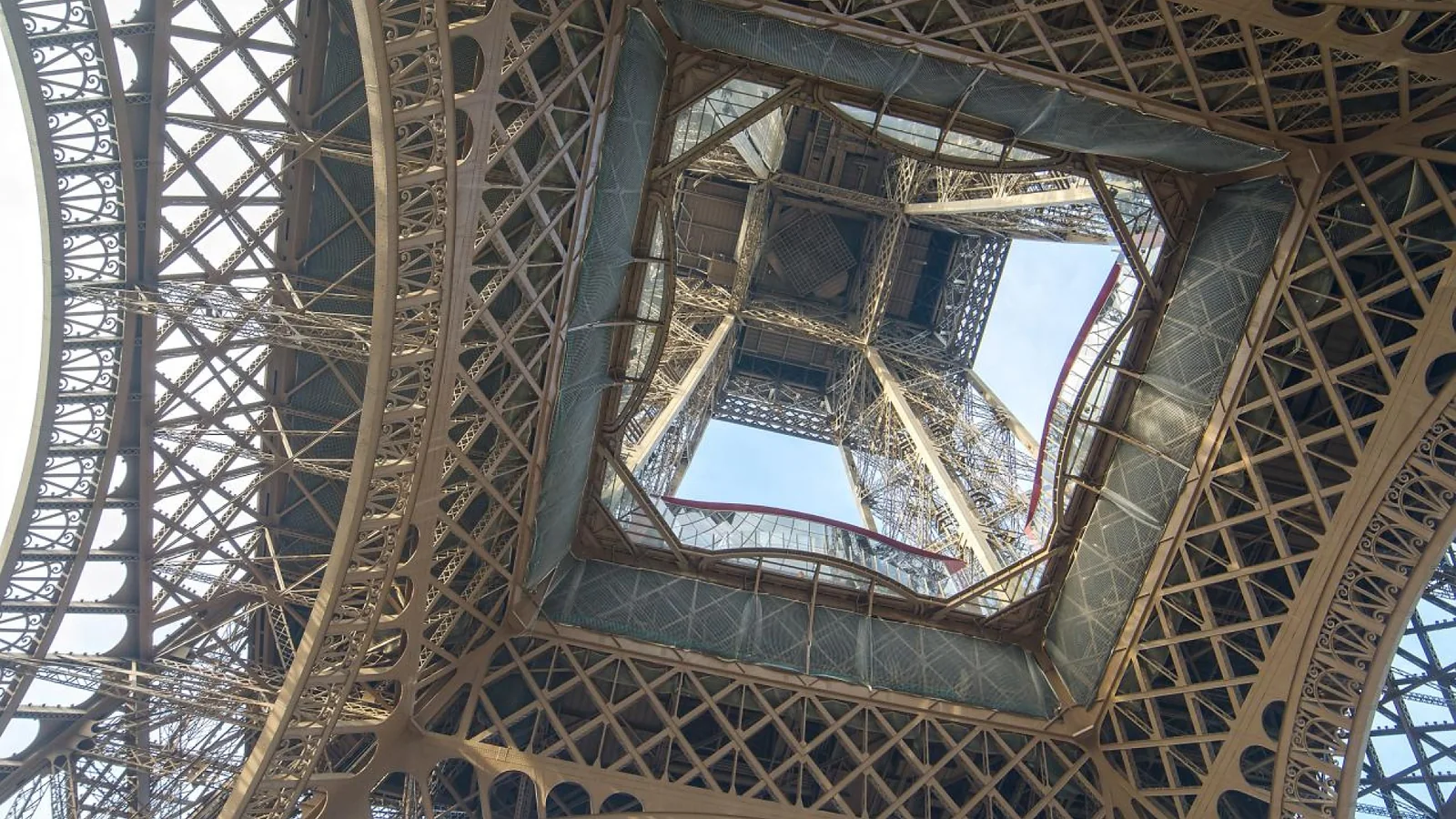
Looking up through the Eiffel Tower’s iron structure toward its upper floors.
This Eiffel Tower guide compares the three public levels, each of which offers a different experience. The first floor is best for exhibits and architecture, the second floor provides the clearest overall views, and the summit is mainly for travelers who want the experience of reaching the top.
| Level | Main Experience | Best For | Drawback |
|---|---|---|---|
| First Floor | Glass floor, exhibits, and restaurants | Families and architecture lovers | Lower panoramic view |
| Second Floor | Detailed views of Paris landmarks | Most first-time visitors | Can still become crowded |
| Summit | Highest accessible viewpoint | Bucket-list travelers | Extra cost and elevator wait |
The First Floor
On the first floor, visitors find more space than on the upper levels, along with exhibits, restaurants, a glass floor, and close views of the tower’s iron structure. It is especially suitable for families and visitors interested in architecture.
The Second Floor
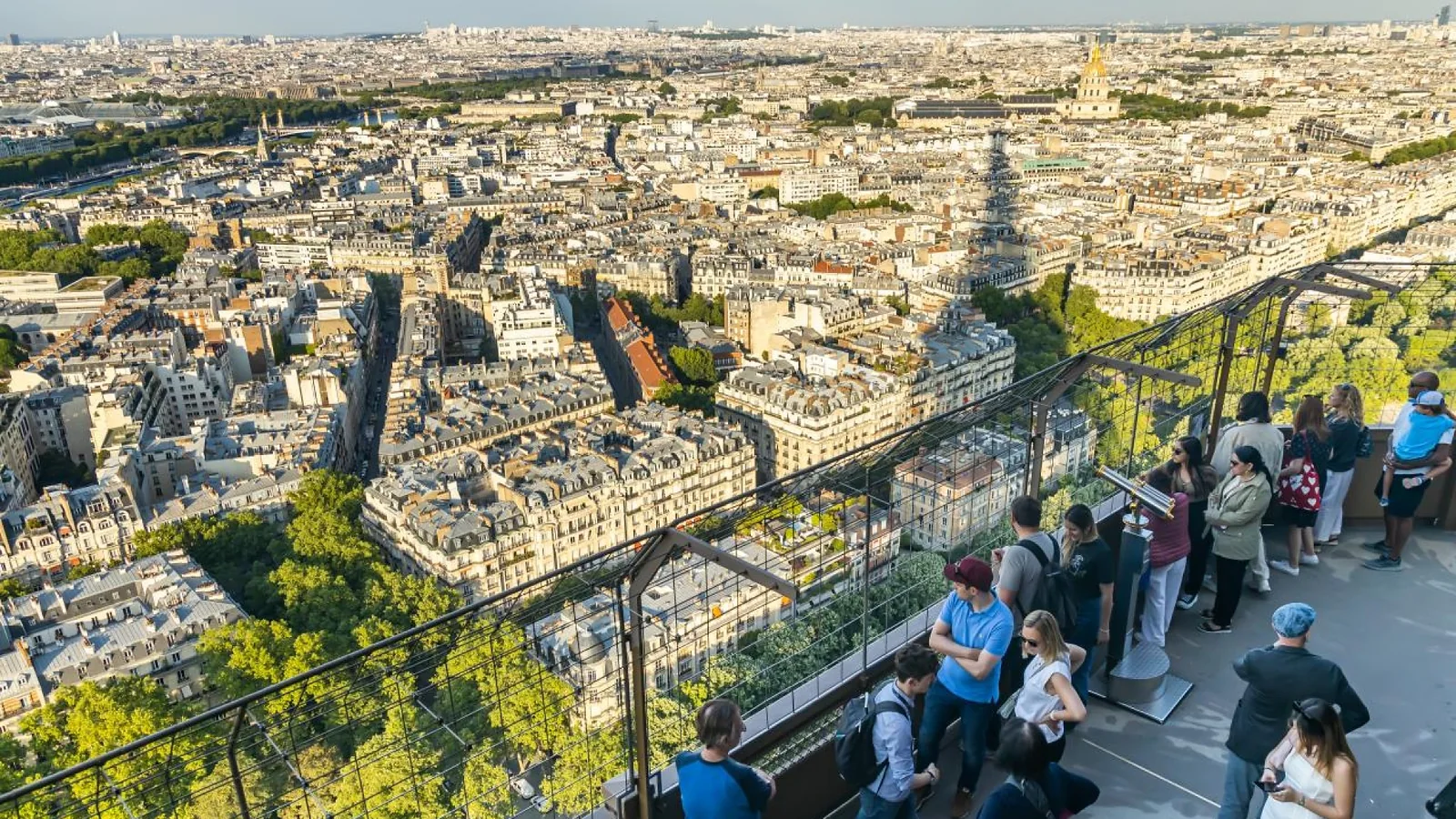
A panoramic view across Paris from the Eiffel Tower’s second-floor observation deck.
For most travelers, the second floor provides the best overall view. For example, major landmarks such as the Arc de Triomphe, the Seine, Les Invalides, and Sacré-Cœur remain clear and easy to identify.
It is also the strongest level for photography because the city retains visible detail and depth without appearing too distant.
The Summit
By contrast, the summit offers the experience of reaching the tower’s highest accessible point and a wider panorama across Paris.
However, visitors must transfer to another elevator on the second floor, and fog, wind, haze, or low clouds can reduce visibility.
Eiffel Tower Summit vs Second Floor: Which Is Worth It?
For most travelers, this Eiffel Tower guide recommends the second floor for better overall value. The summit is worth the additional cost mainly when reaching the top is personally important and weather conditions are clear.
| Feature | Second Floor | Summit |
|---|---|---|
| View | Detailed and recognizable | Wide and panoramic |
| Photography | Better for landmarks | Better for skyline views |
| Waiting Time | Usually shorter | Additional elevator queue |
| Weather Impact | Less affected | More affected by wind and clouds |
| Best For | Most visitors | Bucket-list travelers |
Choose the second floor for the best balance of views, photography, cost, and time. Choose the summit when reaching the top is an important part of your Paris experience.
Eiffel Tower Tickets Explained: Which One Should You Buy?
For most first-time visitors, this Eiffel Tower guide recommends an elevator ticket to the second floor. Active travelers can choose the stairs, while summit tickets include a transfer to a separate elevator from the second floor.
Stairs to the Second Floor
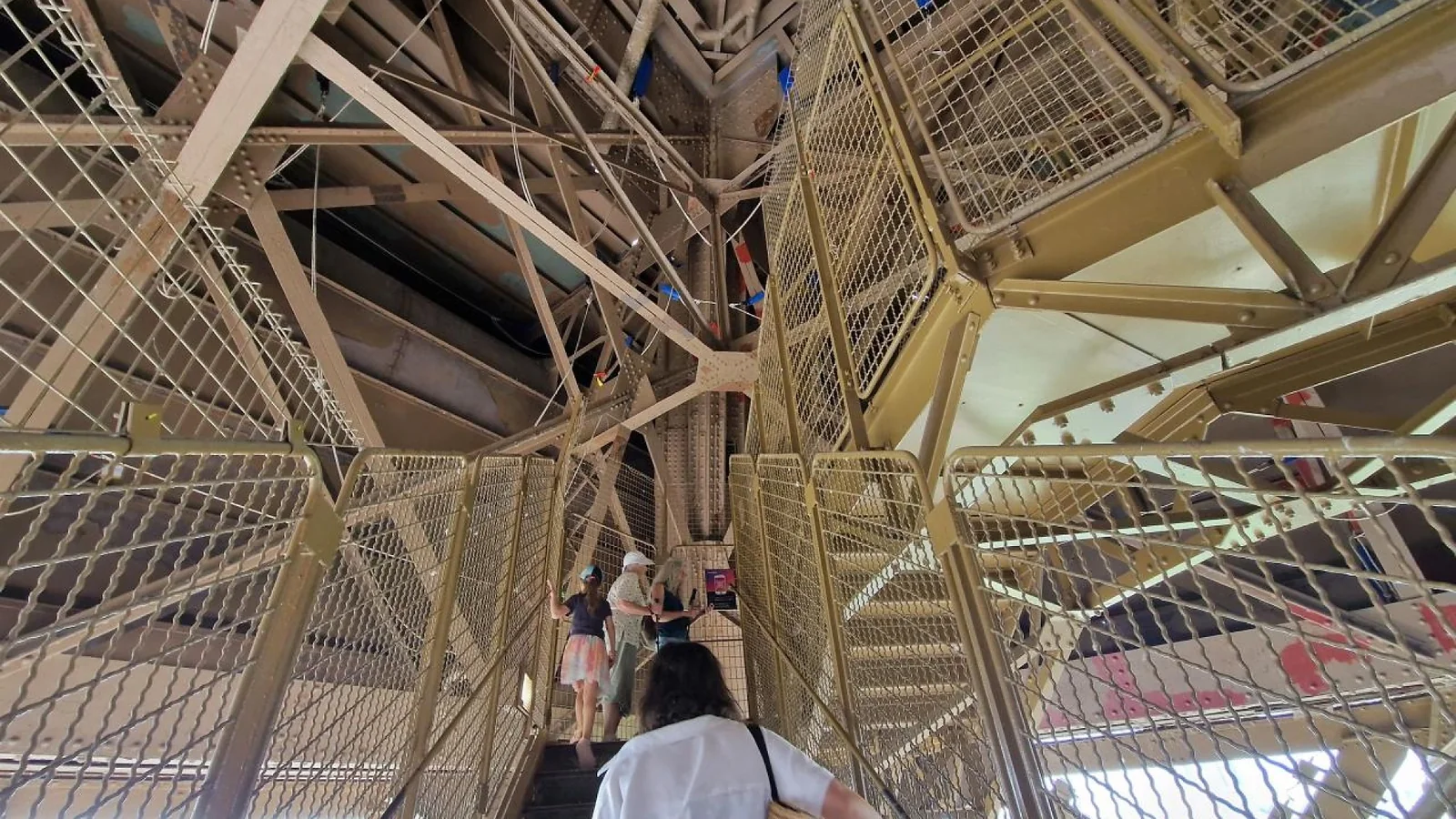
Visitors climbing through the Eiffel Tower’s iron structure toward the second floor.
The stair ticket is usually the cheapest option and requires climbing 674 steps to the second floor. It suits active travelers, but it can feel tiring in hot weather, after a long sightseeing day, or when visiting with young children.
Elevator to the Second Floor
This is the most practical choice for most visitors because it saves energy while still providing clear views of Paris. It works especially well for families, older travelers, and anyone visiting another attraction on the same day.
Elevator to the Summit
Summit tickets include access to the second floor, where visitors transfer to another elevator for the final ascent. This can create an additional queue, especially around sunset and during busy periods.
| Ticket Type | Adult Price | Best For | Main Trade-Off |
|---|---|---|---|
| Stairs to Second Floor | €14.80 | Active budget travelers | 674 steps and more physical effort |
| Elevator to Second Floor | €23.50 | Most first-time visitors | No summit access |
| Stairs to Second Floor + Elevator to Summit | €28.00 | Active travelers who still want the summit | Stair climb plus a separate summit elevator |
| Elevator to Summit | €36.70 | Bucket-list travelers | Highest standard price and an additional elevator queue |
Official adult prices checked for 2026. Reduced rates apply to eligible young visitors, children and visitors with disabilities. Always confirm current prices before booking.
Should You Book Eiffel Tower Tickets in Advance?
Yes, especially when your dates are fixed or you want the summit. Official elevator e-tickets can be released up to 60 days in advance, while stair-access e-tickets can be released up to 30 days in advance. Summit tickets and popular times can disappear quickly during summer, school holidays and other high-demand periods, so check the official Eiffel Tower website as soon as your plans are firm.
A timed ticket avoids the ticket-office queue but does not eliminate security screening, elevator waits or the second-floor transfer queue for the summit. Therefore, same-day tickets may still be available online or at the monument, but your preferred floor or time is not guaranteed.
Important: if you buy a ticket that ends at the second floor, you cannot simply pay an extra supplement at the tower to continue to the summit. If reaching the top matters to you, choose a summit ticket from the beginning.
Choose the second-floor elevator ticket for the best overall balance. Choose the summit only when reaching the top matters more than saving time.
If official tickets for your preferred time are unavailable, or you prefer a guided experience, you can also compare Eiffel Tower tickets and guided tours on GetYourGuide. Check exactly which floor is included before booking, because second-floor and summit access are not interchangeable.
Best Time to Visit the Eiffel Tower
This Eiffel Tower guide compares the best times for lighter crowds, clearer photographs, sunset views, and city lights.
Morning
The earliest time slots usually offer shorter security lines, less crowded platforms, and cooler temperatures. Morning is the best choice for families and travelers who want the rest of the day free.
Afternoon
Afternoon visits fit easily into most itineraries. However, they often coincide with tour groups, higher crowd levels, and warmer temperatures. Strong sunlight or haze may also affect photographs.
Sunset
Sunset provides the best atmosphere because visitors can see Paris in daylight and remain as the city lights appear. Book a time earlier than sunset to allow for security checks and elevator delays.
Night
Night visits are more atmospheric than detailed because distant landmarks become harder to recognize. Instead, for the best overall experience, visit before dark, descend after the lights appear, and watch the tower sparkle from Trocadéro or the Seine.
| Time | Best For | Main Drawback |
|---|---|---|
| Morning | Lighter crowds and cooler weather | Less dramatic atmosphere |
| Afternoon | Clear views and flexible planning | More heat and crowds |
| Sunset | Day-to-night views | High demand |
| Night | City lights and atmosphere | Less landmark detail |
How Weather Affects the Visit
Fog, haze, and low clouds can significantly reduce summit visibility, sometimes making the second floor the better choice. In addition, upper levels are windier and colder than street level, so carry an extra layer even when the forecast appears mild.
Choose the earliest slot for lighter crowds and a smoother visit. Choose late afternoon for the strongest atmosphere, but arrive early enough to complete security and elevator queues before sunset.
How to Avoid Long Lines at the Eiffel Tower
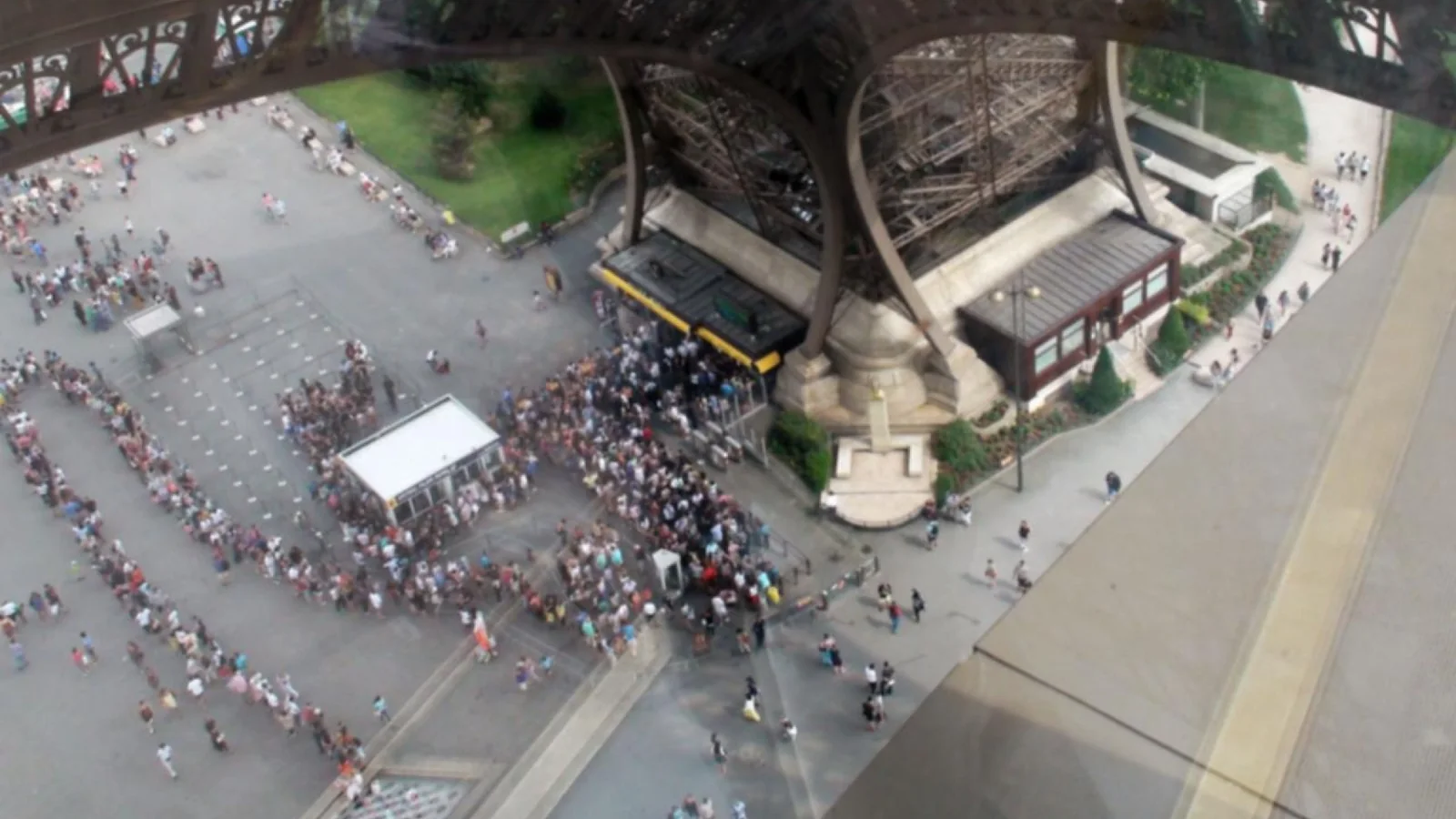
Crowds and security lines at the Eiffel Tower entrance during a busy visiting period.
All visitors pass through two security checks: one at the entrance to the site and another before entering the pillar for the elevators or stairs. A timed ticket avoids the ticket-purchase line, but security checks, elevator queues, and the summit transfer may still add waiting time.
Book Online
In addition, booking online helps secure your preferred floor and time, especially for summit and sunset visits. However, it does not provide priority access through security or eliminate elevator queues.
Choose an Early Slot
This Eiffel Tower guide recommends early entry for lighter crowds, cooler temperatures, and shorter waits.
Arrive About 15–20 Minutes Early
For visitors with timed tickets, the Eiffel Tower recommends arriving at the site entrance about 15–20 minutes before the time shown on the ticket. This gives you time to pass the first security checkpoint and reach the esplanade without rushing.
Do not confuse the ticket time with the moment you will reach the observation deck. Security screening, entrance organization, elevator boarding and, for summit visitors, the second-floor elevator transfer can add extra time. Avoid scheduling another fixed reservation immediately afterward.
Avoid Arrival Day
Do not schedule the Eiffel Tower shortly after a flight or long-distance train. Transport delays, luggage collection, and hotel check-in can cause you to miss a prepaid ticket, so the second day is usually safer.
Allow Time for the Summit Queue
Summit visitors must transfer to another elevator on the second floor, which can significantly extend the visit during crowded periods.
Avoid visiting immediately after a full Louvre visit or Versailles day trip, because the Eiffel Tower involves more standing and waiting than many travelers expect.
| Strategy | Why It Helps |
|---|---|
| Book online | Avoids the ticket-purchase queue |
| Choose an early slot | Reduces crowd pressure |
| Arrive 20–30 minutes early | Allows time for security |
| Choose the second floor | Avoids the summit transfer queue |
Is the Eiffel Tower Better by Day or Night?
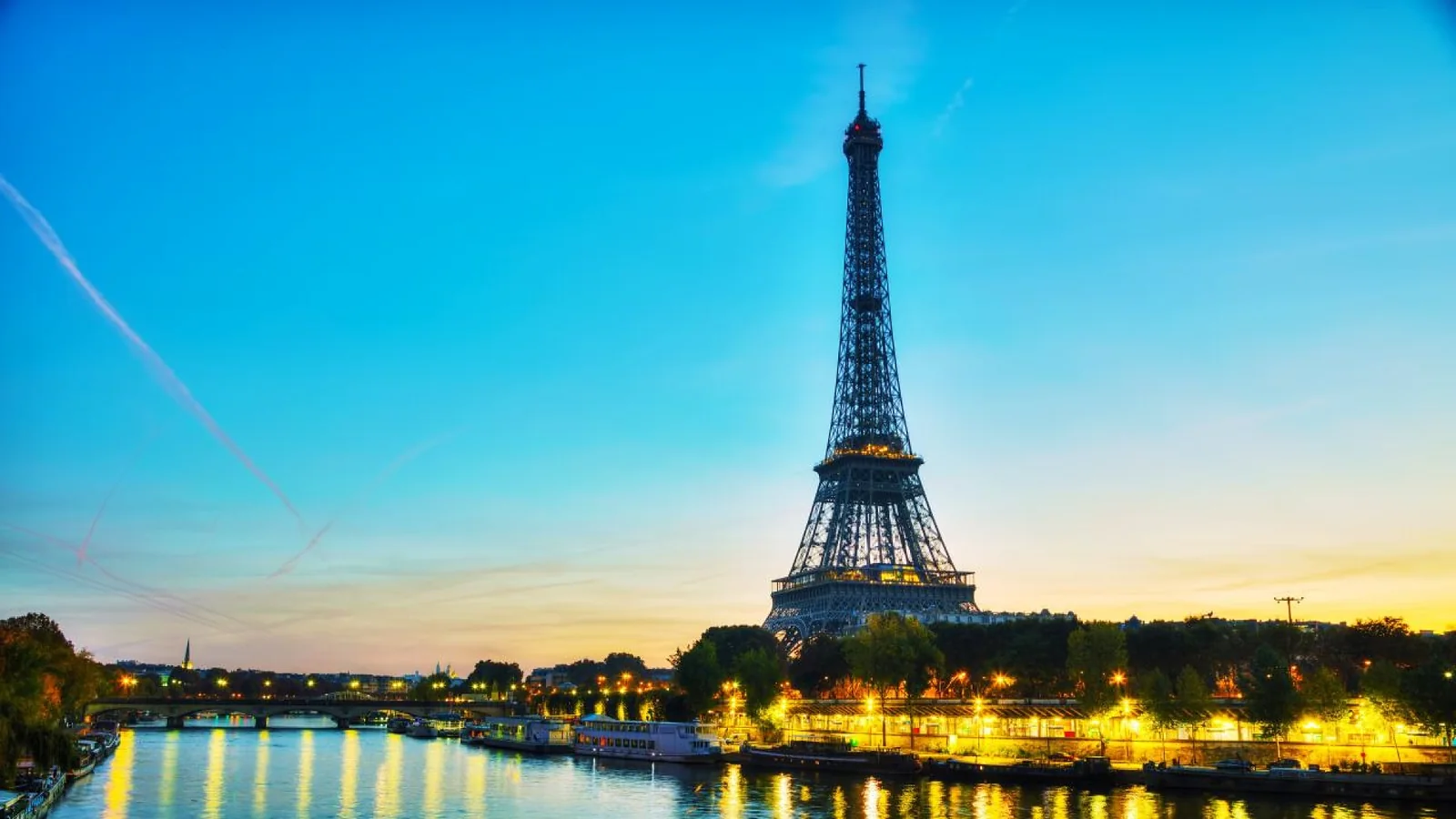
The Eiffel Tower illuminated at blue hour with reflections across the Seine River.
Visit during the day for clearer landmark views and detailed photographs. Visit at night for illuminated scenery and a more romantic atmosphere.
Day Visit
Daylight makes the Seine, Arc de Triomphe, Les Invalides, Montmartre, and the city’s main boulevards easier to recognize. It is the better choice for first-time visitors, families, and architecture lovers.
Night Visit
At night, individual landmarks are harder to identify, but the illuminated streets, bridges, and river create a stronger atmosphere. Meanwhile, upper platforms also feel colder and windier after dark.
Best Compromise: Late Afternoon
For most first-time visitors, late afternoon offers the best balance. Arrive before sunset to see Paris in daylight, watch the colors change, and remain as the city lights appear, while allowing enough time for security and elevator queues.
| Experience | Day | Night |
|---|---|---|
| Landmark Visibility | Excellent | Limited |
| Photography | Architecture and detail | Lights and atmosphere |
| Comfort | Usually warmer | Often colder and windier |
| Best For | First-time exploration | Romantic evenings |
Book a late-afternoon entry, stay until after dark, then watch the entire tower sparkle from Trocadéro or the Seine after descending.
Best Eiffel Tower Photo Spots
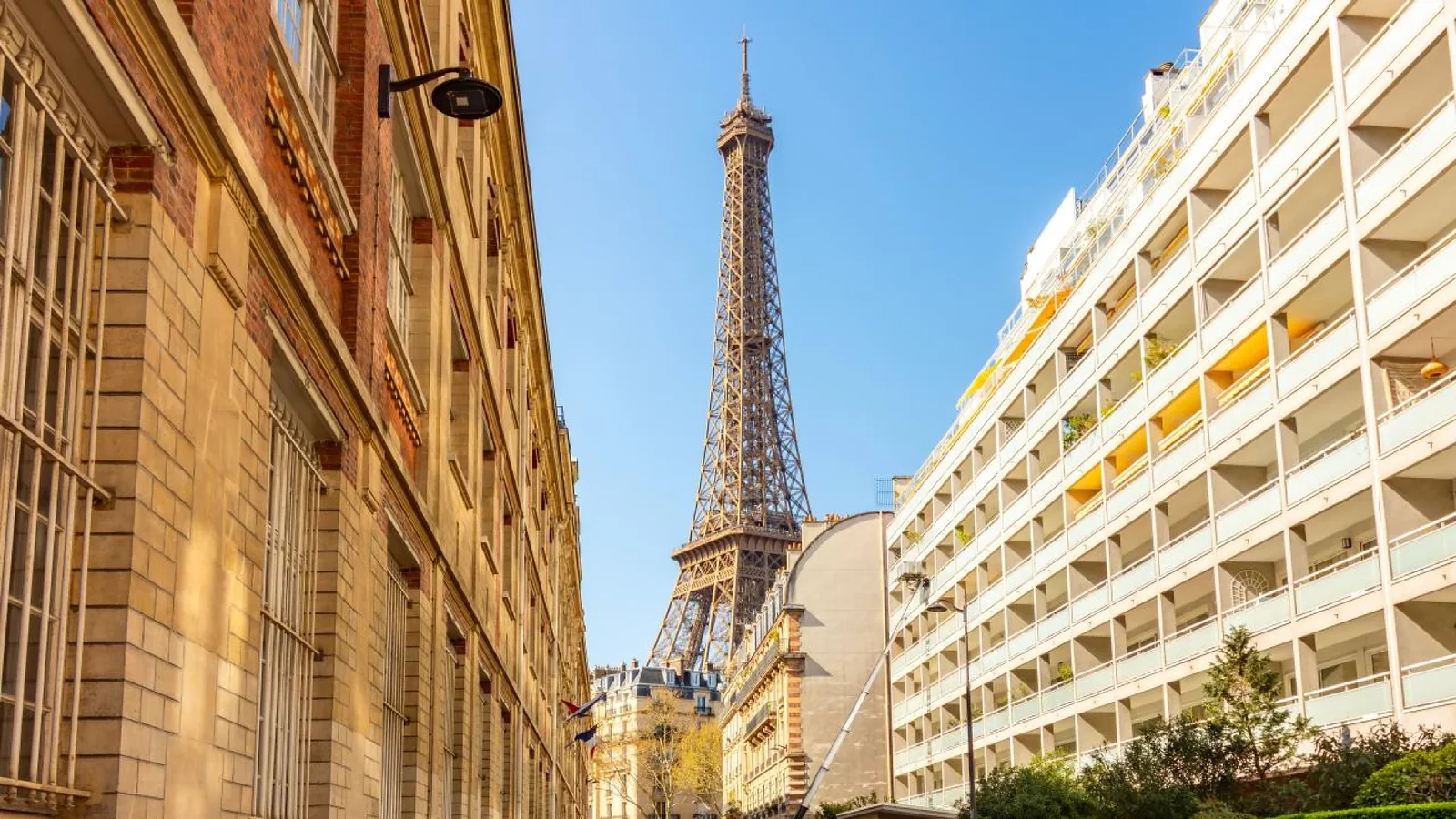
A street-level view of the Eiffel Tower framed by Parisian buildings.
The best Eiffel Tower photographs are rarely taken directly beneath the monument. Stepping farther away allows the full structure to fit naturally into the frame while adding Parisian streets, bridges, gardens, or the Seine as foreground elements.
| Location | Best For | Main Drawback |
|---|---|---|
| Trocadéro | Classic panoramic view | Very crowded |
| Champ de Mars | Wide green foreground | Busy during good weather |
| Rue de l’Université | Iconic Paris street view | Narrow and often crowded |
| Bir-Hakeim Bridge | Architectural framing | Cyclists and heavy foot traffic |
| Seine Riverbanks | Reflections and flexible angles | Weather dependent |
Best Time for Eiffel Tower Photos
For the fewest crowds, arrive shortly after sunrise when popular viewpoints are quieter and the soft morning light creates clean, balanced photos. On the other hand, if you prefer warmer colors, the hour before sunset offers the most dramatic lighting, although popular locations like Trocadéro can become very busy.
Blue hour, just after sunset, is ideal for capturing both the illuminated Eiffel Tower and the deep blue Paris sky. If you’re hoping to photograph the tower sparkling at night, remember that the light show is best viewed from outside rather than from the observation decks.
Capture one classic view from Trocadéro, then explore the Seine or nearby streets for more original photographs instead of repeating the same famous angle.
Things to Do Near the Eiffel Tower
Allow roughly 1.5–2 hours for a visit focused on the first and second floors, and around 2.5 hours or more if you continue to the summit. Crowds and elevator queues can extend either visit, so nearby attractions are easier to combine than another tightly timed reservation across Paris.
Take a Seine River Cruise
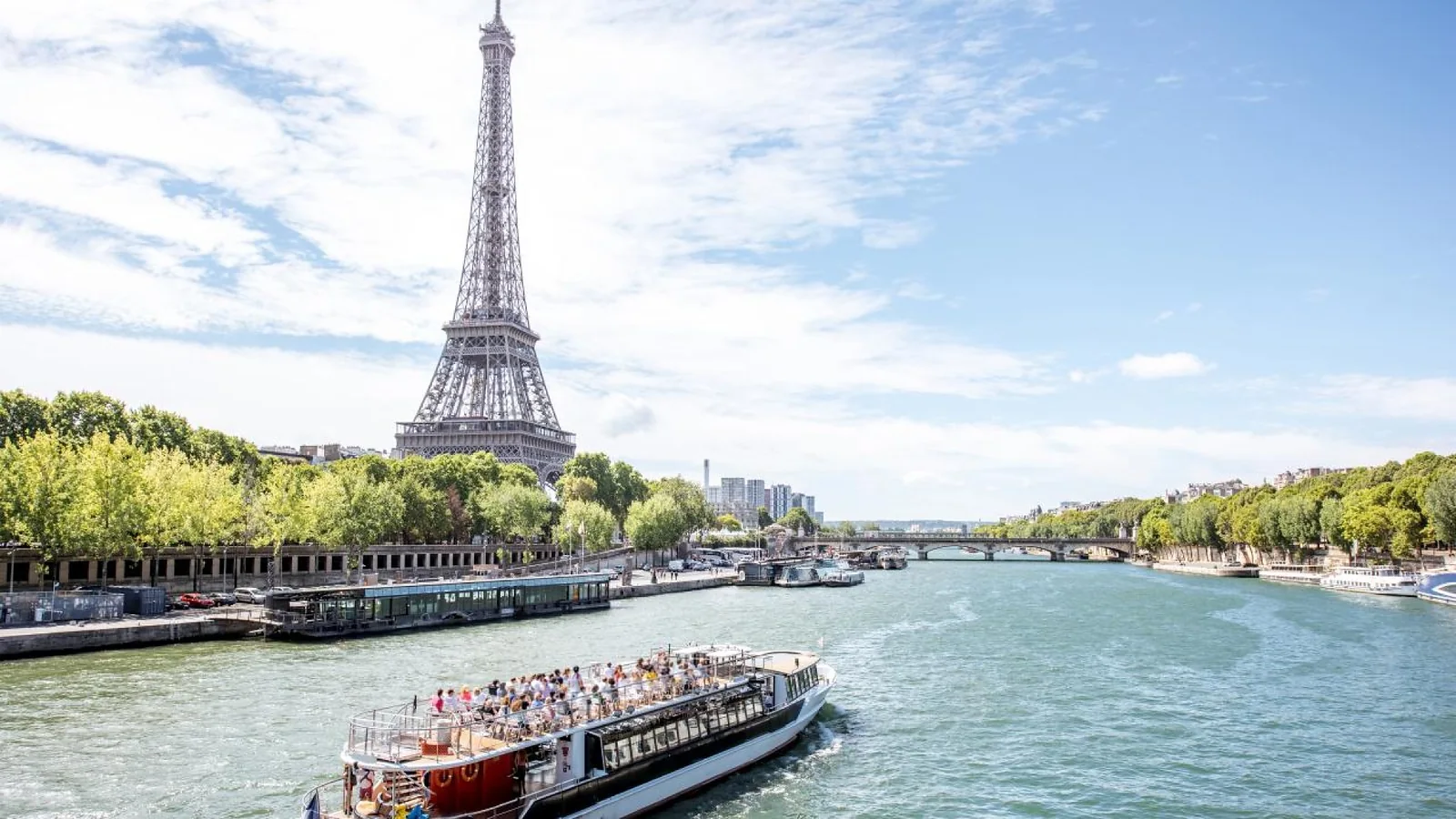
A sightseeing boat cruising along the Seine River with the Eiffel Tower in view.
River cruises depart within walking distance and provide a relaxing way to see landmarks such as Notre-Dame, the Louvre, and Musée d’Orsay after spending time standing in queues.
Relax in Champ de Mars
The lawns of Champ de Mars offer excellent views of the tower and are ideal for a picnic or short break. Keep in mind that parts of the park may occasionally close for events or maintenance.
Visit Rue Cler or Les Invalides
Rue Cler is a pleasant market street for cafés, bakeries, and local food, while Les Invalides is an excellent choice for travelers interested in French history and architecture.
Walk to Trocadéro
After leaving the tower, crossing Pont d’Iéna toward Trocadéro lets you enjoy the complete monument from one of Paris’ most famous viewpoints.
Choose Restaurants Carefully
Restaurants directly beside the Eiffel Tower often charge premium prices for their location. Walking just a few streets farther usually provides better value and a more authentic atmosphere.
| Nearby Activity | Recommended Time |
|---|---|
| Seine River Cruise | 1 hour |
| Champ de Mars | 30–60 minutes |
| Rue Cler | 45–90 minutes |
| Les Invalides | 2–3 hours |
| Trocadéro | 30–60 minutes |
Visit the Eiffel Tower in the morning, enjoy lunch nearby, then finish with a Seine River cruise or a walk to Trocadéro for classic views of the monument.
Common Eiffel Tower Mistakes
- Booking summit tickets too late during busy seasons.
- Assuming timed tickets eliminate all queues.
- Planning the visit immediately after arriving in Paris.
- Choosing the summit without checking the weather forecast.
- Scheduling too many physically demanding attractions on the same day.
- Eating at the first restaurant beside the tower without comparing options.
- Ignoring basic precautions against pickpocketing in crowded areas.
- Paying extra for the summit on a foggy day, only to find the city hidden by low clouds.
- Watching the Eiffel Tower sparkle from inside instead of seeing the complete monument illuminated from Trocadéro or the Seine.
Frequently Asked Questions
How long should I spend at the Eiffel Tower?
Plan at least 1.5 hours for the first and second floors and about 2.5 hours for a full visit to the summit. Security checks and elevator queues can make the visit longer during busy periods. Add separate time if you also plan to walk to Trocadéro, relax in Champ de Mars or take a Seine River cruise afterward.
Is the Eiffel Tower summit worth it?
The summit is worth it when reaching the highest accessible point is an important part of your Paris experience. However, the second floor usually offers clearer landmark views, better photography, shorter waiting times, and stronger overall value.
Can you visit the Eiffel Tower without booking in advance?
Yes, but same-day availability is not guaranteed. Summit tickets and popular sunset slots may sell out during weekends, holidays, and busy travel seasons, so advance booking is the safer option when your itinerary is fixed.
What is the best time to visit the Eiffel Tower without crowds?
The earliest available morning slot usually provides the lightest crowds, shorter queues, and more comfortable temperatures. Late afternoon offers more dramatic lighting, but it is generally busier and requires extra time for security and elevators.
Is the Eiffel Tower better during the day or at night?
Daytime is better for recognizing Paris landmarks and taking detailed photographs, while nighttime offers a more romantic atmosphere and illuminated city views. Late afternoon is the best compromise because visitors can experience daylight, sunset, and the city lights during one visit.
Can you walk up the Eiffel Tower instead of taking the elevator?
Yes. Visitors can climb 674 steps to reach the second floor when stair access is available. The summit cannot be reached entirely by stairs, so visitors continuing to the top must transfer to an elevator on the second floor.
Can you bring bags, food, or drinks into the Eiffel Tower?
A reasonable amount of food and drink is generally allowed at the discretion of the staff, but glass bottles and metal cans are prohibited. All bags are subject to security screening, large luggage is not accepted, and the Eiffel Tower does not provide a left-luggage or cloakroom service. Check the official Eiffel Tower visitor guide before arriving for the latest restrictions.
Is the Eiffel Tower suitable for children?
Yes. Elevators make the first and second floors accessible for most families, and the first floor provides additional space, exhibits, and close views of the tower’s structure. Young children may find long security and elevator queues tiring, so an early visit is usually the most comfortable option.
What should I do after visiting the Eiffel Tower?
Good nearby options include walking to Trocadéro for a complete view of the tower, relaxing in Champ de Mars, taking a Seine River cruise, visiting Les Invalides, or exploring Rue Cler for cafés, bakeries, and local food.
Final Verdict: Is Visiting the Eiffel Tower Worth It?
As this Eiffel Tower guide shows, the monument is absolutely worth visiting for most first-time travelers. The strongest all-around plan is a second-floor elevator ticket in the late afternoon, with enough time allowed for security and elevator queues before sunset.
The summit is a memorable upgrade for travelers who dream of reaching the very top, but it is not essential for enjoying the best views of Paris. In many cases, the second floor offers better photography, shorter waiting times, and greater value.
Whether you choose the second floor or continue all the way to the summit, the Eiffel Tower is far more than an observation deck. It’s one of those rare landmarks that manages to exceed expectations when planned well. With the right ticket, the right timing, and realistic expectations, your visit can easily become one of the highlights of your time in Paris.
And once you’ve seen the tower sparkle over the Paris skyline, you’ll understand why millions of travelers return home feeling that no first trip to Paris is truly complete without it.