
Is Orlando expensive for tourists? It can be—especially when theme park tickets, hotel fees, parking, tolls, and food are added together. But Orlando is not automatically unaffordable; the final cost depends heavily on where you stay, how you move around, and how many ticket-heavy days you plan.
Most budget problems do not come from one huge charge. They come from several smaller costs stacking across the day: resort fees, parking, rideshares, snacks, taxes, tips, and last-minute convenience spending.
This guide breaks down realistic daily budgets for solo travelers, couples, and families, then explains the cost of hotels, food, transport, theme parks, parking, and common hidden fees.
Quick answer: Orlando feels expensive for travelers who combine major attractions with long cross-city transfers and frequent paid add-ons. It becomes much easier to control when you choose the right hotel area, plan transport in advance, and keep at least one low-cost day in the itinerary.
Is Orlando Expensive for Tourists? Daily Cost Breakdown
Is Orlando expensive for tourists on a daily basis? It is not automatically a luxury destination, but costs can rise quickly when accommodation, meals, transport, parking, and attractions begin stacking together.
The ranges below are practical planning estimates for the entire travel party. They include accommodation, meals, and local transport, but exclude flights and theme park tickets.
| Travel party | Realistic daily budget | What this usually covers |
|---|---|---|
| Solo traveler | $180–$300 per day | Budget or mid-range hotel, simple meals, and limited local transport |
| Couple | $300–$550 per day | Shared hotel room, casual dining, and a planned car or rideshare budget |
| Family of four | $500–$900 per day | Family accommodation, meals, local transport, parking, and basic extras |
Important: Theme park days should be calculated separately. Admission, parking, food inside the parks, and optional upgrades can make them the most expensive days of the trip.
Budget insight: Orlando feels most expensive when travelers combine several theme park days with a poorly located hotel and frequent cross-city transport. A trip with fewer paid attractions, a convenient hotel base, and one or two low-cost days can be much easier to control.
What Makes Orlando Expensive for Tourists?
Orlando usually becomes expensive through a combination of several costs rather than one single purchase. The four biggest budget drivers are accommodation, theme park days, transport, and convenience spending.
1. Staying in the Wrong Area
A cheaper hotel is not always the cheaper choice. If it is far from the places you plan to visit, the savings can disappear through extra fuel, parking, tolls, or rideshare trips.
The best approach is to stay near the area where you will spend most of your time. Travelers focused on Disney or Universal usually benefit from staying close to those parks, while visitors planning more local neighborhoods should choose a base that reduces unnecessary cross-city travel.
2. Planning Too Many Theme Park Days
Theme park tickets are only the beginning. Parking, meals, snacks, merchandise, and optional upgrades can make each park day significantly more expensive than a normal sightseeing day.
You do not need to avoid the parks, but it helps to separate expensive attraction days with lower-cost days around Downtown Orlando, Winter Park, or other relaxed areas.
3. Mixing Transport Costs
Renting a car and then using rideshare repeatedly is one of the easiest ways to overspend. The same problem happens when travelers cross several distant areas in one day and pay for parking, tolls, fuel, and last-minute transport fixes.
Choose one main transport approach for each day and keep nearby attractions together whenever possible.
4. Underestimating Small Extras
Taxes, tips, resort fees, hotel parking, tolls, snacks, and convenience purchases may look small individually, but they can add a noticeable amount to the final trip cost.
A simple daily buffer for unplanned expenses helps prevent these charges from disrupting the rest of your budget.
Bottom line: Orlando is most expensive for travelers who choose a distant hotel, schedule several ticket-heavy days, and move repeatedly between different parts of the city. It becomes more manageable when the itinerary is organized around location and realistic daily limits.
Is Orlando Expensive for Tourists in Every Area?
Is Orlando expensive for tourists in every area? Not necessarily. Orlando is spread across several tourist districts, and each one creates a different spending pattern. The right area depends on what you actually plan to do—not which hotel looks cheapest at first.
| Orlando area | Best for | Main cost risk | How to control it |
|---|---|---|---|
| Downtown Orlando | Local sightseeing and lower-cost days | Paying to travel back to the theme park corridor | Use it for a dedicated local day rather than combining it with a park |
| Winter Park | Relaxed walks, cafés, and a slower itinerary | Adding a distant second area unnecessarily | Keep the visit focused around Park Avenue and nearby attractions |
| International Drive | Restaurants, entertainment, and tourist atmosphere | Small purchases, paid attractions, and repeated transport | Choose one or two priorities before arriving |
| Disney and Universal areas | Trips centered mainly on theme parks | Tickets, hotel fees, parking, food, and upgrades | Stay close to the parks and treat each park day as the main event |
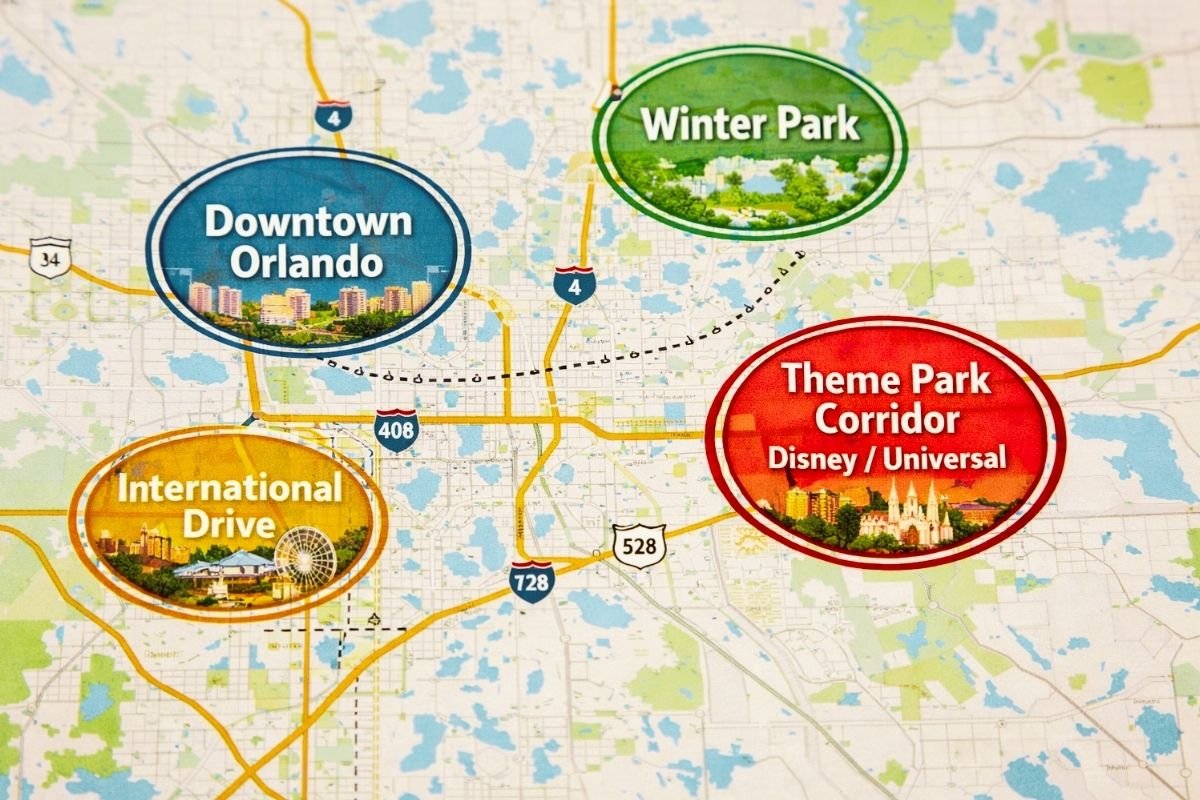
Orlando gets expensive when your day crosses zones. Keep it inside one cluster to stop leaks.
Downtown Orlando and Winter Park
These areas work well for travelers who want at least one day away from expensive attractions. Lake Eola, Park Avenue, neighborhood walks, cafés, and local scenery can provide a full change of pace without requiring a major admission ticket.
However, Downtown Orlando and Winter Park are not automatically the best hotel bases for travelers spending most of the trip at Disney or Universal. Any savings on accommodation may disappear if you need long rideshare trips or repeated drives to the parks.
International Drive
International Drive combines restaurants, entertainment, shopping, and paid attractions in one tourist area. It works best when you arrive with one or two planned activities instead of spending hours wandering, which often leads to extra transport, snacks, parking, and unplanned attraction costs.
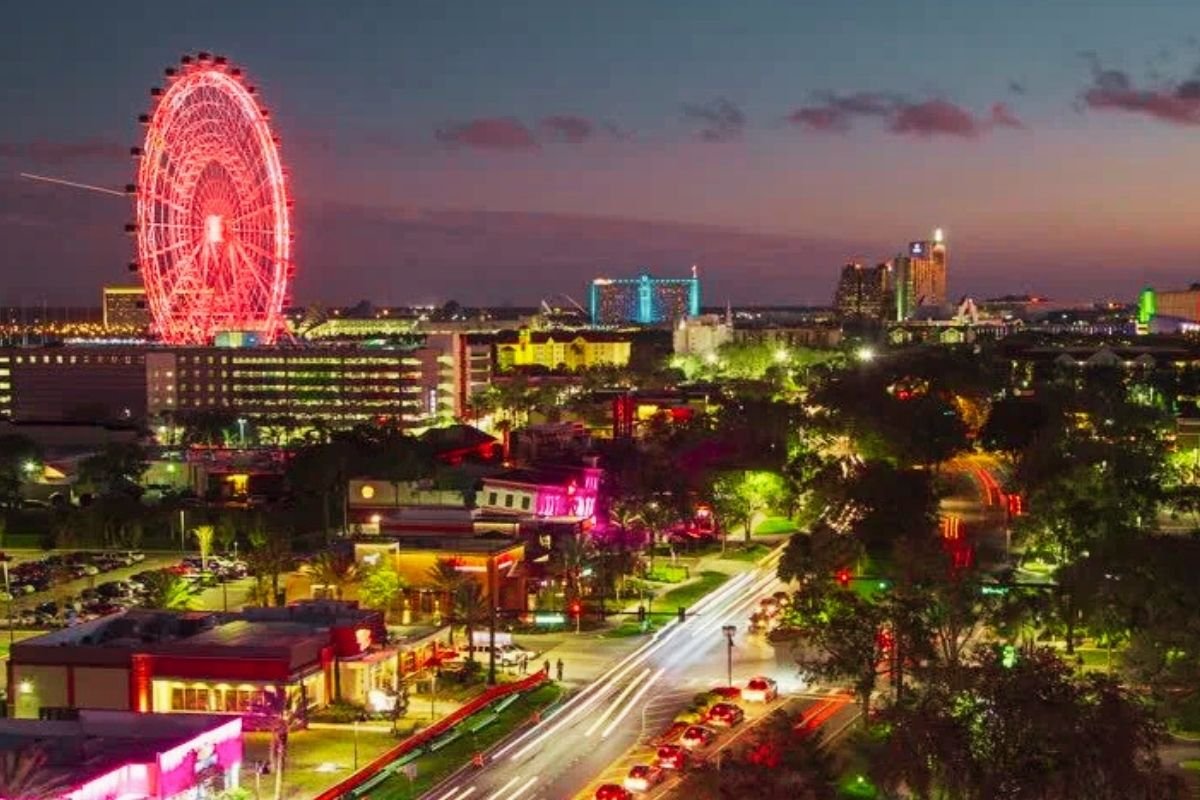
International Drive works when you cap it. It fails when you “hang out” without a plan.
Disney and Universal Areas
The theme park corridor is usually the most expensive part of an Orlando trip, but staying nearby can still be the financially sensible choice when the parks are your main priority.
A park day may include admission, hotel fees, parking or transport, meals, snacks, merchandise, and optional upgrades. Treat it as one complete high-cost day rather than combining it with another distant attraction.
Is Orlando Expensive for Tourists? Hidden Costs to Expect
When travelers ask, “Is Orlando expensive for tourists?” hidden charges are often part of the answer. The advertised hotel rate or attraction ticket is not always the final amount paid, as taxes, parking, resort fees, tolls, tips, and convenience purchases can add noticeably to the trip total.
These costs are especially easy to underestimate for international visitors who are used to seeing taxes included in displayed prices or who do not normally budget for tipping and hotel parking.
| Hidden cost | Why it matters | What to check |
|---|---|---|
| Taxes | The displayed price may not be the final total | Review the checkout amount before confirming |
| Resort and hotel fees | A low nightly rate can rise after mandatory charges | Check destination, amenity, and service fees |
| Parking | Hotels and attractions may charge separately | Compare overnight and daytime parking costs |
| Tolls | Rental companies may add administrative charges | Read the toll policy before collecting the car |
| Tips | They accumulate across restaurants, rides, and hotel services | Include tipping in the daily budget |
| Convenience spending | Heat and long attraction days lead to extra snacks and drinks | Plan meals and carry water when allowed |
Is Orlando Expensive for Tourists Because of Hotel Fees?
Compare the complete stay price rather than judging a property only by its nightly rate. A cheaper hotel may become more expensive after resort fees, parking, fuel, tolls, or repeated rideshare trips are included.
Tolls and Rental Car Charges
Some rental companies use electronic toll programs that add service fees on top of the road charge. Check the rental agreement before driving and use the official Florida Turnpike toll calculator to estimate likely route costs.
Taxes, Tips, and Small Purchases
Restaurant menus, attraction listings, and advertised prices may not represent the final amount paid. Taxes, tips, bottled drinks, snacks, lockers, merchandise, and upgrades can become significant when repeated across several days.
You do not need to remove every treat from the trip. Decide which extras matter most, set a daily allowance, and leave a small buffer for unplanned purchases.
If you plan to use International Drive without a car, check the official I-Ride Trolley fare information before the trip.
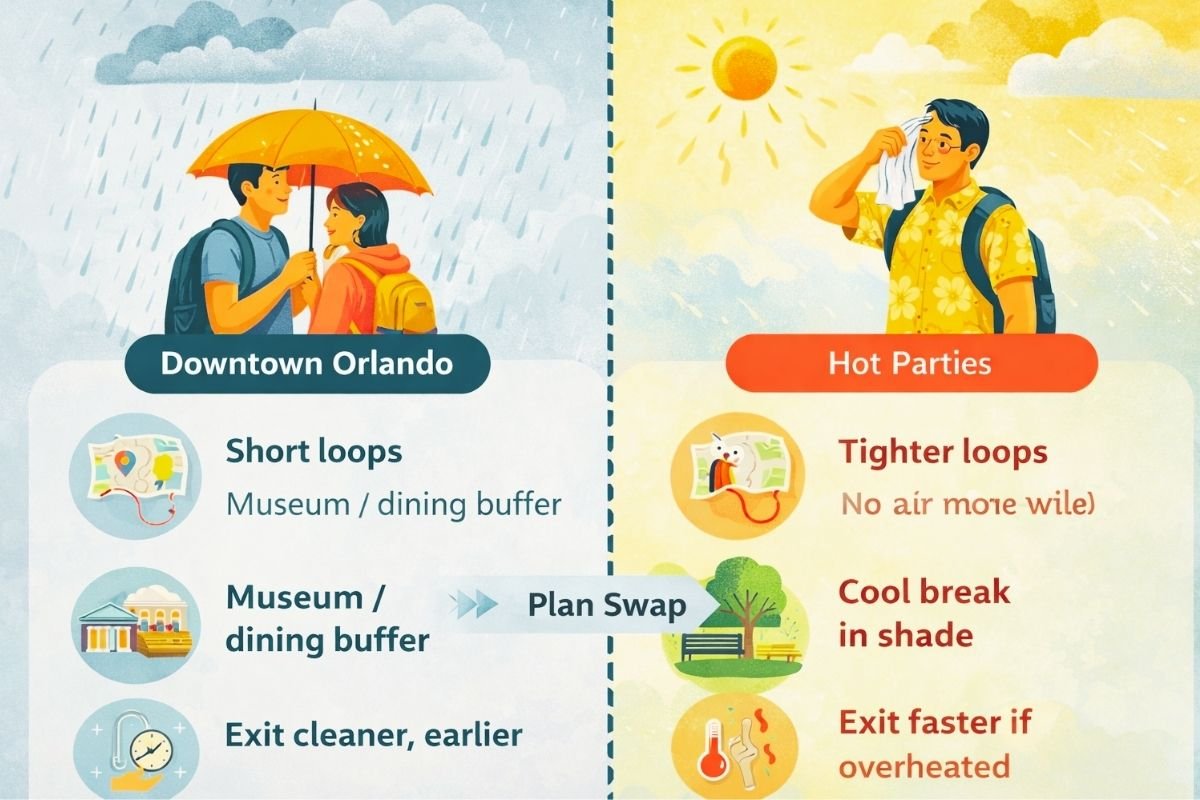
Weather changes movement. A good plan swaps without adding distance.
Budget takeaway: Add hotel fees, parking, tolls, taxes, tips, and likely daily extras before deciding whether an option is genuinely affordable.
Car vs Rideshare in Orlando: Which One Is Cheaper?
The cheaper option depends on where you stay, how many areas you visit, and whether your hotel charges for parking. A rental car offers flexibility, but its real cost includes fuel, tolls, insurance, hotel parking, and attraction parking. Rideshare avoids those charges, but repeated trips can become expensive when the itinerary is spread across Orlando.
| Trip pattern | Usually more practical | Main reason |
|---|---|---|
| One compact area per day | Rideshare or no car | You avoid daily parking and pay for only a few trips |
| Hotel near Disney or Universal with mostly park days | Hotel shuttle or rideshare | A rental car may sit unused while still creating parking costs |
| Several distant areas during the trip | Rental car | Multiple rideshare trips may cost more and reduce flexibility |
| Family with children, strollers, or frequent stops | Rental car | It provides more control over timing, luggage, and rest breaks |
| Short stay without theme parks | Rideshare or limited public transport | You may not use a car enough to justify the full cost |
Is Orlando Expensive for Tourists Renting a Car?
A rental car is usually easier to justify for families, vacation rentals, grocery stops, and itineraries that regularly include several separated areas such as the theme parks, outlets, Winter Park, and Downtown Orlando.
Before booking, calculate the full cost: rental price, insurance, fuel, parking, tolls, and possible administrative fees.
Is Orlando Expensive for Tourists Using Rideshare?
Rideshare works best for short stays and travelers based close to their main attractions. It may also be more economical when a hotel provides park shuttles and the car would remain parked for most of the day.
The risk is looking at each ride separately. Airport transfers, restaurant trips, park journeys, and surge pricing can add up quickly across a full week.
Avoid Paying for Both
The most expensive pattern is renting a car, paying for hotel and attraction parking, and then using rideshare regularly because driving feels inconvenient.
Simple decision: Choose rideshare when most days remain near one hotel area. Choose a rental car when your itinerary regularly crosses several parts of Orlando.
How to Make an Orlando Trip Less Expensive
Saving money in Orlando does not require turning the trip into a strict budget challenge. The biggest savings usually come from avoiding unnecessary transport, poorly chosen hotel locations, and unplanned convenience spending.
- Stay near your main attractions. A cheaper hotel can cost more overall when it creates long rideshare trips, parking charges, tolls, and lost time.
- Keep each day focused on one area. Combining Disney, Downtown Orlando, International Drive, and Winter Park in the same day usually adds transport costs without improving the experience.
- Separate expensive days with low-cost days. After a theme park day, plan a slower day around Lake Eola, Winter Park, hotel pools, shopping, or other free and low-cost activities.
- Check the full hotel price. Compare resort fees, destination charges, parking, and taxes—not only the nightly room rate shown in search results.
- Choose one main transport strategy. Avoid paying for a rental car and then using rideshare repeatedly because the itinerary is poorly organized.
- Plan food before everyone becomes tired. Heat, long queues, and hungry children make expensive convenience purchases much more likely. Decide where and when you will eat before the day becomes stressful.
- Set a budget for extras. Merchandise, snacks, upgrades, lockers, and spontaneous attractions are easier to control when they already have a clear allowance.
How a Low-Cost Day Reduces Orlando Travel Costs
A free or inexpensive day does more than reduce the total budget. It also gives everyone time to recover after long attraction days and reduces the pressure to keep spending simply to stay entertained.
Use our guide to free things to do in Orlando to build a day around local neighborhoods, parks, and relaxed attractions without adding another major ticket expense.
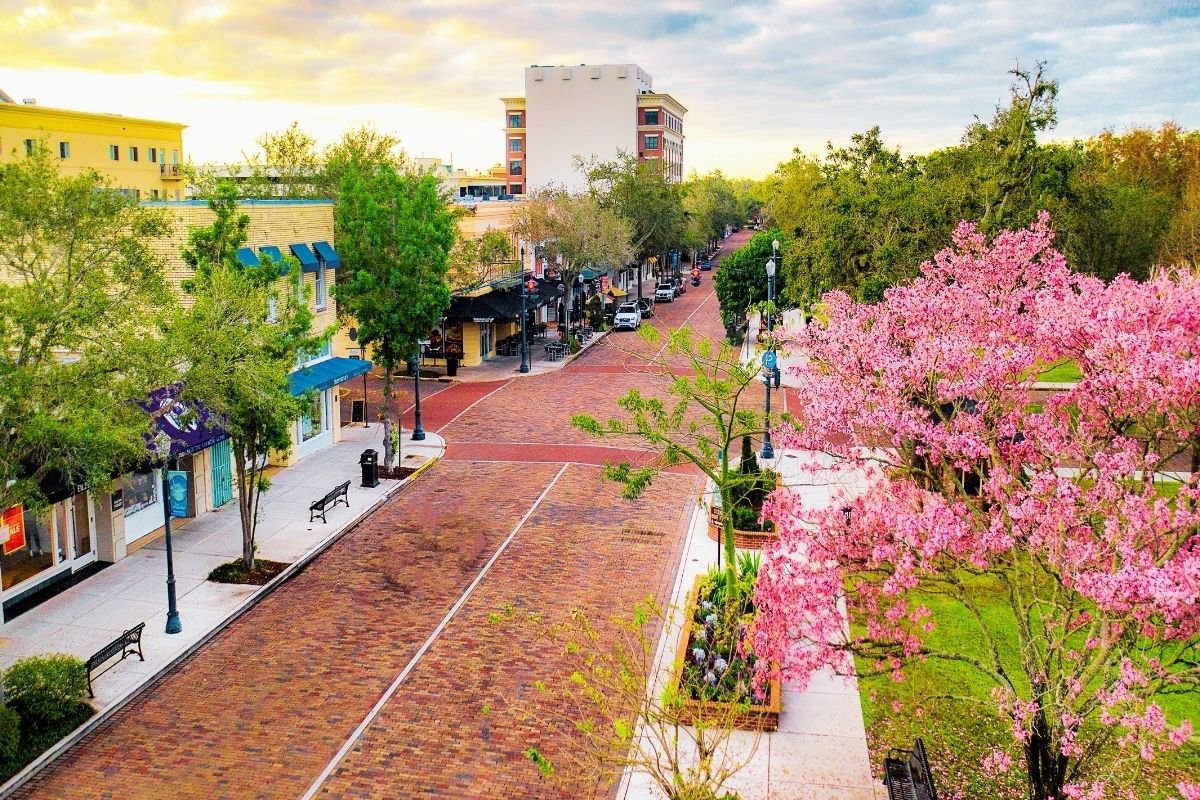
Winter Park feels “less expensive” because it doesn’t force constant paid fixes.
Best saving rule: Do not ask only, “What is the cheapest option?” Ask which option creates the lowest total cost after transport, fees, parking, and time are included.
Orlando Trip Cost Checklist Before You Book
Before confirming your hotel, transport, and attraction tickets, calculate the trip as one complete budget rather than comparing each purchase separately.
- Check the full hotel price: Include taxes, resort fees, parking, and mandatory property charges.
- Choose the right location: Make sure your hotel is close to most of your planned days, not simply the cheapest room available.
- Separate park and non-park budgets: Theme park days need extra room for tickets, parking, meals, snacks, and optional upgrades.
- Choose one main transport method: Compare the full cost of a rental car with rideshare, hotel shuttles, and public transport.
- Plan meals and extras: Set limits for snacks, souvenirs, lockers, tips, and convenience spending.
- Keep one low-cost day: A slower day reduces both the total budget and attraction fatigue.
- Add a small buffer: Leave room for weather changes, tolls, delays, or another unexpected expense.
Final budget test: Before booking, add accommodation, transport, tickets, hotel fees, taxes, tips, and extras to estimate your realistic trip cost.
FAQ: Is Orlando Expensive for Tourists?
What is a realistic daily budget for Orlando?
A solo traveler may spend around $180–$300 per day, a couple around $300–$550, and a family of four approximately $500–$900. These estimates exclude flights and theme park tickets.
What are the biggest hidden costs in Orlando?
The most overlooked expenses are resort fees, hotel and attraction parking, tolls, taxes, tips, rental car charges, snacks, and other convenience purchases.
Is renting a car cheaper than using rideshare?
A rental car may be better for families and trips covering several areas. Rideshare may cost less for short stays or travelers staying close to their main attractions.
Are theme parks the main reason Orlando is expensive?
For many visitors, yes. Tickets, parking, food, transport, souvenirs, and optional upgrades can make park days much more expensive than normal sightseeing days.
Can Orlando be visited on a budget?
Yes. Stay near your main activities, avoid unnecessary cross-city travel, check hotel fees, plan meals, and include free or low-cost days between major attractions.
Final Thoughts: Is Orlando Worth the Cost?
Is Orlando expensive for tourists? It can be, but the city is not automatically unaffordable. A trip becomes difficult for the budget when travelers combine costly attractions, an inconvenient hotel, repeated cross-city transport, and unplanned extras.
The most effective approach is to calculate the entire trip rather than focusing on one appealing hotel rate or ticket offer. Accommodation, transport, parking, tolls, food, attraction tickets, taxes, tips, and optional spending all belong in the same calculation.
Choose a hotel near the places that matter most, give theme park days their own higher budget, and include at least one slower day that does not depend on expensive admission tickets.
Final answer: Orlando is expensive for tourists who try to do everything without controlling location, transport, and extras. With a realistic daily budget and a focused itinerary, it can still offer good value for couples, families, and first-time visitors.
Planning around location—not just price—is the easiest way to enjoy Orlando without overspending.