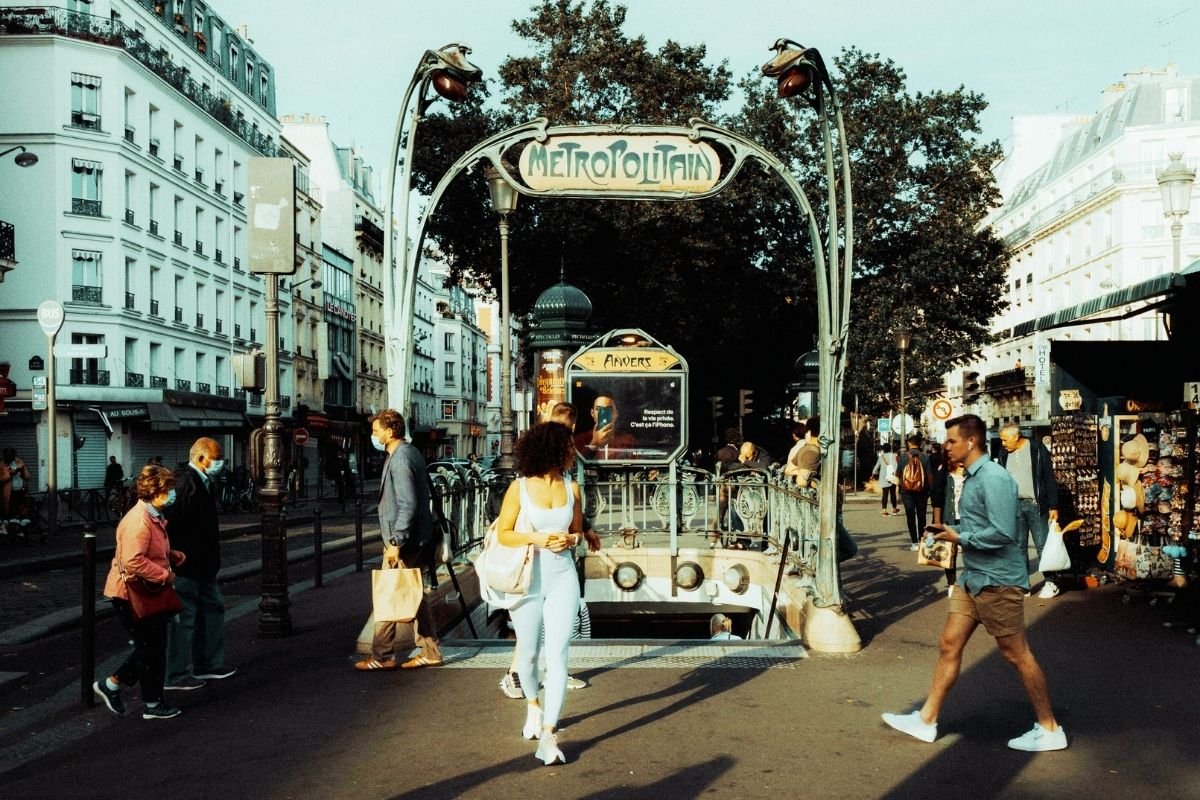
How to get around Paris is easier when you stop treating every journey the same. For most visitors, the Metro is the fastest choice for crossing the city, walking is best for sightseeing within one neighborhood, buses are useful when you want an above-ground route, and RER trains handle longer journeys such as Charles de Gaulle Airport, Disneyland Paris and some suburban connections.
The practical rule is simple: walk when your next stop is nearby, use the Metro when you are crossing several neighborhoods, and use the RER when the destination sits beyond the normal central sightseeing pattern. Taxis and pre-booked transfers make the most sense when luggage, late arrivals, children or mobility needs matter more than saving money.
Quick answer: Best way to get around Paris by situation
- Most sightseeing days: walk + Metro
- Short central journeys: walk when the route is pleasant and direct
- Scenic above-ground travel: bus
- Charles de Gaulle Airport: RER B or a taxi/transfer
- Orly Airport: Metro line 14 or a taxi/transfer
- Disneyland Paris: RER A
- Outer districts: Metro, RER or tram depending on the exact route
- Heavy luggage or reduced mobility: compare step-free public transport with a taxi or pre-booked transfer
This guide focuses on how to move around Paris efficiently: which transport mode to use, how to combine walking with public transport, how airport and day-trip journeys differ, and which mistakes create unnecessary transfers. For detailed ticket prices, passes and fare comparisons, use our dedicated Paris public transport costs guide.
Updated for 2026 with current transport options, airport access and practical route-planning advice.
Best Ways to Get Around Paris
Paris works best when you combine transport modes. Walk inside compact neighborhoods, use the Metro for larger cross-city moves, take buses when an above-ground route is simpler, and use the RER for longer regional journeys. Trams mainly matter outside the tourist core.
| Transport | Best for | Main advantage | Main trade-off |
|---|---|---|---|
| Walking | Nearby sights and neighborhood exploration | You see more and avoid unnecessary station transfers | Long distances can quietly consume sightseeing time |
| Metro | Cross-city sightseeing | Fast and frequent across central Paris | Busy stations, stairs and long corridors can add effort |
| Bus | Short or scenic above-ground journeys | Street views and fewer underground corridors | Traffic can make journey times less predictable |
| RER | Airports, suburbs and longer regional journeys | Faster over longer distances | Stations and ticket rules require more attention |
| Tram | Outer districts | Simple, modern connections outside the center | Rarely useful for a classic first-time sightseeing route |
| Taxi or transfer | Luggage, late arrivals and door-to-door convenience | Minimal walking and transfers | Costs much more than public transport |
Walking — Best for Central Neighborhoods
Walking should be part of almost every Paris transport plan. The Louvre, Tuileries Garden and Seine combine naturally on foot, while Le Marais, the Latin Quarter and Saint-Germain are often better explored by walking than by repeated one-stop Metro rides.
Best for: sightseeing within one neighborhood, short distances and travelers who want to notice cafés, streets and smaller landmarks between major stops.
Main trade-off: Paris distances can look shorter on a map than they feel after several hours. Walking is efficient when it connects nearby places; it becomes inefficient when you cross the city simply to avoid paying for transport.
TripsCity Insight: Build each sightseeing block around one area, then use the Metro or RER for the larger move between areas. That usually creates fewer transfers and less backtracking.
Paris Metro — Best for Fast Cross-City Travel
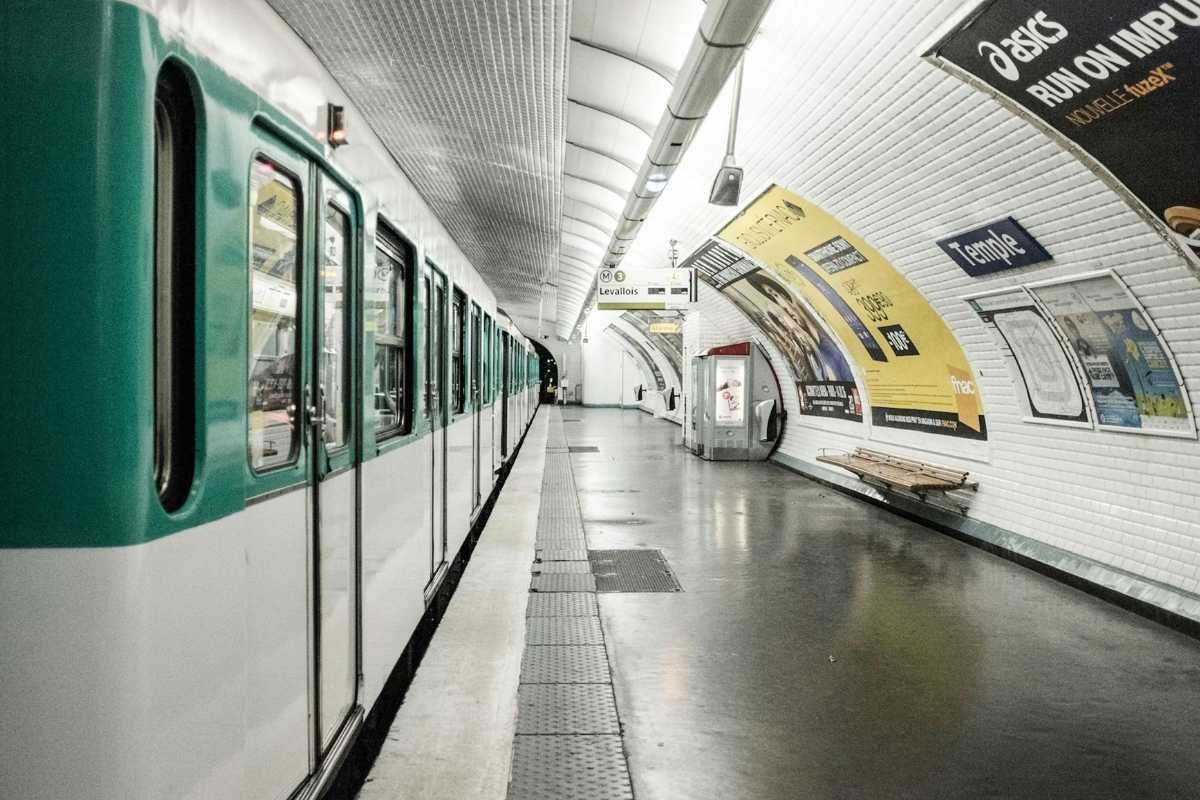
The Metro is the default choice for most visitors because it reaches almost every part of central Paris and usually beats road traffic. Use it when your next attraction is several neighborhoods away or the alternative is a long walk.
Best for: first-time visitors, cross-city sightseeing and days with several attractions spread across different areas.
Large interchanges can involve long corridors, stairs and multiple exits. Before entering, check the line number, direction and destination station. When leaving, use your navigation app to choose the most useful exit.
Main trade-off: older stations are not consistently step-free, and crowded periods can make travel harder with luggage, strollers or limited mobility. A route with one direct line is often better than a technically faster route requiring several changes.
Paris Buses — Best for Scenic and Simple Above-Ground Journeys

Buses work best when the route is direct and you would rather stay above ground. They can be easier than the Metro for travelers who dislike stairs or long underground corridors, while also showing how neighborhoods connect.
Best for: short journeys, scenic rides, tired sightseeing days and routes that avoid an awkward Metro transfer.
Main trade-off: traffic makes travel times less predictable. A bus route that looks ideal on the map may be slower during busy road periods, so compare the live journey time with the Metro before leaving.
RER Trains — Best for Longer Journeys and Major Connections
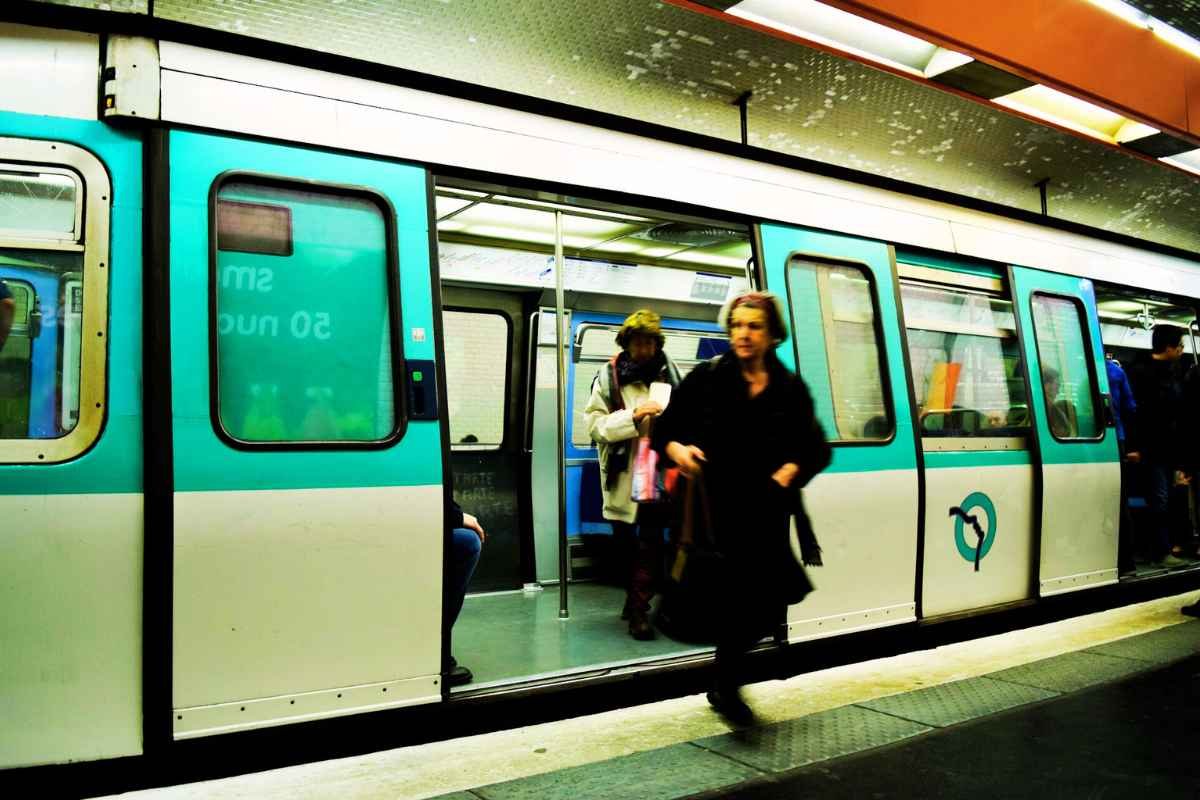
The RER is a regional rail network that crosses central Paris and continues into the wider Île-de-France region. Visitors most often use it for journeys that are longer than a normal sightseeing hop.
- For Disneyland Paris: RER A is the main regional rail option.
- Charles de Gaulle Airport: RER B provides the main rail connection with central Paris.
- Versailles: RER C works for some routes, although the best station depends on where you start and which services are operating normally that day.
Best for: airport access, Disneyland, suburban destinations and longer trips where the RER offers a direct route.
Main trade-off: RER platforms can serve trains with different stopping patterns or branches, so check the destination displayed before boarding. Airport journeys also use specific airport ticket rules rather than an ordinary Metro-Train-RER ticket.
Paris Trams — Best for Outer Districts

Trams mainly serve areas outside the central tourist core. Most first-time visitors staying in central Paris may never need one, but trams can be useful if your accommodation, event or local destination sits near an outer-ring route.
Best for: hotels and destinations in outer districts where a tram creates a simpler connection than returning toward the center.
Main trade-off: trams are rarely the fastest answer for classic sightseeing between the Louvre, Eiffel Tower, Le Marais, Montmartre and the Latin Quarter.
Taxis and Pre-Booked Transfers — Best for Door-to-Door Convenience
Taxis are not the best default for sightseeing, but they become useful with heavy luggage, late arrivals, young children, mobility limitations or when you want a direct airport transfer.
Best for: airport transfers, luggage-heavy journeys, late arrivals and situations where reducing walking and transfers matters more than price.
Main trade-off: cost. For ordinary sightseeing, a combination of walking and public transport is usually more efficient.
How to Use Paris Transport Efficiently in 2026
Using Paris transport well is less about memorizing every ticket and more about making clean route decisions. Most visitors only need to understand three fare categories: normal Metro/Train/RER journeys, Bus/Tram journeys and airport rail journeys. The detailed pass decision belongs in a fare guide, but the basic 2026 structure is useful when planning routes.

Know the Basic 2026 Ticket Structure
As of 2026, the standard Metro-Train-RER Ticket costs €2.55 for a normal journey across Île-de-France, excluding airport access. A Bus-Tram Ticket costs €2.05. Rail journeys to or from Orly via Metro line 14 and Charles de Gaulle via RER B use the Paris Region–Airports Ticket at €14. The Navigo Day pass costs €12.30 and covers zones 1–5 for ordinary transport, but it excludes airport access.
Those prices matter only enough to choose the right category. For pass comparisons, Navigo options and a full fare breakdown, see our Paris public transport costs guide. You can also verify current ticket rules through the official Île-de-France Mobilités 2026 fare guide.
Do Not Plan Central Paris Around Old Zone Rules
Older Paris advice often tells visitors to think constantly about zones or to buy legacy ticket products. The current system is simpler for ordinary journeys: the Metro-Train-RER Ticket has one standard regional price outside airport access, and Bus-Tram travel has its own ticket category.
Zones still matter for some passes and products, but they should not control every sightseeing decision. For a normal day in central Paris, focus first on the easiest route, number of changes and walking time. Treat airport access as a separate category because those journeys have their own fare.
Use the Right App Before You Enter the Station
The best navigation tool is the one that gives you a route you can follow without improvising inside a busy interchange. Useful options include:
- Île-de-France Mobilités: official regional journey planning, service information and ticket purchases on compatible phones.
- Bonjour RATP: useful for Paris transport routes and live network information.
- Citymapper: strong for comparing Metro, bus, walking and mixed routes.
- Google Maps: convenient when public transport is only one part of a wider sightseeing route.
Before entering a station, check the line number and final direction. When changing lines, confirm the next platform. Finally, check whether the recommended station exit matters before leaving. Those three small checks prevent many of the “wrong corridor, wrong side of the street, walk back again” moments that make Paris transport feel harder than it is.
Choose Fewer Transfers, Not Just the Lowest Travel Time
Navigation apps sometimes recommend a route that saves only a few minutes but adds another transfer. That can be a bad trade when you have luggage, children, tired legs or an unfamiliar interchange.
A direct Metro line that takes 28 minutes can be more practical than a 23-minute route with two changes. The same logic applies to RER journeys: fewer changes usually make the trip easier to recover if a platform is busy or a train is delayed.
Plan Accessibility and Luggage Before the Journey
Do not assume every Metro station has a lift or step-free route. Accessibility varies across the network, while newer lines and some RER stations are easier for travelers with reduced mobility. Metro line 14 is particularly useful because its stations are designed for step-free access, including the connection to Orly Airport.
If stairs are difficult, compare the full route rather than only the train time. A bus, accessible rail route or taxi may be the better choice even when it looks slower on paper.
Avoid These Common Paris Transport Mistakes
- Taking the Metro for every short hop: you can spend more time entering, changing and exiting than simply walking.
- Choosing a route only by minutes: extra transfers often create more friction than they save.
- Using outdated ticket advice: the old Ticket t+ and carnet logic no longer describes the current 2026 system.
- Assuming airport travel works like a normal city ride: Orly and CDG rail access uses the airport ticket category.
- Ignoring station accessibility: stairs and long corridors matter with luggage, strollers or limited mobility.
- Crossing Paris repeatedly: group attractions by neighborhood and make one larger transport move between sightseeing zones.
TripsCity Insight: The best Paris route is not always the mathematically fastest route. For real sightseeing days, fewer changes, less backtracking and a shorter walk at the end often matter more than saving three or four minutes.
Best Transport Strategy for Your Paris Trip
The right transport strategy changes with your trip. A first-time visitor may walk for half the day and use the Metro only for larger moves, while families, travelers with luggage or visitors with mobility needs may prioritize direct or accessible routes.
| Situation | Best starting choice | Why |
|---|---|---|
| First-time sightseeing | Walk + Metro | Best balance between seeing neighborhoods and crossing the city quickly |
| Short 2–3 day trip | Central walking clusters + direct Metro rides | Reduces wasted transfer time |
| Family with stroller | Bus, accessible rail routes or taxi when needed | Avoids unnecessary stairs and long station corridors |
| Heavy luggage | Direct rail route or taxi/transfer | Minimizes changes and difficult walking |
| Airport arrival | RER B for CDG; Metro 14 for Orly; taxi/transfer for convenience | These are the main direct public-transport options in 2026 |
| Disneyland Paris | RER A | Direct regional rail connection from central Paris routes |
| Nightlife evening | Metro/bus outward, then check late return options | Avoids discovering too late that your preferred route has changed or finished |
Getting From Charles de Gaulle Airport to Paris
RER B is the main rail connection between Charles de Gaulle Airport and central Paris. It is usually the practical choice for travelers who can manage luggage and whose hotel connects conveniently to the RER or a simple Metro transfer.
A taxi or pre-booked transfer becomes more attractive for late arrivals, families, heavy luggage or hotels that require several public-transport changes.
Getting From Orly Airport to Paris
Metro line 14 provides a direct connection to Orly Airport. The line is fully accessible and removes the older multi-step journey still described in some outdated guides.
For both Orly and CDG rail journeys, use the airport ticket category rather than assuming a normal Metro ticket covers the trip.
When a Pre-Booked Airport Transfer Makes Sense
Public transport is normally cheaper, but after a long flight you may prefer door-to-door travel. You can compare pre-booked airport transfer options.
Affiliate disclosure: TripsCity may earn a commission if you book through this link, at no extra cost to you.
How to Get to Disneyland Paris
For most visitors starting in central Paris, RER A is the straightforward public-transport option to Disneyland Paris. Check that the train is heading toward the correct eastern branch before boarding, because RER A has multiple destinations.
Treat Disneyland as a separate day-trip movement: reach the correct RER A station, make the regional journey, then return to your normal central Paris transport pattern afterward.
How to Get to Versailles
Versailles can be reached by several rail routes depending on where you start. RER C is commonly used for journeys toward Versailles Château Rive Gauche, but other SNCF routes can be faster from some parts of Paris. Check the live route from your hotel rather than assuming every traveler should use the same station.
The best train depends on your starting point, so check the live route rather than planning the journey from a generic Versailles recommendation.
FAQ: How to Get Around Paris
What is the best way to get around Paris for first-time visitors?
For most first-time visitors, the best combination is walking and the Metro. Walk within compact sightseeing areas, then use the Metro for larger moves between neighborhoods. This gives you the speed of public transport without missing the street-level experience of Paris.
Is the Paris Metro easy to use for tourists?
Yes. The main challenge is usually large stations rather than the line system itself. Check the line number, direction and destination before entering, and use your navigation app to confirm the best exit when you arrive.
Should I use the Metro or walk in Paris?
Walk when two sights are close or belong to the same neighborhood. Use the Metro when the walk would consume meaningful sightseeing time or when you are moving between distant areas such as Montmartre and the Latin Quarter.
Is the bus useful for tourists in Paris?
Yes, especially for direct short journeys and travelers who prefer staying above ground. Buses can also reduce the amount of stair climbing and long underground walking, although traffic can make them slower than the Metro.
What is the easiest way to get from Paris airports to the city?
For Charles de Gaulle, RER B is the main rail option. For Orly, Metro line 14 provides a direct connection. Taxis and pre-booked transfers are useful when luggage, mobility, children or convenience make door-to-door travel more important.
Do I need to understand Paris transport zones before sightseeing?
Not in detail for most normal city journeys. The current ticket system is much simpler than older guides suggest. Zones still matter for some passes, but airport travel is the main journey visitors should treat as a separate fare category.
Final Verdict: How Should You Get Around Paris?
For most trips, the strongest strategy is walk locally and use the Metro strategically. Add buses when they create a direct above-ground route, use the RER for airports and longer regional journeys, and keep taxis or transfers for situations where convenience genuinely matters.
Do not try to optimize every journey down to the last minute. Group sightseeing by neighborhood, avoid unnecessary transfers, check the live route before leaving and choose the option that still feels simple when you are tired.
Next, use our transport costs guide, our accommodation area guide, and our sightseeing guide to connect your routes with the rest of your itinerary.
Last updated: September 2026 – reviewed for current transport options, airport access and 2026 fare rules.