Yes, Paris is generally safe at night for most tourists, especially in busy central areas, but normal big-city precautions still matter. The most common problem for visitors is opportunistic theft such as pickpocketing, particularly around crowded tourist sites, Metro and RER trains, and major stations.
You do not need to avoid Paris after dark. You do need to keep valuables secure, use well-lit routes, understand how you are getting back to your hotel and pay more attention around large transport hubs or unfamiliar quiet streets late at night.
| Night-safety question | Short answer |
|---|---|
| Is Paris safe at night for tourists? | Generally yes, particularly in busy central areas |
| What is the main tourist risk? | Pickpocketing and theft in crowded or distracting situations |
| Is the Paris Metro safe at night? | Generally yes, but keep valuables secure and stay alert in stations and crowded trains |
| Should I walk at night? | Yes in normal busy areas; prefer well-lit main streets over isolated shortcuts |
| Where should I use extra caution? | Major transport hubs and unfamiliar quieter streets, especially late at night |
Current official visitor guidance from Paris je t’aime advises extra vigilance in busy tourist areas, keeping belongings inside a securely closed bag and watching for common distraction scams. UK and Australian travel advice also specifically warns travelers about theft on the Paris Metro, RER services, major stations and around popular attractions.
Check the latest Paris je t’aime safety advice.
Most visitors can enjoy Paris after dark with the same practical awareness they would use in another major European capital.
What Actually Makes Paris Less Comfortable at Night?
The answer is usually not an entire arrondissement. Nighttime comfort changes street by street and situation by situation.
- Crowded transport: busy trains, platforms and stations create opportunities for pickpockets.
- Tourist distraction: checking a phone, taking photos or leaving a bag open makes valuables easier to reach.
- Isolated routes: a poorly lit shortcut may feel very different from a busy avenue only a few blocks away.
- Unfamiliar major stations: large stations can be confusing when you do not know which exit or connection you need.
- Late changes of plan: knowing your hotel address and basic return route is useful if transport or plans change.
For general crime, scams and daytime safety rather than the specific nighttime question, use our Paris Safety Guide. This article stays focused on whether Paris is safe at night and how visitors can make evenings easier.
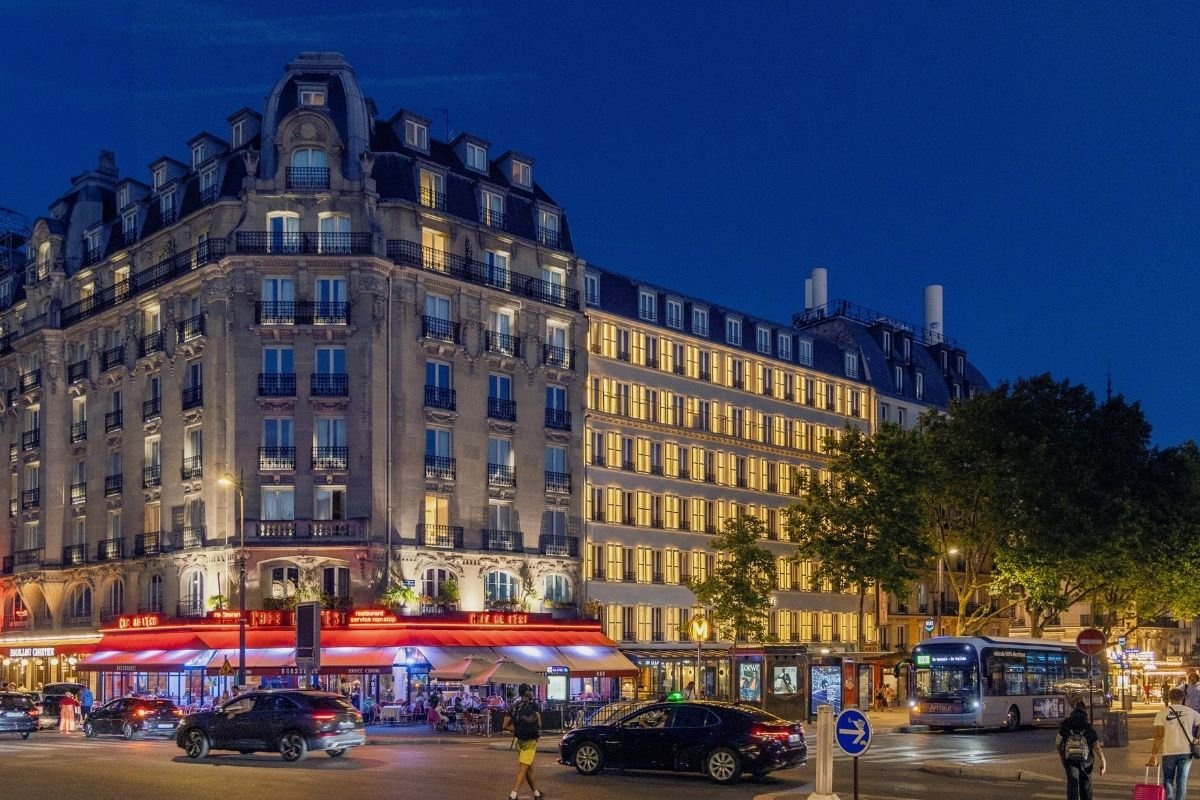
Busy, well-lit streets usually make nighttime navigation easier for visitors than isolated shortcuts.
Areas to Use More Caution in Paris at Night
Paris does not have a simple list of entire arrondissements that tourists must avoid after dark. The more useful distinction is between busy, familiar central areas and locations where an unfamiliar visitor may prefer extra awareness late at night.
| Area or situation | What visitors should know at night |
|---|---|
| Saint-Germain-des-Prés, Latin Quarter and central Left Bank streets | Generally busy and comfortable for normal evening sightseeing; still protect valuables in crowds |
| Le Marais and central Right Bank tourist areas | Lively into the evening; pickpocket awareness still matters around busy transport and nightlife |
| Eiffel Tower and Champs-Élysées tourist zones | Heavily visited and well trafficked, but tourist crowds can also attract theft |
| Gare du Nord and Gare de l’Est surroundings | Major transport hubs where travelers should stay more alert, particularly late at night |
| Barbès, La Chapelle and Stalingrad | Not automatic no-go zones, but unfamiliar visitors may feel less comfortable on quieter streets late at night |
| Quiet parks, isolated passages and poorly lit streets | Avoid unnecessary shortcuts when an active, well-lit route is available |
These distinctions are about practical nighttime comfort, not declaring whole neighborhoods dangerous. Paris changes block by block, and even a busy tourist area can be a poor place to expose a phone or leave a bag unsecured.
Current government travel advice specifically warns about theft on Paris public transport and around major tourist attractions. Australian guidance highlights Gare du Nord, RER services and several Metro lines as places where travelers should protect belongings and stay alert.
Major Stations Deserve Extra Attention
Gare du Nord and other large stations serve huge numbers of ordinary passengers every day. The reason to pay extra attention is not that using them is inherently unsafe; it is that crowds, luggage and unfamiliar navigation create more opportunities for theft and confusion.
Know which connection you need before leaving the platform when possible, keep your bag closed and avoid placing a phone or wallet where it can be reached easily.
Busy Tourist Areas Are Not Risk-Free
The Eiffel Tower, Champs-Élysées, Louvre area and other famous districts usually have plenty of activity after dark. That activity can make walking feel comfortable, but dense tourist crowds are also where pickpockets look for distracted visitors.
The practical rule is simple: a busy street can be comfortable for walking while still requiring attention to your belongings.
Do Not Turn a Quiet Shortcut Into a Safety Test
If a navigation app offers a route through a poorly lit side street, isolated passage or very quiet area, there is little benefit in taking it simply because it is shorter. Choose the route that feels straightforward and active.
A slightly longer well-lit route can be a better choice than an unfamiliar isolated shortcut.
If hotel location is still part of your decision, see our Where to Stay in Paris guide. You can then compare Paris hotels by neighborhood once you have narrowed down the area.
For the broader question of scams, theft and general safety throughout the day, continue with our Paris Safety Guide.
Is the Paris Metro Safe at Night?
For most tourists, yes. The Metro remains one of the most practical ways to move around Paris in the evening. The main visitor concern is theft, particularly in crowded trains, stations and moments when passengers are distracted.
Official travel guidance recommends keeping valuables in secure compartments, carrying bags close to the body and paying extra attention on Metro and RER services.
Before Entering the Metro
- Know the name of your destination station and basic direction of travel.
- Keep your phone and wallet inside a closed bag or secure pocket.
- Use official transport information rather than buying tickets from street sellers.
- Check current service information if you will be returning particularly late.
Check the official RATP network information.
Inside Stations and Trains
Stay aware when boarding, leaving a train or moving through crowded corridors. Those transition points are exactly when visitors tend to focus on signs, luggage or phones rather than their belongings.
If a large station has several exits, check the street or landmark you need before leaving the station when possible. A wrong exit is usually a navigation inconvenience, not a safety emergency, but avoiding unnecessary confusion is useful at night.
For a complete explanation of tickets, lines and Paris transport strategy, see our How to Get Around Paris guide.
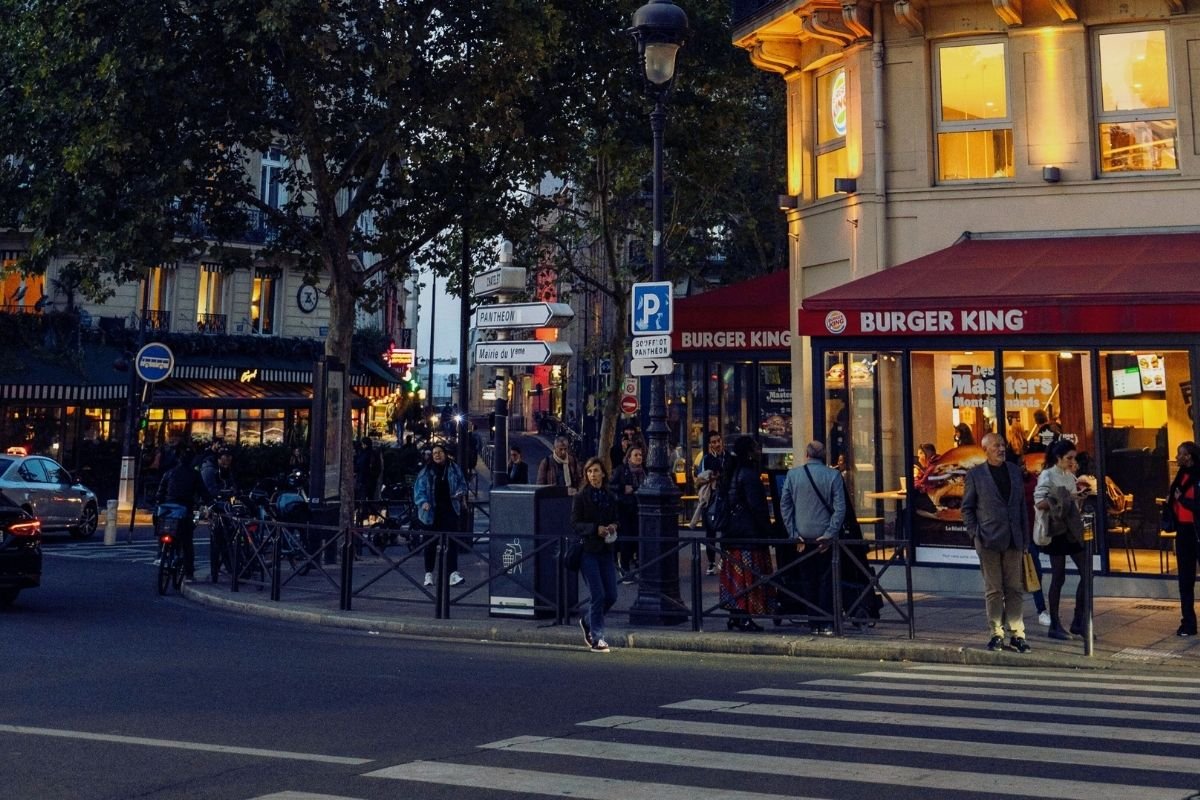
Knowing your route before leaving a station makes nighttime travel simpler.
Walking in Paris at Night: 5 Practical Rules
1. Prefer Active, Well-Lit Streets
You do not need to avoid walking after dark, but there is little reason to choose an isolated shortcut when a busier avenue is available nearby.
2. Keep Valuables Secure
Use a closed bag and avoid leaving a phone or wallet exposed on a café table, in an open tote or in an easy-to-reach pocket.
3. Know Your Hotel Address
Save the hotel address and basic route before going out. It is useful if your phone loses connectivity, transport changes or you decide to take a taxi or ride service.
4. Do Not Ignore Your Own Comfort
If a street or station exit feels uncomfortable, you do not need to prove that it is objectively dangerous before changing course. Move toward a brighter, busier route or enter a normal public place while checking directions.
5. Know What to Do in an Emergency
If you are in immediate danger in France, call 112, the European emergency number. If you are robbed or assaulted, Paris je t’aime advises visitors that they can report the incident at a police station day or night.
See official Paris visitor safety information.
For a late airport arrival, family trip or situation involving substantial luggage, a door-to-door transfer may be more convenient than navigating an unfamiliar route after landing. You can compare private transfer options if that fits your trip.
If a route feels unnecessarily isolated, moving toward a busier street is a simple option.
Paris Night Safety Checklist Before You Go Out
You do not need an elaborate nighttime safety system. A few practical checks cover most situations that matter to visitors:
- Keep your hotel address saved on your phone.
- Make sure your phone has enough charge for maps and transport information.
- Carry valuables inside a zipped or securely closed bag.
- Know roughly how you plan to return to the hotel.
- Check current public transport service if you expect to stay out very late.
- Prefer an active, well-lit walking route over an unfamiliar isolated shortcut.
- Use official taxis or recognized transport services rather than accepting unsolicited rides.
TripsCity Insight: Paris nightlife does not require a different personality from daytime sightseeing. The useful change is simply paying more attention to transport, valuables and unfamiliar routes once crowds and street activity begin to change.
Is Paris Safe at Night for Solo Travelers?
Paris is a major destination for solo visitors, and many travel around the city at night without problems. Solo travelers have less margin for confusion because there is no companion checking a route or watching luggage, so keeping the return journey simple and belongings secure becomes more important.
Women traveling alone should also use the same practical precautions they would in another large city: stay aware of surroundings, keep control of drinks and move away from unwanted attention rather than engaging with it.
For more detailed advice on choosing accommodation, going out alone and staying comfortable after dark, see our Paris for Solo Travelers guide.
Is Paris Safe at Night for Families?
Yes for most family trips. The practical difference is that children, strollers and tired parents can make late transfers or long walks less convenient.
Families do not necessarily need an earlier curfew; they benefit more from choosing an evening plan with a straightforward return and knowing when switching to a taxi or other direct transport makes more sense than adding another transfer.
Final Verdict: Is Paris Safe at Night in 2026?
For most tourists, Paris is safe to enjoy at night with normal big-city precautions. You do not need to avoid evening walks, the Metro or central tourist neighborhoods simply because the sun has gone down.
The risks worth planning around are much more ordinary: pickpocketing in crowded places, exposed valuables, confusing transport hubs and isolated routes you do not know well.
Stay aware, keep your bag closed, choose sensible routes and check official information when transport conditions change. That is enough for most visitors to enjoy Paris after dark without turning the trip into a safety exercise.
Is Paris Safe at Night FAQ
Is Paris safe at night for tourists in 2026?
Yes, Paris is generally safe at night for most tourists, particularly in busy central areas. Stay alert to pickpocketing and theft around crowded attractions, Metro and RER services, and major transport stations.
Which areas should tourists use more caution in at night?
Use extra awareness around major transport hubs such as Gare du Nord and Gare de l’Est and on unfamiliar quieter streets late at night. Areas such as Barbès, La Chapelle and Stalingrad are not automatic no-go zones, but some visitors may prefer not to explore unfamiliar side streets there late at night.
Is the Paris Metro safe at night?
Generally yes. Keep bags closed, valuables secure and stay aware in crowded trains and stations. Check current RATP service information if you plan to travel particularly late.
Is it safe to walk around central Paris at night?
For most visitors, yes. Central tourist districts usually remain active into the evening. Prefer well-lit streets and normal pedestrian routes and avoid unnecessary isolated shortcuts.
Is the Eiffel Tower area safe at night?
The Eiffel Tower area remains heavily visited in the evening. The main practical concern for tourists is protecting belongings in crowds rather than avoiding the area altogether.
Is Paris safe at night for solo female travelers?
Many women visit Paris alone and go out in the evening without problems. Use normal big-city precautions, stay aware on public transport, keep control of drinks and move away from unwanted attention. Our Paris for Solo Travelers guide covers this topic in more depth.
What should I do if I am robbed or feel in immediate danger?
Move to a safe public place and contact emergency services if necessary. The European emergency number is 112. Paris visitor guidance also states that victims of theft or assault can report the incident at a police station day or night.
Do I need to avoid Paris nightlife because of safety concerns?
No. For most travelers, normal awareness is enough to enjoy restaurants, evening walks, performances and other activities after dark. Keep valuables secure, understand your return route and use extra caution in crowded or unfamiliar places.