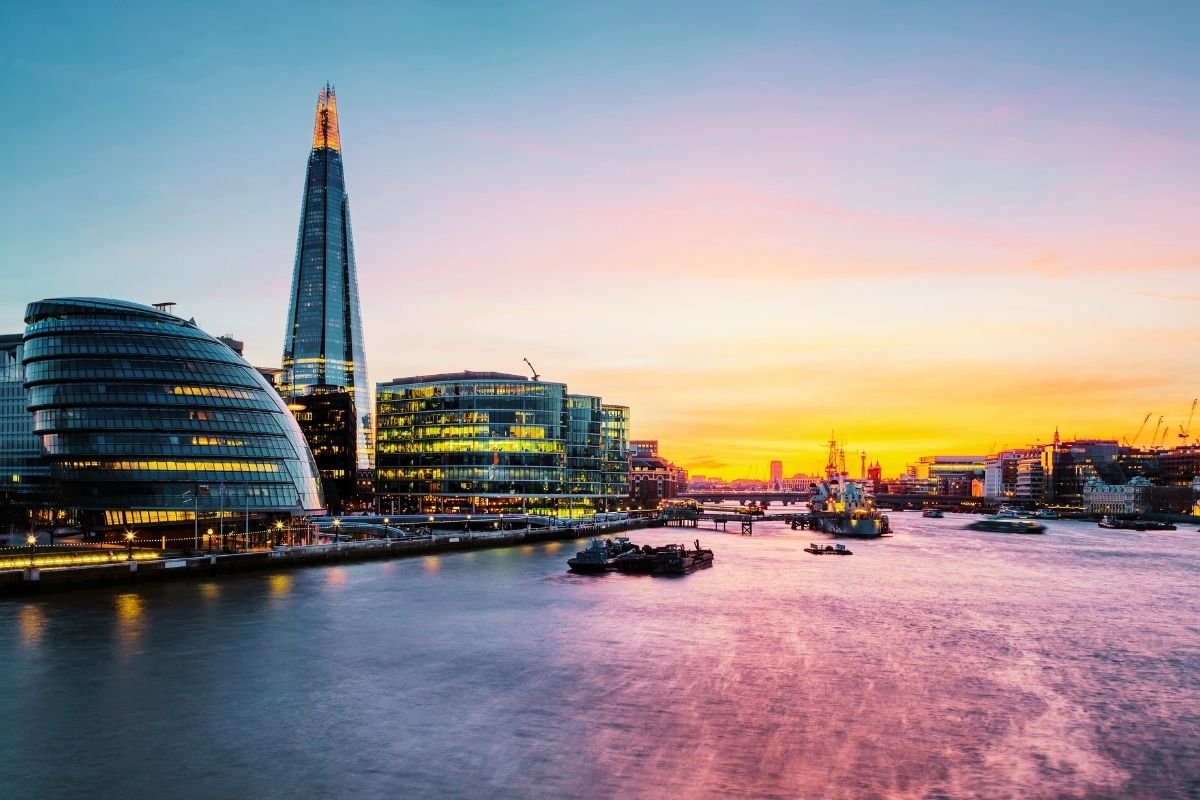
This London 3 Days Itinerary gives first-time visitors a practical route through Westminster, the South Bank, the City of London, Covent Garden, Soho, and the West End without wasting hours crossing the city.
Each day follows one connected part of London, includes no more than one major timed attraction, and leaves enough flexibility for queues, rain, and slower walking.
Use the schedule as a realistic framework rather than a rigid checklist. Start early, keep your daily route compact, and remove an optional stop if the day begins to run late.
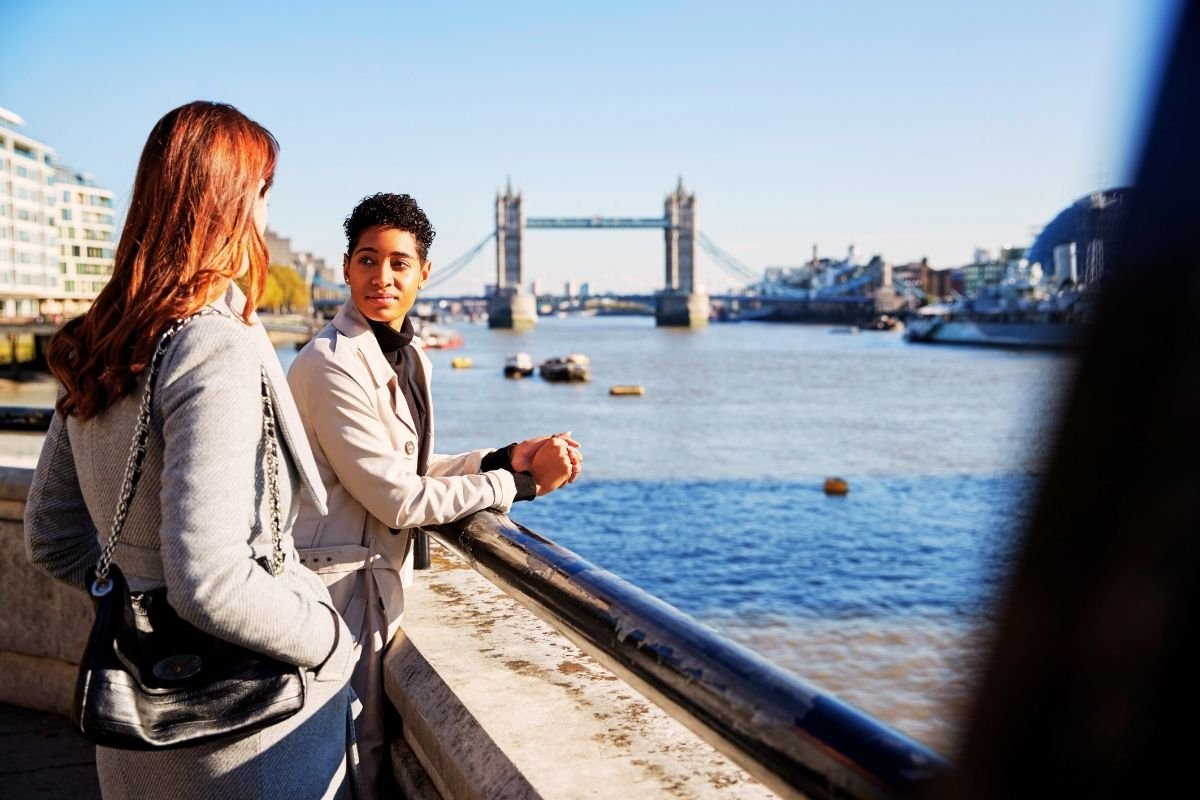
A balanced 3-day London trip works when your movement stays clean: one spine, short transfers, and one protected anchor at a time.
London 3 Days Itinerary at a Glance
| Day | Main Route | Optional Timed Attraction |
|---|---|---|
| Day 1 | Westminster, St James’s Park, South Bank, and Tower Bridge | Westminster Abbey or Churchill War Rooms |
| Day 2 | Tower of London, Leadenhall Market, Bank, St Paul’s, and Millennium Bridge | Tower of London |
| Day 3 | Covent Garden, Seven Dials, British Museum, Soho, and the West End | British Museum or a West End performance |
Booking rule: reserve no more than one major timed attraction each day. Keeping the rest flexible makes it easier to handle queues, rain, and slower-than-expected journeys.
Check current routes and station access using the official TfL Journey Planner.
Where to Stay for a London 3 Days Itinerary
For a three-day trip, choose accommodation near a useful station with direct routes to Westminster and central London. Victoria, St James’s Park, Waterloo, Bloomsbury, and the quieter edges of King’s Cross can all work well depending on your arrival route.
Compare suitable neighborhoods in our Where to Stay in London guide. You can also use the London Airport Transfer Guide and How to Get Around London guide when planning your arrival and daily transport.
London 3 Days Itinerary — Day 1: Westminster, South Bank, and Tower Bridge
Day 1 is built to make London feel coherent. You’re not teleporting between attractions—you’re moving in one clean direction with short, forgiving transfers. If Day 1 is stable, the whole trip feels easier.
08:30–09:30 — Arrive early and “lock” the day before London gets heavy
Start early on purpose. In London, an early start isn’t about doing more—it’s about removing pressure. You get calmer sidewalks, cleaner photos, and fewer time leaks before the first queue wave hits.
09:30–10:45 — Westminster core loop (dense icons, zero commuting)
- Big Ben & Parliament area: short loop, no rushing.
- Westminster Bridge viewpoint: quick panoramic orientation moment.
- St. James’s Park edge: a calm pocket that resets your brain before the day speeds up.
This works because it’s dense. Density is the cheat code for stable days.
11:00–13:00 — Visit One Westminster Attraction
Use this period for either Westminster Abbey or the Churchill War Rooms. Westminster Abbey fits the route most naturally, while the Churchill War Rooms provide a useful rainy-day alternative.
Choose only one attraction so you still have enough time for lunch and the South Bank walk.
You can compare timed-entry London attraction tickets before deciding which option fits your schedule.
13:00–14:00 — Lunch + reset (this protects the afternoon)
Don’t treat lunch as “lost time.” It’s stability insurance. Sit, eat, refill water, check the next two moves. A rushed lunch is how people enter the afternoon tired—and tired travelers choose the easiest option, not the smart one.
14:00–17:30 — South Bank → river spine walk (the most efficient way to “feel” London)
Now you switch mode: less queuing, more flow. The Thames spine is forgiving—hard to get lost, easy to pace, and it gives you constant “payoff moments” without station friction.
- South Bank rhythm: keep stops flexible; the plan is the spine, not the exact minutes.
- Crossing choices: pick bridges based on energy, not perfection.
- Photo pockets: short pauses are part of the itinerary—don’t treat them as detours.
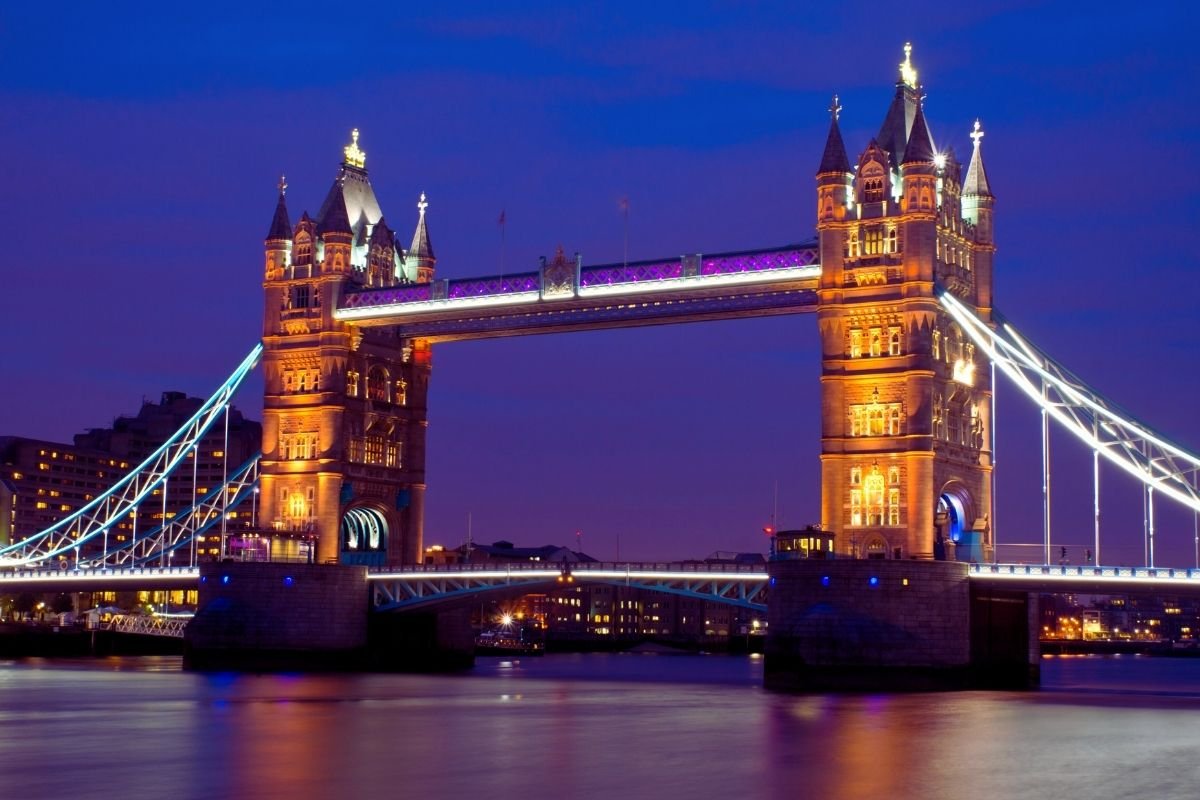
End Day 1 with a clear closing scene. A clean finish keeps your energy intact for Days 2 and 3.
17:30–19:00 — Tower Bridge finish (a satisfying endpoint without complicated transport)
Tower Bridge is a strong closer because it gives you a defined endpoint, strong visuals, and a natural place to slow down. Don’t stack another major commitment here unless you’re sure your morning didn’t run late—late-day stacking is where fatigue turns into paid fixes.
London 3 Days Itinerary — Day 2: Tower of London and the City
Day 2 follows one east-to-west route through Tower Hill, the Tower of London, Leadenhall Market, Bank, St Paul’s Cathedral, and the Millennium Bridge.
Most of the route can be completed on foot. Use the Tube only if the weather changes or you need to shorten the afternoon.
Day 2 Timing for This 3-Day London Itinerary
| Time | Plan |
|---|---|
| 08:30–09:00 | Tower Hill and Tower Bridge viewpoints |
| 09:00–11:30 | Tower of London |
| 11:30–13:00 | St Dunstan in the East and Leadenhall Market |
| 13:00–14:00 | Lunch near Leadenhall Market or Bank |
| 14:00–16:30 | Bank, Royal Exchange, and St Paul’s Cathedral |
| 16:30–18:30 | Millennium Bridge and South Bank finish |
London 3 Days Itinerary — Start Day 2 at Tower Hill
Begin outside Tower Hill Station and walk toward the riverside viewpoints around the Tower of London. Arriving early gives you time for exterior photographs before the main visitor crowds build.
Tower Bridge is visible from this area, but there is no need to cross it again if you already finished Day 1 there.
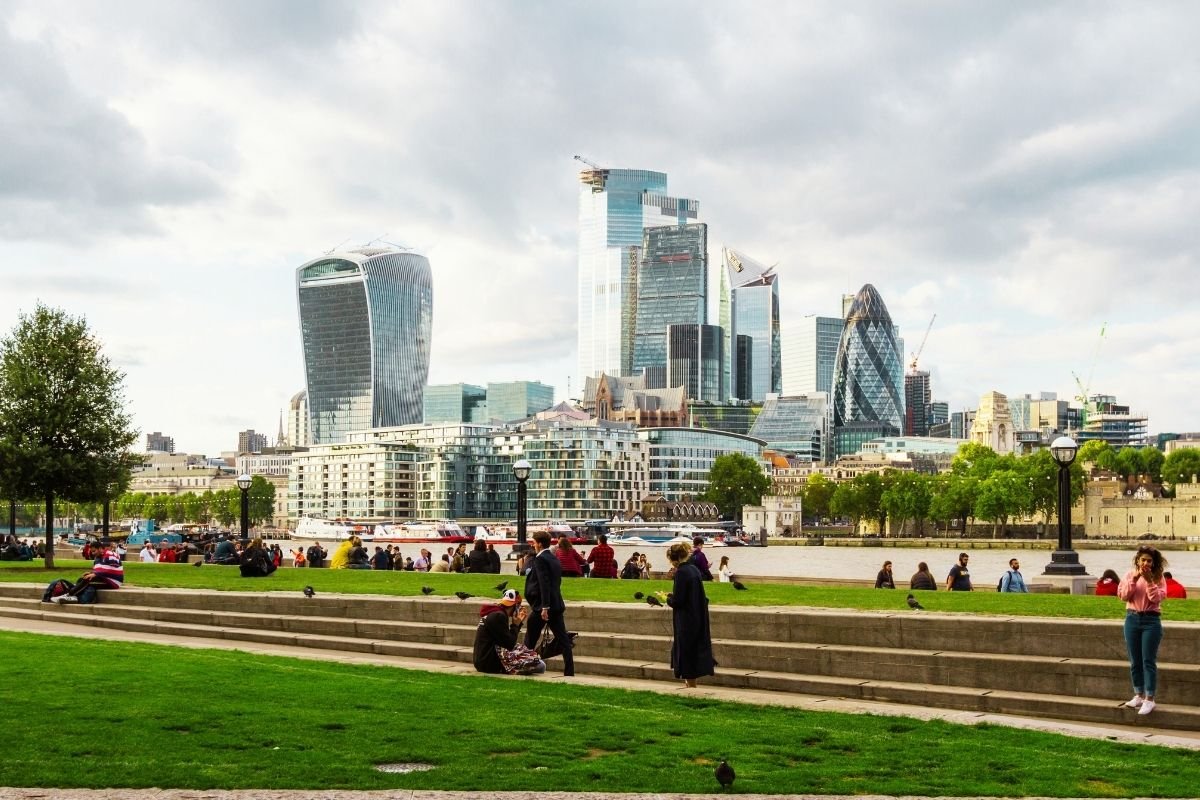
Day 2 starts sharp: dense, walkable, and forgiving before London builds midday pressure.
09:00–11:30 — Visit the Tower of London
The Tower of London is the main attraction for Day 2. Allow around two to two and a half hours for the Crown Jewels, the historic buildings, and the grounds.
Booking an early entry is usually more practical than arriving around midday, when queues and interior spaces can become busier.
If you do not want to visit the interior, use the morning for a longer City walk and continue toward St Dunstan in the East and Leadenhall Market.
11:30–13:00 — St Dunstan in the East and Leadenhall Market
Walk west from Tower Hill to St Dunstan in the East, a small ruined church garden that provides a quiet break from the main attractions.
Continue to Leadenhall Market for its covered Victorian architecture. This is also a practical place to stop for lunch or coffee.
13:00–14:00 — Lunch Near Leadenhall Market or Bank
Stay in the same area for lunch rather than taking the Tube to another neighborhood. This keeps the afternoon route compact and avoids losing time inside stations.
14:00–16:30 — Bank, Royal Exchange, and St Paul’s Cathedral
After lunch, walk through Bank and the Royal Exchange area before continuing west toward St Paul’s Cathedral.
You can visit the cathedral interior or simply view the exterior and nearby streets. Visiting the interior after the Tower of London creates a second major ticketed attraction, so choose it only if your energy and schedule allow.
16:30–18:30 — Millennium Bridge and South Bank
Cross the Millennium Bridge for views back toward St Paul’s Cathedral. Finish with a relaxed walk near Tate Modern or continue toward the riverside restaurants around the South Bank.
London 3 Days Itinerary — Day 3: Covent Garden, Soho, and the West End
Day 3 is a mostly walkable central-London route through Covent Garden, Seven Dials, the British Museum area, Soho, Chinatown, and Regent Street.
The British Museum is optional. Visit it if you want an indoor cultural stop, or skip it and spend more time exploring the surrounding neighborhoods.
London 3 Days Itinerary — Day 3 Timing
| Time | Plan |
|---|---|
| 08:30–10:00 | Covent Garden |
| 10:00–11:00 | Seven Dials and Neal’s Yard |
| 11:00–13:00 | British Museum or extra neighborhood time |
| 13:00–14:00 | Lunch in Soho or Chinatown |
| 14:00–16:30 | Soho, Carnaby Street, and Regent Street |
| 16:30–18:30 | Piccadilly Circus, Green Park, or a West End finish |
London 3 Days Itinerary — Start Day 3 in Covent Garden
Start in Covent Garden before the busiest shopping and performance hours. Walk through the main piazza, the market buildings, and the surrounding streets.
The area is compact, so avoid spending too long inside shops if you plan to visit the British Museum later.
10:00–11:00 — Seven Dials and Neal’s Yard
Walk north through Seven Dials and make a short stop at Neal’s Yard. These streets provide a more relaxed neighborhood contrast to the major landmarks visited on Days 1 and 2.
11:00–13:00 — British Museum or Extra Neighborhood Time
The British Museum is a practical indoor stop because it fits naturally between Seven Dials and Soho. Focus on a limited number of galleries rather than attempting to see the entire museum.
If you do not want another museum, skip it and continue through Bloomsbury before returning toward Soho.
13:00–14:00 — Lunch in Soho or Chinatown
Soho and Chinatown offer a wide range of lunch options. Eating here keeps you close to the afternoon route and avoids an unnecessary transport journey.
14:00–16:30 — Soho, Carnaby Street, and Regent Street
Continue through Soho, Carnaby Street, and Regent Street at a relaxed pace. This section is better treated as a neighborhood walk than a strict list of individual attractions.
16:30–18:30 — Finish in the West End
Finish around Piccadilly Circus, Green Park, or the surrounding West End streets. You can also use the evening for a theater performance if you have booked one in advance.
If you are leaving London that evening, shorten this section and allow enough time to collect your luggage and reach the airport or train station.
London 3 Days Itinerary: Rainy-Day Options
London rain usually affects walking time more than the overall itinerary. Keep the main area for each day but shorten exposed outdoor sections rather than moving to the opposite side of the city.
- Day 1: visit Westminster Abbey or the Churchill War Rooms and shorten the South Bank walk.
- Day 2: keep the Tower of London booking and use St Paul’s Cathedral as an additional indoor stop only if needed.
- Day 3: spend more time in the British Museum or use the National Gallery as an indoor alternative near the West End.
Check the weather before leaving the hotel and avoid booking several indoor attractions simply because rain is forecast.

A balanced classic itinerary ends with buffer: flexible movement, a calm finish, and no last-hour panic.
London 3 Days Itinerary FAQ
Is three days enough for a first trip to London?
Three days is enough to see many of London’s major highlights if you group attractions by area. This itinerary covers Westminster and the South Bank, the Tower of London and the City, and the central neighborhoods around Covent Garden and Soho.
Where should I stay for three days in London?
Choose a hotel near a useful station with simple routes to central London. Victoria, St James’s Park, Waterloo, Bloomsbury, and the quieter edges of King’s Cross can all work well depending on your arrival route.
Do I need to book London attractions in advance?
Book major timed attractions such as Westminster Abbey or the Tower of London in advance, especially during busy travel periods. Avoid booking several major attractions on the same day.
What should I remove if the itinerary runs late?
Remove an optional neighborhood stop or shorten an afternoon walk. Do not try to recover lost time by crossing London for another major attraction.
What should I do if it rains during the trip?
Keep the same daily area but replace part of the outdoor walk with one nearby indoor attraction. Westminster Abbey, the Tower of London, the British Museum, and the National Gallery are practical options within the planned routes.