
You have three hotel tabs open, trying to decide where to stay in NYC. Every map pin looks close to something famous. One room overlooks Broadway; another costs less across the river. Your flight arrives late, your suitcase is large, and the booking deadline makes every option feel urgent.
The uncomfortable truth: a central address can still give you an inconvenient stay. A noisy room, awkward station entrance, or long walk from the platform can matter more than the neighborhood’s reputation. Choosing where to stay in NYC means choosing how each day starts and ends.
For most first-time visitors, start with Midtown near Bryant Park or a useful subway station. Compare Chelsea, Flatiron, and NoMad if you want a central base with more appealing evenings. Choose the Upper West Side for park access and family routines; consider Long Island City when the final savings justify daily subway travel.
This guide suits visitors balancing sightseeing, sleep, and a realistic hotel budget. If your trip revolves around one conference, a specialist medical appointment, or visiting relatives, proximity to that commitment should override a general sightseeing recommendation.
Where to Stay in NYC: Choose Your Base by Daily Routes
Before comparing hotels, mark three anchors: your first major attraction, your likely evening destination, and somewhere you can comfortably eat near the hotel. An address that serves those repeated journeys is more useful than one roughly in the middle of Manhattan.
For a two- or three-night trip, convenience deserves extra weight because there is little time to recover from inefficient transfers. With five or six nights, you can accept a less central base if the surrounding neighborhood is part of the experience you want.
Test the return journey as carefully as the morning departure. An easy outbound ride loses its appeal if dinner ends across town, the route needs a transfer, and everyone wants to sit down. Your hotel should serve the itinerary you can comfortably finish.
| Area | Choose it for | Main compromise |
|---|---|---|
| Midtown | A short first visit and major landmarks | Crowds, traffic, and variable room noise |
| Chelsea, Flatiron, NoMad | A central base with varied evening options | Western addresses can mean longer station walks |
| Greenwich Village, SoHo | Restaurants, shopping, and neighborhood evenings | Fewer hotel choices and nightlife on some blocks |
| Upper West Side | Families, parks, and calmer residential streets | More travel for downtown-heavy itineraries |
| Lower Manhattan | Downtown attractions and useful subway connections | Less convenient for repeated Midtown evenings |
| Williamsburg, Downtown Brooklyn | A trip that includes substantial Brooklyn time | Convenience changes sharply between addresses |
| Long Island City | Potential savings with a practical Midtown connection | A subway-dependent stay and uneven station access |
Midtown: The Most Practical Starting Point for a First Visit

Bryant Park adds a green setting beneath the buildings of Midtown Manhattan.
Midtown works when your plans include Broadway, Rockefeller Center, the Empire State Building, and Central Park. Its advantage is the concentration of attractions and transport options. You can adjust a tiring day without turning every change into another cross-city journey.
However, Midtown is a large area. Bryant Park, Grand Central, Times Square, and the western avenues create different stays. A hotel near Bryant Park can balance sightseeing with several subway options. Grand Central suits east-side journeys; the theater district suits visitors who expect multiple late Broadway evenings.
Times Square is worth considering if its energy is part of your reason for visiting. Light sleepers should examine recent noise reviews and room orientation before paying for the location. A high floor may help, but soundproofing and the building next door matter too.
Farther west, Hell’s Kitchen offers restaurants and access to the theater district, but the walk toward subway stations can grow. Arlo Midtown, at 351 West 38th Street, is one concrete hotel to investigate here. Compare its room categories and route to your preferred station rather than treating “Midtown” as a complete location assessment.
Chelsea, Flatiron, and NoMad: A Strong Balance of Location and Evenings

The Flatiron Building and an ornate street clock mark the streets beside Madison Square Park.
These neighboring areas are useful when you want sightseeing convenience without building the entire stay around Times Square. Madison Square Park anchors Flatiron; NoMad sits north of it. Chelsea stretches farther west, where proximity to the High Line can come with a longer walk to some subway lines.
Choose the eastern side of Chelsea or a station-connected Flatiron or NoMad address when your itinerary regularly moves both uptown and downtown. Choose farther west when galleries, the waterfront, and the High Line justify that location. An attractive streetscape does not remove the practical cost of an extra walk every evening.
Freehand New York, at 23 Lexington Avenue, illustrates why room selection matters as much as area selection. Its published Queen category is 185 square feet, approximately 17 square meters; its Private Quad uses four twin beds. Those are different accommodation decisions, even though the hotel address stays the same.
Greenwich Village and SoHo: Choose Them for the Evenings You Want
Greenwich Village and SoHo suit travelers who care about dinner, independent shopping, and wandering between planned attractions. They can be rewarding bases for couples who expect to spend evenings downtown rather than returning repeatedly from Midtown.
The compromises are hotel choice, price, and block-level noise. A room above a busy bar can undermine an otherwise appealing location. Nearby East Village and Lower East Side addresses deserve the same scrutiny, particularly when nightlife is a selling point.
Stay here when the neighborhood itself belongs in your itinerary. If this is a brief landmark-focused visit with early starts, compare the total price and daily routes against Midtown before paying extra for an atmosphere you may barely use.
Alternative Areas and the Right Base for Your Travel Style
The best neighborhood changes when your priorities change. A family returning for naps, a couple planning late dinners, and a solo traveler protecting a small budget should not automatically book the same area. When choosing where to stay in NYC, start with the part of the day that will be hardest to manage.
Where to Stay in NYC with Kids: Upper West Side

Brownstone homes and trees show the residential character of Manhattan’s Upper West Side.
The Upper West Side works well when Central Park, the American Museum of Natural History, and an easy neighborhood dinner are central to your plans. Residential side streets can offer a calmer setting, while Broadway and Amsterdam Avenue provide practical food choices.
Along Broadway, 72nd Street offers the 1, 2, and 3 trains in normal weekday daytime service; 79th Street is a local 1 stop. From 72nd Street, the downtown 2 reaches Times Square–42nd Street and Chambers Street without a transfer. This gives a lower Upper West Side hotel a practical connection to both Midtown and Lower Manhattan. Compare that station access with a farther-north hotel’s room advantage, especially if your plans include several downtown days.
The Wallace is a hotel to compare when room comfort matters. Its Superior Double Queen is listed for four guests at 310 square feet; its one-bedroom Double Queen Suite is larger. Confirm the exact category, because several other suites at the same hotel are listed for two guests.
The Upper East Side is another option when the Metropolitan Museum of Art and east-side plans dominate. Crossing Central Park is pleasant in suitable weather, but it should not be treated as effortless daily transport. Choose the side that fits your repeated journeys.
Lower Manhattan: Useful for Downtown Plans, Less Useful for Repeated Broadway Nights
The Financial District works when the 9/11 Memorial, the Battery, and downtown sightseeing are priorities. Around Fulton Street and the World Trade Center, several subway connections make the area more versatile than its distance from Midtown initially suggests.
Still, a station-rich neighborhood can contain a hotel with an inconvenient entrance walk. Trace the route from the building itself. Office-oriented blocks may also feel quieter after business hours, with fewer nearby evening choices than you expected.
Compare Tribeca if you want downtown access with a different restaurant and residential setting, but do not assume the price will be lower. Choose Lower Manhattan when its location or an actual rate advantage supports the trip. Repeated late Midtown returns weaken that case.
Williamsburg and Downtown Brooklyn: Two Different Bases
Williamsburg suits travelers who want Brooklyn restaurants, cafés, and waterfront time to form a substantial part of the visit. A hotel near the Bedford Avenue L station serves a different itinerary from one near another line farther away. Check the station and likely transfers before booking.
Downtown Brooklyn can provide access to several subway routes and works for visits mixing Brooklyn with Lower Manhattan. DUMBO is attractive for waterfront walks, but a scenic hotel location does not automatically deliver the easiest Midtown commute. Brooklyn is too large to assess through one borough-wide label.
A first-time visitor can stay here successfully. The decision depends on itinerary fit rather than whether you have visited before. If almost every planned stop is in Manhattan, book Brooklyn only when the hotel or price advantage is worth the extra journeys.
Where to Stay in NYC on a Budget: Test Long Island City
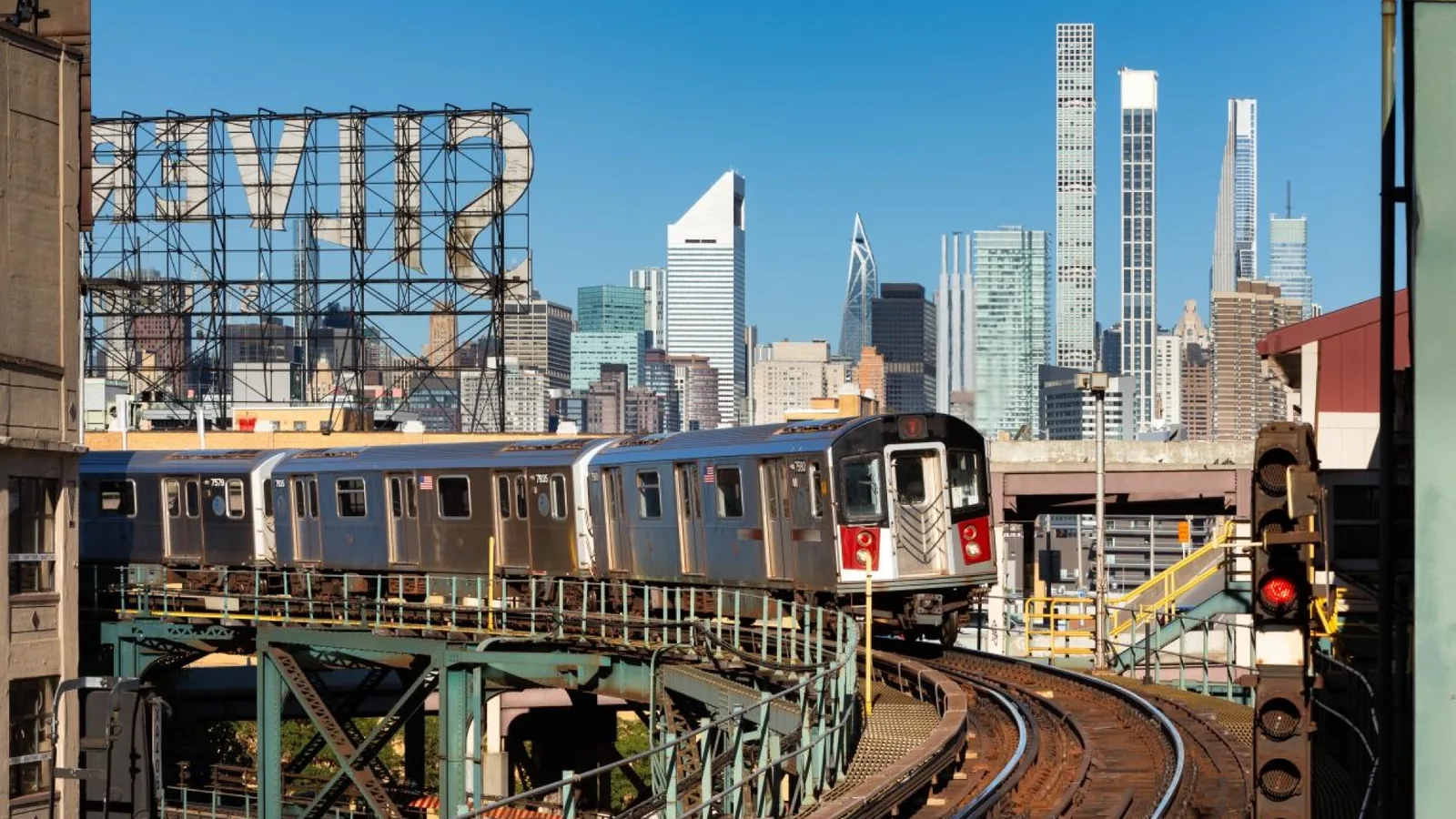
An elevated subway train passes through Queensboro Plaza in Long Island City, with Manhattan in the background.
Long Island City, in Queens, deserves a place on a sensible budget shortlist. Its strongest case is a hotel near a useful station with a final price meaningfully below comparable Manhattan rooms. Queens Plaza, Queensboro Plaza, Court Square, and Vernon Boulevard–Jackson Avenue are distinct locations.
For Grand Central or Times Square, a hotel near Vernon Boulevard–Jackson Avenue gives you a direct 7 train route. A hotel near Queens Plaza instead has the E train to Lexington Avenue/53rd Street and World Trade Center. Match the station to your repeated destinations: these locations offer different journeys despite sharing the Long Island City label. These are normal weekday routes; allow for walks and waiting, and check weekend or late-night changes.
Hyatt Place Long Island City is a useful room-layout comparison: its Two Queen Beds category with a sofa bed is published at 325 square feet. Check your party’s permitted occupancy and the exact configuration. Extra floor space helps only when the location and total price also fit.
Match the Hotel to the People Traveling
For couples, Chelsea, Flatiron, NoMad, or the Village can support evenings you enjoy without another journey. If Broadway is the main event, Midtown may be the better trade. Pay for a terrace or view only if you expect to use it.
For families, compare the Upper West Side with a convenient Midtown address. Bed configuration, stroller space, and nearby breakfast matter more than a fashionable lobby. Connecting rooms should be guaranteed if essential; a request is not the same commitment.
For budget travelers, compare Long Island City with compact Manhattan rooms and legitimate hostels. Price a dorm bed separately from a private room, and check bathroom arrangements. A cheap room becomes poor value when its commute encourages frequent paid car rides.
For travelers seeking comfort, prioritize soundproofing, room dimensions, reliable lifts, and an uncomplicated return journey. If step-free travel is essential, verify the complete route, accessible entrances, and current elevator status as well as the hotel’s facilities. An accessible station can still have a transfer that requires stairs.
Where to Stay in NYC: Costs and Booking Decisions
Once two areas fit your itinerary, narrow down where to stay in NYC by comparing actual hotel options. Use identical dates, guest numbers, bed requirements, and cancellation terms. Otherwise, a cheaper listing may simply represent a smaller room, fewer occupants, or a booking you cannot change.
Budget for the Total Stay, Including Taxes and Transport
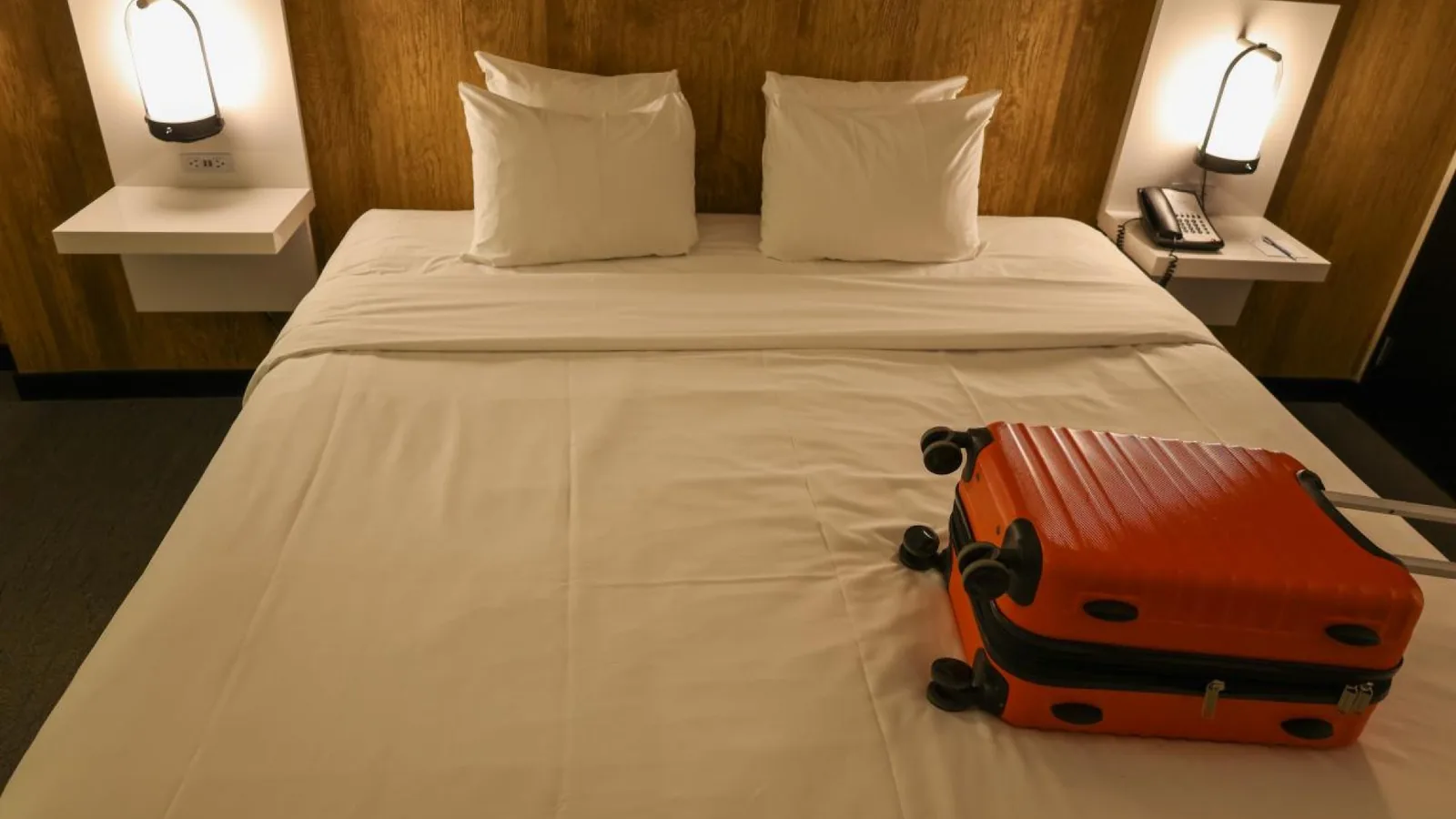
When choosing where to stay in NYC, compare room layout and luggage space alongside the total price.
New York City Tourism + Conventions reported a citywide average daily hotel rate of $334 for 2025. That historical benchmark explains why accommodation needs a serious budget; it is neither a quote for your dates nor a minimum price.
For a standard single hotel room costing at least $40, the usual combined percentage taxes total 14.75%, alongside $3.50 in daily fixed charges. Check the city’s hotel occupancy tax guidance and your booking breakdown. Multi-room suites and additional taxable charges can change the calculation.
As an illustration, a $300 nightly room becomes approximately $347.75 after those taxes and fixed charges, before other applicable costs. Four nights total $1,391. This is a budgeting calculation using an assumed rate, not an advertised hotel offer.
Compare a refundable rate with the amount you could lose if plans change. Check whether breakfast covers your whole party and whether the room fits your luggage. Ask separately about incidental deposits or card holds: these affect available funds even when they are eventually released.
Compare Hotel Savings with Extra Travel Time
Compare Hotel Savings with Extra Travel Time
The MTA’s current fare guidance lists $3 for a regular subway or local bus ride. OMNY caps eligible subway and local bus spending at $35 over seven days when the same card or device is used. Airport rail links and other transport can require separate fares.
For a four-night comparison, assume equivalent rooms cost $300 nightly in Midtown and $250 in Long Island City. Using the taxes and daily charges above, the totals are approximately $1,391 and $1,161.50, a $229.50 difference before other applicable costs. These are hypothetical rates for explaining the comparison; they are not current hotel offers or neighborhood averages.
If the Queens option adds 20 minutes each way over four sightseeing days, that means 160 extra travel minutes. Use mapped door-to-door times for your actual hotels. Deduct only transport costs caused by the alternative location, then compare the remaining saving with differences in room space, breakfast, and cancellation terms. For families, an awkward late return with tired children can outweigh a modest saving.
Dates Can Change the Best-Value Neighborhood
January and February often offer opportunities outside holiday and event periods, with cold weather as the trade-off. Autumn, major events, and the Thanksgiving-to-New-Year holiday season can put pressure on rates. Compare your actual dates rather than assuming every weekend is cheaper.
If Thanksgiving is your reason for traveling, use our New York Thanksgiving Day plan to identify your day’s priorities before choosing a hotel. A holiday-specific location decision should follow the activities you actually intend to do.
Costly Booking Mistakes to Avoid
Buying the neighborhood name. Verify the street, station entrance, and evening route. A hotel advertised as near Times Square or SoHo can sit at the edge of the area you imagined.
Booking the wrong room. Confirm bed sizes, maximum occupancy, bathroom privacy, and space for luggage. “Double” is not a universal promise of two beds.
Assuming an apartment listing is legal. Ordinary residential rentals under 30 days face strict NYC restrictions. Do not assume an entire apartment advertised online is a permitted alternative to a hotel; verify the accommodation’s legal category before paying.
Making an uncertain itinerary non-refundable. Read the cancellation deadline in local hotel time. Check late-arrival arrangements, luggage storage, and whether essential room requests are confirmed in writing.
A Practical Booking Plan for Your First NYC Stay

Guests complete check-in at a hotel reception desk, with their luggage beside them.
Before searching, fix your dates, party size, and total lodging ceiling. Identify the attraction and evening destination you will visit most often. Select two neighborhoods from those needs.
Before reserving, shortlist three hotels and compare door-to-door routes at your likely travel times. Read recent room-specific reviews for noise and layout. Ask the hotel about any requirement that could make the room unusable for your party.
Then compare New York hotel options on Trip.com, checking the final total against the hotel’s direct offer and matching the cancellation terms. TripsCity may earn a commission if you book through this link.
After booking, save the confirmation, cancellation cutoff, exact address, and arrival instructions. Near departure, check transport changes. Keep one hotel for a short first visit unless a clear practical benefit outweighs packing and moving.
Frequently Asked Questions About Where to Stay in NYC
What is the best area to stay in NYC for the first time?
Midtown is the strongest starting point for a short, landmark-focused trip. Compare Bryant Park, Grand Central, and theater-district addresses according to your routes, noise tolerance, and final room price.
Is Times Square a good place to stay?
Yes, when Broadway access and the busy atmosphere matter to you. Light sleepers should assess room orientation and recent noise reviews rather than assuming central means comfortable.
Is Long Island City better value than Manhattan?
Sometimes. Compare equivalent rooms on your dates, including taxes, cancellation terms, station walks, and additional journeys. A small discount may not justify an inconvenient commute.
Where should families stay in New York City?
The Upper West Side suits park and museum plans; Midtown suits concentrated sightseeing. Confirm occupancy and bed layout before choosing either area.
Should I stay near the airport for my first NYC trip?
Only when a late arrival, early departure, or short stopover makes it practical. For several sightseeing days, choose a hotel that serves the daily itinerary rather than only the airport journey.
Book the hotel that makes your repeated journeys easy and your room genuinely usable. Start with Midtown or Chelsea–Flatiron–NoMad, move elsewhere for a specific benefit, and pay only after checking the full price, room category, and route home.