
A Versailles day trip begins with a surprise that has nothing to do with gold: it is the scale. The walk across the forecourt, the security line, the decorated rooms, the gardens and the distant Trianon estate all require more time and energy than they appear to on a map.
Versailles does not invite you in gently. It overwhelms you with distance, ceremony and detail. But that sense of grandeur also creates the most common planning mistake: visitors book a Palace time slot and assume they are preparing for one large building. In reality, the Palace is only one part of an enormous royal estate.
A timed ticket controls when you can enter the Palace. It does not remove security checks, shorten the garden paths or guarantee that you will have enough energy left for the Grand Trianon and Queen’s Hamlet.
This Versailles Guide is designed to help first-time visitors choose the right 2026 ticket, decide how many hours to spend, travel from Paris without unnecessary confusion and understand which parts of the estate deserve their limited time. The objective is not to see every room. It is to leave Versailles feeling that the day was thoughtfully designed rather than endured.
Versailles Day Trip Quick Answer
TripsCity Quick Answer: Versailles is worth visiting if you can give the estate at least five to six hours and you are interested in French history, architecture, royal life or formal gardens. For a first visit, the full Passport is usually the most practical ticket. A half-day can work for the Palace and a brief look at the Gardens, but it is not enough for the complete Palace, Gardens and Trianon experience.
What Does the Versailles Estate Include?
Versailles is more than a single palace building. The complete estate includes the Palace, the formal Gardens, the much larger Park and the Estate of Trianon. These areas have different opening times, ticket rules and physical demands, which is why a visit can feel confusing when it is planned as one attraction.

The Palace is the most famous part of Versailles, but the royal estate extends far beyond its main building.
However, the scale can be deceptive. The Grand Canal and Trianon estate appear closer than they are, and walking between the main areas often takes longer than expected.
| Area | Realistic Time | Priority for a First Visit |
|---|---|---|
| Palace | 1.5–2 hours | Essential for most first-time visitors |
| Formal Gardens | 1–2 hours | Highly recommended when weather and mobility allow |
| Park and Grand Canal | 30–90 minutes | Optional when time or energy is limited |
| Trianon Estate and Queen’s Hamlet | 2–3 hours | Best for full-day visitors |
This is the central planning decision at Versailles: do not buy access based on what exists. Buy it based on what you realistically have time and energy to experience.
Is Versailles Worth Visiting on Your First Trip to Paris?
Versailles is worth visiting for most first-time travelers, but it is not an automatic choice for every Paris itinerary. The estate offers something central Paris cannot: a physical explanation of how French royal power was displayed through architecture, ceremony, landscape and controlled distance.
Versailles is a strong choice if:
- French history interests you: royal life, architecture and landscape design are central to the experience.
- Your schedule allows five or six hours: this gives the estate enough time without sacrificing the rest of your Paris itinerary.
- Substantial walking feels manageable: the day includes security lines, long paths and considerable time on your feet.
- One major historical day trip appeals to you: Versailles works better as a priority than as another attraction squeezed into a crowded schedule.
You may want to skip Versailles if:
- Your Paris stay is very short: travelers with only two or three full days may get more value from experiencing the city’s main neighborhoods first.
- Food and street life matter more than royal history: smaller museums and central Paris may suit your priorities better.
- Long walks or prolonged standing are difficult: the scale of the estate can make the day physically demanding.
- The Hall of Mirrors is your only priority: traveling to Versailles for one room may not justify the time required for the complete day trip.
If you are still deciding between Versailles, Giverny and the Loire Valley, our comparison of the best day trips from Paris explains how the three experiences differ in pace, travel time and physical effort.
TripsCity Insight: Visit Versailles because you want to understand the estate—not because it appears on a generic Paris checklist. When a short itinerary is already filled with the Louvre, major neighborhoods and timed attractions, adding Versailles can reduce the quality of the entire trip.
Best Time for a Versailles Day Trip: Crowds, Weather and Opening Hours
The best time for a Versailles day trip depends on what matters more to you: quieter Palace interiors, warmer garden walks or the Musical Fountains experience. There is no crowd-free version of Versailles, but timing can make the day feel substantially more manageable.
For most first-time visitors, the best choice is a weekday with the earliest available Palace time slot. Book the 9:00 AM entry when possible and arrive at the forecourt around 20 to 30 minutes early. You will still pass security and share the Palace with other visitors, but you begin before the busiest middle of the day and have more energy for the Gardens afterward.
| When to Visit | What It Feels Like | Best For |
|---|---|---|
| Weekday morning | The most balanced option, with fresher energy and more time for the estate | Most first-time visitors |
| Late afternoon | Useful for a shorter Palace-focused visit, but not enough time for the full estate | Visitors with limited time |
| Summer weekend or fountain-show day | Beautiful, lively and more expensive, with heavier visitor volume | Travelers prioritizing the Gardens and musical program |
| Winter weekday | Cooler, quieter and more focused on interiors than long outdoor walks | Museum lovers and travelers avoiding summer crowds |
The Palace and the Estate of Trianon are closed on Mondays. The Palace opens at 9:00 AM, while Trianon opens at 12:00 PM. This matters when building a full-day route: do not walk directly to Trianon first thing in the morning and expect to enter.
Before booking, check the official Versailles opening-hours and access page. Seasonal schedules, fountain dates and weather-related closures can change, especially for the Gardens and Park.
Versailles Day Trip Tickets in 2026: Which Option Is Right for You?
The most important ticket decision for a Versailles day trip is simple: are you visiting only one part of the estate, or do you want a proper first-time experience of the full estate? Buying the cheapest option can make sense, but only when it matches the time you actually have.
For entry to the Palace, visitors must reserve a timed slot. This is not the same as instant access. A timed ticket reserves your Palace entry window, but security checks and crowd control still apply when you arrive.
| Ticket | 2026 Standard Price | Best For |
|---|---|---|
| Passport | €25 in low season; €35 in high season | First-time visitors who want the Palace, Gardens and Trianon estate |
| Estate of Trianon | €15 | Visitors returning to Versailles or focusing only on Grand Trianon, Petit Trianon and the Queen’s Hamlet |
| Gardens ticket | Free in low season; €15 in high season | Outdoor visitors who do not plan to enter the Palace |
The Passport is the practical default for a first visit. It includes timed entry to the Palace, the Estate of Trianon, temporary exhibitions, the Gardens and Park. During the high season, it also covers entry to the Musical Gardens or Musical Fountains program when scheduled.
Paris Museum Pass holders should still reserve the required Palace entry slot before visiting.

A timed ticket reserves your Palace entry window, but security screening and queues can still take time.
Book directly through the official 2026 Versailles ticket page before fixing the rest of your itinerary. Prices and scheduled garden programs can change, so the official page should always be the final reference.
How to Get to Versailles from Paris: Choose the Right Station
Planning transportation for a Versailles day trip is relatively easy, but the best route depends on where you are staying in Paris. Do not choose a train simply because it appears fastest in a generic guide. A slightly longer train journey can be the smarter option when it starts close to your hotel and leaves you with a simpler walk at the other end.
Versailles Train and Transport Options from Paris
| Route | Versailles Station | Walk to the Palace | Best For |
|---|---|---|---|
| RER C | Versailles Château–Rive Gauche | About 10 minutes | Most visitors staying near central Paris or an RER C stop |
| SNCF Line N or U from Gare Montparnasse | Versailles Chantiers | About 18 minutes | Travelers staying on the Left Bank or near Montparnasse |
| SNCF Line L from Gare Saint-Lazare | Versailles Rive Droite | About 17 minutes | Visitors staying in western or northwestern Paris |
| Bus 171 from Pont de Sèvres | Palace area | Minimal after arrival | Visitors already near Metro Line 9 who prefer a direct bus |
For most first-time visitors, RER C to Versailles Château–Rive Gauche is the simplest route because it leaves the shortest walk to the Palace. From the station, follow the signs toward Château de Versailles and cross Place d’Armes to reach the main entrance.
Build buffer time into the journey. A train ride is only one part of the process: you still need to reach the departure station, find the right platform, walk from the Versailles station, pass security and arrive at the Palace before your timed entry window. Plan to arrive in Versailles at least 30 minutes before your Palace slot.
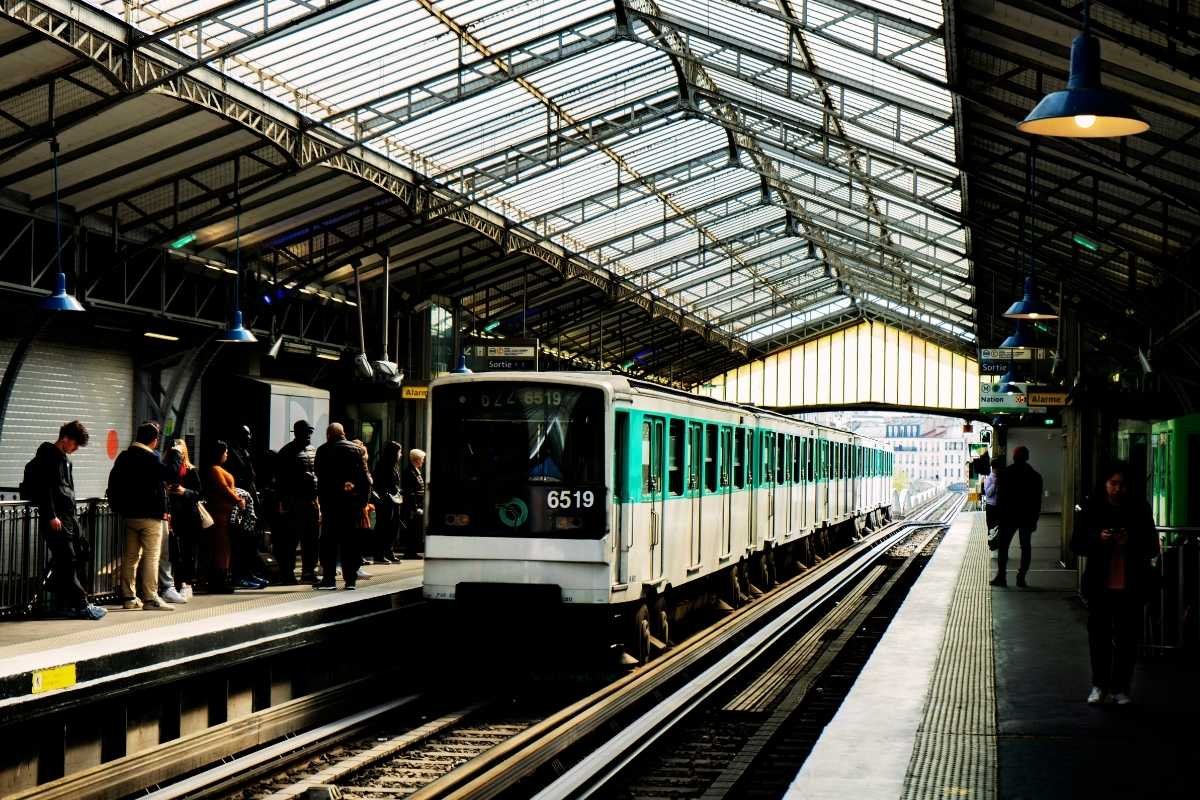
The station you choose matters because the walk to the Palace can range from about 10 to 18 minutes.
Buy or load your return journey in advance when possible, and check live rail status before leaving Paris.
For Paris transport basics, ticket types and route-planning tools, see our Paris public transport guide. If you prefer a coach transfer or an organized day trip, choose it for simplicity and time control—not because it guarantees a better experience inside the Palace.
What to See in the Versailles Gardens—and What You Can Skip
The Gardens are not simply an optional backdrop during a Versailles day trip. They are part of the same statement of power, designed by André Le Nôtre to extend the Palace into the landscape. The geometry, fountains, sculptures and long central axis make the scale of Versailles understandable in a way that the interior rooms alone cannot.
That said, you do not need to walk every path to appreciate them. The Gardens are large enough to exhaust visitors who try to treat every grove, fountain and terrace as a required stop. A better approach is to choose a route based on the time and energy you have left after the Palace.

The Gardens reveal the full scale of Versailles, but they reward a focused route more than an attempt to see every corner.
Choose a Versailles Gardens Route Based on Your Time
| Time Available | Best Gardens Route | What to Skip |
|---|---|---|
| 30–45 minutes | Palace terrace, central view, Latona Fountain and the main parterre | Grand Canal and distant groves |
| 60–90 minutes | Terrace, Latona Fountain, Apollo Fountain and a walk toward the Grand Canal | Most outer paths and Trianon |
| 2 hours or more | Main axis, Grand Canal, selected groves and a slower return route | Only the areas that do not interest you personally |
Treat the Gardens as part of the overall experience, not as a checklist.
Should You Visit Trianon and the Queen’s Hamlet?
The Estate of Trianon is the quieter and more personal side of Versailles. It includes the Grand Trianon, the Petit Trianon, their gardens and the Queen’s Hamlet. While the main Palace was designed for ceremony and public display, Trianon was created as a retreat from that pressure.
The Estate of Trianon opens at 12:00 PM, not in the morning. This catches many first-time visitors by surprise. If you arrive at Versailles early, use the morning for the Palace and the main Gardens, then decide whether your energy and available time justify continuing to Trianon.
| Your Available Time | Should You Visit Trianon? | Best Decision |
|---|---|---|
| 3–4 hours total | No, usually not | Prioritize the Palace and a focused section of the Gardens |
| 5–6 hours total | Possibly | Visit one Trianon area only if you move efficiently and still have energy |
| 7–8 hours total | Yes | Include Grand Trianon, Petit Trianon and the Queen’s Hamlet at a comfortable pace |
The Grand Trianon, Petit Trianon and the Queen’s Hamlet offer a quieter contrast to the main Palace. They are worthwhile for full-day visitors, but skipping Trianon is usually the better choice if the Palace and Gardens have already taken longer than expected.
How Long Does a Versailles Day Trip Take?
In practice, a Versailles day trip can work as a half-day visit, but only when you define what you are willing to leave out. The mistake is not visiting for three or four hours. The mistake is buying a full-estate ticket, trying to see everything and turning the entire day into a rushed walk.
| Time at Versailles | Realistic Plan | What You Will Miss |
|---|---|---|
| 3–4 hours | Palace highlights, Hall of Mirrors and a focused walk through the main Gardens | Trianon estate and most of the Grand Canal area |
| 5–6 hours | Palace, Gardens, a proper break and either the Grand Canal or part of Trianon | Some distant paths and a slow visit to every Trianon sight |
| 7–8 hours | Palace, Gardens, lunch, Grand Canal and the full Trianon estate | Very little, except optional outer paths and special exhibitions |
TripsCity Insight: A shorter visit is not a failed visit. Palace plus Gardens is a strong half-day experience. The full Passport becomes worthwhile only when you genuinely have the time and energy to use Trianon as well.
Versailles Day Trip Costs, Food and Practical Comfort
A Versailles day trip becomes tiring when visitors underestimate the basic parts of the experience: walking, standing, weather, food and the return journey to Paris. A simple comfort plan often improves the day more than adding one extra attraction.
Eat before you become exhausted, carry water and keep a small snack available. Comfortable shoes matter more than formal-looking travel clothes, and weather protection becomes particularly important when your itinerary includes several hours in the Gardens or Park.
Where Your Versailles Budget Actually Goes
| Expense | What Changes the Cost | Planning Advice |
|---|---|---|
| Palace ticket | Season and ticket type | The Passport costs €25 in low season and €35 in high season based on the 2026 pricing used in this guide |
| Transport from Paris | Your starting point and route | Check the current fare for your exact rail or bus journey before departure |
| Food and drinks | Restaurant, café or packed food | Decide before arrival whether you want a proper meal or a quicker low-cost break |
| Garden transport | Walking versus little train or electric vehicle | Optional, but potentially worthwhile when energy or mobility matters |
| Guided tour | Tour length and inclusions | Compare the tour with the official Passport before paying extra |
The key budgeting lesson is simple: the cheapest ticket does not automatically create the cheapest successful visit. Paying for the correct estate access—or occasionally for transport inside the grounds—can be better value than saving money and ending the day too tired to use the ticket properly.
Is a Guided Tour of Versailles Worth It?
A guided tour can improve a Versailles day trip when historical context matters to you, when you prefer a structured route, or when the tour includes access that is difficult to understand or arrange independently.
Independent visitors do not automatically need one. The official audioguide and a clear route are sufficient for many travelers who prefer flexibility and want to spend more or less time in individual rooms.
If a guided format fits your travel style, you can compare Versailles tickets and guided tours on Klook. Check exactly what is included before booking, especially the Palace entry time, Gardens access and whether the Estate of Trianon is part of the package.
Mistakes That Can Ruin a Versailles Day Trip
Most disappointing Versailles visits are not caused by the Palace itself. They come from planning a huge estate as if it were an ordinary two-hour museum.
- Arriving too close to your Palace slot: the train journey, walk and security process all require buffer time.
- Assuming timed entry means no queue: your reservation controls Palace admission, not security screening.
- Trying to see the entire estate in half a day: Palace, Gardens and Trianon require different amounts of time and energy.
- Skipping the Gardens automatically: even a short central route helps explain the scale and design of Versailles.
- Walking to every distant area: saving money on estate transportation can become poor value when fatigue ruins the final hours.
- Forgetting that Trianon opens later: do not build an early-morning route around an area that is not yet open.
- Ignoring the return journey: leave enough energy and time to get back to Paris comfortably.
Versailles rewards realistic priorities. A focused Palace-and-Gardens visit can be substantially better than completing every section of the estate while exhausted.
Final Verdict: Is a Versailles Day Trip Worth It in 2026?
A Versailles day trip is worth it when the estate matches your interests and you give it enough time. It is not automatically essential simply because you are visiting Paris for the first time.
History, architecture, royal life and landscape design are the strongest reasons to go. The experience becomes less convincing when Versailles is squeezed into an already overloaded two- or three-day Paris itinerary.
For many first-time visitors, the strongest plan is an early Palace entry followed by a focused Gardens route and one deliberate decision: either continue toward Trianon or finish the visit before fatigue takes over.
The goal is not to leave knowing that you walked every path. It is to understand why Versailles became one of the most extraordinary expressions of royal power in Europe—and still have enough energy to enjoy the journey back to Paris.
Versailles FAQ
Is Versailles worth visiting on a first trip to Paris?
Yes, if you can give it at least five or six hours and are interested in history, architecture, royal life or formal gardens. Travelers with only two or three full days in Paris may prefer to explore the city itself before dedicating most of a day to Versailles.
How long should I spend at Versailles?
Allow three to four hours for the Palace and main Gardens, five to six hours for a balanced first visit, and seven to eight hours when you want to include the complete Trianon estate and Queen’s Hamlet.
What is the best ticket for Versailles?
The Passport is usually the most practical option for first-time visitors who want access to the Palace, Gardens, Park and Estate of Trianon. A smaller ticket makes more sense when your available time or interests are deliberately limited.
What is the easiest way to get to Versailles from Paris?
For many visitors, RER C to Versailles Château–Rive Gauche is the simplest option because the Palace is about a 10-minute walk from the station. Travelers staying near Montparnasse or Saint-Lazare may find another rail route more convenient.
Can you visit Versailles in half a day?
Yes. Book an early Palace entry, focus on the main interior route and spend your remaining time in the central Gardens. Leave Trianon for a longer visit rather than rushing across the estate.
Is Versailles closed on Mondays?
The Palace and Estate of Trianon are normally closed on Mondays. Always verify the official schedule before booking because seasonal hours, special dates and Garden programs can change.