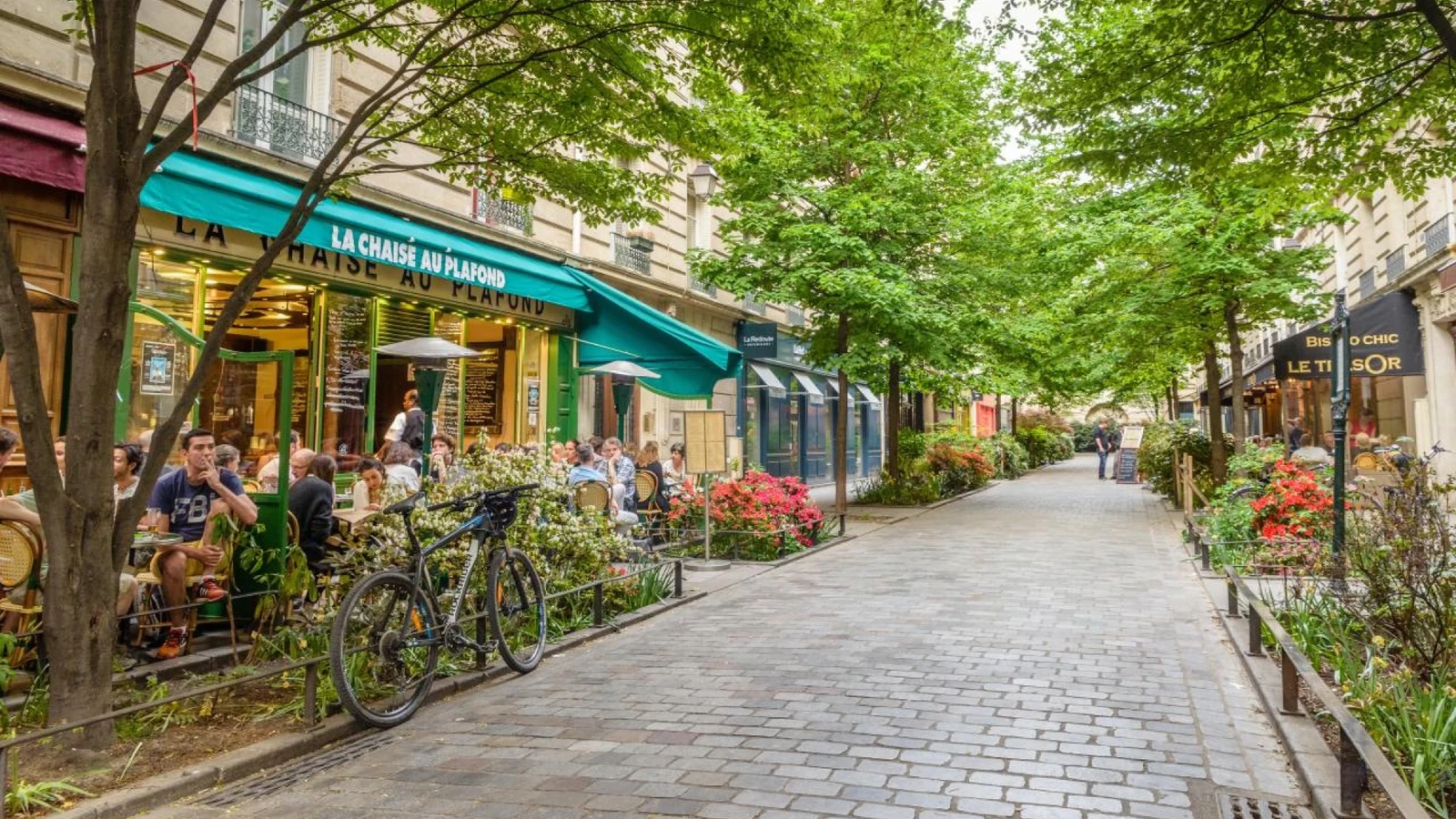
This Le Marais guide helps first-time visitors decide what deserves their time, how long to stay, and how to explore the neighborhood without rushing between museums, shops, and food stops.
Le Marais stretches across much of Paris’s 3rd and 4th arrondissements on the Right Bank. Aristocratic mansions stand beside contemporary galleries, while busy shopping streets open into quiet courtyards, gardens, and historic squares.
Quick Answer: Is Le Marais Worth Visiting?
Yes. Le Marais is one of the best Paris neighborhoods for architecture, museums, independent shops, cafés, Jewish heritage, and easy walking. Plan three hours for Place des Vosges, Rue des Rosiers, and nearby streets. A half day is better with one museum, while a full day suits visitors adding lunch, shopping, and the quieter northern Marais.
Weekday mornings are calmest. Sunday is livelier but much busier around Rue des Rosiers and Rue des Francs-Bourgeois. Wear comfortable shoes for cobbles, narrow pavements, and frequent stops.
What Is Le Marais in Paris?
The name Le Marais refers to the marshland that once occupied this part of Paris. Religious communities helped drain and develop the area, and later aristocratic families built the private mansions that still shape many of its streets.
Today, the southern Marais is busiest around Saint-Paul, Rue des Rosiers, Rue de Rivoli, and Place des Vosges. The Haut Marais is calmer around Rue de Bretagne, Rue Charlot, and Square du Temple. The south concentrates famous landmarks; the north offers more breathing room.
Le Marais is also a living cultural district rather than a themed historic zone. The Pletzl around Rue des Rosiers reflects centuries of Jewish life, while streets around Rue des Archives are closely associated with Paris’s LGBTQ+ community. Visitors should experience these areas respectfully instead of reducing them to food lines, nightlife, or photo stops.
Is Le Marais Worth Visiting for First-Time Travelers?
Le Marais is especially useful on a first trip because several interests fit into one walk. You can visit a museum, sit in a formal square, browse small shops, explore historic streets, and stop for lunch without repeated Metro journeys.
The main drawback is crowding, especially on weekends. Start early at Place des Vosges, explore Rue des Rosiers before lunch, and move north when the central shopping streets become congested.
Travelers planning their first visit should place Le Marais within one realistic central Paris day rather than combining it with several distant districts. Our guide to Paris for first-time travelers explains how to reduce backtracking and avoid exhausting schedules.
TripsCity Insight
Choose one museum, one food area, and one flexible walking period. That simple structure leaves room for courtyards, galleries, gardens, and unexpected stops—the experiences most visitors remember better than another rushed attraction.
Best Things to Do in Le Marais
Start at Place des Vosges
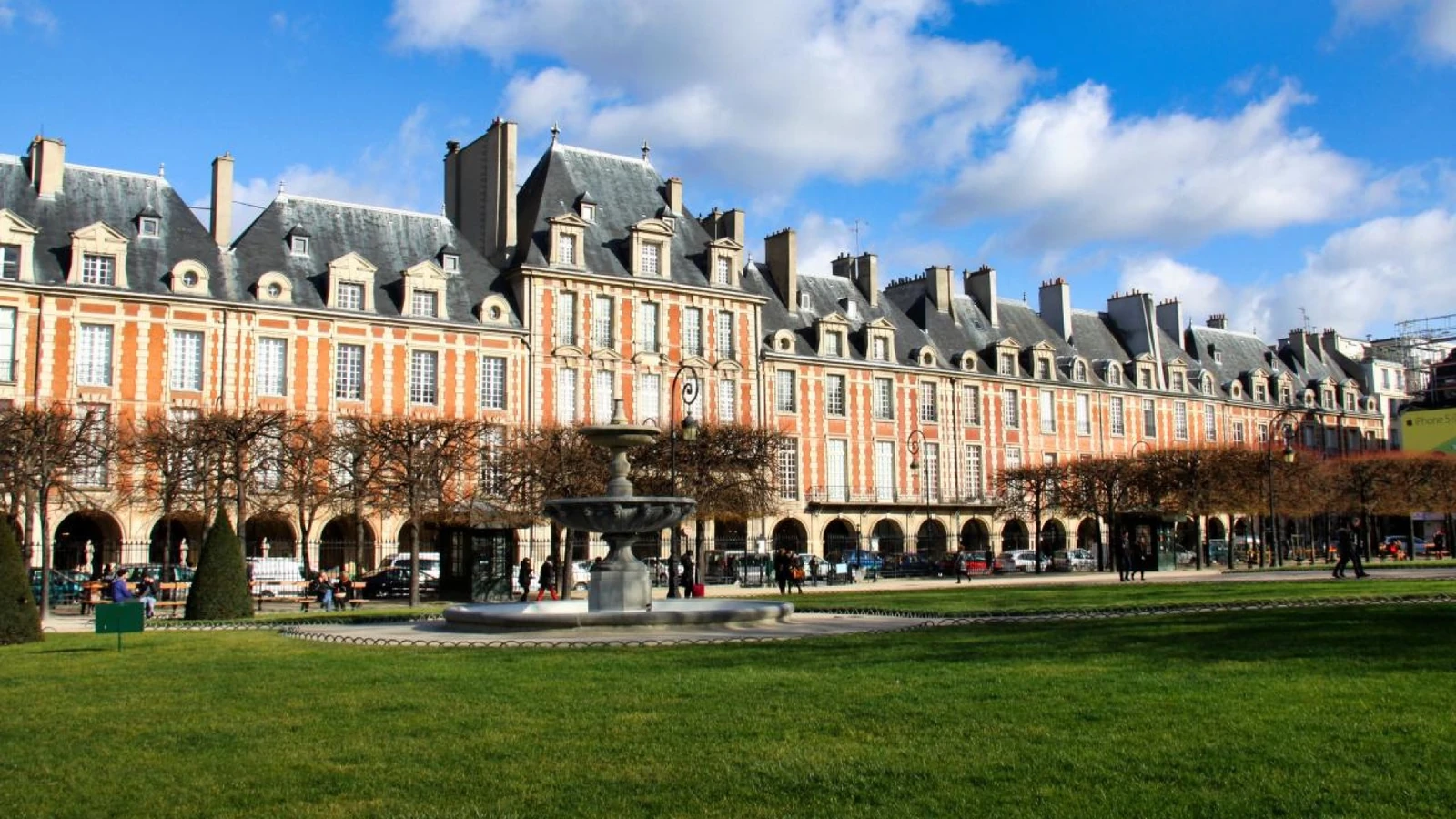
Place des Vosges is one of the most beautiful historic squares in Le Marais.
Place des Vosges is the neighborhood’s strongest visual landmark and a practical starting point. Walk beneath the arcades, look across the symmetrical brick façades, and allow twenty to thirty minutes to sit in the central garden. Early morning feels calmer than sunny afternoons.
Visit Musée Carnavalet
Musée Carnavalet is the best choice for travelers who want to understand Paris itself. Its permanent collections explore the city through interiors, paintings, signs, documents, and reconstructed rooms.
The permanent route is free, but the museum can consume several hours. On a half-day visit, choose selected rooms and allow about ninety minutes. Check current access details on the official Musée Carnavalet website.
Choose the Picasso Museum for Modern Art
The Musée National Picasso-Paris occupies the Hôtel Salé, a 17th-century mansion. It is the stronger paid museum choice for visitors interested in Picasso, modern art, and architecture.
Allow around ninety minutes and avoid pairing it with a complete Carnavalet visit unless museums are the main purpose of your day. Review current opening details and ticket options on the official Picasso Museum website.
Walk Rue des Rosiers With Context
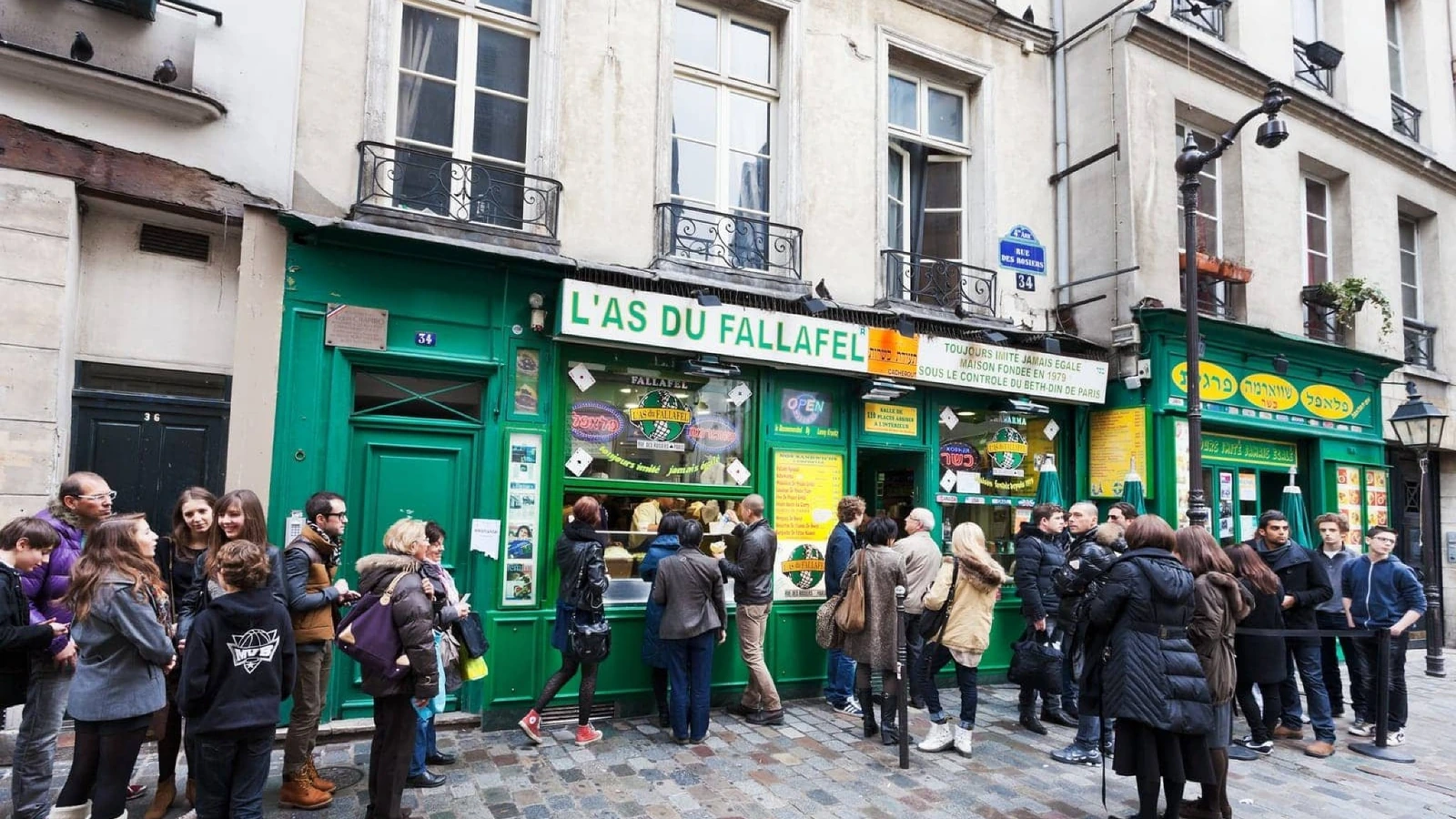
Crowds often gather outside L’As du Fallafel on Rue des Rosiers, one of the busiest food stops in Le Marais.
Rue des Rosiers is known for Jewish bakeries, restaurants, shops, and the surrounding Pletzl. Lunch queues and narrow pavements can dominate the experience, so look beyond the most visible food stops and notice the plaques, schools, side streets, and community institutions that explain the area’s importance.
Use Hôtel de Sully as a Quiet Transition
Near Place des Vosges, Hôtel de Sully offers a short look at the private mansions that define historic Le Marais. When the courtyard passage is accessible, it creates a useful transition between Rue Saint-Antoine and the square. Treat access as a bonus because closures and events can occasionally affect the route.
Good to Know
Many major Marais museums close on Mondays. Check official opening days before choosing your route; otherwise, you may arrive at a closed museum and spend the busiest hours searching for a replacement.
Best Le Marais Walking Route
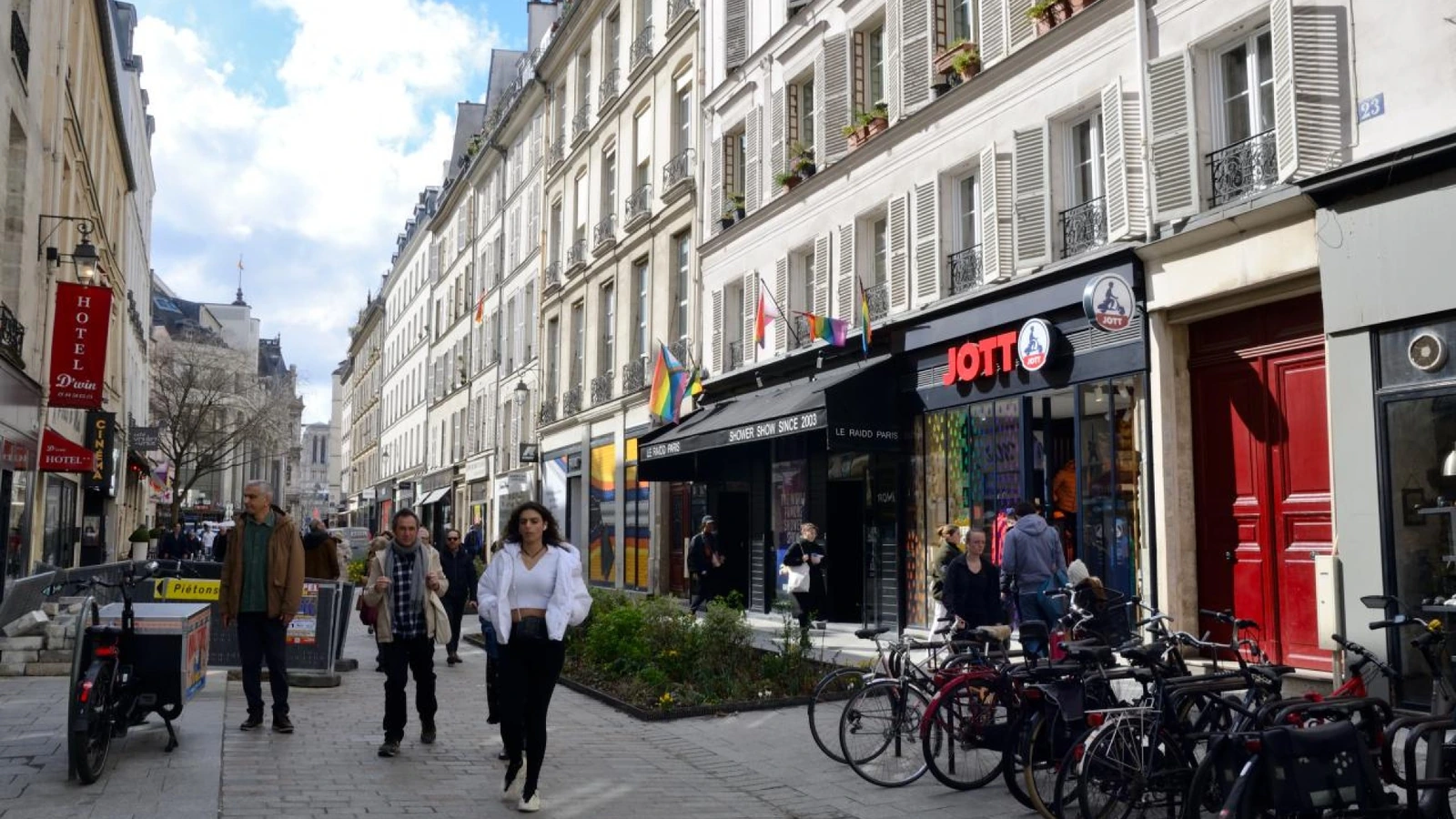
Walking through Le Marais reveals lively pedestrian streets, local shops and neighborhood character.
The easiest way to explore Le Marais is to begin in the historic south and finish in the quieter Haut Marais. This direction places the most recognizable landmarks early in the day, then gradually moves you toward food markets, local shops, and calmer streets.
Stop 1: Place des Vosges
Begin at Place des Vosges before the square becomes busy. Walk beneath the arcades, cross the central garden, and decide whether Maison de Victor Hugo fits your schedule. If you plan to enter, complete the museum now rather than returning later.
Stop 2: Hôtel de Sully and Rue Saint-Antoine
Leave the square through the Hôtel de Sully passage when access is available. Continue toward Rue Saint-Antoine and Saint-Paul-Saint-Louis Church. This section is compact, so avoid spending too much time on the busier commercial street.
Stop 3: Rue des Rosiers and the Pletzl
Walk into Rue des Rosiers before the main lunch rush. Explore the surrounding streets instead of remaining beside the longest food queues. Rue des Écouffes, Rue Ferdinand Duval, and nearby passages provide more context and a calmer view of the historic Jewish quarter.
Stop 4: Musée Carnavalet or Picasso Museum
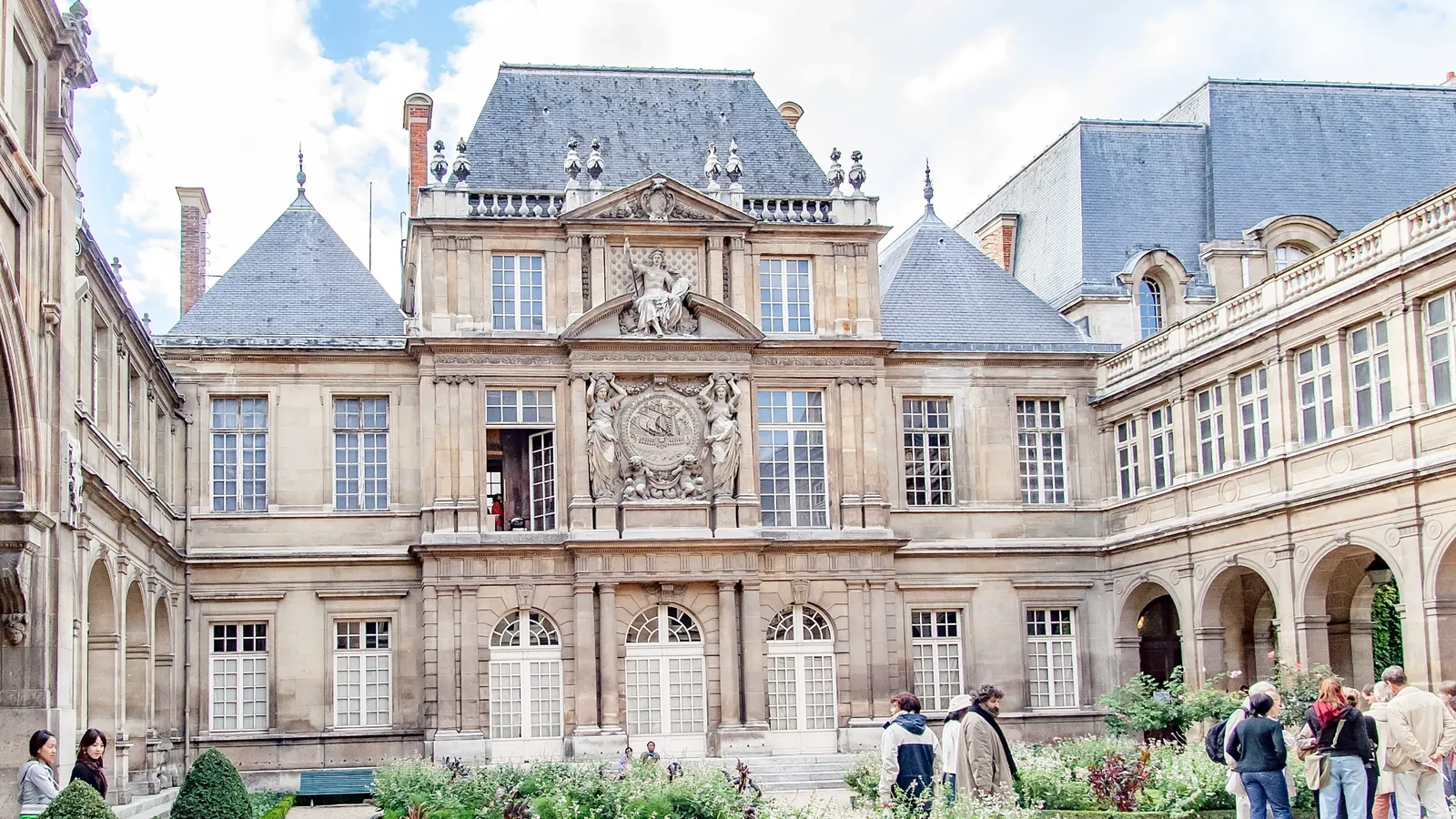
The elegant courtyard of Musée Carnavalet offers a glimpse into the history and architecture of Paris.
Choose one main museum. Musée Carnavalet works best for Parisian history, while the Picasso Museum suits travelers interested in modern art and the architecture of Hôtel Salé. Entering both is possible during a full day, but it usually leaves less time for food, shopping, and unplanned streets.
Stop 5: Rue Vieille du Temple and Rue des Francs-Bourgeois
Continue through the central shopping area. Rue des Francs-Bourgeois carries more recognizable fashion and beauty shops, while Rue Vieille du Temple mixes boutiques, galleries, cafés, and historic buildings.
The pavements become crowded during weekend afternoons. Walk one or two parallel streets when the main route slows down; the quieter alternatives often reveal courtyards and smaller shops that hurried visitors miss.
Stop 6: Rue de Bretagne and Marché des Enfants Rouges
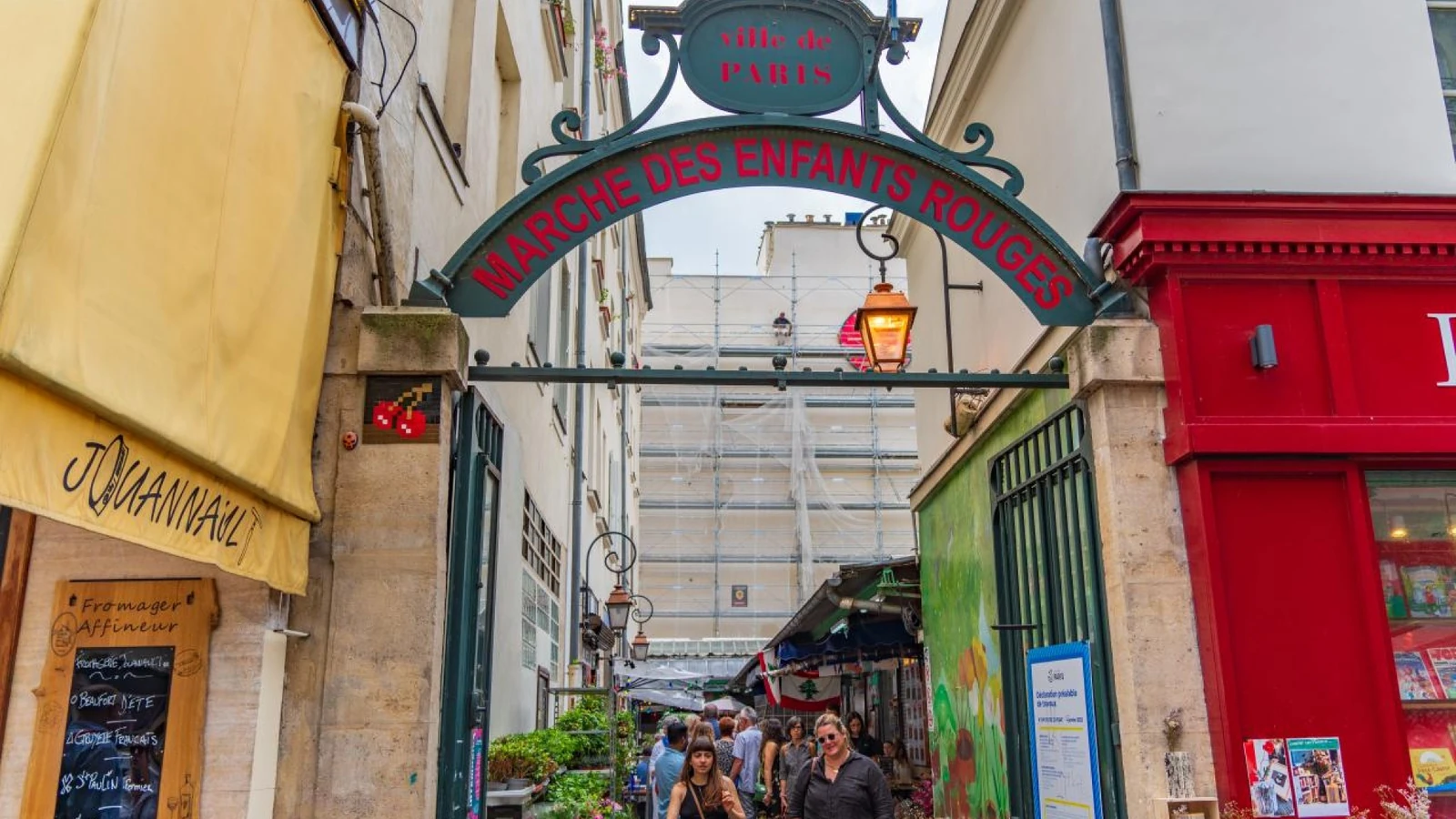
Marché des Enfants Rouges is a historic covered market known for its food stalls and local atmosphere.
Finish in the Haut Marais around Rue de Bretagne. The Marché des Enfants Rouges, established in 1615, is Paris’s oldest covered food market and a useful lunch stop for travelers who want several cuisines in one place.
Seating is limited and popular counters may develop queues, so arrive before peak lunch or remain flexible about which stall you choose. The market normally operates from Tuesday through Sunday, but individual vendors and hours vary. Check current details on the official City of Paris market page.
Optional Final Stop: Square du Temple
End at Square du Temple when you need greenery and a quieter break. From there, you can continue toward République or return south through Rue Charlot and Rue de Turenne.
Travelers who want historical explanations rather than independent wandering can compare guided Marais tours through Klook. A guide is most useful when Jewish history, architecture, or hidden courtyards matter more than shopping.
How Long Do You Need in Le Marais?
| Time available | Realistic plan | Best for |
|---|---|---|
| 2–3 hours | Place des Vosges, Rue des Rosiers, and central shopping streets | Visitors with a crowded Paris itinerary |
| Half day | Add one museum, a food stop, and the Haut Marais | Most first-time visitors |
| Full day | Add two museums, lunch, shopping, and slower neighborhood walks | History, art, and shopping enthusiasts |
Half a day provides the best balance. Three hours cover the essential streets, while a full day suits travelers prioritizing museums, shopping, and a slower meal.
TripsCity Insight
Do not calculate the visit using walking distance alone. The neighborhood looks compact on a map, but museum interiors, food queues, shop browsing, photography, and repeated stops can easily double the time you expect.
Where to Eat in Le Marais
Le Marais offers bakeries, falafel shops, Jewish pastries, cafés, market counters, traditional restaurants, and modern dining. The main challenge is not finding food; it is choosing before crowds and hunger make the decision for you.
For a Quick Meal
Rue des Rosiers is convenient for falafel, sandwiches, and pastries, but the most famous queue is not automatically the only worthwhile choice. Compare nearby menus and notice whether there is somewhere comfortable to eat before ordering.
For a Market Lunch
Marché des Enfants Rouges offers several cuisines and works well for groups with different preferences. It is less comfortable for large families, luggage, or travelers who require guaranteed seating.
For a Slower Meal
Look around Rue de Bretagne, Rue Vieille du Temple, or the quieter northern streets. Reserve dinner when a specific restaurant matters, especially from Thursday through Sunday.
Watch Out
Do not spend forty minutes in a food queue simply because it appears in every travel video. During a short visit, the lost time may cost you a museum, Place des Vosges, or the quieter streets that provide more lasting value.
Shopping in Le Marais
Shopping is part of the neighborhood’s identity, but different streets suit different priorities. Rue des Francs-Bourgeois is practical for mainstream fashion and beauty, while Rue Vieille du Temple, Rue Charlot, and Rue de Turenne offer more independent boutiques, design shops, galleries, and vintage options.
Village Saint-Paul is a better choice for antiques, decorative objects, and slower browsing. Travelers interested mainly in major Paris shopping districts should avoid turning this neighborhood guide into an all-day retail route; select one or two streets and preserve time for its historic character.
Many Marais shops open on Sundays, making the area livelier than much of Paris. The trade-off is heavier pedestrian traffic and less relaxed browsing. Weekday afternoons generally offer a more comfortable shopping experience.
Best Time to Visit Le Marais
Weekday mornings are best for Place des Vosges, historic streets, and easier photography. Visit museums by late morning, then continue north for lunch and shopping.
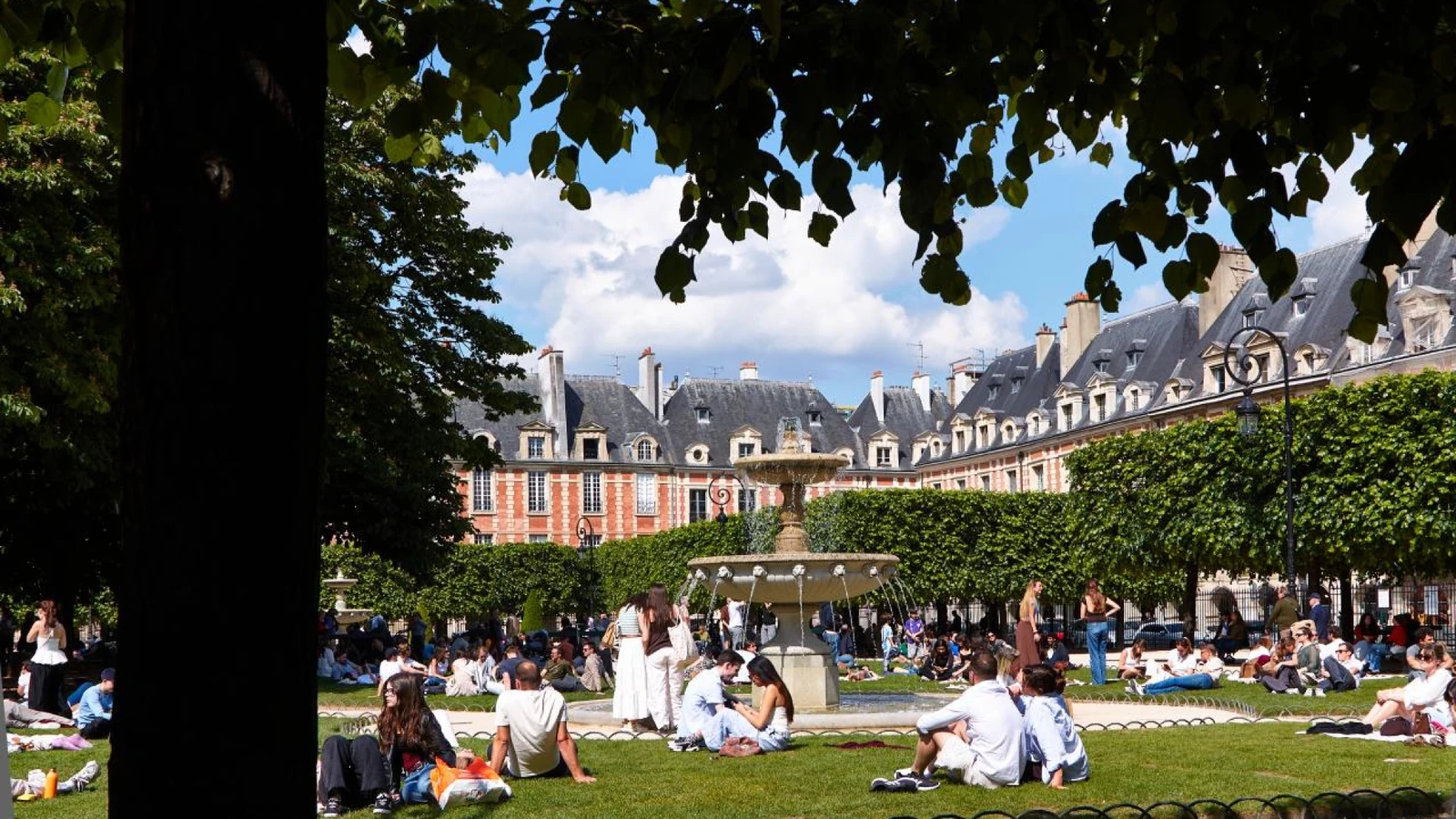
Locals and visitors relax beside the fountains and gardens of Place des Vosges.
Sunday offers the strongest street atmosphere and broad shopping access, but it is also one of the busiest times around Rue des Rosiers and Rue des Francs-Bourgeois. Monday can be calmer, although several major museums and independent businesses may be closed.
In summer, begin early to avoid heat and crowded pavements. Winter brings shorter daylight and colder walks, but museums, cafés, and covered passages make the neighborhood easy to adapt. Our Paris winter itinerary explains how to alternate outdoor neighborhoods with warm indoor attractions.
Should You Stay in Le Marais?
Le Marais is a strong base for first-time visitors who value a central location, historic streets, restaurants, museums, and evening atmosphere. Many major sights are reachable on foot, but hotel rooms can be small and prices often reflect the neighborhood’s popularity.
| Area | Best for | Main drawback |
|---|---|---|
| Saint-Paul | Place des Vosges, Rue des Rosiers, and first-time visitors | Busy streets and possible evening noise |
| Hôtel de Ville | Central transport and walking to the Seine | Less intimate neighborhood atmosphere |
| Haut Marais | Restaurants, boutiques, and calmer streets | Longer walk to the southern landmarks |
| Near République | Transport connections and wider hotel choice | Outside the most atmospheric part of Le Marais |
Check the complete price rather than the advertised room rate. Breakfast, cancellation terms, room size, air conditioning, elevator access, and street noise can matter more than saving a small amount per night.
You can compare hotel locations and current rates through Trip.com. For alternatives in other districts, read our guide to where to stay in Paris.
How to Get to Le Marais
Le Marais has no single entrance, so the best station depends on where you want to begin:
- Saint-Paul: best for Place des Vosges, Rue des Rosiers, and the southern Marais.
- Hôtel de Ville: useful for the Seine, Rue de Rivoli, and the western edge.
- Chemin Vert: convenient for Place des Vosges and nearby museums.
- Filles du Calvaire: practical for the Picasso Museum and Haut Marais.
- Temple or République: useful when starting near Rue de Bretagne and Square du Temple.
Once you arrive, walking is the best way to explore. Do not repeatedly use the Metro for short distances inside the neighborhood; the streets, courtyards, façades, and small gardens are part of the experience.
How Much Does a Visit to Le Marais Cost?
Le Marais can suit several budgets because its squares, streets, churches, courtyards, and window-shopping are free. Museums, shopping, and restaurant choices create the largest differences.
| Visit style | Planning range per person | What it may include |
|---|---|---|
| Walking-focused | €0–€25 | Free sights, pastry, coffee, or a quick meal |
| Balanced half day | €35–€75 | One paid museum and a casual lunch |
| Comfortable full day | €80–€150+ | Museum admission, meals, drinks, and shopping |
These are planning estimates rather than fixed prices. Shopping can increase the total quickly, while choosing free museums and bakery food can keep the visit affordable. See our Paris budget guide for broader daily spending estimates.
Is Le Marais Safe?
Le Marais generally feels comfortable for visitors, including families and solo travelers. The main practical risk is petty theft in crowded shopping streets, Metro entrances, restaurant queues, and busy weekend areas.
Keep your phone and wallet secure, especially when stopping to check maps or photographs. At night, active streets around Saint-Paul, Hôtel de Ville, and the central Marais usually feel lively, while some northern side streets become quieter after businesses close.
Our complete Paris safety guide covers pickpocketing, transport precautions, common scams, and returning to your hotel after dark.
Luggage and Other Practical Problems
Cobbled streets, narrow shops, crowded cafés, and small museums make Le Marais uncomfortable with suitcases. If your hotel cannot hold your bags before check-in or after checkout, compare nearby options through Radical Storage.
Use museum facilities and larger cafés when possible, because public toilets may not appear exactly when needed. Families should plan breaks before long shopping or museum sections rather than waiting until everyone is tired.
Common Le Marais Mistakes to Avoid
- Visiting only Rue des Rosiers: it represents one important part of a much larger neighborhood.
- Entering too many museums: two long museum visits can consume the entire day.
- Following the longest food queue: popularity does not automatically mean the best use of your time.
- Ignoring the Haut Marais: the northern streets offer calmer shopping, cafés, and local atmosphere.
- Planning around walking distance alone: browsing and repeated stops make the visit longer than expected.
- Arriving without checking closures: museums and independent businesses do not all follow the same schedule.
- Dragging luggage through the district: store bags before beginning your route.
TripsCity Insight
A satisfying Marais visit usually includes one museum, one historic square, one food stop, and enough unscheduled time to follow an interesting street. The neighborhood loses much of its character when every minute is assigned in advance.
Final Verdict: Who Will Enjoy Le Marais Most?
Le Marais is one of the strongest Paris neighborhoods for travelers who enjoy history, architecture, art, food, fashion, photography, and streets that remain interesting between major sights.
Choose three hours for the essentials, half a day for the best balance, or a full day for museums and shopping. Leave room for courtyards, gardens, and unexpected streets rather than trying to complete every famous address.
Le Marais Guide FAQs
What is Le Marais famous for?
Le Marais is known for Place des Vosges, historic mansions, museums, Jewish heritage, LGBTQ+ culture, boutiques, galleries, cafés, and Sunday shopping.
How many hours do you need in Le Marais?
Allow at least three hours for the essential streets. A half day is ideal with one museum, while a full day suits visitors adding shopping and a slower meal.
Is Le Marais walkable?
Yes. Its main sights are close enough to connect on foot, although cobbles, crowds, and frequent stops can make the visit tiring.
Is Le Marais a good place to stay?
Yes, especially for first-time visitors seeking central sightseeing, restaurants, nightlife, and historic atmosphere. The main drawbacks are price, small rooms, and street noise.
What Metro station is best for Le Marais?
Saint-Paul is best for the southern Marais, while Filles du Calvaire, Temple, and République are useful for the northern streets.
Is Le Marais open on Sunday?
Many shops, cafés, restaurants, and food businesses operate on Sunday, making it one of the liveliest days to visit. Individual opening hours still vary.
Can you visit Le Marais and Notre-Dame on the same day?
Yes. Notre-Dame is within practical walking distance of Hôtel de Ville and the southern Marais, so the two areas combine naturally in one central Paris day.