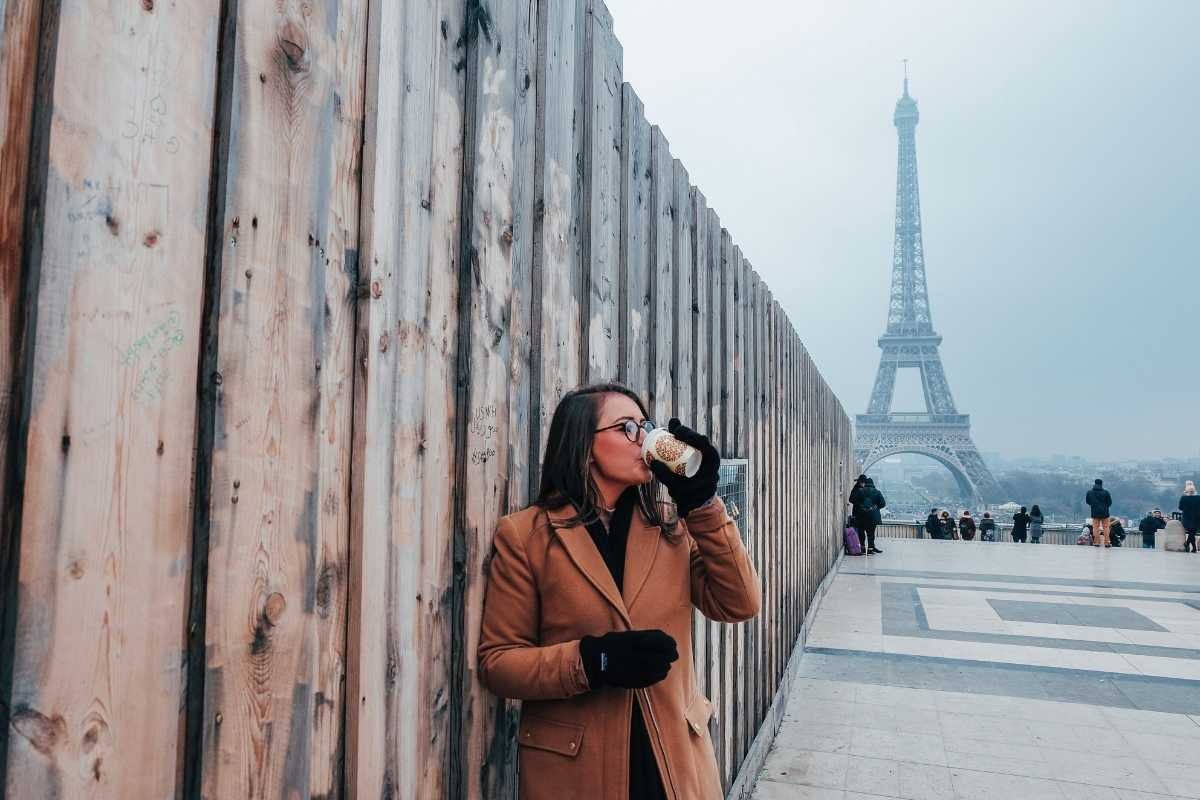
Weather in Paris in January is usually cold, damp, and changeable rather than severely cold. Rain, grey skies, chilly wind, and short daylight are more useful conditions to prepare for than heavy snow.
The temperature itself can look manageable on a weather app, but January feels different once you spend several hours moving between warm museums, Metro stations, cafés, and cold streets. Wet shoes and wind beside the Seine can matter more than a small change in the number on the forecast.
The practical answer is simple: prepare for moisture, dress in adjustable layers, use the brighter part of the day deliberately, and keep at least one worthwhile indoor option nearby.
Quick answer: January in Paris typically brings average lows around 3°C and highs around 8°C, with regular rainfall and relatively short days. Snow is possible but uncommon enough that you should plan for rain and damp cold instead. Waterproof footwear, layers, a wind-resistant outer layer, and flexible indoor-outdoor sightseeing make the month much easier.
Last updated: September 2026.
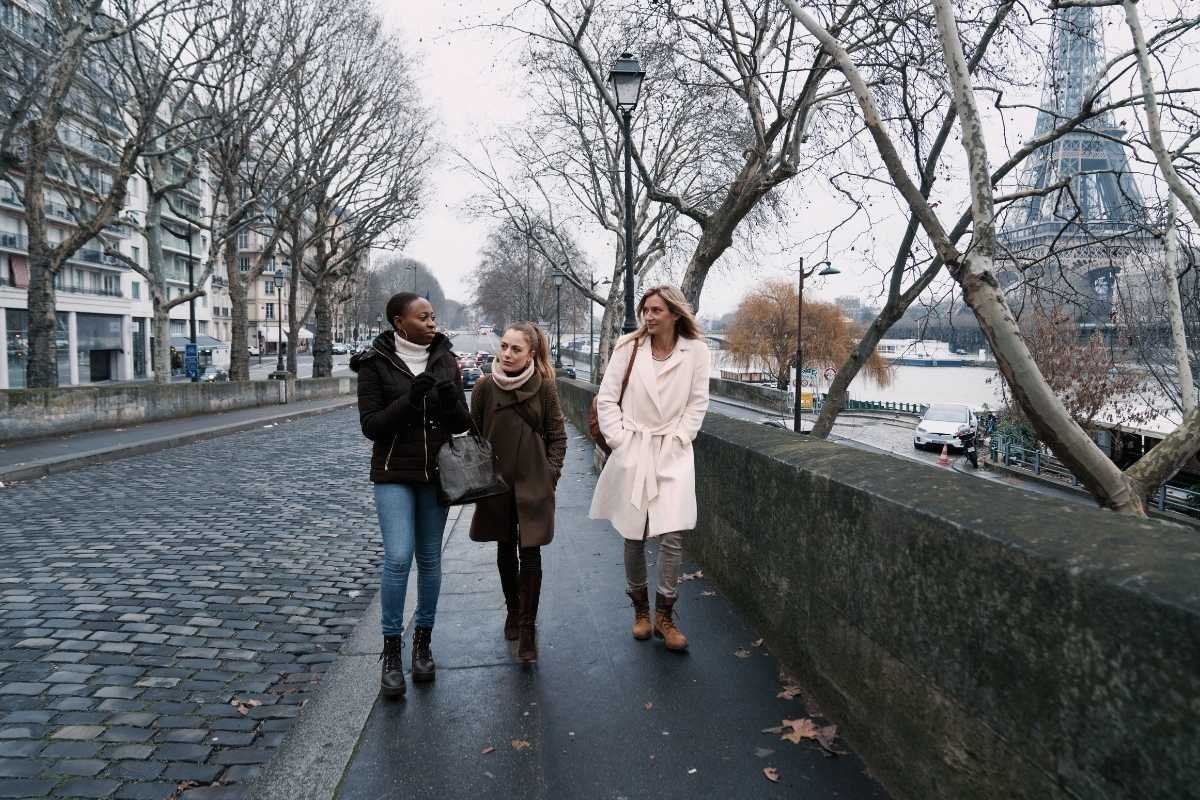
January in Paris is more often defined by cool damp streets than by a dramatic blanket of snow.
Weather in Paris in January: Temperatures, Rain and Daylight
Paris has a modified oceanic climate, which helps explain why January is usually damp and cool without being relentlessly frozen. Temperatures can move above or below the monthly average from one day to another, so climate figures are best used for packing and expectations rather than as a forecast for your exact dates.
Typical Paris January Temperatures
Current climate information published by Paris je t’aime lists an average January low of about 3.2°C and an average high of about 7.6°C.
That is relatively mild compared with colder European winter destinations, but the real experience depends on what you are doing. Walking briskly through Le Marais at 7°C can feel comfortable with the right clothes. Standing outside for 30 minutes in damp wind at the same temperature can feel considerably colder.
| January factor | Typical expectation | What it means for travelers |
|---|---|---|
| Average low | About 3°C | Early mornings and evenings need proper layers |
| Average high | About 8°C | Reasonable for walking when dry and protected from wind |
| Rainfall | About 48 mm monthly | Prepare for wet periods rather than assuming constant rain |
| Snow | Possible but unreliable | Do not plan a January trip around seeing snow |
| Daylight | Short but gradually increasing | Prioritize outdoor sightseeing during the middle of the day |
The best way to read those numbers is as a range of conditions rather than one standard January day. You may get a crisp dry morning, a grey afternoon with drizzle, or a milder spell that feels surprisingly comfortable while walking.
Rain Is More Important to Plan for Than Snow
Snow attracts attention because Paris under snow looks spectacular in photographs, but it is not the normal January experience. Paris je t’aime notes that snowfall in the city is relatively rare and often does not remain for long.
Rain and drizzle are much more practical concerns.
January rainfall does not mean it pours from morning to night every day. The problem is unpredictability. A dry start can turn damp later, and wet pavement can remain unpleasant after the rain itself stops.
This is why water-resistant shoes usually help more than obsessing over the heaviest possible winter coat. Once socks and shoes are wet, even a moderate temperature can make the next several hours uncomfortable.
Grey Skies Are Normal
January Paris is not a reliable destination for blue skies and strong winter sunshine. Some days are bright and clear, but overcast conditions are common enough that they should not feel like bad luck.
This changes photography and the visual mood of the city. Buildings can look softer under flat light, streets can feel more subdued, and the Seine can take on a very different character from summer photographs.
If photography matters, use brighter breaks in the weather rather than waiting for an entire day of sunshine. A short period of good light may be enough for the outdoor photographs you care about.
January Days Are Short but Improve Through the Month
Early January has some of the shortest useful sightseeing days of the year. Sunrise is relatively late and darkness arrives in the late afternoon. By the end of the month, the amount of daylight has noticeably improved.
This matters because many outdoor experiences look and feel better in natural light. Montmartre streets, bridges, parks, the Seine, viewpoints, and outdoor landmarks are easier to appreciate when you place them between late morning and mid-afternoon.
After dark, Paris remains highly usable. Museums, cafés, shops, restaurants, performances, and illuminated landmarks mean you do not need to end the sightseeing day when daylight disappears.
The useful January strategy is therefore not “finish everything early.” It is simply to avoid wasting your brightest hours on activities that work equally well indoors.
For current conditions close to your travel dates, check the official Météo-France forecast. Climate averages tell you what January is usually like; a short-range forecast tells you what your January will actually be like.
What January Weather Feels Like and What to Wear
A temperature chart cannot fully explain weather in Paris in January. The most important difference is exposure.
Paris sightseeing involves repeated transitions: hotel to street, street to Metro, Metro to museum, museum to café, then back outside again. You may spend only part of the day continuously outdoors, but those transitions happen again and again.
Damp Cold Often Feels Worse Than the Number Suggests
Imagine a forecast of 7°C. If you are walking steadily through Saint-Germain on a dry afternoon, it may feel fairly mild. If you are waiting beside the Seine in wind after light rain, the same temperature can feel much harsher.
That is why packing only according to the expected high temperature is one of the easiest January mistakes.
Think instead about three things:
- temperature: enough insulation for cool mornings and evenings;
- wind: an outer layer that reduces exposure;
- moisture: shoes and clothing that can cope with light rain and wet streets.
What to Wear in Paris in January
You do not need expedition clothing. You need a system that can adjust easily throughout the day.
- Base layer: comfortable clothing that works indoors and does not become unpleasant after walking.
- Mid layer: a sweater, fleece, or similar removable layer for warmth.
- Outer layer: a coat or jacket that blocks wind and handles light rain.
- Footwear: comfortable water-resistant walking shoes with enough grip for wet pavement.
- Accessories: gloves and a scarf are small but useful during longer outdoor periods.
- Umbrella: a compact one can be useful, although a weather-resistant outer layer is often easier in wind.
Layers are especially useful because many indoor spaces can feel warm after you have been walking outside. An extremely heavy outfit that cannot be adjusted may become uncomfortable inside museums, restaurants, shops, and Metro stations.
Footwear Matters More Than Fashion
Paris involves more walking than many visitors expect, and January adds wet pavement to that equation.
The ideal shoe does not need to look like hiking equipment. It needs to remain comfortable after several hours, provide reasonable grip, and resist enough moisture that one rainy walk does not ruin the rest of the day.
If you have to choose between a fashionable pair that becomes painful after five kilometers and a comfortable pair that handles damp streets, choose comfort.
Wind Beside the Seine and Open Spaces Can Change the Experience
Conditions do not feel identical everywhere in Paris. Narrow streets can provide some protection, while open bridges, riverbanks, elevated viewpoints, and exposed squares can feel colder when wind increases.
This matters when combining attractions. A short walk beside the Seine may feel refreshing after a museum; an hour of exposed walking on a windy day may become tiring much faster.
Keep outdoor periods flexible rather than assuming every walking route needs to be completed exactly as planned.
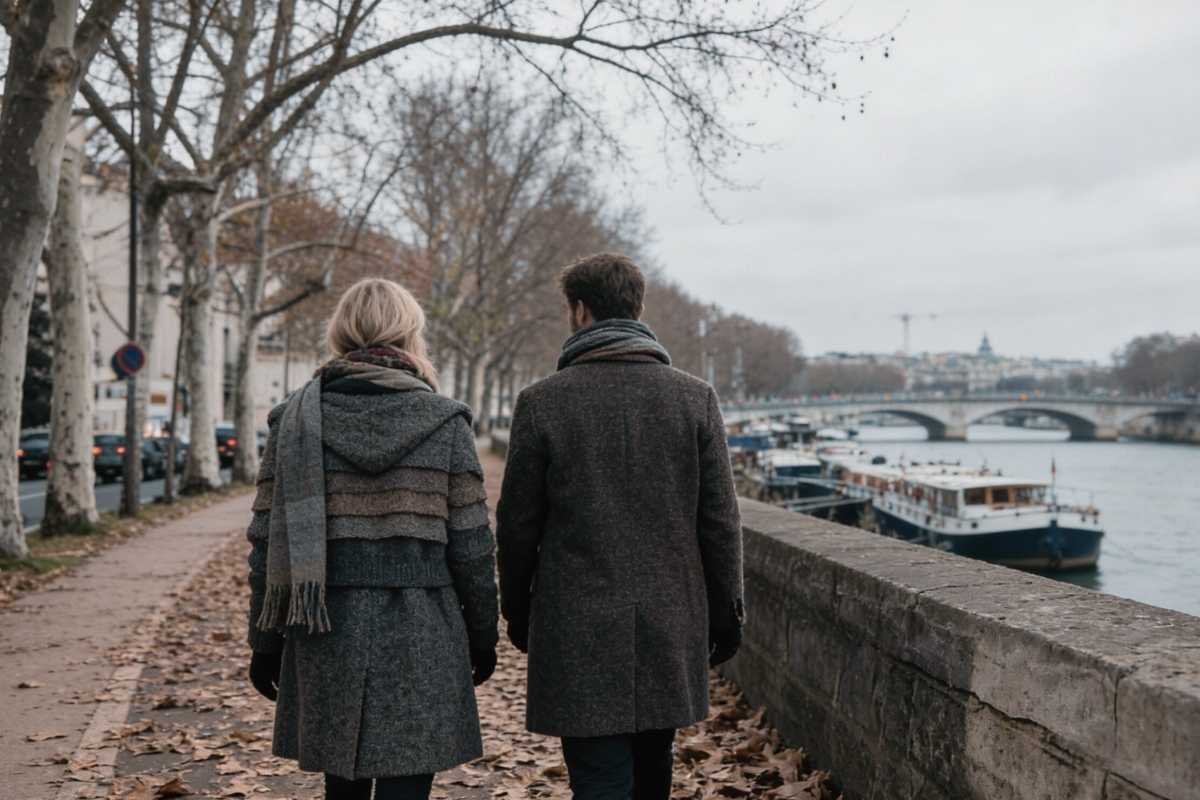
The difference between an enjoyable January walk and an exhausting one is often exposure time rather than the temperature itself.
What About Snow?
Snow can fall in Paris during January, but treat it as a bonus rather than part of the itinerary.
When snow does appear, it can transform familiar places such as the Eiffel Tower, Tuileries Garden, Sacré-Cœur, and the Seine. But snowfall is uncommon enough that choosing January specifically for a snowy Paris experience is risky.
If your trip happens to coincide with snow, check transport and attraction conditions before changing your plans. Otherwise, pack for cold rain and damp streets and you will be prepared for the more likely weather.
What to Pack in Addition to Clothing
A few small items can make January easier without filling your suitcase:
- a compact umbrella;
- a small water-resistant bag or backpack;
- a portable phone charger, since navigation becomes more important when you change plans;
- a reusable water bottle;
- a small pack for wet gloves or accessories;
- lip balm and moisturizer if cold wind bothers your skin.
The goal is not to prepare for every theoretical weather event. It is to make normal January friction easier to handle.
Do Not Pack for the Monthly Average Alone
Averages hide individual weather systems. January can produce warmer-than-average afternoons as well as colder spells.
Check the forecast again a few days before departure. If temperatures are expected to drop substantially below seasonal norms, adjust your clothing then rather than carrying unnecessary heavy gear for every January trip.
How to Plan Around Paris January Weather
Weather planning should support the trip, not become the trip. You do not need a completely different itinerary every time the forecast changes.
The simplest January approach is to protect the outdoor experiences where weather matters and keep enough indoor flexibility that rain never destroys the whole day.
Use the Brighter Part of the Day Outdoors
Schedule streets, river walks, viewpoints, markets, parks, and outdoor photography during the better daylight window whenever possible.
Museums, churches, galleries, shopping, cafés, and covered attractions can move later in the day or absorb periods of rain without losing much value.
This is particularly useful if you have only a few days in Paris. You are not wasting daylight inside unless the indoor attraction itself is the day’s priority.
A Dry January Day Can Still Include Plenty of Walking
Cold alone does not make outdoor sightseeing impractical.
On a dry day, you might begin with a neighborhood or landmark while the light is useful, stop for lunch indoors, spend part of the afternoon in a museum, then finish with an illuminated landmark or short evening walk.
The important difference from summer is that you should not automatically connect every activity with another long walk simply because the locations look close on a map.
On a Wet Day, Change the Order Rather Than Cancelling Paris
Persistent rain is a good reason to move your substantial indoor attraction earlier.
A museum morning followed by lunch, a covered passage or shop, then a shorter neighborhood walk when the weather improves can still produce a strong day.
Paris has enough indoor cultural options that rain rarely needs to become a lost day. The latest official winter guidance from Paris je t’aime continues to highlight museums, covered spaces, cafés, shopping, shows, and other indoor activities during colder weather. :contentReference[oaicite:4]{index=4}
If January activities rather than weather are your main question, continue with our Things to Do in Paris in January guide.
Use Transport to Protect Energy, Not to Avoid Every Walk
Walking remains one of the best ways to experience Paris in January. The goal is not to replace it with the Metro whenever the temperature drops.
Use walking where the route itself has value: through Montmartre, Le Marais, the Latin Quarter, along a useful section of the Seine, or between nearby landmarks.
For longer connections, especially in rain or after dark, public transport can save time and energy. That keeps your outdoor exposure focused on places you actually want to see rather than on transferring between distant parts of the city.
For ticket and route planning, use our How to Get Around Paris guide.
Weather Can Affect Spending, but This Is Not a Budget Problem
A wet or particularly cold day may lead to more Metro journeys, an extra café stop, or another paid indoor attraction. That is useful to remember, but it does not mean January weather automatically makes Paris expensive.
If budget is a major part of your decision, use our Paris Winter Budget Guide for the full cost breakdown rather than trying to calculate the entire trip from weather alone.
Families Need Shorter Exposure Blocks
January weather affects families less through temperature itself and more through accumulated discomfort.
A child may be perfectly happy during a 20-minute outdoor walk, then struggle once rain, hunger, tiredness, and another long transfer arrive together.
Keep outdoor sections focused, know where the next warm stop is, and avoid waiting until everyone is already cold before taking a break.
For family-specific logistics, use our Paris With Kids guide.
January Weather Mistakes Worth Avoiding
- Packing only for temperature: moisture and wind deserve equal attention.
- Wearing poor walking shoes: wet feet can spoil a moderate-weather day surprisingly quickly.
- Building the whole day outdoors: keep at least one meaningful indoor option available.
- Ignoring daylight: use brighter hours for sights where natural light improves the experience.
- Walking every connection: save long walks for routes worth experiencing.
- Checking the forecast too early: monthly climate data is useful for packing, but detailed forecasts become more meaningful closer to your dates.

January works best when outdoor time is spent on places worth seeing rather than on unnecessary transfers.
Paris January Weather FAQ
How cold is Paris in January?
Average January temperatures are around 3°C at the lower end and roughly 8°C at the upper end. Individual days can fall outside those averages, and damp wind can make conditions feel colder.
Does it rain a lot in Paris in January?
Rain is common enough to plan for, but January is not necessarily a month of continuous heavy rain. Current Paris climate data lists average January rainfall at about 47.6 mm. Prepare for intermittent rain, drizzle, and damp streets.
Does it snow in Paris in January?
It can, but snow is relatively uncommon and often does not remain for long. Plan for rain and cold first, and treat snowfall as a possibility rather than an expectation.
What shoes should I wear in Paris in January?
Choose comfortable water-resistant walking shoes with reasonable grip. You will usually benefit more from dry, comfortable feet than from extremely heavy winter footwear.
Do I need a very heavy coat for Paris in January?
Not necessarily. Adjustable layers with a wind- and rain-resistant outer layer are often more practical because you will move repeatedly between cold streets and heated indoor spaces.
Can you still walk around Paris in January?
Yes. Walking remains useful and enjoyable on many January days. Keep long routes flexible, use public transport for less interesting cross-city connections, and shorten outdoor periods when rain or wind becomes uncomfortable.
Is January too dark for sightseeing in Paris?
No, but daylight is limited compared with spring and summer. Use the middle of the day for outdoor places and keep museums, restaurants, shopping, and illuminated sights for later periods.
Should I avoid Paris in January because of the weather?
Not solely because of the weather. January is manageable if you are comfortable with cold, damp conditions and shorter days. Whether the month fits your overall travel style is covered in more detail in our Is Paris Good in Winter guide.
Final Weather Summary
Weather in Paris in January is best understood as cool, damp, and changeable rather than extremely cold or reliably snowy.
Expect average temperatures around 3°C to 8°C, regular chances of rain, relatively short daylight, and weather that can feel colder during long periods of exposure. Pack water-resistant walking shoes, adjustable layers, wind protection, and a compact umbrella.
Use daylight for outdoor Paris, keep useful indoor stops nearby, and check Météo-France shortly before each sightseeing day. Once you plan for moisture and shorter days instead of waiting for perfect winter weather, January becomes much easier to manage.