
How to get around London becomes much easier once you stop treating every journey the same way. The Tube is usually the strongest choice for a larger cross-city move, buses work well when you want a simpler above-ground route, and walking is often the fastest way to connect nearby sights inside the same area.
The mistake many first-time visitors make is trying to optimize every journey by minutes. In London, the route that looks three minutes faster can still feel worse if it adds another interchange, a long station corridor and an awkward walk at the other end.
The practical system is simpler: use rail for the big move, walk inside sightseeing clusters, use buses when the route is direct or your energy is dropping, and choose fewer changes whenever two routes are reasonably close.
This guide focuses on how to move around London efficiently: when to use the Tube, bus, Elizabeth line, Overground, DLR, walking, river services and taxis, how to plan real sightseeing days, and how to avoid the transport mistakes that waste time. For fares, Oyster, contactless, Travelcards, daily caps and ticket costs, use our separate London Public Transport Costs guide.
How to Get Around London: Quick Answer
Quick answer: Best way to get around London by situation
- Most sightseeing days: walking + Tube
- Short central journeys: walk when the route is direct
- Cross-city travel: Tube or Elizabeth line
- Simple above-ground journeys: bus
- East and southeast London: DLR, Elizabeth line or Overground depending on the route
- Longer suburban journeys: rail, Overground or Elizabeth line
- Heavy luggage or limited mobility: prioritize step-free routes or compare a taxi
- Late-night travel: check the live network before leaving
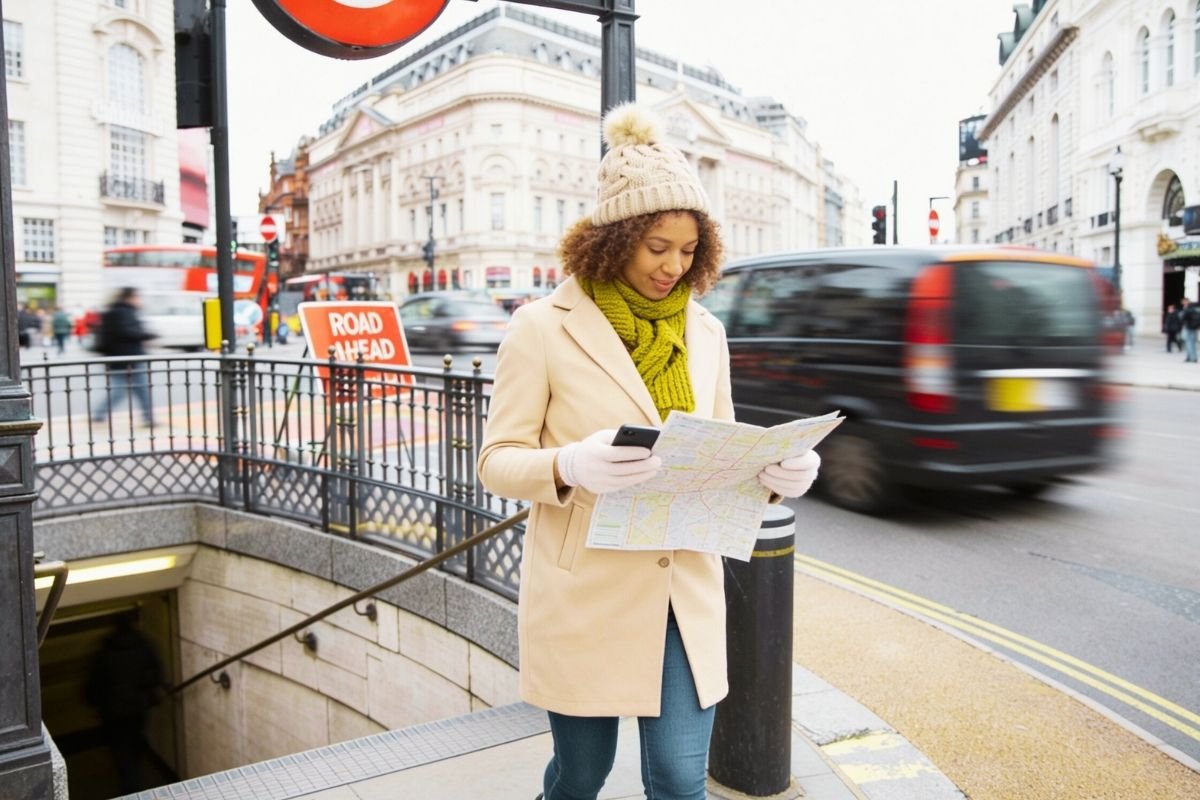
London becomes easier when you choose the transport mode for the journey instead of using the Tube automatically.
Best Ways to Get Around London
London does not have one transport mode that wins every journey. The strongest sightseeing days usually combine two or three modes instead of forcing the whole itinerary onto the Underground.
| Transport | Best for | Main advantage | Main trade-off |
|---|---|---|---|
| Walking | Nearby attractions and neighborhood exploration | No station entry, transfers or waiting | Long cross-city walks quietly consume sightseeing time |
| Tube | Large moves across central London | Fast and frequent | Stairs, corridors and busy interchanges can add effort |
| Bus | Direct above-ground journeys and tired days | Less station friction and useful street views | Traffic can make journey times less predictable |
| Elizabeth line | Long east-west journeys and Heathrow connections | Fast, modern and useful for major cross-city travel | Not relevant to every sightseeing route |
| Overground / DLR | Outer neighborhoods and east/southeast London | Connects areas that may be awkward by Tube | Less useful for a classic central sightseeing loop |
| River services | Scenic Thames journeys | Transport and sightseeing at the same time | Usually less useful for ordinary point-to-point travel |
| Taxi / private transfer | Luggage, late arrivals and mobility needs | Door-to-door convenience | Costs more than public transport |
Walking — Best for Sightseeing Inside One Area
Walking should be part of almost every London itinerary. Many central attractions form natural clusters, and entering the Tube for a very short journey can take longer than simply continuing on foot.
Westminster and the South Bank combine naturally. Covent Garden, Soho, Leicester Square and Trafalgar Square also work well as a walking cluster. Around the City, several historic sights sit close enough that repeated station journeys add more friction than value.
Best for: nearby sights, central neighborhoods and travelers who want the streets between landmarks to remain part of the trip.
Main trade-off: do not turn walking into a rule. Crossing London on foot simply to avoid transport can consume an hour that would have been better spent at the destination.
London Underground — Best for Bigger Cross-City Moves
The Tube is the default choice when your next stop sits several neighborhoods away. It compresses distance extremely well and connects most of the areas first-time visitors use.
The important part is not memorizing all the lines. Before entering a station, confirm three things: the line, the direction and the station where you will leave or change.
Large interchanges can involve longer internal walks than visitors expect. If two routes differ by only a few minutes, a direct train or one simple change is often the better real-world choice.
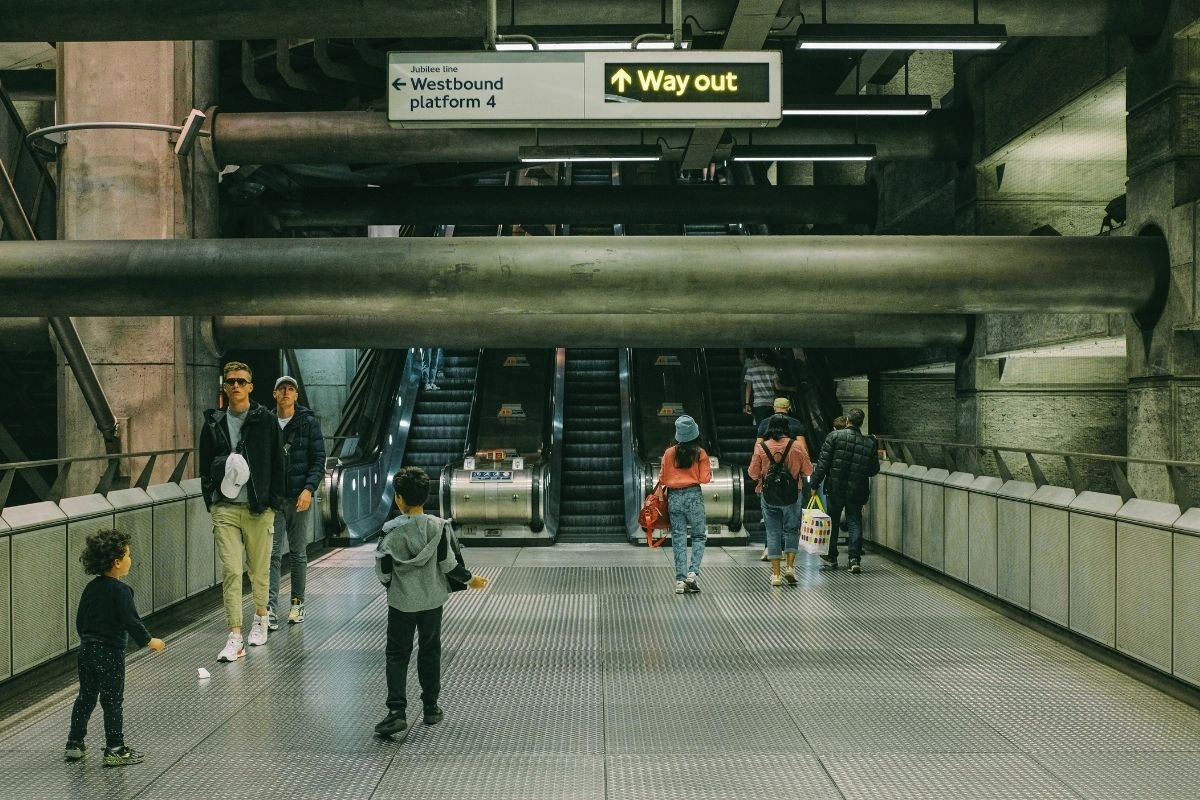
In London, the shortest journey on an app is not always the easiest journey in practice.
Best for: moving between distant sightseeing areas, timed attractions and cross-city travel where walking would use too much of the day.
Main trade-off: busy stations, escalators, stairs and corridor walking can become tiring, especially with luggage or a stroller.
London Buses — Best for Simple Above-Ground Travel
Buses are especially useful when a direct route avoids an awkward Underground interchange. They also let you understand how London neighborhoods connect because you remain above ground instead of disappearing into stations between stops.
A bus often makes sense late in a sightseeing day when speed is no longer the only priority. Sitting down and watching the city can be easier than navigating another large interchange when your legs and attention are already tired.
Best for: direct short journeys, travelers who dislike underground stations, families, scenic movement and lower-friction travel.
Main trade-off: road traffic means a bus that looks excellent on the map can become slower during busy periods. Compare the live journey before leaving.
Elizabeth Line, London Overground and DLR
Visitors sometimes treat every train that is not the Tube as a specialist service. That makes the network harder than it needs to be.
The Elizabeth line is especially useful for fast east-west travel through London. It connects major stations including Paddington and Liverpool Street and also provides an important rail connection with Heathrow Airport.
The London Overground becomes useful when your itinerary moves around neighborhoods outside the traditional central core. It can connect parts of north, east, south and west London without forcing you back through Zone 1 for every journey.
The DLR is particularly useful in Docklands and southeast London, including Canary Wharf, Greenwich connections and London City Airport.
You do not need to memorize these networks before arrival. Let the live journey planner suggest them when they create the cleanest route.
River Services and Cycling — Useful, but Not Your Default
River transport can turn one journey into part of the sightseeing day. It makes the most sense when both your starting point and destination already sit close to a useful pier.
Do not choose a river service simply because it looks scenic if the pier locations create long walks at both ends. Treat it as a strong experience when the route fits, not as a replacement for the Tube.
Public cycle hire can also work for confident urban cyclists, especially in parks and areas with suitable cycling infrastructure. Visitors uncomfortable with London traffic should not feel pressure to use a bicycle just because the distance looks short.
How to Use London Transport Efficiently
Knowing which vehicles exist is the easy part. The difference between a smooth London day and an exhausting one comes from how you combine them.
Choose Fewer Changes When the Time Difference Is Small
A journey app may show one route taking 24 minutes and another taking 28. If the faster option requires two interchanges while the slower route is direct, the four-minute saving can disappear inside escalators, corridors and platform changes.
Transport for London’s Journey Planner allows travelers to compare routes by factors such as fewer changes and less walking. Use that flexibility instead of accepting the first route automatically.
You can check journeys through the official TfL Journey Planner.
Check the Exit Before You Reach the Street
London stations can have several exits that place you on different streets. Choosing the wrong one rarely ruins the day, but it can create ten unnecessary minutes of walking around a large junction.
Before leaving the platform or concourse, check which exit puts you closest to your actual destination. This becomes especially useful around large stations and complex road layouts.
Use One Payment Method — Then Leave the Fare Math to the Cost Guide
For normal public transport, keep the same eligible payment method throughout the journeys that need to be linked together. Do not switch casually between a physical card, the same card stored on a phone, or another device.
That is all you need to remember in this movement guide. For Oyster vs contactless, Travelcards, individual fares, daily caps, weekly caps, zones and touch rules, see our dedicated London Public Transport Costs article.

Keep payment simple, then focus on choosing the best route rather than calculating every fare during the day.
Group Sightseeing by Area
The biggest transport improvement usually happens before you enter a station.
A scattered day might send you from Westminster to Camden, then the Tower of London, then Notting Hill. Every individual journey is possible, but the total day becomes a transport project.
Instead, build around one main area and one nearby secondary area. Westminster pairs naturally with the South Bank. The Tower area works with parts of the City. South Kensington museums can combine with Hyde Park or nearby west-London plans.
TripsCity Insight: London transport works best when the itinerary already makes geographic sense. Good routing cannot completely rescue a badly scattered sightseeing day.
Accessibility, Strollers and Heavy Luggage
Do not assume that every Underground station offers a step-free route from street to train. Accessibility varies by station, platform and line.
The Elizabeth line is especially useful for travelers who need easier access because its stations provide step-free access from street to platform, with many central and Heathrow stations offering step-free access to the train. DLR stations are also step-free, and London buses are designed to accommodate wheelchair users.
For the Tube, check the exact journey rather than relying on the network generally. A station that works well in one direction may still involve steps, a platform gap or a different interchange experience.
Travelers using wheelchairs, strollers or heavy luggage can check the official TfL accessibility information before leaving.
Practical rule: if a direct accessible route takes slightly longer than a faster route with several difficult transfers, the accessible route is usually the better choice.
How to Get Around London From the Airports
London has several airports, so there is no single airport-transport answer. The right route depends heavily on where your hotel is located.
Heathrow Airport
Heathrow has two major public-transport choices that matter to most visitors: the Elizabeth line and the Piccadilly line. The better option depends on the part of London you need to reach and the number of changes required after arriving in the city.
Do not automatically choose the fastest train into “central London.” The useful question is which route leaves you closest to the hotel with the least complicated final connection.
Gatwick, Stansted and Luton
These airports rely more heavily on rail connections into London rather than the Underground itself. Your destination station matters because arriving at the wrong side of central London can add another difficult journey with luggage.
Before travel, compare the airport rail arrival point with the exact hotel address instead of judging only by total train time.
London City Airport
London City Airport connects conveniently with the DLR. It can be particularly straightforward for travelers staying around east London, Canary Wharf or areas connected through the DLR and Elizabeth line.
When a Taxi or Pre-Booked Airport Transfer Makes Sense
Public transport is normally the logical starting point, but luggage, young children, reduced mobility or a very late arrival can change the decision.
A door-to-door option becomes more valuable when the public-transport route requires several changes after a long flight. You can compare pre-booked London airport transfers when convenience matters more than minimizing transport cost.
Affiliate disclosure: TripsCity may earn a commission if you book through this link, at no extra cost to you.
Plan the Return Journey Before a Late Evening
Do not assume the route you used during the afternoon will operate exactly the same way late at night. Some services run later than others, and selected Night Tube and overnight services operate on specific routes and nights.
Check the live network before the evening begins rather than trying to solve the return journey at the station after midnight. For current overnight Tube information, use the official TfL Night Tube page.
Best London Transport Strategy by Trip Type
The best way to get around London changes with the traveler. A route that feels effortless to a solo visitor with a small backpack can be a poor choice for a family using a stroller.
| Situation | Best starting strategy | Why |
|---|---|---|
| First-time visitor | Walk + Tube | Combines efficient cross-city movement with street-level sightseeing |
| 2–3 day trip | Central clusters + direct rail journeys | Protects limited sightseeing time |
| Family with stroller | Accessible rail + buses | Reduces stairs and complicated interchanges |
| Heavy luggage | Direct rail route or taxi | Minimizes physical transfers |
| Budget trip | Walk sensible distances + public transport | Avoids both unnecessary rides and exhausting cross-city walks |
| Longer stay | Use the full network | Overground, DLR and outer routes become more useful |
| Late-night evening | Check the return route before leaving | Prevents last-minute route confusion |
First-Time Visitors: Keep the System Simple
On a first visit, you do not need to learn every transport mode. Start with walking and the Tube. Add buses when the route is direct, and let the journey planner introduce Elizabeth line, Overground or DLR when one of them genuinely improves the journey.
The goal is confidence, not network mastery.
Families: Protect the Return Journey
Families should judge transport differently. The morning journey may feel easy when everyone is rested, but the same station change can feel much harder at 5pm with a tired child.
Prioritize fewer changes, step-free routes where needed and a simple path back to the hotel. This is also why accommodation location matters so much for family trips. Our London family accommodation guide compares areas with those logistics in mind.
Short Trips: Do Not Commute Across London for Every Attraction
On a two- or three-day visit, transport mistakes cost more because you have less time to absorb them.
Build each day around compact sightseeing clusters, then make one larger Tube or rail movement when necessary. Avoid crossing the city repeatedly simply because several attractions appeared on the same “top things to do” list.
Longer Trips: Use More of the Network
Once you have several days, Overground, DLR and less-central neighborhoods become easier to include. You can afford a longer movement when the destination deserves half a day instead of squeezing it between unrelated central stops.
This is also when London begins to feel smaller. After a few days, you stop thinking in individual stations and start understanding which parts of the city naturally connect.
Common London Transport Mistakes to Avoid
- Taking the Tube for every journey: nearby attractions can be faster and more enjoyable on foot.
- Choosing only the fastest route: an extra interchange can make a tiny theoretical time saving meaningless.
- Ignoring the station exit: large stations can place you on the wrong side of a busy road or major block.
- Crossing London repeatedly: scattered sightseeing creates unnecessary transport time.
- Planning accessibility after arrival: check the complete step-free journey when stairs or platform gaps matter.
- Using a bus without checking live travel time: road traffic can change the value of the route.
- Assuming every late-night route stays unchanged: check service status and overnight options before the evening begins.
- Turning the movement guide into a fare calculation: choose the route here; use the separate costs guide for fares and passes.

A bus can be the better journey even when the Tube looks slightly faster on paper.
TripsCity Insight: The best London route is the one that still feels simple when you are tired. Speed matters, but so do the number of changes, the station layout and the walk at the end.
How to Build a London Sightseeing Day Around Transport
A practical London day has a geographic shape.
Start with one main area. Add nearby sights that naturally connect on foot. Then use public transport for the single larger movement that changes the character of the day.
For example, a Westminster morning can flow into the South Bank without another major transport decision. A South Kensington museum day can stay focused on west-central London instead of jumping to the Tower area for one attraction and returning again later.
This approach reduces more than journey time. It lowers the number of decisions you have to make, keeps meal breaks easier and makes it more realistic to return to the hotel without feeling that you are beginning another commute.
If your accommodation is still undecided, our Where to Stay in London guide compares neighborhoods by location, connections and travel style.
FAQ: How to Get Around London
What is the best way to get around London for tourists?
For most visitors, the best combination is walking and the Tube. Walk between nearby attractions inside one area, then use the Tube or another rail service for larger moves across the city. Add buses when they provide a simple direct route or when you prefer to stay above ground.
Is the London Underground difficult for first-time visitors?
The network is large, but individual journeys are usually straightforward once you confirm the line, direction and destination before entering. The harder part is often navigating large interchanges, so choose fewer changes when two routes are similar.
Should I take the Tube or walk in central London?
Walk when the sights are genuinely close and belong to the same sightseeing cluster. Use the Tube when walking would consume a meaningful part of the day or when you are moving between distant neighborhoods.
Are London buses useful for tourists?
Yes. Buses can be especially useful for direct short journeys, tired afternoons and travelers who prefer staying above ground. They also provide street views, although traffic can make journey times less predictable than rail.
What is the Elizabeth line useful for?
The Elizabeth line is useful for fast east-west travel across London and for Heathrow Airport connections. It can also simplify some longer journeys that would otherwise require multiple Underground changes.
Is London public transport accessible with luggage or a stroller?
It depends on the route. Elizabeth line and DLR stations generally offer much stronger step-free access than the older Tube network, while buses are also useful when stairs are a concern. Check the exact journey before traveling rather than assuming every station is accessible.
Do I need Oyster or contactless to get around London?
Most visitors use Oyster or contactless for public transport, but this article focuses on movement rather than fare strategy. For the full comparison of Oyster, contactless, Travelcards, fares, zones and caps, see our London Public Transport Costs guide.
Does London public transport run late at night?
Some services run late or overnight, and selected Night Tube services operate on Friday and Saturday nights. Exact routes and service changes should be checked before travel, particularly after a late event.
Final Verdict: How Should You Get Around London?
For most sightseeing trips, the strongest strategy is simple: walk locally, use the Tube for the bigger move, and use buses when they reduce friction.
Add the Elizabeth line, Overground, DLR or rail when they create a cleaner route. Prioritize fewer changes when the time difference is small, check accessibility when stairs or luggage matter, and plan your day by neighborhoods instead of bouncing between unrelated attractions.
The goal is not to master London’s transport network. It is to make each journey simple enough that transport stays in the background while the city remains the reason you came.
Next, use our London Public Transport Costs guide for fares and payment, our Where to Stay in London guide for choosing your base, and our London Budget Guide for the wider trip budget.
Last updated: September 2026.