
If you are comparing the best areas to stay in London for first-time visitors, start with one question: which location will make your first few days easier to understand?
London is large enough that a hotel can look central on a map and still create awkward daily journeys. For a first trip, the strongest bases usually put several classic sights within walking distance or give you simple routes to the places you are most likely to visit.
The goal is not to find the single “best” London neighborhood. The best areas to stay in London for first-time visitors are the ones that reduce navigation, avoid unnecessary cross-city travel and still work when you return tired after a full sightseeing day.

A first London trip becomes much easier when your hotel base matches the routes you will actually use.
Best Areas to Stay in London for First-Time Visitors at a Glance
| Area | Best For | Main First-Trip Advantage | Main Trade-Off |
|---|---|---|---|
| Covent Garden / Charing Cross | Short trips and maximum walkability | West End, Trafalgar Square and many central sights nearby | Premium prices, crowds and possible evening noise |
| Westminster / Victoria | Classic landmarks and efficient sightseeing | Easy access to Westminster sights plus useful transport | Some streets feel busy or less atmospheric |
| South Bank / Waterloo | Thames walks and first-time sightseeing | Landmarks, river walks and strong transport in one area | Busy visitor zones and variable atmosphere by street |
| Bloomsbury / Russell Square | Balanced central stays | Walkability, British Museum and a calmer evening feel | Hotel quality varies noticeably |
| South Kensington / Gloucester Road | Museums and a more polished base | Major museums plus useful central connections | Higher accommodation prices |
| Paddington | Arrival convenience and transport flexibility | Useful rail, Underground and Elizabeth line connections | Less sightseeing atmosphere than the West End |
If you need a broader comparison covering different traveler types, longer stays and more neighborhoods, use our general London accommodation guide. If children, stroller access and family-room logistics drive the decision, our London family accommodation guide goes deeper into that specific trip type.
How to Choose Among the Best Areas to Stay in London for First-Time Visitors
First-time visitors have a different problem from repeat visitors. You are not only moving around the city; you are learning how its neighborhoods, stations and sightseeing clusters fit together.
Best Areas to Stay in London for First-Time Visitors: Check Your Sightseeing Routes
Choose three places you are almost certain to visit—perhaps Westminster, Covent Garden and the South Kensington museums—and test the journey from the exact hotel address.
You do not need a direct route everywhere. However, if most of your sightseeing depends on repeated transfers and long station walks, the hotel may make a first visit more complicated than necessary.
How First-Time Visitors Should Compare London Areas for Walkability
A hotel five minutes from one attraction is not automatically a better base than a hotel that places several neighborhoods within a comfortable walking radius.
For a first trip, areas around Covent Garden, Westminster and South Bank can be powerful because one walk may connect several things you already planned to see.
Check the Evening Return
Look at the hotel route at 9pm as well as 9am. After a day of museums, landmarks and walking, a complicated return feels very different from the same journey when you are fresh.
The best first-time bases reduce the number of decisions you need to make when the day is nearly over.
Inspect the Exact Street
Neighborhood names can hide major differences. A hotel can be technically in Covent Garden yet face a noisy nightlife street, or be listed around Paddington while sitting on a much calmer side road.
Check recent reviews for noise, look at the immediate streets on a map, and identify the station entrance you will realistically use.
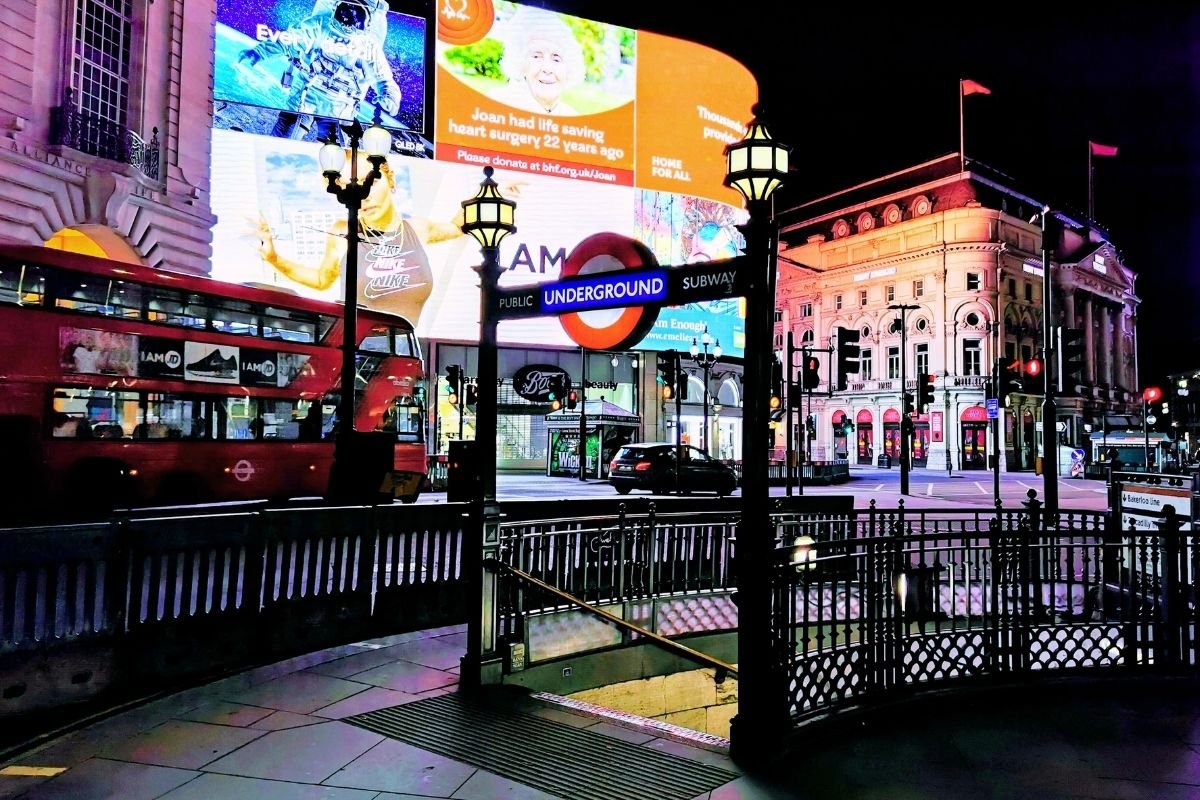
The neighborhood name matters, but the exact street and station route often decide how convenient the hotel feels.
1. Covent Garden and Charing Cross: Best for Maximum First-Time Walkability
Covent Garden and Charing Cross are among the best areas to stay in London for first-time visitors who want classic central London immediately outside the hotel.
Trafalgar Square, the National Gallery, Soho, Leicester Square, the West End and several Thames walking routes are close enough that a large part of a short first trip can happen on foot.
This is especially useful when you only have three or four days. Every journey you replace with a simple walk leaves more time for sightseeing and reduces the amount of transport planning required while you are still learning the city.
Best for: first trips, short city breaks, theatre, restaurants and travelers who value location over room size.
Typical price position: high to premium. You are paying heavily for location.
Main advantage: perhaps the strongest combination of central walkability and evening activity on this list.
Main trade-off: crowds, strong hotel demand and potential street noise. Read recent room-specific reviews before choosing a property.
2. Westminster and Victoria: Best for London’s Classic Landmarks
If your mental picture of a first London trip includes Big Ben, Westminster Abbey, Buckingham Palace and St James’s Park, Westminster and Victoria put many of those sights into an efficient sightseeing radius.
Victoria adds another advantage: transport. Its rail, Underground and coach connections make it a practical base when you want landmark access without depending entirely on walking.
The distinction between the two matters. Westminster places you closer to some of London’s most famous sights, while Victoria often gives you a broader hotel choice and stronger arrival or onward-transport logistics.
Best for: landmark-focused first visits, shorter trips and travelers who want practical transport.
Typical price position: generally high, with substantial variation by exact street and hotel category.
Main advantage: classic sightseeing begins quickly, which is valuable when you are seeing London for the first time.
Main trade-off: some streets around transport hubs or government districts can feel functional rather than atmospheric.
For the wider structure of a first London itinerary, use our Complete Travel Guide to London rather than trying to make the hotel location solve every part of the trip.
More of the Best Areas to Stay in London for First-Time Visitors
3. South Bank and Waterloo: One of the Best Areas to Stay in London for First-Time Visitors
South Bank is one of the easiest areas for a first-time visitor to understand geographically. The Thames becomes your reference point, and several major attractions sit along or close to the riverside.
The London Eye, Westminster views, Southbank Centre and riverside walks are nearby, while Waterloo provides major rail and Underground connections. Continue east and the river route eventually leads toward Bankside, Tate Modern, Shakespeare’s Globe, Borough Market and London Bridge.
That combination creates something especially useful on a first trip: a sightseeing corridor you can understand without constantly checking a map.
Best for: riverside sightseeing, photographers, first-time walkers and visitors who want landmarks integrated into normal journeys.
Typical price position: generally high, particularly close to major river attractions and views.
Main advantage: strong sightseeing density combined with Waterloo’s useful transport.
Main trade-off: the experience changes quickly by micro-location. Some streets feel highly visitor-oriented, while others become quieter or more business-like.
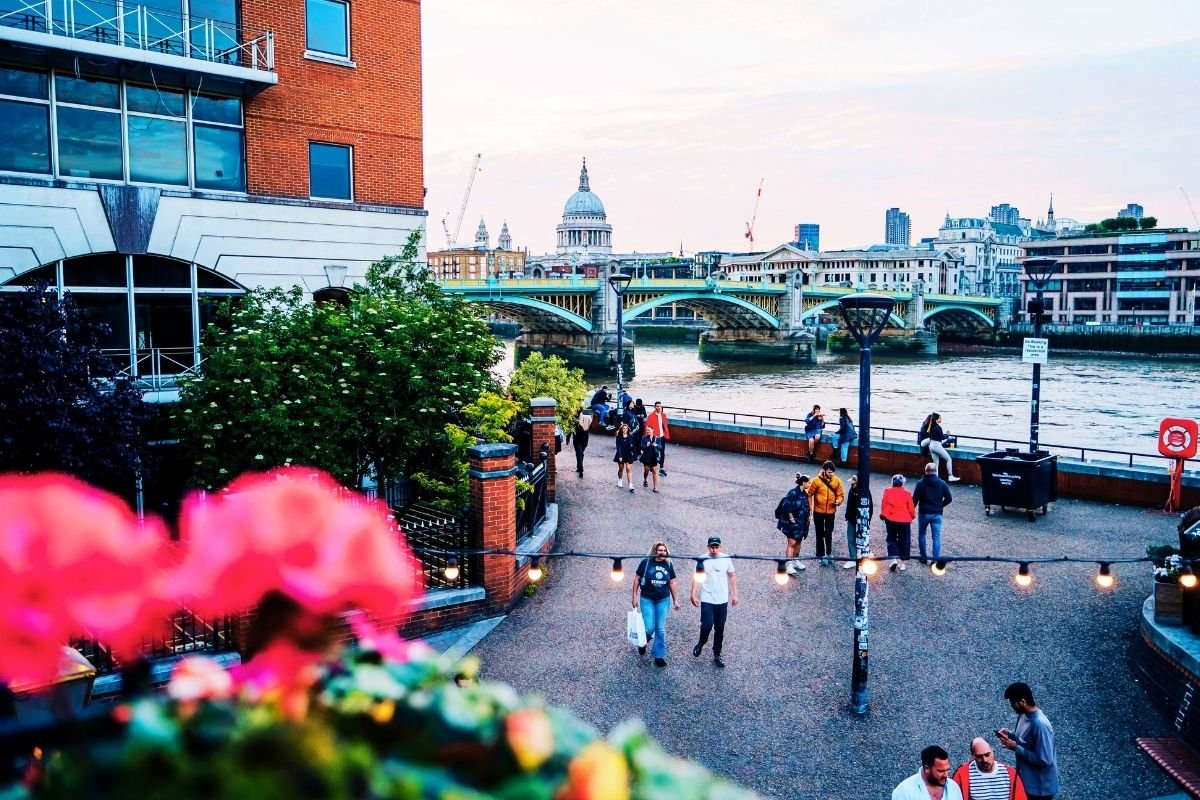
The Thames gives first-time visitors an easy geographic reference while linking several major sightseeing areas.
4. Bloomsbury and Russell Square: Best for a Balanced Central Base
Bloomsbury is a strong choice when you want central London without placing the hotel directly inside the busiest entertainment streets.
The British Museum is in the neighborhood, Covent Garden is walkable from many addresses, and King’s Cross, Soho and the West End remain relatively easy to reach.
For first-time visitors, its advantage is balance rather than spectacle. You get a useful central position, but evenings can feel calmer than Covent Garden, Leicester Square or Soho.
Best for: couples, solo travelers, museum visitors and travelers who want a calmer central stay.
Typical price position: moderate-high to high, with a broad range of property quality.
Main advantage: central positioning that works for several different sightseeing directions.
Main trade-off: hotels vary considerably. Room size, sound insulation and overall quality deserve more attention here than the neighborhood label alone.
5. South Kensington and Gloucester Road: Best for Museums and West London
South Kensington gives a first-time visitor a very different version of central London. It is more polished and residential than the West End, yet major museums and useful transport remain close.
The Natural History Museum, Science Museum and Victoria and Albert Museum create a concentrated sightseeing cluster, while Hyde Park and west London are also convenient.
This works well when those museums are high on your itinerary. However, do not choose South Kensington merely because it appears on every accommodation list; if most of your plans are around the West End and east-central London, another base may reduce your daily travel.
Best for: museum-heavy first trips, visitors who prefer calmer evenings and travelers spending significant time in west London.
Typical price position: high to premium.
Main advantage: a strong museum cluster combined with a more residential atmosphere.
Main trade-off: accommodation can be expensive for the room size, and the Underground station should not be assumed to be fully step-free. If accessibility matters, check the exact route before booking on the official TfL South Kensington information page.
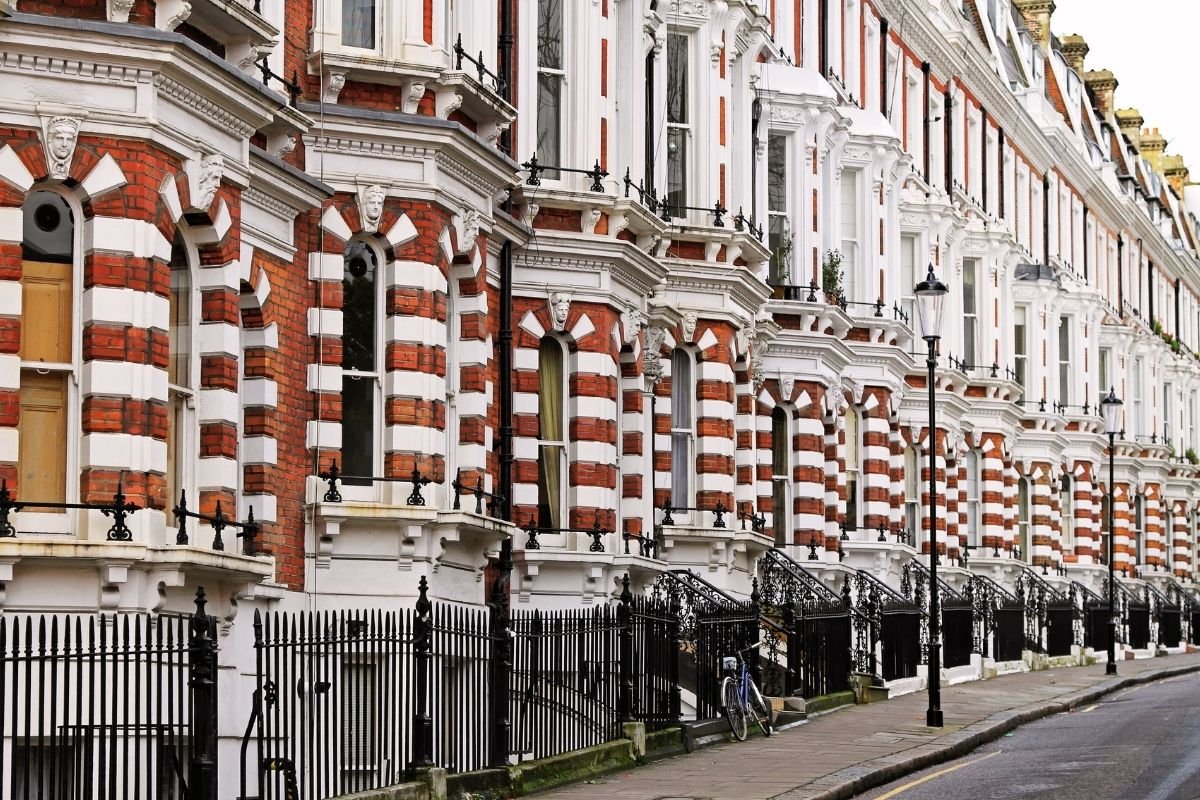
South Kensington works best when its museum cluster and west-London position genuinely match your first-trip itinerary.
6. Paddington: Best for Arrival Convenience and Flexible Connections
Paddington is not the neighborhood on this list that most looks like a postcard. Its strength is logistical.
Rail, Underground and Elizabeth line connections make the area particularly practical if Heathrow is part of your arrival or departure plan, if you expect to travel around west London, or if you simply want several transport options available while you are still learning the city.
The hotel inventory is also broad. That can give first-time visitors more choice than premium areas such as Covent Garden or South Kensington.
Best for: arrival convenience, short visits, Heathrow-oriented trips and travelers who prioritize transport over atmosphere.
Typical price position: broad, ranging from relatively simple properties to much more expensive hotels.
Main advantage: transport flexibility and useful arrival-day logistics.
Main trade-off: the neighborhood experience varies strongly by street, and it does not provide the same immediate sightseeing atmosphere as the West End or South Bank.
Which London Area Is Best for Your First Visit?
| Your Priority | Start With | Think Twice If… |
|---|---|---|
| Maximum walkability | Covent Garden / Charing Cross | You need quiet evenings or better-value rooms |
| Classic landmarks | Westminster / Victoria | You want strong neighborhood nightlife and local atmosphere |
| River sightseeing | South Bank / Waterloo | You prefer a residential-style base |
| Central but calmer | Bloomsbury / Russell Square | You want famous views directly outside the hotel |
| Museums and west London | South Kensington / Gloucester Road | Hotel value is your main priority |
| Arrival and transport | Paddington | You want the strongest sightseeing atmosphere outside your door |
This is where the best areas to stay in London for first-time visitors become easier to compare. Do not ask which neighborhood is objectively best. Ask which one removes the most unnecessary movement from the trip you actually intend to take.
How Hotel Prices Change by Season
Do not judge a London neighborhood from one hotel search. Rates change substantially according to season, weekdays versus weekends, large events, room type and booking demand.
| Travel Period | Typical Demand Pattern | What It Means for a First Trip |
|---|---|---|
| January–March | Often lower outside major dates and school breaks | Premium central areas may become easier to justify |
| Spring | Moderate to high | Check Easter, events and exact weekend dates carefully |
| June–September | Main high season | Expect stronger demand and compare several central bases |
| Autumn | Variable | Good value can appear, particularly after the summer peak eases |
| Christmas and New Year | Strong demand on popular festive dates | Do not assume winter automatically means low hotel prices |
According to Visit London’s seasonal guidance, January through March is usually the cheapest period to visit, while June through September generally forms the main high season.
The practical rule is simple: compare the actual price difference for your dates. Paying more for Covent Garden may be worthwhile on a short trip if it removes several journeys. Paying the same premium on a longer stay may offer much less value.
Best London Areas for First-Time Visitors on Arrival Day
Arrival logistics matter more on a first visit because you have not yet learned the transport system, the station layout or the neighborhood around your hotel.
Two properties may be equally good for sightseeing, yet one can make the first evening noticeably easier because the airport or rail arrival route is simpler.
Check the Full Airport-to-Hotel Journey
Do not stop when a booking site says the hotel is “well connected.” Check the actual chain from your arrival airport or station to the hotel door.
A journey involving luggage, a line change and a ten-minute walk may be perfectly reasonable at midday. The same route after a late flight can feel very different.
Ask the Hotel About Luggage Before Paying for Storage
If you arrive before check-in or leave London after checkout, first ask whether the hotel will hold your bags. Many properties provide this service, which can make your arrival or departure day significantly easier.
Compare Direct Transfer Only When It Solves a Real Problem
Public transport works well for many visitors. However, a late arrival, substantial luggage or a complicated final connection can make a direct transfer worth comparing.
If that applies to your trip, you can compare a pre-booked London airport transfer rather than assuming it is necessary for every traveler.

Arrival convenience can become an important tie-breaker when two London hotel areas otherwise work equally well.
5 Hotel Booking Mistakes First-Time London Visitors Make
1. Booking Beside One Landmark
Being beside Big Ben, Hyde Park or another famous attraction sounds useful, but your trip probably includes several different sightseeing clusters.
Test the hotel against three or four actual destinations rather than one recognizable landmark.
2. Ignoring the Exact Street
The difference between a calm side street and a noisy junction can be only a few hundred metres. Read recent comments about noise and look at what surrounds the hotel.
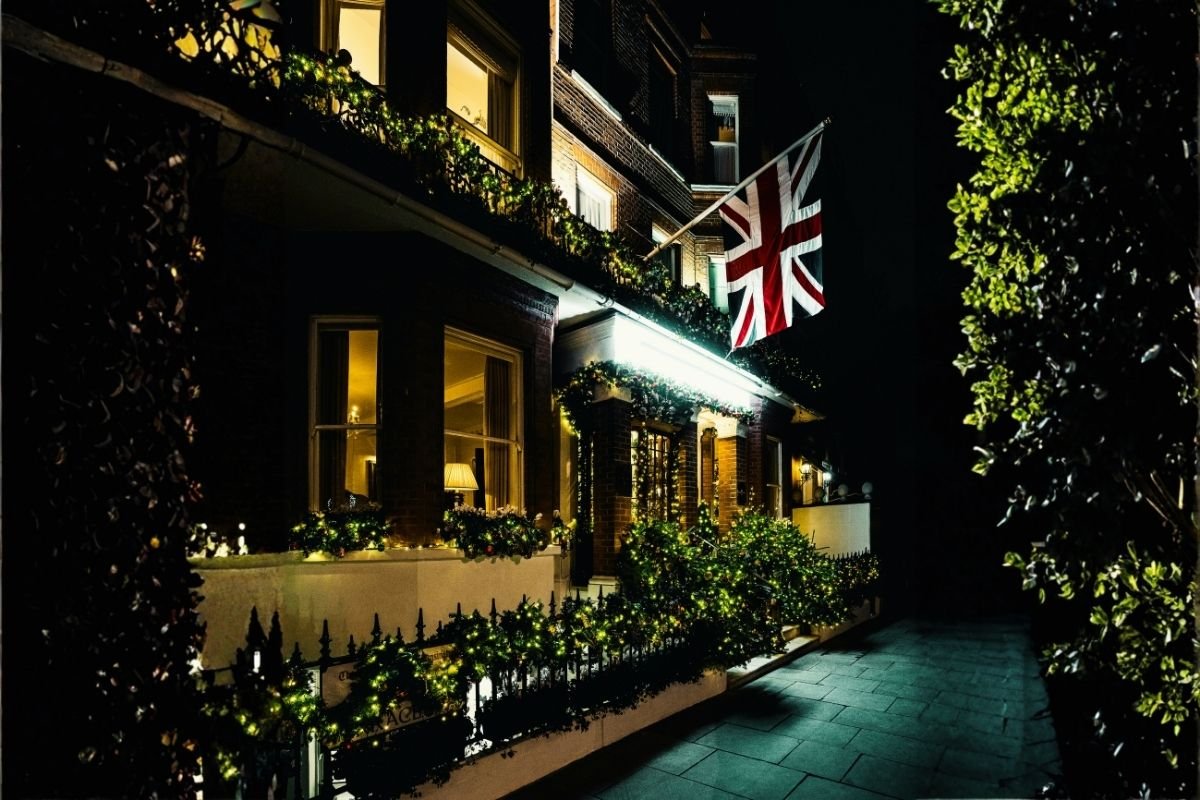
Judge a London hotel by the evening return and immediate street as well as its daytime location.
3. Choosing the Cheapest Hotel Before Checking the Journey
A cheaper room can be a sensible choice, but only after you understand the additional daily travel. This article does not try to reproduce a full London budget calculation; the decision here is simply whether the saving is large enough to justify the extra movement.
4. Waiting Too Long on High-Demand Dates
London hotel availability changes sharply around holidays, major events and the main summer travel period. If your dates are fixed, compare suitable areas before the remaining choice forces you into a poor location.
5. Forgetting the Night Return
First-time visitors often test how quickly they can reach the sights in the morning. Test the reverse trip too. A hotel should still feel practical when you are returning after dinner, theatre or a long sightseeing day.
How First-Time Visitors Should Choose a London Hotel Area
Step 1: Choose Two Areas
Use the comparison in this guide to narrow London to two neighborhoods. Do not open fifty hotels across the entire city.
Step 2: Test Real Routes
Check each shortlisted property against three places you are genuinely planning to visit. For the wider network rather than accommodation choice, use our London transport planning guide.
Step 3: Inspect the Property
Check room size, cancellation terms, lift access if relevant, climate control, recent reviews and repeated comments about noise or maintenance.
Step 4: Compare the Final Rate
Only after the hotel passes the location and room tests should price become the tie-breaker. You can compare current London hotel rates for your dates after narrowing the search to the areas that fit your first-trip itinerary.
Which of the Best Areas to Stay in London for First-Time Visitors Should You Choose?
- Choose Covent Garden or Charing Cross when maximum central walkability and the West End matter most.
- Choose Westminster or Victoria when your first trip is built around London’s classic landmarks and practical transport.
- Choose South Bank or Waterloo when you want the Thames, landmark walks and a strong sightseeing corridor.
- Choose Bloomsbury when you want a balanced central position without sleeping in the busiest entertainment streets.
- Choose South Kensington when museums and west London dominate your plans.
- Choose Paddington when arrival convenience and transport flexibility matter more than having famous sights outside the hotel.
For a first London visit, convenience is not the same as being closest to the centre. The strongest base is the one that makes your important sightseeing routes obvious, keeps the evening return simple and prevents your first few days from becoming an exercise in constant navigation.
Best Areas to Stay in London for First-Time Visitors FAQ
What is the best area to stay in London for a first-time visitor?
Covent Garden is one of the strongest choices when maximum walkability is the priority, while Westminster/Victoria works well for classic landmarks and South Bank/Waterloo for Thames-side sightseeing. Bloomsbury, South Kensington and Paddington suit different itineraries, so the best choice depends on what you plan to visit most often.
Is Covent Garden or Westminster better for a first London trip?
Choose Covent Garden when the West End, restaurants, theatre and central walkability are priorities. Choose Westminster or Victoria when Buckingham Palace, Westminster Abbey, Big Ben and practical transport matter more.
Is South Bank a good place to stay on a first trip to London?
Yes. South Bank gives first-time visitors an easy Thames-side sightseeing corridor and quick access to several famous attractions. Waterloo also provides strong transport connections for places that are not walkable.
Do first-time visitors need to stay in Zone 1?
No. Zone 1 is convenient, but the exact journey matters more than the zone number alone. A well-connected hotel slightly farther out can work better than a central property that repeatedly requires awkward routes.
Is Paddington a good area for first-time London visitors?
Paddington is especially practical when transport and arrival convenience are priorities. It is less atmospheric than Covent Garden or South Bank, but its rail, Underground and Elizabeth line connections can make a short trip easier to manage.
Should I choose a London hotel by neighborhood or Tube station?
Use both. First choose a neighborhood that matches your sightseeing priorities, then check the exact station and journeys from the individual hotel. A good neighborhood cannot rescue a poorly positioned property.
When are London hotels usually cheaper?
January through March is generally one of the better-value periods, although specific holidays and events can increase demand. June through September is normally the main high season, when central accommodation is typically under stronger pressure.
Once the hotel decision is settled, continue with our How to Get Around London guide and Complete Travel Guide to London to plan the rest of the first trip around your base.