Most travelers ask do you really need a Paris Pass in 2026? as if the answer is simply yes or no.
It is not.
A sightseeing pass can save money when your trip is built around paid attractions. The same pass can become poor value when your best Paris days are cafés, neighborhoods, parks, markets, long walks, and only one major ticketed attraction.
Quick answer: buy a pass only when the attractions you genuinely want already justify it. Do not build a busier itinerary just to make the pass look worthwhile.

The right Paris pass depends on what you actually plan to visit, not how many attractions a pass advertises.
Paris Pass vs Pay As You Go: Quick Decision Guide
| Travel Style | Usually Better | Why |
|---|---|---|
| 2–3 paid attractions on busy sightseeing days | Pass | The bundled value has a realistic chance to outweigh individual tickets |
| One major attraction per day | Pay as you go | You avoid paying for capacity you may never use |
| Museum-heavy itinerary | Museum-focused pass | You are paying for the category you actually plan to use |
| Neighborhoods, cafés, parks and walking | Pay as you go | Most of your day does not need a sightseeing pass |
| You dislike fixed schedules | Pay as you go | Less pressure to stack attractions |
| You start early and enjoy structured days | Pass | You have more usable hours to benefit from included attractions |
TripsCity Insight: Never ask how many attractions a pass lets you visit. Ask how many of those attractions you would still visit if you had to buy every ticket separately.
What “Paris Pass” Actually Means in 2026
There is no single universal Paris pass. Travelers are comparing several different products with very different rules.
| Option | 2026 Starting Point | Best For | Main Limitation |
|---|---|---|---|
| Official Paris City Pass | From €65 | Travelers who want a selected bundle of museums, monuments and experiences | You must check exactly which activities your chosen level includes |
| Go City Explorer Pass | €84 for 3 attractions | Travelers who want a small number of specific paid experiences | Not every major attraction is included in every pass type |
| Go City All-Inclusive Pass Plus | From €189 for 2 days | Very active sightseeing trips with several paid attractions | Value depends heavily on how much you realistically fit into the valid days |
| Paris Museum Pass | 48, 96 or 144 consecutive hours | Museum and monument-heavy trips | It does not replace every reservation and does not cover every Paris attraction |
| Individual tickets | Pay only for what you book | Flexible or slower itineraries | You lose the potential bundled discount of a well-used pass |
Prices and inclusions checked for 2026. Pass products change, so confirm your exact dates and inclusions before purchasing.
For current official information, check the official Paris City Pass, the current Go City Paris passes, and the official visitor information for the Paris Museum Pass.
If you prefer to compare a bookable sightseeing pass through our partner, you can also check the current Paris Pass options.
For the TripsCity planning side, compare this decision with our Paris Budget Guide and Paris Museum Pass Guide.
When a Paris Pass Is Actually Worth It
A pass works when your real itinerary already looks like a pass itinerary before you buy anything.
You Already Want Several Included Attractions
If museums, monuments, cruises, tours, and other paid experiences dominate your wish list, bundling them can make financial sense.
The important word is already. Do not add attractions after buying the pass just to manufacture savings.
You Can Use Your Sightseeing Hours Efficiently
Travelers who start relatively early and group attractions geographically have a much better chance of getting useful value from a time-based pass.
A late breakfast followed by one attraction and a long lunch is a perfectly good Paris day—but it is not usually the ideal day for an expensive all-inclusive pass.
You Prefer Structure Over Maximum Flexibility
A good pass day often looks like this: one important attraction, nearby sightseeing, a proper break, and a second included experience if your energy is still good.
If that sounds enjoyable rather than restrictive, the pass is compatible with your travel style.
When Pay As You Go Is the Better Choice
Individual tickets usually win when flexibility is part of what you came to Paris for.
- You expect to visit only one major paid attraction on many days.
- You want long neighborhood walks, markets, parks, cafés, and free sights.
- You are traveling with children or anyone whose energy can change quickly.
- You dislike planning several entrances in advance.
- You would rather skip an attraction than rush across Paris because you already paid for access.
Pay as you go is not automatically the budget option. It is the option that makes you pay only for the sightseeing you actually complete.
The Paris Pass Break-Even Test
If you are still asking do you really need a Paris Pass in 2026? forget the advertised maximum savings for a moment. Your personal break-even point is the only one that matters.
- Write down the paid attractions you would buy anyway. Do not include “maybe” attractions.
- Check the exact pass version. Make sure those specific attractions are actually included.
- Add the individual ticket prices.
- Compare that total with the pass price.
- Check reservations and time slots. Included does not always mean walk straight in.
- Remove anything you would probably skip if you were tired.
A Simple 2026 Reality Check
The current Go City Explorer Pass starts at €84 for three attractions. That means three attractions need to average more than about €28 each before the pass beats €84 on raw ticket cost alone.
If your three real choices would cost €20, €22, and €25 separately, the pass does not become a bargain simply because dozens of other attractions are available.
On the other hand, if your chosen experiences comfortably exceed the pass price and you would buy them anyway, the value is real.
TripsCity Insight: Never calculate savings using attractions you would not have paid for without the pass.
The Hidden Cost: Pass Pressure
Pass pressure begins when your itinerary stops answering “What do we want to do?” and starts answering “What else can we fit in so this purchase feels worthwhile?”
That is the warning sign.
A pass should make your existing plan cheaper or easier. It should not force you to build a more exhausting trip.
Pass Day vs Pay-As-You-Go Day
Structured Pass Day
- Morning: Visit the highest-priority included attraction.
- Late morning: Stay nearby for a short walk or second sight.
- Midday: Take a proper food and rest break.
- Afternoon: Use a second included attraction only if you still want it.
- Evening: Stop treating unused pass capacity as money you must recover.
Flexible Pay-As-You-Go Day
- Morning: Choose one main sight or neighborhood.
- Midday: Let food, weather, and energy change the plan.
- Afternoon: Add one ticketed attraction only when it still fits naturally.
- Evening: Keep the rest of the day open rather than chasing value.
If you want to reserve one or two important attractions without turning the whole trip into a pass itinerary, you can compare Paris timed-entry tickets and guided experiences.
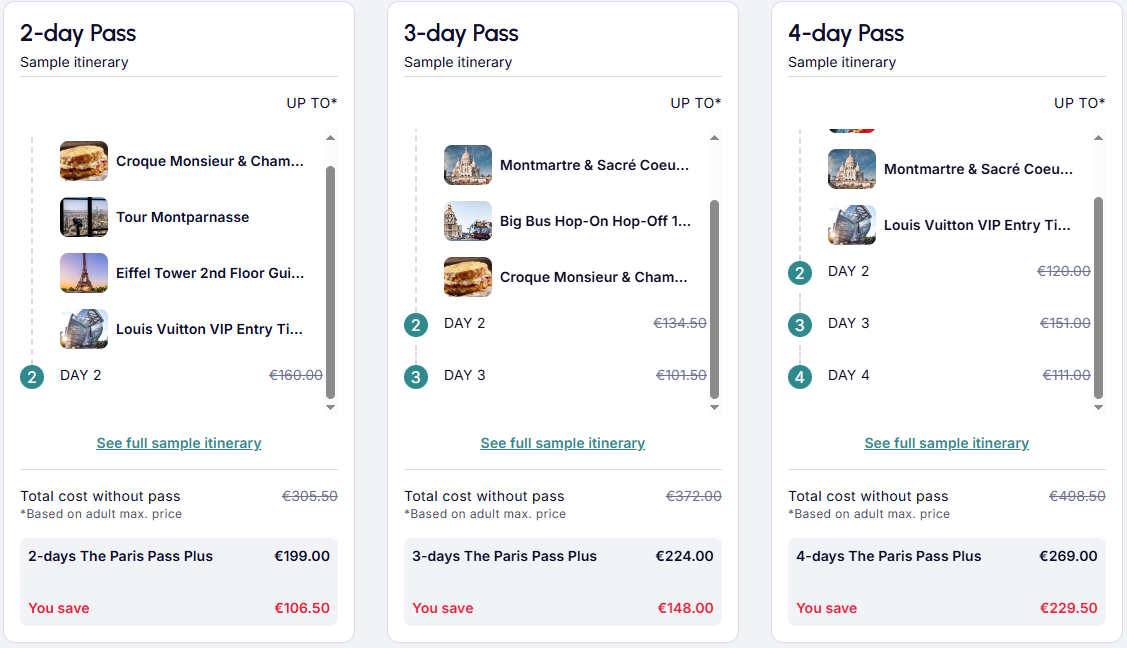
The better option is the one that matches the number of attractions you genuinely want to visit.
Final Verdict: Do You Really Need a Paris Pass?
So, do you really need a Paris Pass in 2026? For most travelers, the answer depends on the itinerary—not on the discount percentage printed on the sales page.
Buy a sightseeing pass when several included paid attractions are already part of your real plan and the pass costs less than buying those experiences separately.
Choose a museum-focused pass when museums and monuments make up most of your paid sightseeing.
Pay as you go when you want slower days, fewer ticketed attractions, family flexibility, or more time exploring Paris without a reservation attached to every few hours.
The best Paris pass is not the one with the longest attraction list. It is the one that covers things you would have paid for anyway.
Paris Pass FAQ
Is a Paris Pass worth it in 2026?
It can be. A pass is worth considering when the individual cost of attractions you genuinely plan to visit exceeds the pass price and you can realistically fit those attractions into the pass validity period.
Which Paris pass is best for museums?
A museum-focused pass generally makes more sense when your itinerary is dominated by museums and monuments. Compare its included sites with your actual museum list before buying.
Is a sightseeing pass good for first-time visitors?
Yes, but only for first-time visitors who want a relatively attraction-heavy trip. First-time status alone does not make a pass good value.
How many attractions per day make a Paris Pass worthwhile?
There is no universal number because ticket prices differ. However, travelers using a time-based all-inclusive pass usually need several meaningful paid experiences during the valid period for the math to work comfortably.
Does a Paris Pass let you skip every line?
No. Some attractions still require reservations or timed entry, and security procedures can still create waits. Always check the rules for the specific attractions you plan to visit.
Is pay as you go cheaper than a Paris Pass?
It can be cheaper when you visit fewer paid attractions. It can also be the better choice even when the total is slightly higher if flexibility matters more to you than maximizing bundled value.
Should families buy a Paris Pass?
Families should be conservative with pass calculations. Weather, naps, meals, queues, and changing energy levels can reduce how many paid attractions the group actually completes.
What is the biggest Paris Pass mistake?
The biggest mistake is counting attractions you would not have purchased individually. That creates imaginary savings and often leads to an unnecessarily rushed itinerary.