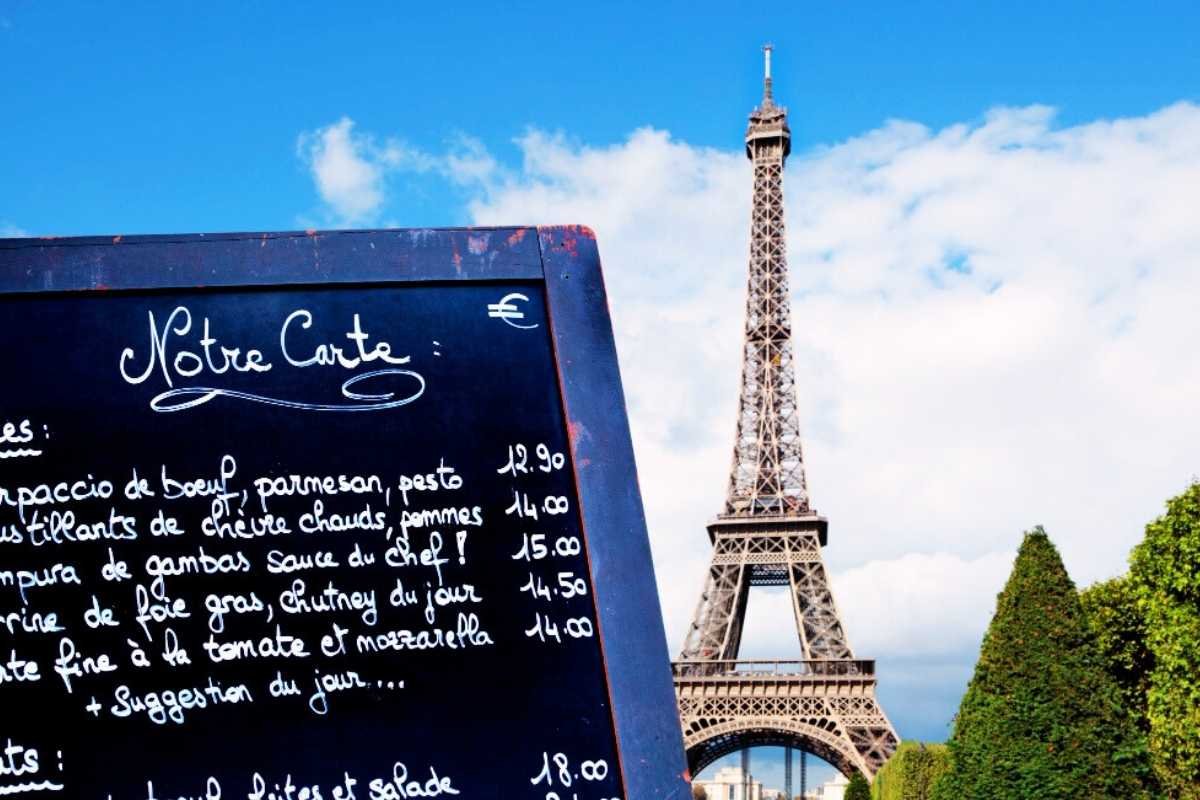
This Paris Budget Guide shows what travelers realistically need for accommodation, food, transport and sightseeing. Paris can be surprisingly manageable on a walking-heavy day, then become much more expensive when you combine a central hotel, several paid attractions, restaurant meals and taxis.
For most visitors, a useful planning range is about €82–€161 per person per day on a budget, €160–€263 at a mid-range level and €283–€426 for a comfort-focused trip. Flights are not included. Budget accommodation assumes one hostel bed, while the mid-range and comfort estimates assume two adults sharing a hotel room.
Those numbers are not fixed prices. Travel dates, room sharing, attraction choices and the way you move around Paris can shift the total significantly.
The biggest budget decisions usually happen before the trip. Where you stay and how many paid experiences you schedule matter more than saving a few euros on one Metro ride.
Paris Budget Guide: Quick Daily Cost Estimate
Budget trip: about €82–€161 per person per day.
Mid-range trip: about €160–€263 per person per day.
Comfort-focused trip: about €283–€426 per person per day.
3-day budget trip: roughly €246–€483 before flights, airport transfers and tourist tax.
5-day mid-range trip: roughly €800–€1,315 per person.
7-day mid-range trip: roughly €1,120–€1,841 per person.
Most important rule: calculate accommodation first, then add food, attractions and transport around the itinerary you actually plan to follow.
Paris Budget Guide: Realistic Cost Per Day
The table below uses per-person planning estimates. Accommodation is the category that needs the most explanation: budget travelers are assumed to use one hostel bed, while mid-range and comfort travelers are assumed to share a hotel room between two adults.
| Travel style | Accommodation | Food | Transport | Attractions | Approx. daily total |
|---|---|---|---|---|---|
| Budget | €40–€80 | €20–€35 | €2–€6 | €20–€40 | €82–€161 |
| Mid-range | €75–€110 | €40–€70 | €5–€13 | €40–€70 | €160–€263 |
| Comfort | €110–€175 | €80–€120 | €13–€31 | €80–€100 | €283–€426 |
A solo traveler using hotels should expect the accommodation figure to rise because there is nobody to split the room cost with. Couples can often reduce the per-person cost substantially by sharing one room.
Likewise, attraction spending is an average planning allowance. A free neighborhood day along the Seine, in Le Marais or around Montmartre can cost almost nothing in admission fees. A Louvre, Eiffel Tower and Seine cruise day will be very different.
Paris Budget Guide: Costs for 3, 5 and 7 Days
| Trip length | Budget | Mid-range | Comfort |
|---|---|---|---|
| 3 days | €246–€483 | €480–€789 | €849–€1,278 |
| 5 days | €410–€805 | €800–€1,315 | €1,415–€2,130 |
| 7 days | €574–€1,127 | €1,120–€1,841 | €1,981–€2,982 |
These totals exclude flights, airport transfers and Paris tourist tax. They also assume a realistic mix of sightseeing rather than stacking several expensive attractions into every day.
TripsCity Insight: Use the tables as a planning range, not a spending target. Build your real budget from accommodation first, then replace the food and attraction estimates with the experiences you actually want.
What Changes Your Paris Daily Budget the Most?
1. Your Travel Dates
Hotel rates respond strongly to demand. Summer periods, holidays, major events, busy weekends and high-demand dates can raise accommodation prices quickly. A quieter week can produce a very different hotel budget in exactly the same neighborhood.
Instead of assuming one month is always cheap, compare your exact dates across several neighborhoods before building the rest of the trip budget.
2. Traveling Solo or Sharing a Room
Room sharing changes the calculation more than many smaller savings. A €200 hotel room costs €200 per night for a solo traveler but €100 per person for two adults.
Families should also compare hotels with apartments or aparthotels carefully. Extra space and a kitchen can reduce other costs, although cleaning charges, property fees and tourist tax can change the final total.
3. Your Paid Attraction Schedule
Paris offers enough free neighborhoods, parks, churches, viewpoints and riverside walks to balance expensive sightseeing days. A useful approach is to plan one major paid attraction and then build free or low-cost activities around the same area.
4. How Often You Use Taxis
Central Paris is highly walkable, and public transport is inexpensive relative to taxis. Taxis are most useful for luggage, mobility needs, late arrivals or specific family situations rather than as the default way to move between attractions.
Paris Budget Guide: Accommodation Costs
Accommodation is normally the largest category in a Paris travel budget. Prices change by district, season, property type and booking demand, so the ranges below should be treated as planning estimates rather than guaranteed nightly prices.
- Hostel bed: about €40–€80 per night.
- Budget hotel room: roughly €90–€130.
- Mid-range hotel room: roughly €150–€220.
- 4-star hotel room: roughly €220–€350.
- Premium hotel: often €300–€500+.
Where Accommodation Can Offer Better Value
The cheapest room is not always the strongest budget choice. A hotel that saves €20 but adds inconvenient daily travel or late-night taxi use can lose part of its advantage.
The 10th, 11th, 12th, 14th and 15th arrondissements are useful areas to compare when value matters. The 5th, 9th and parts of the 10th, 11th and 14th can offer a balance between location and price. Premium areas such as Saint-Germain-des-Prés and parts of the 1st, 6th and 7th usually increase the accommodation budget.
For a neighborhood-by-neighborhood decision rather than a cost calculation, use our Where to Stay in Paris guide.
Once you have shortlisted several areas, you can compare Paris hotel prices for your exact dates.
Paris Budget Guide: Public Transport and Taxi Costs
Transport is usually one of the smaller categories in a Paris Budget Guide, particularly when you choose a reasonably central base and organize sightseeing by neighborhood.

Walking between nearby sights and using public transport selectively can keep the transport part of a Paris budget surprisingly low.
Paris Public Transport Prices in 2026
- Metro, Train or RER: €2.55 per standard journey.
- Bus or Tram: €2.05 per standard journey.
- Navigo Day: €12.30 for unlimited eligible travel across zones 1–5, excluding airport journeys.
- Paris Région ↔ Aéroports: €14 for eligible public transport journeys to or from CDG or Orly.
Two standard Metro-Train-RER journeys cost €5.10. Four cost €10.20. Therefore, travelers who walk frequently do not automatically need a day pass.
The transport strategy becomes more important on longer trips. A suitable Navigo Weekly Pass can dramatically change the calculation when your dates fit its Monday-to-Sunday validity.
For ticket rules, Navigo options, airport fares and 3-, 5- and 7-day calculations, use our Paris transport guide. You can also verify current fares through the official Île-de-France Mobilités fare guide.
Paris Airport Taxi Costs
Official fixed 2026 taxi fares between Paris and the airports are €56 between CDG and the Right Bank and €65 between CDG and the Left Bank. For Orly, the fixed fares are €45 to or from the Right Bank and €36 to or from the Left Bank.
That can make a taxi reasonable for some groups sharing the cost, particularly with luggage. Solo travelers usually have a very different value calculation.
Paris Budget Guide: Food and Dining Costs
Food is one of the easiest categories to adjust without turning the trip into a strict budget exercise. Paris gives you a wide range between a bakery breakfast and a full restaurant day.
| Meal | Lower-cost choice | Typical restaurant choice |
|---|---|---|
| Breakfast | Pastry and coffee: €4–€7 | Café breakfast: €9–€14 |
| Lunch | Sandwich or market meal: €5–€12 | Set menu or café meal: €15–€28 |
| Dinner | Casual meal: €14–€20 | Mid-range restaurant: €25–€40+ |
A realistic lower-cost food budget is around €20–€35 per person per day when you combine bakeries, supermarkets, sandwiches and casual meals. Around €40–€70 gives more space for cafés and sit-down meals.
A practical compromise is to keep breakfast simple, use a fixed-price or casual lunch and choose which dinners are worth spending more on.
Restaurant menu prices in France include service. Extra tipping is optional rather than a mandatory percentage added to every bill. You can also ask for une carafe d’eau when you want free tap water instead of bottled water.
Paris Budget Guide: Attractions and Museum Costs
Paid sightseeing can change your Paris daily budget faster than transport. One major museum is easy to absorb; several headline attractions on the same day can add €70–€100 or more before meals.

Mixing major paid attractions with free neighborhood days helps keep the sightseeing budget under control.
Major Museum Prices
- Louvre Museum: €22 for eligible EEA visitors and €32 for most non-EEA visitors.
- Musée d’Orsay: €16 online or €14 when purchased at the museum.
- Musée de l’Orangerie: €12.50 online or €11 at the museum.
If the Louvre is a priority, you can compare Louvre ticket and guided-visit options. Guided experiences can cost significantly more than standard admission, so compare like with like when building the budget.
Eiffel Tower Costs
Current adult official prices include €14.80 for stairs to the second floor, €23.50 for the elevator to the second floor and €36.70 for elevator access to the summit. A stairs-plus-elevator summit ticket is another option.
The difference matters because “Eiffel Tower ticket” is not one fixed price. Decide how high you actually want to go before assigning a cost to the itinerary.
For current admission options and official opening information, check the official Eiffel Tower website.
Versailles and Other Paid Days
A Versailles day should be treated as its own budget category because admission, transport and meals can make it noticeably more expensive than a neighborhood day in central Paris.
The same rule applies to Seine cruises, guided tours and combined experiences. Prices vary by operator and what is included, so add the exact product you plan to book rather than a generic “Paris attractions” allowance.
TripsCity Insight: Expensive attractions are easier to manage when they are distributed across the itinerary. One €30–€40 experience on three different days feels very different from placing three paid attractions into one afternoon.
Paris Budget Guide: Hidden Costs Travelers Often Miss
A realistic Paris budget should include charges that do not appear in the hotel headline price or attraction plan.
Paris Tourist Tax
Tourist tax is charged per eligible adult, per night and varies by accommodation category. Current 2026 rates include approximately €3.25 for 2-star hotels, €5.53 for 3-star hotels, €8.45 for 4-star hotels and €11.70 for 5-star hotels. Palace properties can reach €15.93 per adult per night.
Check whether the booking platform already shows the tax in the final price or whether the property collects it separately.
Other Small Costs
- ATM and foreign-exchange fees: depend on your bank and the machine used.
- Bottled water: can add up when bought repeatedly in tourist areas.
- Luggage storage: may matter on early-arrival or late-departure days.
- Convenience purchases: snacks, umbrellas, pharmacy items and small souvenirs can quietly increase daily spending.
- Last-minute transport: a tired evening can turn an inexpensive Metro plan into a taxi ride.
Paris also has a large network of free public sanisettes, so you do not need to build a fixed paid-toilet charge into every sightseeing day.
A small contingency buffer is still useful. Adding roughly 5–10% to the planned trip total gives you room for small surprises without changing the entire budget.
Paris Budget Guide: How to Reduce Daily Costs Without Ruining the Trip
Saving money in Paris works best when you protect the experiences that matter and reduce spending in categories that do not add much to your trip.
1. Control Accommodation Before Anything Else
A €30 nightly hotel difference becomes €210 over a seven-night stay. That is often more important than small daily savings on coffee or Metro tickets.
Compare several neighborhoods and property types before booking. However, do not move so far out that daily travel or late taxis erase the saving.
2. Build Walking Days
Paris works particularly well when attractions are grouped geographically. A day around the Latin Quarter, Île de la Cité and the Seine can require very little transport. The same is true for parts of Le Marais or Montmartre.
Fewer unnecessary journeys also reduce the temptation to buy an unlimited transport product that you do not actually use enough.
3. Use Bakeries and Lunch Menus Strategically
You do not need to avoid restaurants. Instead, decide where restaurant spending gives you the most value.
A bakery breakfast, a reasonably priced lunch menu and one planned dinner can produce a much more enjoyable budget than paying full café or restaurant prices three times a day.
4. Mix Paid and Free Sightseeing
The Louvre, Eiffel Tower and Versailles can all be worth paying for. The mistake is assuming every day needs multiple ticketed attractions.
Balance paid experiences with gardens, neighborhoods, churches, markets, river walks and viewpoints that cost little or nothing.
5. Compare a Museum Pass Against Your Real Itinerary
A pass saves money only when you genuinely intend to visit enough included attractions. Do not add extra museums simply to justify the pass price.
If your itinerary is museum-heavy, you can compare Paris Museum Pass options with the individual admission prices you would otherwise pay.
6. Keep Airport Costs Separate
Do not hide arrival and departure costs inside a normal €5–€10 sightseeing transport budget. Public transport to an airport and an official taxi transfer are separate trip expenses and can change your total noticeably.
Example Paris Budget Decisions by Travel Style
Budget Traveler
A budget traveler gets the most leverage from accommodation and food. A hostel, bakery breakfast, casual lunch, supermarket snacks and one paid attraction can keep the day close to the lower end of the €82–€161 range.
Walking between nearby areas also keeps transport costs low. The biggest risk is trying to save so aggressively on location that the trip becomes inconvenient.
Mid-Range Couple
For two adults sharing a hotel, the per-person accommodation cost becomes easier to control. A typical day might include a €150–€220 room shared between two people, €40–€70 of food per person, a few transport journeys and one major paid attraction.
This is why the €160–€263 daily range is useful as a planning baseline rather than a fixed target.
Comfort-Focused Traveler
A 4-star or premium hotel, taxis, restaurant meals and multiple paid experiences move the daily total quickly toward €300–€400+. The difference is driven mostly by accommodation and dining rather than ordinary public transport.
How Much Cash Buffer Should You Add to a Paris Budget?
Once you calculate accommodation, meals, transport and attractions, add a small buffer instead of planning the trip down to the final euro.
For a five-day mid-range trip, even a €50–€100 reserve can cover an unexpected taxi, a more expensive dinner, an additional attraction or a small price difference at the hotel.
The goal is not to spend the buffer. It is to avoid having one unplanned expense force you to cut something you actually wanted to do later.
Paris Budget Guide: Final Planning Formula
A practical Paris budget can be built in five steps:
- Set the accommodation total first. Use your exact dates and divide the room cost between travelers when appropriate.
- Choose a daily food level. Decide whether your trip is bakery-and-casual, restaurant-heavy or somewhere between.
- List the paid attractions you genuinely want. Use their real prices rather than an arbitrary daily allowance.
- Add normal and airport transport separately. Walking-heavy sightseeing days can be inexpensive, while airport days are different.
- Add tourist tax and a small contingency buffer.
This method produces a much more accurate number than asking whether Paris is simply “cheap” or “expensive.” Two travelers staying for the same number of nights can have completely different budgets without either one spending incorrectly.
Paris Budget Guide FAQ
How much money do you need per day in Paris?
A useful planning range is about €82–€161 per person per day for a budget trip, €160–€263 for a mid-range trip and €283–€426 for a comfort-focused trip. Flights are excluded, and hotel-sharing assumptions affect the result significantly.
How much money should I budget for 3 days in Paris?
Using the planning ranges in this guide, allow roughly €246–€483 for a budget trip, €480–€789 for mid-range travel or €849–€1,278 for a comfort-focused visit. Add flights, airport transfers and tourist tax separately.
How much should I budget for 5 days in Paris?
Five days works out to roughly €410–€805 on a budget, €800–€1,315 at mid-range level and €1,415–€2,130 for a comfort-focused trip, before flights and other excluded costs.
How much should I budget for a week in Paris?
For seven days, a useful starting range is €574–€1,127 for budget travel, €1,120–€1,841 for mid-range travel and €1,981–€2,982 for a comfort-focused trip.
How much does food cost per day in Paris?
Budget travelers can often plan around €20–€35 per day by using bakeries, supermarkets and casual meals. Around €40–€70 per day provides more room for café meals and sit-down restaurants.
What is usually the biggest Paris travel expense?
Accommodation is usually the largest single category. Travel dates, whether you share a room and the neighborhood you choose can change the total more than small differences in transport or food spending.
Do I need a large transport budget in Paris?
Not necessarily. Central Paris is walkable, and standard public transport fares are relatively low. Travelers using only two or three journeys on many days may spend much less than visitors relying heavily on taxis.
Should I include Paris tourist tax in my hotel budget?
Yes. Tourist tax is charged separately or included by some booking platforms and varies according to accommodation category. Check the final booking breakdown rather than assuming the headline nightly rate includes it.
Paris Budget Guide: Final Estimate
A realistic Paris Budget Guide should help you build your own number rather than promise that every visitor can travel for the same amount.
Start with accommodation because it creates the largest difference. Add the food style you actually enjoy, the attractions you genuinely want to visit and the transport your itinerary requires. Then include tourist tax, airport travel and a small reserve.
For most travelers, that produces a planning range of roughly €82–€161 per day on a budget, €160–€263 at mid-range level and €283–€426 for a comfort-focused visit.
Budget the trip you plan to take, not an imaginary “average Paris day.” That is the simplest way to keep the numbers realistic without cutting the experiences that made you choose Paris in the first place.