
London Budget Guide 2026 doesn’t begin with a number. It begins with a day that felt “fine”… until it didn’t.
You don’t remember the exact moment your budget broke. You remember the feeling: your hands are cold, the drizzle turns heavier, and you realise you’ve been moving all day but you haven’t been settled once.
London is not the kind of city that empties your wallet with a single dramatic blow. London does it in a pattern that feels reasonable while you’re doing it: a quick ride because it’s raining, a paid shortcut because you’re late, a “cheap” base that forces two changes twice a day, a rushed meal because you missed the calm window, a small upgrade because your feet are done and you just want the day to stop asking questions.
That’s the London budget problem most guides avoid: it’s not the headline prices. It’s repair spending.
London Budget Guide 2026: The Shocking Truth About Why Normal Trips Feel Expensive
London becomes expensive when your plan is vague, because London sells relief in a hundred small ways.
Other cities punish tourists with language barriers or confusing transport. London is unusually functional. English is easy for many travellers. Signs are clear. The system is deep. And because the system is deep, the city gives you constant options to “fix” a messy day — and you pay for those fixes without noticing.
When someone says “London is expensive,” they’re often describing a specific travel style: drifting across the map, changing the plan mid-day, and buying stability late, when the body is tired and the mind stops negotiating.
This guide is TripsCity-style on purpose. Not “cheap tips.” Not a list of free things. A realistic model that tells you what you’ll spend per day in 2026 — and why.
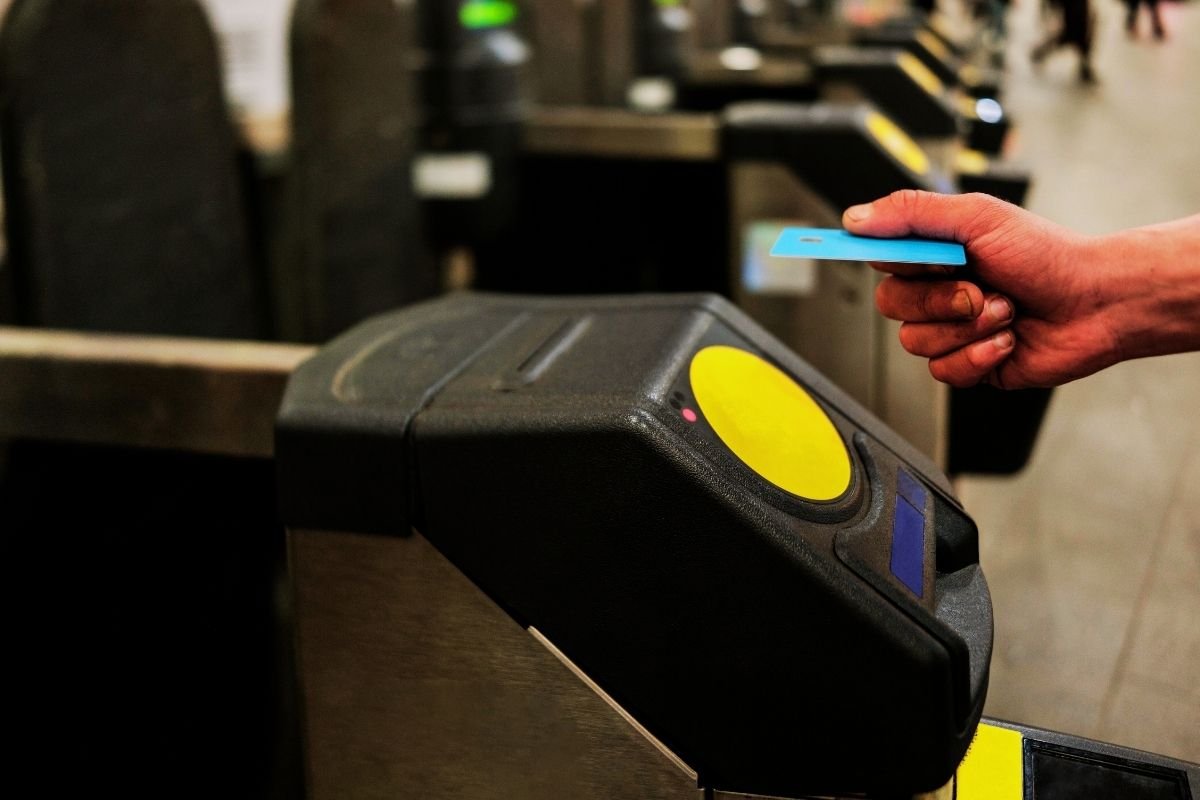
In London, the budget often lives or dies at the gate: consistent taps keep your day predictable.
London 2026 Reality: What You Actually Pay For Every Day
When people try to budget London, they usually budget the wrong thing. They budget “prices.”
London requires you to budget behaviour. Because two travellers can do the same city and spend wildly different amounts — not because one chose luxury, but because one avoided repair spending and the other kept buying it.
Every London day is made of five cost buckets:
1) Base cost (sleep) — your biggest lever. Your base can save you money without looking “cheap,” or it can bleed you quietly even if the room price looks good.
2) Movement cost (transport) — usually controllable if your day is clustered and your payment identity is consistent.
3) Anchors (paid priorities) — the experiences you genuinely care about. A London trip fails when you buy five anchors out of fear instead of choosing two on purpose.
4) Food rhythm — London isn’t expensive when you eat calmly. It becomes expensive when you eat reactively.
5) Repair buffer — the hidden bucket: extra rides, small upgrades, rushed choices, and “I don’t care anymore” spending.
Most “budget guides” pretend bucket #5 doesn’t exist. That’s why their numbers feel unrealistic after Day 2.
The TripsCity Budget Model: The Only Math That Matches Real London
Here’s the model you will use for the rest of this article:
Real daily spend = Base + Movement + Food + Anchors + Repair.
That last word is the difference between fantasy budgeting and London budgeting.
Repair spending is not shameful. It’s human. It’s what happens when fatigue meets friction. The goal isn’t “perfect discipline.” The goal is to build a structure where you don’t need discipline to survive the day.
London Budget Guide 2026: Real Daily Numbers (Three Honest Scenarios)
London “per day” is not one number. It’s a range, and the range is driven mostly by your base and your behaviour.
Below are realistic daily spending bands for a typical first-time trip in 2026. These are not luxury fantasies and not backpacker extremes. These are the three scenarios most travellers actually live inside.
| Scenario | Base (per night, per person) | Food (per day) | Transport (per day) | Anchors (avg per day) | Repair buffer | Realistic total (per day) |
|---|---|---|---|---|---|---|
| Budget-Disciplined | £70–£120 | £20–£35 | £6–£12 | £10–£25 | £5–£12 | £111–£204 |
| Balanced First-Timer | £110–£190 | £30–£55 | £8–£15 | £20–£45 | £10–£20 | £178–£325 |
| Comfort-Driven | £170–£280 | £45–£85 | £10–£20 | £30–£70 | £15–£35 | £270–£490 |
Read that table correctly: transport is rarely what “makes London expensive.” Base choice, anchors, and repair spending are the real drivers.
And yes: these ranges can swing higher in peak weeks. The point is not to “guess perfectly.” The point is to stop lying to yourself about what a tired London day costs.
The Real Travel Decision: Who This London Budget Guide 2026 Is For
This guide is for travellers who want London to feel controlled — not because control is fun, but because control prevents repair spending.
It’s for you if you want:
— a daily number that survives rain, fatigue, and crowds.
— a budgeting method that doesn’t collapse when you miss one plan window.
— a way to enjoy London’s depth without turning the week into a paid checklist.
You should rethink London (or tighten your planning expectations) if:
— you plan to drift across the whole map daily and call it “freedom.”
— you refuse any structure, then feel betrayed when the city becomes expensive.
— you choose a base purely by price without understanding what it costs you in movement.
The London Budget Lever Nobody Wants to Admit: Your Base
A “cheap” base that forces extra changes twice a day is not cheap. It’s a daily tax.
Because the real cost of a bad base is not the transport fare. It’s what the base does to your decisions: you avoid going back to rest because it feels complicated, you overextend, you get tired earlier, and then you buy relief.
In London, a good base makes the city feel smaller. A bad base makes the city feel like it keeps escaping you.
That’s why your most budget-protecting booking action is not buying a pass. It’s choosing a base that reduces interchanges and makes “returning” easy.
Check stays in well-connected London areas (filter by Underground access)

London doesn’t drain you with one big cost — it drains you with rainy-day decisions when the plan has no spine.
One Official Reference You Should Use (Because Numbers Can Change)
London fares and caps can update. Don’t build a 2026 budget from a random screenshot you saw once.
Use the official TfL fares/capping pages close to your travel date so your transport assumptions are real, not nostalgic:
TfL fares & fare finder (official)
TripsCity London Funnels (Internal Links You Provided)
These are the three internal links that keep your London planning in the right order. Internal links open in the same tab:
Complete Travel Guide to London 2026: The City That Punishes Vague Plans
How to Get Around London (2026): The System That Saves Your Day (Tube, Buses, Oyster & Contactless)
London Public Transport Costs Explained (2026): Daily Caps, Passes & The Mistakes That Cost You
PART 2 will break London daily spending down by traveller type (couples, families, budget travellers, comfort seekers) with realistic day totals — and the mistakes that explode each profile’s spend.
London Budget Guide 2026: Daily Spend by Traveller Type (Real Numbers, Not Wishes)
London doesn’t have “one budget.” It has four different London trips hiding inside the same map.
Two people can stay in the same neighbourhood, ride the same Tube lines, see the same headline sights — and still leave with completely different spending totals. The difference is rarely discipline. It’s structure: where your day starts, how many times you force a cross-city jump, and how often you buy relief when fatigue hits.
So in Part 2, we stop pretending that one daily number fits everyone. We’re going to budget London the way London actually behaves: by traveller type.
Important reading rule: the ranges below are per person per day unless stated otherwise, and they assume a normal sightseeing rhythm (not a trip built around constant paid attractions).
| Traveller type | Real daily spend (per person) | What drives the number | What usually breaks the budget |
|---|---|---|---|
| Couples (balanced) | £170–£320 | Base choice + one paid “anchor” day + calm meals | Daily debates, late arrivals, buying speed to “save the mood” |
| Families (2 adults + 1 child) | £360–£620 (per family/day) | Returnability of the base + snacks + transport simplicity | Overextending, too many interchanges, “panic taxi” moments |
| Budget traveller (disciplined) | £110–£210 | Caps discipline + free culture + food rhythm | Cheap base that creates transport debt + scattered days |
| Comfort seeker | £260–£480 | Paying to remove friction (timed entries, stability) | Paying for stability repeatedly instead of once, early |
Those ranges aren’t here to scare you. They’re here to prevent the most common London failure: building a budget for an imaginary version of yourself who never gets tired.

Couples don’t overspend because London is romantic. They overspend because the day starts with indecision and ends with paid repairs.
London Budget Guide 2026: Couples (The “Mood” Trip That Gets Expensive Fast)
Couples arrive with the most dangerous London plan: a plan built on mood.
“We’ll wander. We’ll decide on the day. We’ll follow whatever feels right.” That can be beautiful — but only after two things are locked: your base and your anchors.
Here’s what actually raises a couple’s daily spend:
1) Debating the first hour. London mornings decide the tone. If you spend the first hour negotiating, you start the day already late — and late is what triggers the “pay to save the mood” pattern.
2) Choosing romance over radius. A “cute” base that forces two changes twice a day quietly turns romance into logistics. And logistics is where couples burn money: extra rides, extra snacks, extra “let’s just take the quick option.”
3) Buying certainty too late. You don’t buy certainty when you’re calm. You buy it when you’re tired and the queue looks like a punishment. That’s why London feels expensive: you keep paying for the hour you should have protected earlier.
The couple budget fix is not “do less.” It’s “cluster the day.” One main area + one nearby second stop. When your day is clustered, you can drift without breaking the structure. When you drift across the whole city, you pay for repairs.
Use your internal planning order the way TripsCity intended:
Complete Travel Guide to London 2026 shows you why vague plans get punished.
How to Get Around London (2026) gives you the movement system that stops “we’re lost again” spending.
London for Families: The Budget Is Not Money — It’s Momentum
Families don’t lose budgets in London because attractions are pricey. They lose budgets because momentum collapses.
And when momentum collapses, families pay for relief: paid transport you didn’t plan to take, food you buy because everyone is suddenly hungry, and small “just make it easier” choices that stack up faster than any single ticket.
A family London day becomes expensive in three predictable places:
1) Interchanges and long station corridors. Every extra change is not just minutes — it’s attention, patience, and energy. London punishes tired bodies. Not emotionally. Practically.
2) A base that makes returning hard. If returning to rest requires complicated changes, you delay the return. Then you overextend. Then you hit the collapse point in public — usually near a station when everyone is done.
3) Stacking “queue experiences.” Queue-heavy days don’t just drain time; they drain appetite, mood, and decision quality. And decision quality is budget.
The family budget fix: you plan London like a city of “returns.” Your base must allow an easy reset. Your day must have one simple anchor and one calm buffer block.
This is exactly why your transport article matters for families more than any “cheap eats” list:
London Public Transport Costs Explained (2026) is where families avoid the money mistakes (incomplete journeys, mixed payment identity) that quietly spike costs.

For families, the cheapest move is often the simplest: fewer changes means fewer collapses — and fewer paid repairs.
Budget Traveller 2026: London Punishes “Cheap Bases” More Than Cheap Meals
Budget travellers usually fight the wrong battle.
They spend mental energy saving £4 on a meal, then book a base that forces extra transfers twice a day. That base doesn’t just cost time — it creates fatigue. And fatigue is what triggers spending you didn’t plan: extra rides, paid shortcuts, “just get us there” moments.
London budget success is not about discomfort. It’s about reducing the city’s two biggest leak points:
Leak point #1: scattered geography. If your plan forces cross-city ping-pong, you’re paying in movement and in mood.
Leak point #2: repair spending. A tired budget traveller starts spending like a comfort traveller — not because they changed identity, but because they hit the same human limit.
The budget-traveller fix: pick a base that reduces changes, design at least one “free culture + walking” day, and treat buses as a recovery tool when the Tube feels like a corridor marathon.
And don’t confuse “free” with “filler.” London has genuine depth that costs nothing — and those hours stabilise the budget because they reduce the pressure to keep buying your identity as a tourist.
Comfort Seekers: The London Daily Spend Pattern People Don’t Admit
Comfort seekers don’t spend more because they love luxury. They spend more because they buy stability.
And the biggest mistake comfort travellers make is buying stability repeatedly instead of buying it once, early, on purpose.
The London comfort budget breaks in two places:
1) Connectivity problems. If your phone signal drops or roaming is unreliable, you start making slower decisions, you miss exits, and you drift into repair spending. Navigation is not “nice.” It’s a budget tool.
2) Queue anxiety. If queues ruin your day, you will pay to avoid them — and you should do it strategically, not emotionally. One protected anchor day is smarter than five last-minute upgrades.
There is one comfort purchase that can genuinely reduce budget leaks without turning your trip into a shopping list: stable data that keeps navigation clean and decision-making fast.
Get a travel eSIM for London (so maps and tickets don’t fail when you’re moving)
That link is not here to sell a product. It’s here because London is a city where a dead signal turns into a messy day — and a messy day turns into spending.
The Hidden Budget Trigger That Unites All Traveller Types: Cross-City Ping-Pong
Whether you’re a couple, a family, a budget traveller, or comfort-first, the same pattern breaks the budget:
crossing London twice in one day.
It doesn’t look dramatic on a map. It looks like “just another stop.” But in real life it means: more interchanges, more corridor walking, more late arrivals, and more end-of-day “relief spending.”
That’s why TripsCity budgets London by clusters, not by attraction lists. The cluster logic is what protects your energy — and your energy is what protects your spending.
PART 3 will turn this into an operational routine: how to build a 5-day spine that survives weather and fatigue, where to place anchors, how to budget “repair” honestly, and the deadly mistakes that quietly inflate your daily total.
London Budget Guide 2026: The Operational Routine That Keeps Costs Predictable
London doesn’t become expensive because you chose the “wrong attraction.” It becomes expensive because your day becomes fragile — and fragile days buy repairs.
This Part 3 is the routine that stops that. Not a list of hacks. A sequence of decisions that makes your daily spend behave even when the weather turns and your feet stop cooperating.
If you follow this routine, London stays inside your range. If you ignore it, London will keep charging you in small, reasonable decisions until you’re surprised by your own total.
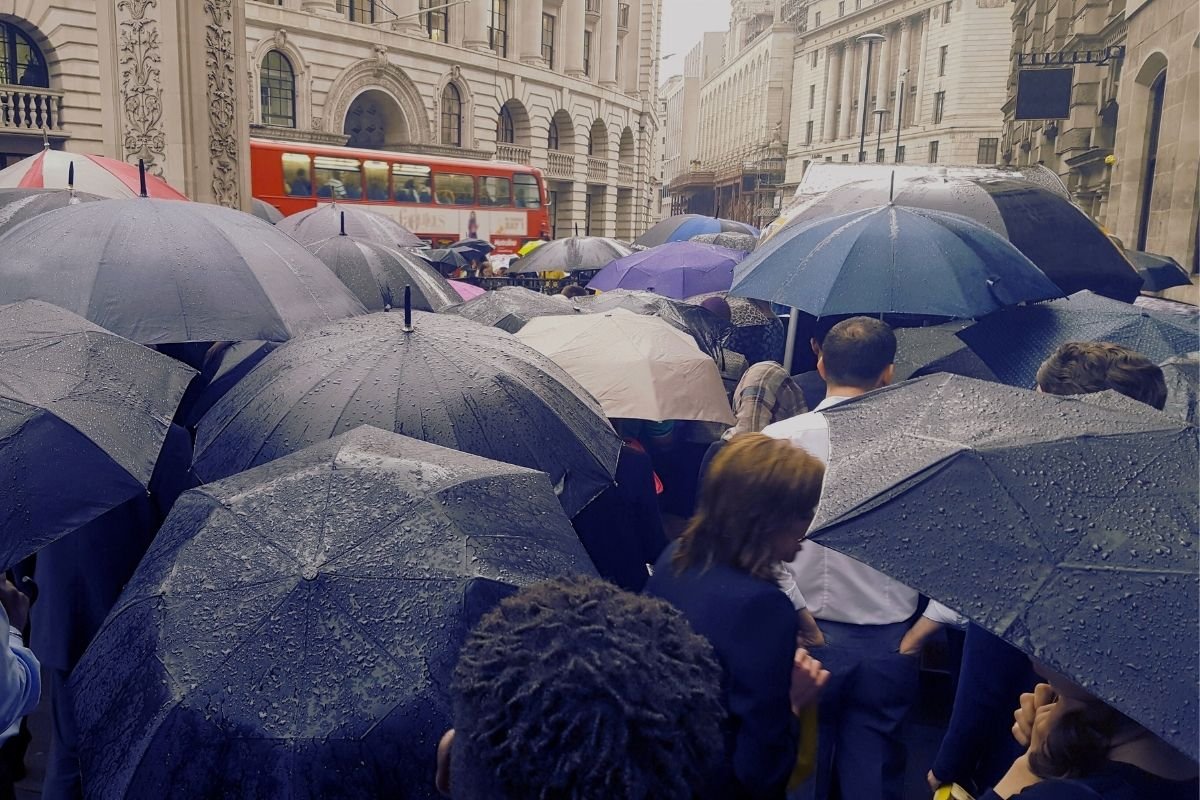
A London budget fails most often on rainy afternoons — when you start paying for relief instead of sticking to a calm routine.
Step 1: Budget Like a Human (Build a Daily Range, Not a Fantasy Number)
Most travellers budget London like they’ll be calm, efficient, and disciplined every hour.
You won’t be. On Day 3 you’ll be tired. On one afternoon you’ll misread a crossing. On one evening you’ll choose the easy option because your brain is done. A real London budget assumes that.
TripsCity rule: your budget is a range, not a point.
If you’re aiming for a balanced first-timer trip, treat your daily number like a band. Then protect the band by reducing the triggers that cause repair spending (late starts, cross-city ping-pong, a base that makes returns hard).
Step 2: Choose a “Returnable” Base (The Cheapest Decision That Doesn’t Look Cheap)
Here’s the uncomfortable London truth: a base that makes returning easy is not a comfort choice — it’s a budget choice.
If returning to rest is complicated, you delay the return. Then you overextend. Then you collapse late and buy repairs: extra rides, rushed food, paid shortcuts, small upgrades you didn’t plan to buy.
The base that saves money is not the one with the lowest nightly price. It’s the one that makes your day start clean and end clean.
If you need the wider planning logic behind this, keep these internal guides as your “order of decisions”:
Complete Travel Guide to London 2026: The City That Punishes Vague Plans
How to Get Around London (2026): The System That Saves Your Day
London Public Transport Costs Explained (2026): Daily Caps, Passes & The Mistakes That Cost You
Step 3: Pick Two Anchors — Then Stop Buying Certainty Everywhere
London has dozens of paid thresholds. Your budget dies when you turn your entire week into a chain of “must-do” purchases.
The strong London pattern is simple: two anchors across the whole trip.
Anchor A: one iconic hour you truly care about (your skyline, your historic site, your “this is London” moment).
Anchor B: one structured block that removes complexity (a day trip, a guided unit, or one high-friction attraction where timed entry prevents repair spending).
Everything else is built from free culture, walkable streets, and calm hours that don’t force you to spend to feel like a tourist.
London becomes cheaper when you protect one hour on purpose — not when you keep paying to save hours you lost by drifting.
Step 4: Build Days as Clusters (This Is Where London Budgets Are Won)
London is not a compact “walk-it-all” city. It is a network of strong areas separated by time. The budget leak is treating those areas like casual neighbourhood hops.
So you plan by clusters: one main area per day, plus one nearby second stop. That keeps movement simple and prevents the “we crossed the city again” pattern that triggers repair spending.
Think in circles, not lines. Circles survive delays. Lines snap when one thing runs late.
London Budget Guide 2026: The Deadly Mistakes That Quietly Inflate Your Daily Total
These are not dramatic mistakes. They are normal mistakes — and that’s why they hurt. They feel reasonable while you’re doing them.
Deadly mistake #1: Crossing London twice in one day.
It looks harmless on a map. In real life it becomes interchanges, corridor walking, late arrivals, and end-of-day relief spending.
Deadly mistake #2: Building a “cheap base” that is expensive in line changes.
If your base forces complicated transfers, you pay twice: in time and in fatigue. Fatigue is what turns a disciplined traveller into an impulsive spender.
Deadly mistake #3: Booking paid anchors on fragile days.
Timed entry requires buffer. If you plan a timed ticket after a complicated cross-city route, you’re basically planning to buy a repair.
Deadly mistake #4: Eating reactively instead of rhythmically.
London food isn’t the problem. Timing is the problem. Miss your calm window and you’ll overpay for convenience without noticing.
Deadly mistake #5: Treating free museums as filler instead of anchors.
Free culture is not a backup plan. It’s a budget stabiliser that gives you high-value hours without purchase pressure.
London Budget Guide 2026: Real 5-Day Budget Spine (A Week That Doesn’t Leak Money)
This is not a full itinerary. It’s a budget spine — a structure you can customise without breaking the spending logic.
Day 1 (Arrival + Reset): stay near your base. One short walk. One simple meal. Early sleep. Don’t cross the city “to start strong.” That’s how you start fragile.
Day 2 (Institutional Cluster Day): one core area day. If you have an anchor, place it in the morning with buffer. Keep the afternoon flexible and close.
Day 3 (Free Culture Stabiliser): build a calm day around a major free museum. This is where budgets recover because you’re not forced into paid identity spending.
Day 4 (Paid Anchor Day): one paid priority you truly care about. Protect the hour. Don’t stack three paid attractions “because we’re here.”
Day 5 (Recovery + Walkable Views): a bus-heavy, walking-friendly day that doesn’t demand complex transfers. This is where London feels human again.
If you want a day trip, don’t “add it.” Replace Day 5 or Day 3 based on your energy profile. London budgets fail when you only add and never replace.

Free culture is not a “cheap option.” It’s a stabiliser that keeps the day from turning into a paid panic spiral.
One Official London Link That Protects Budget Planning (Free Culture Anchor)
If you want London to feel expensive less often, you need at least one day that is high-value without purchase pressure.
The British Museum makes it very clear that tickets to the permanent collection are free — which is exactly the kind of “budget anchor” that stops the trip from becoming a chain of paid thresholds:
British Museum – Plan your visit (official)
One Smart Budget Purchase That Isn’t “Touristy” (Only If It Solves a Real Problem)
This is where many guides turn into sales. We won’t.
But there is one practical purchase that can genuinely prevent repair spending on two specific days: arrival day and checkout day.
If you arrive early or leave late, luggage turns London into friction. You walk slower, you get tired faster, you avoid transport, and you start buying relief to escape the burden. That’s not a luxury problem. That’s a budget leak.
If your trip timing creates that problem, solve it cleanly once:
Store luggage near a major station (useful for early arrival or late checkout)
If you don’t have that problem, skip it. This is not “something everyone needs.” This is a repair-spending prevention tool for specific days.
The Direct Decision (No Soft Ending)
London is not a city you “save money in” by being clever. You control London spending by building a week that doesn’t require repairs.
If you choose a returnable base, plan by clusters, protect two anchors only, and budget a small repair buffer you hopefully never use, London becomes predictable. Not cheap — predictable. And that’s what makes the trip feel calm.
If you drift across the map, delay decisions until you’re tired, and keep buying relief in small bursts, London will keep charging you until the week feels more expensive than it needed to be.
So decide honestly: do you want freedom?
Then build structure first. That’s the London trade.
FAQ: London Budget Guide 2026 Questions People Actually Mean
1) What is a realistic daily budget for London in 2026?
For many first-time travellers, realistic daily spend per person often lands in a band: roughly £170–£320 for a balanced style, lower if disciplined and higher if comfort-driven. Your base and repair spending decide the real result more than transport fares.
2) Why do I spend more than expected even when I avoid luxury?
Because London punishes vague days. The overspend usually comes from repairs: extra rides, convenience upgrades, rushed food, and paid certainty bought late. The fix is clustering and a returnable base.
3) What is the biggest budget mistake first-timers make?
Planning London like a compact city and crossing the map repeatedly. Cross-city ping-pong creates fatigue, and fatigue triggers spending.
4) Do I need paid attractions to feel like I “did London”?
No. London has world-class free culture. Use free museum days as anchors (not filler) and choose only two paid priorities on purpose.
5) How do I stop “repair spending” without turning the trip into a strict schedule?
By building a spine: cluster days, protect two anchors, and keep buffers. You’re not scheduling every minute — you’re preventing the day from becoming fragile.