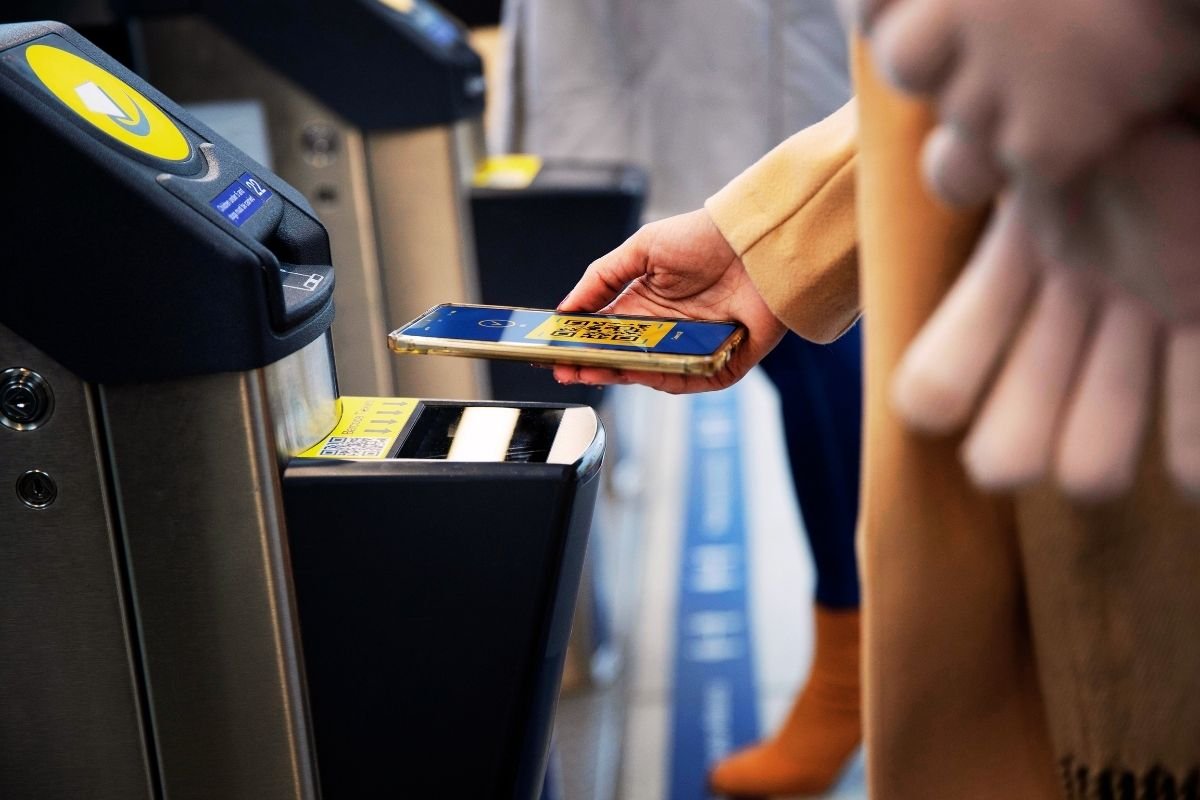
London public transport costs in 2026 usually become “a problem” in the most unglamorous place: the gate.
You tap in. The reader beeps. You move. Then you tap out somewhere else and your phone shows another charge. Then another. Then another. By the end of Day 2 you open your banking app and it looks like London has been taking tiny bites out of you all day.
Most first-time visitors react the same way: they start hunting for the “cheapest ticket.” They ask if they should buy an Oyster. They consider a pass. They try to calculate single fares like they’re doing math homework.
That mindset is exactly how London gets expensive.
The truth most guides avoid is simple: London’s transport pricing is not designed to confuse you. It’s designed to reward consistency. And tourists don’t lose money because they “picked the wrong option.” They lose money because they break the consistency rules without noticing—usually when they’re tired.
This guide is TripsCity-style on purpose: not a cute list of ticket types, but the actual system that controls what you pay, where you accidentally overpay, and how to build a transport habit that keeps your days calm.
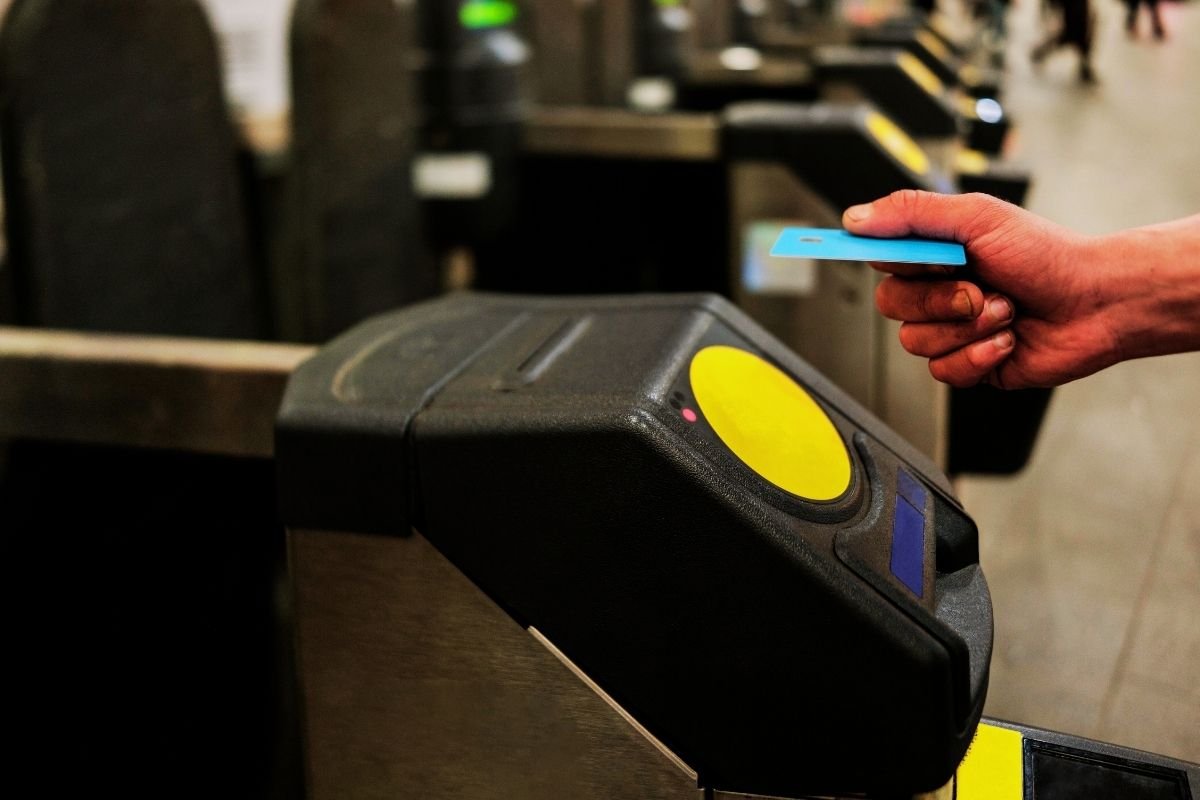
A London gate is where most “cost mistakes” begin: one inconsistent payment or one incomplete journey can break capping and trigger extra charges.
Complete Travel Guide to London 2026: The Shocking Truth About Transport Costs
London does not punish you with high prices all day. It punishes you with repair costs.
Repair costs are the small payments that appear when your day becomes fragile:
• You mix payment methods (phone in the morning, card in the evening) and the cap stops protecting you.
• You forget to tap out and get hit with a maximum fare.
• You drift across zones because your plan is scattered, so you “upgrade” your cap without intending to.
• You miss a timed window and pay for convenience (an extra ride, a faster option, a rushed detour).
That’s why this article isn’t just “what things cost.” It’s “what triggers extra cost patterns.” Because London’s transport system is one of the few in Europe where behaviour changes the bill just as much as distance.
If you haven’t read it yet, the bigger planning logic is here (base, radius, anchors): Complete Travel Guide to London 2026. Internal note: if you haven’t published it yet, keep this as “Coming Soon” text and link it later.
London Public Transport Costs (2026): The Only Three Numbers That Matter
You can drown in fare tables if you want. Or you can understand London public transport costs through three numbers and stop bleeding money:
1) The central daily cap (Zones 1–2).
This is the number that decides whether your day feels controlled or expensive. Once you understand capping, you stop doing “single fare anxiety.”
2) The bus/tram fare and cap.
Buses are not just transport in London—they’re a fatigue tool. If you learn how the bus cap works, you stop paying extra just to “avoid the Tube.”
3) The rule that defines the “transport day.”
London’s daily cap is not “midnight to midnight.” If you travel late, this matters more than you think.
We’ll go deep on each of these. But first, a small table that gives you the shape of the system.
| What you’re paying for | Pay-as-you-go | Daily cap | Weekly cap (Mon–Sun) |
|---|---|---|---|
| Tube / DLR / Overground / Elizabeth line (central example) | Varies by journey | Zone 1–2 cap applies | Zone 1–2 cap applies |
| Buses & trams | £1.75 | £5.25 | £24.70 |
This table is not here to “teach pricing.” It’s here to teach the logic: London is a cap city. Your job is to stay inside the rules that let caps protect you.
Daily Caps and London Public Transport Costs (04:30–04:29): The Rule That Stops Leaks
Most visitors assume a daily cap resets at midnight. London’s system doesn’t.
A daily cap is calculated over a transport day that starts at 04:30 and ends at 04:29 the next day. If you travel late at night, this changes what your “day” means.
Here’s why it matters in real travel:
Scenario: You’ve had a long day. You go back to your hotel around 00:40. You wake early for a morning slot. If you think “new day, new cap,” you might mentally relax—then discover your early journeys were still counted inside the previous transport day, or you hit caps in ways you didn’t expect.
London isn’t trying to trap you. It’s using a consistent 24-hour operating day that matches how the network runs. But tourists often plan their days by hotel sleep, not by transport rules—and that mismatch is where confusion lives.
TripsCity rule: if you have late nights + early starts, treat the cap day like a “shift.” Your costs feel calmer when you know exactly when London resets the meter.
Passes vs Pay-As-You-Go: What Changes London Public Transport Costs
People love passes because passes feel like certainty. The problem is: many passes create a psychological debt. You start “using it enough,” which pushes you into scattered movement—and scattered movement is exactly what turns London into a fatigue machine.
So here’s the honest frame:
Pay-as-you-go with capping is best when: your itinerary is normal (central London with occasional wider trips), you want flexibility, and you don’t want to pay for travel on days you barely move. London’s capping system is literally built for this.
A pass can help when: you’re commuting hard every day, you’re doing repeated long zone travel, or you want a clean “one purchase” mindset for a very structured week.
A pass backfires when: you buy it before you’ve chosen your base and your daily radius. Because then you’ve paid for movement before you’ve planned movement—and you’ll move just because you can.
If you want the practical movement system (when buses beat the Tube, how to avoid interchange traps), keep this internal link ready: How to Get Around London (2026): Tube, Buses, Oyster & Contactless. If it isn’t published yet, mark it “Coming Soon” and link later.
The Mistake London Waits For: Breaking Your Cap Without Knowing
Here is the most common silent mistake:
You don’t use the same payment method all day.
You tap with your phone once because it’s convenient. Later your phone battery drops and you tap with your physical card. You think: “Same bank, same account, it should count.”
London’s system does not care that it’s the same bank. It cares that it’s the same token. If you switch, your journeys may stop counting toward the same cap. Your day can become more expensive without you doing “more travel.”
The second mistake is equally brutal:
Incomplete journeys.
On rail services you must tap in and tap out. If you don’t, the system can’t price the journey correctly and you can be charged a maximum fare. Most tourists don’t do this because they’re reckless—they do it because stations are crowded, gates are confusing, and they’re mentally “already done” with the day.
TripsCity rule: the cap protects disciplined travellers. London penalises tired travellers who stop being disciplined.
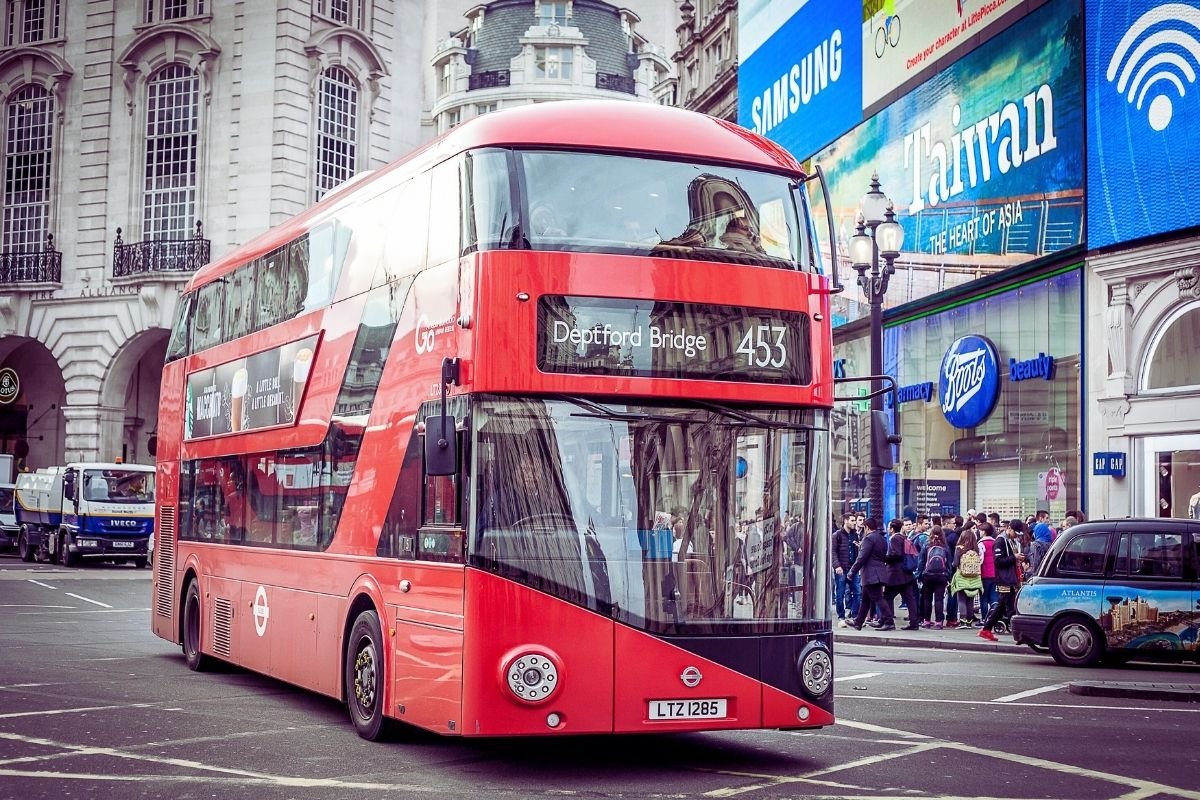
Buses are often the calm option when you’re tired. But the real win is using them inside the cap logic, not as a panic alternative.
One Official Page to Bookmark Before You Arrive
If you only trust one source for transport pricing, make it an official TfL page—because blogs go outdated, but TfL updates the rules that actually charge you.
Official TfL fare capping (daily & weekly caps, including Zone caps)
And for buses/trams (the numbers tourists misread most often):
Official bus & tram fares (Hopper fare, daily cap, weekly cap)
In PART 2, we’ll do what most guides never do: we’ll map the costs to traveller behaviour—couples, families, budget travellers, and comfort seekers—and name the specific mistakes that hit each type hardest (and how to build a transport routine that stays cheap when energy drops).
One booking link only in this part, used for the right situation: if you land late, travel as a family, or know you get overwhelmed on arrival day, a fixed-price transfer can prevent the “Day 1 mistake chain” (wrong platform, wrong line, extra rides, and a tired meltdown before you even check in).
Pre-book a fixed-price airport transfer (best for late arrivals or family travel)
London Public Transport Costs Explained (2026): What You Actually Pay (When You Move Like a Tourist)
Most visitors don’t “overspend” because London is evil. They overspend because they move like tourists: scattered, reactive, and inconsistent.
London pricing is built around a simple promise: if you travel consistently, the system caps you and settles down. But tourists rarely travel consistently. They do the central morning, the random afternoon detour, the tired evening rescue ride, and then they change payment method when the phone battery drops. That’s when costs stop feeling like a cap and start feeling like a leak.
So in this part, I’m not going to drown you in fare tables. I’m going to show you the real “cost behaviour” by traveller type—because London punishes different weaknesses depending on how you travel.
In London, the expensive part is rarely the train. It’s the interchange: extra walking, missed connections, and the tired decisions that follow.
Couples: The Hidden Cost Is Not Fares – It’s “Debate Time”
Couples often arrive with the most dangerous transport plan: the plan built on mood.
It sounds romantic: “We’ll just wander, and take the Tube when we need.” In London, that often becomes: a long morning discussion, a late arrival, a rushed transfer, and then one of you quietly pays for a shortcut just to stop the day from feeling fragile.
The couple-version of transport overspending usually looks like this:
1) Too many cross-city jumps. You try to “sample” areas far apart. Your day becomes a chain of interchanges. You’re not paying more per ride—you’re paying in fatigue, and fatigue makes you spend differently.
2) Last-minute convenience. When you’re late for an hour you care about, you stop caring about cost. That’s when a small “just this once” decision becomes a pattern.
TripsCity fix for couples: plan the day by one area + one nearby secondary area. Use the Tube for the big jump in the morning, then keep movement inside the cluster. Your transport bill stays calmer because your behaviour stays calmer.
If you want one “paid certainty” moment (because missing it would actually hurt), protect it once—don’t buy certainty repeatedly all day. That is how London turns romance into irritation.
Families: Your Real Cost Is Momentum Collapse (Not Ticket Price)
Families don’t lose money first. They lose rhythm.
London stations can be long. Interchanges can be mentally heavy. And the family version of “just one more stop” often ends with: hungry kids, tired adults, and a forced expensive choice to reset the day.
The family overspend pattern is predictable:
1) A base that’s hard to return to. If returning to your hotel requires multiple changes, you avoid returning. Then you push too long. Then you “buy relief” (extra rides, a taxi, a paid indoor fallback you didn’t plan).
2) Overusing rail when the day is already fragile. When children are done, the calm option is often the bus—not because it’s cheapest, but because it’s simpler and above ground.
TripsCity fix for families: treat buses as your “recovery mode” and keep your payment identity consistent so the system stays predictable. A family doesn’t need the cheapest ride. It needs the ride that keeps the day kind.
Also: don’t stack “queue risk” and “transfer risk” on the same day. If you have a timed hour, protect the approach to it. Build buffer. Families don’t fail because they did too little. They fail because the day becomes fragile in public.
Budget Travellers: London Punishes the Wrong Kind of “Saving”
Budget travellers often fight over the wrong numbers.
They stress about saving a few pounds on food, then choose a base that forces extra changes twice a day. That is not saving. That is buying an invisible ticket—daily—paid in energy. And energy loss is what triggers the most expensive budget behaviour: panic spending.
Budget overspending in London usually happens through three quiet doors:
1) Zone drift. You don’t plan by clusters, so you keep bouncing. Your day becomes longer, and your cap logic becomes more expensive than you expected because your travel pattern expanded.
2) Payment inconsistency. You swap card/device once. The safety net stops catching you cleanly. You pay as if you never had a cap strategy.
3) The “I’m done” taxi moment. Not because you love taxis. Because you’re exhausted from interchanges you didn’t need.
TripsCity fix for budget travellers: your real savings are structural: a connected base, fewer changes, and at least one bus-heavy day when your feet need a break. London becomes affordable when you stop buying repairs.
Comfort Seekers: Pay Once for Stability – Don’t Pay All Day for Panic
Comfort travellers have a valid goal: they want London to carry them.
But London only supports that style if you pay in the right place. Most comfort overspending happens because travellers refuse structure, then buy structure late in the day when anxiety is high.
Comfort overspend looks like:
• paid upgrades because you arrived late,
• extra rides because you chose the “fastest” route with too many changes and got overwhelmed,
• repeated convenience spending instead of one deliberate stability purchase.
TripsCity fix for comfort travellers: buy stability early and intentionally. That can mean: a base that reduces interchanges, one protected arrival solution (if you land late), and a day structure that avoids cross-city ping-pong. Then you can be “relaxed” without paying for it repeatedly.
If you want the city to feel easy, you still need a spine. London doesn’t punish comfort. It punishes vagueness.

When your brain is tired, the best “cost decision” is often the calm decision. Buses keep you moving without the interchange tax.
London Public Transport Costs (2026): The Mistakes That Quietly Break Capping
This is the section that actually saves money, because it targets what tourists do wrong in real life—not what they “should” do on paper.
Mistake 1: Mixing payment identities.
Phone in the morning, card in the evening, watch “just once.” Your brain thinks it’s the same bank. London’s system prices by the same identity. Mix it and you can break the “one-day logic” you thought you were using.
Mistake 2: Incomplete journeys on rail.
If you don’t tap out, the system can’t price properly and you can be charged as if you took the most expensive version of that journey. This happens most on tired evenings when you stop paying attention.
Mistake 3: Planning by attractions instead of clusters.
When your day is scattered, your transport becomes scattered. Even if you’re capped, you end the day exhausted—then you spend on repairs (food you didn’t plan, extra rides, paid shortcuts).
Mistake 4: Buying a pass before you’ve chosen your base.
A pass can be fine in the right situation. But buying it before base choice often creates “movement pressure.” You move because you paid, not because the day is logical. That’s how London becomes tiring, even when it’s “covered.”
Mistake 5: Treating the bus as a last-resort panic option.
Buses work best when they’re planned as part of your system, not used as emotional rescue after a bad interchange.
Passes vs Pay-As-You-Go: The Honest Decision (Without Marketing)
If you came here hoping I’ll declare one winner, you’ll be disappointed. London doesn’t have one “best” option. It has one best fit.
Pay-as-you-go with capping usually wins when: you’re a normal visitor staying mostly central, you want flexibility, and you don’t want to pre-pay for travel on low-movement days. It keeps your costs proportional to your actual behaviour.
A Travelcard-style approach can make sense when: you have a fixed routine and you know you’ll hit heavy travel days across the same zones every day. It’s less “cheap” and more “predictable.”
But here’s the TripsCity truth: most tourists don’t need a pass. They need a base and a routine. A pass cannot fix scattered planning. It can only make scattered planning feel justified.
Official reference pages worth checking close to your travel date (because numbers can change):
TfL fare capping (official)
TfL bus & tram fares (official)
One Smart Booking Link (Only If It Matches Your Situation)
I’m keeping this disciplined: one link in this part, and only because it solves a cost pattern—not because “booking links are nice.”
If you’re flying in and you know your Day 1 is vulnerable (late arrival, family travel, or you get overwhelmed by transport learning), you often spend more by improvising. A fixed-price arrival solution can prevent the mistake chain: wrong platform, extra rides, confusion, then paying for repairs on the first night.
Pre-book a fixed-price airport transfer (useful for late arrivals or family travel)
In PART 3, we’ll build the practical calculator: realistic 3-day / 5-day / 7-day transport budgets using caps, when Heathrow (or other airports) changes the first-day math, and the clean planning order that keeps London predictable even when you’re tired.
London Public Transport Costs (2026): A Realistic 3–7 Day Budget (Caps-Based)
Most travellers try to budget London transport like it’s a single number per ride. That approach collapses on Day 2.
London budgeting works when you budget like London charges: by daily caps, by zone behaviour, and by the “repair moments” that appear when your plan scatters or your taps get messy.
So instead of pretending you can predict every single journey, you build your transport budget in three layers:
Layer 1 (Base cost): how many days you’ll move in central zones with normal sightseeing rhythm.
Layer 2 (Distortion cost): airport journeys and any day you intentionally go wider (zones expand).
Layer 3 (Repair buffer): the small money you spend when the day slips (extra rides, wrong turns, late fixes).
Below is a realistic way to estimate transport spending without lying to yourself.
| Trip length | Typical visitor pattern | How to budget (caps mindset) | What usually breaks it |
|---|---|---|---|
| 3 days | Central London, one heavy day, one tired day | 2 days near your central cap + 1 bus-heavy day + airport distortion | Cross-city ping-pong and late-day panic rides |
| 5 days | Most first-time trips | 3–4 capped days + 1 low-movement day + airport distortion | Choosing a base that forces extra changes daily |
| 7 days | Deeper trip with wider areas | Weekly logic matters: repeated caps in same zones may justify weekly cap thinking | Mixing payment identities and incomplete journeys |
Important: the point isn’t to guess the exact number. The point is to stop building a fantasy budget that breaks the moment you get tired.
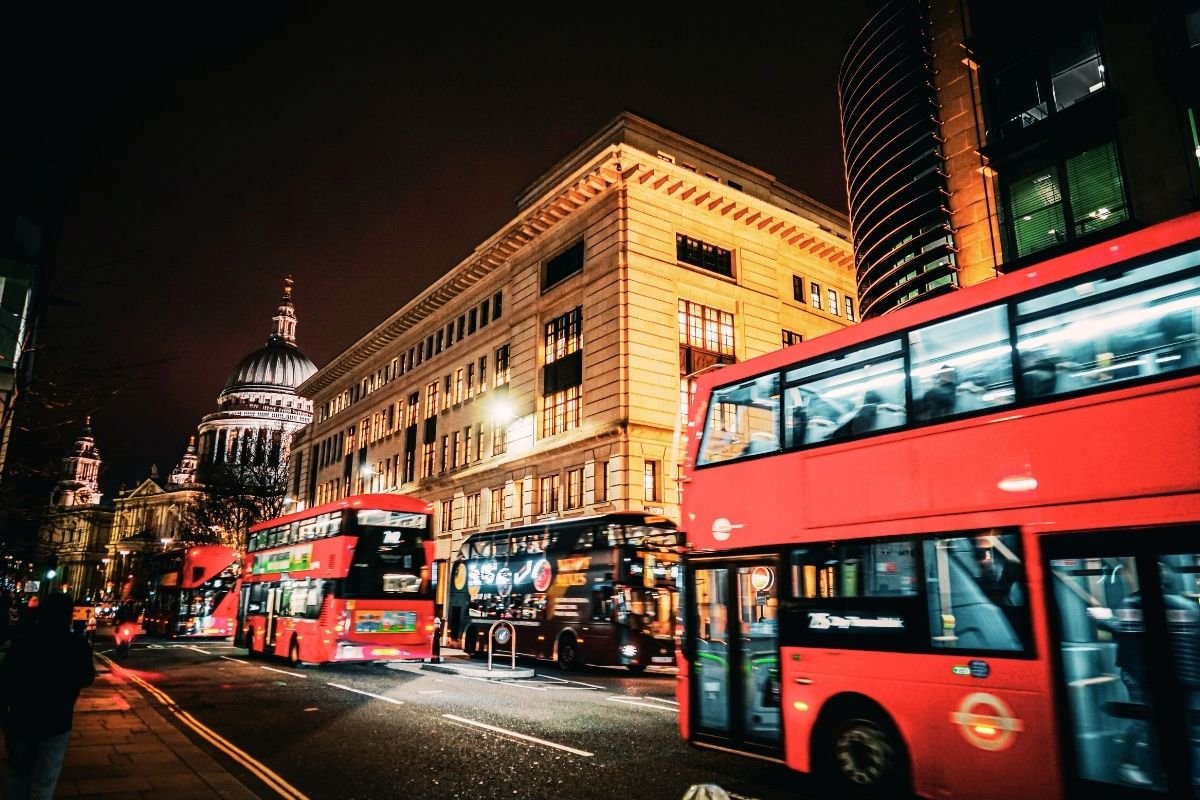
The cheapest transport day is often the calmest one: fewer changes, more buses, and no repair spending.
Heathrow and London Public Transport Costs: Why Day 1 Feels Wrong
Most London transport budgets feel wrong for one reason: airport travel distorts the first and last day.
On normal sightseeing days, capping makes costs feel controlled. Airport days are different. You’re tired. You’re carrying bags. You’re more likely to make a bad decision quickly just to end the friction. And airport journeys often sit outside the mental model tourists use for “daily travel.”
TripsCity rule: treat airport travel as a separate line item, not part of your “daily cap comfort.” Even if the system caps you later, the airport journey is still the moment most visitors feel the money shock.
Also: airport pricing can change. Don’t build a 2026 budget from a random blog number you saw once. Use official TfL pages close to your date, especially for Heathrow journeys and zone rules.
The Pass Trap: When “Certainty” Makes You Move More Than You Needed
Passes are not evil. They’re just psychologically dangerous in London.
A pass creates a subtle pressure: “We paid, so we should use it.” That pressure pushes you into scattered movement and extra cross-city jumps. And scattered movement is the real enemy—because it turns the day into interchanges, delays, and fatigue.
The pass question should never be “Is it cheaper?” first. The pass question should be:
Will it make my movement cleaner—or messier?
A pass-style approach can help when you genuinely have repeated, heavy travel days across the same pattern and you want your brain to stop thinking about transport costs entirely.
It backfires when you haven’t chosen a connected base and you’re still planning by attraction lists instead of clusters. Then the pass becomes permission to scatter, and London becomes exhausting.
If your trip is attraction-heavy and you want a “single purchase” mindset for tickets (not transport), there is one controlled way a pass can fit: it’s not for everyone, and it’s not required. It’s for the traveller who hates repeated checkout decisions and prefers one planned structure.
Check a London pass option (only if your itinerary is paid-attraction heavy)
London Public Transport Costs Explained (2026): The “Repair Spending” You Must Budget For
Here is what most guides don’t say clearly: even if transport is capped, London still becomes expensive if you keep repairing your day.
Repair spending is not “luxury.” It’s what happens when you’re late or tired and you start buying relief:
Extra rides because you crossed the river twice for no reason.
Convenience upgrades because you arrived late and don’t want to queue.
Taxi moments because you chose a route with too many changes and your brain is done.
Transport budgeting that ignores repair spending is not budgeting. It’s denial.
TripsCity fix: don’t try to eliminate repair spending completely. Build a small buffer for it, then focus on reducing the triggers: fewer changes, clustered days, and a base that doesn’t force complexity twice a day.
The Practical Planning Order (So Costs Stay Predictable)
London gets expensive when you decide in the wrong order. Here is the order that makes costs behave:
1) Choose your base first. A base that forces multiple changes every morning is a daily cost pattern, not an inconvenience. If your base is wrong, every “cap” day still feels exhausting, and exhaustion is what triggers overspending.
2) Commit to one payment identity. One card OR one phone OR one Oyster. Keep it consistent. London caps disciplined travellers. It penalises mixed tokens.
3) Build days by clusters. One main area per day plus a nearby secondary. When you cluster, you reduce interchanges. When you reduce interchanges, you reduce fatigue. When you reduce fatigue, you stop buying repairs.
4) Design one bus-heavy day on purpose. Not as a failure. As a strategy. A bus-heavy day keeps you moving above ground when your brain doesn’t want stations anymore.
5) Separate airport travel from daily rhythm. Treat it as a distortion line item. Plan it cleanly. Airport chaos is where tourists lose discipline first.
If you want the movement habits behind this logic, keep this internal connection ready: How to Get Around London (2026): Tube, Buses, Oyster & Contactless (add link when published).
The One-Minute Audit That Prevents “Why Did I Pay So Much?”
Most people only notice problems when the trip is over. Do this quick audit once per day (it takes one minute):
• Did we use the same payment identity all day? If not, tomorrow becomes “discipline day.”
• Did we do any rail journeys without a clear tap-out? If yes, expect a mess and tighten behaviour.
• Did we cross the city twice? If yes, that’s not transport—it’s planning. Fix tomorrow’s cluster.
• Did we take a taxi because we were tired? If yes, tomorrow needs a bus-heavy recovery plan.
This is not obsessive. This is how you stop London from turning into a silent leak.

The cheapest London movement is usually the most structured: cluster days reduce interchanges, and fewer interchanges reduce repair spending.
The Direct Decision (No Soft Ending)
If you want London transport to feel cheap in 2026, stop hunting for the “cheapest ticket.”
London is not a bargain city. It is a consistency city.
Choose a connected base. Commit to one payment identity. Plan by clusters. Use buses as recovery—not as panic. Treat airport travel as a distortion line item. Build a small repair buffer and then reduce the behaviours that trigger it.
Do that, and your transport costs will feel stable. Refuse it, and London will keep charging you in small, quiet bites until the trip feels more expensive than it should.
FAQ: London Public Transport Costs (2026) Questions That Actually Matter
1) Is pay-as-you-go always cheaper than a pass?
Not always. But for most visitors it is safer, because it matches real travel behaviour and capping protects normal sightseeing days. Passes only win when your travel pattern is fixed and consistently heavy.
2) Why do I see many small charges instead of one daily amount?
That’s normal. Many banks show taps as separate entries first, then the system settles the final total later. The real problem is when the charges look inconsistent across the day—often caused by mixed payment identity or an incomplete rail journey.
3) What is the single biggest mistake that makes transport costs spike?
Mixing payment identities (phone then card, or watch “just once”). London prices your day by token consistency. Break that, and capping can stop protecting you cleanly.
4) Do buses really help reduce spending, or just reduce stress?
Both—because stress is what triggers repair spending. Buses reduce interchange fatigue and keep your day above ground when you’re mentally done with stations.
5) Should I budget airport travel inside my daily transport budget?
No. Treat airport travel as a separate line item. Airport days are distortion days: you’re tired, more likely to make mistakes, and pricing can differ from your central travel rhythm.