
A Paris 3 Day Itinerary gives first-time visitors enough time for the Eiffel Tower, Louvre, historic center and Montmartre — but not enough time to treat every famous Paris attraction as mandatory.
The quick answer: spend Day 1 around the Eiffel Tower, Seine and Arc de Triomphe; use Day 2 for the Louvre, Notre-Dame and Latin Quarter; then slow the pace on Day 3 in Montmartre. That route covers three distinct parts of Paris without wasting hours crossing the city back and forth.
The truth is that three days can feel surprisingly relaxed or completely exhausting depending on what you add. Versailles, Disneyland Paris, Musée d’Orsay and extra museums are all worthwhile, but stacking them onto this first-trip route usually means sacrificing neighborhoods, meals or the time buffers that keep reservations from controlling the entire trip.
| Day | Main Route | Pace |
|---|---|---|
| Day 1 | Trocadéro → Eiffel Tower → Seine → Arc de Triomphe → Champs-Élysées | Major icons + viewpoints |
| Day 2 | Louvre → Tuileries → Seine → Notre-Dame → Latin Quarter | Museum + historic center |
| Day 3 | Abbesses → Sacré-Cœur → Place du Tertre → quieter Montmartre streets | Neighborhood + slower finish |
TripsCity Insight: Three days in Paris works because each day has a different geographic purpose. The fastest way to ruin the plan is to insert one distant attraction simply because you have seen it on another “must-do” list.
Disclosure: This guide contains affiliate links. If you book through one of them, TripsCity may earn a commission at no extra cost to you.
Paris 3 Day Itinerary: Quick Plan, Costs and Before You Start
This Paris 3 Day Itinerary is designed primarily for a first visit. Day 1 stays in western Paris, Day 2 moves through the center toward Île de la Cité and the Left Bank, while Day 3 concentrates on Montmartre rather than adding another long cross-city route.
Paris 3 Day Itinerary Transport Costs for 2026
In 2026, a standard Metro-Train-RER journey costs €2.55, while a Bus-Tram journey costs €2.05. The all-zone Navigo Day pass costs €12.30 and excludes airport journeys.
| Option | 2026 Price | Best Use |
|---|---|---|
| Metro-Train-RER | €2.55 | Occasional longer journeys between sightseeing areas |
| Bus-Tram | €2.05 | Individual bus or tram journeys |
| Navigo Day | €12.30 | A transport-heavy sightseeing day |
This itinerary deliberately keeps many attractions within walking distance of one another, so unlimited travel is not automatically the cheapest option. For example, Day 2 can be largely walked after you reach the Louvre.
On the other hand, your hotel location and evening plans can increase the number of Metro journeys. Compare the options in our Paris transport guide, or confirm current fares with Île-de-France Mobilités.
Which Attractions Should You Reserve First?
Do not begin by booking ten activities. Instead, secure the attractions capable of controlling an entire sightseeing day.
Eiffel Tower: if going up is important, choose your date and time before arranging the rest of Day 1. The official Eiffel Tower guidance explains that third-party “priority” or “skip-the-line” offers provide no additional privilege beyond the standard reserved e-ticket. Security procedures still apply.
Louvre: reserve Day 2 next. Time-slot booking is strongly recommended, and the Louvre states that advance booking is the only way to guarantee museum access.
Check the official Eiffel Tower ticket office and official Louvre visitor information before building the rest of your schedule.
Where Should You Stay for Three Days?
For a short trip, a simple Metro connection can be more useful than sleeping beside one famous attraction.
The 1st arrondissement is convenient for the Louvre and central Paris. The 5th and 6th work well for the Latin Quarter and Left Bank, while the 7th is attractive for travelers who prioritize the Eiffel Tower.
Parts of the 9th can also work well because they provide useful access to both central Paris and Montmartre.
Compare the trade-offs in our Where to Stay in Paris guide. If you are ready to compare accommodation, you can also check current Paris hotel options on Trip.com.
What Should You Leave Out of a First Three-Day Trip?
Versailles: it can work, but it consumes most of one day. On a first three-day visit, adding Versailles normally means sacrificing Montmartre or a substantial section of central Paris.
Disneyland Paris: treat it as a replacement day, not an additional attraction.
Multiple major museums: the Louvre already creates a demanding museum block. If Musée d’Orsay matters more to you, replace another activity instead of simply adding it.
Every famous neighborhood: Le Marais and Saint-Germain are excellent, but a three-day itinerary benefits from choosing depth over constant movement.
Does Your Arrival Day Count?
Only count an arrival day as Day 1 if you can realistically begin sightseeing by late morning without depending on a delayed flight, baggage collection and airport transfer.
If you land in Paris in the afternoon, use that evening for dinner, a neighborhood walk or a Seine view and begin this itinerary the following morning. Otherwise, a delayed arrival can distort all three days before the trip properly starts.
For broader preparation, use our Paris trip planning guide and Things to Do in Paris guide.
Paris 3 Day Itinerary: Days 1–2
The first two days of this Paris 3 Day Itinerary cover the landmarks most first-time visitors expect to see. However, the route avoids treating every landmark as a long interior visit.
Paris 3 Day Itinerary Day 1: Eiffel Tower, Seine and Arc de Triomphe
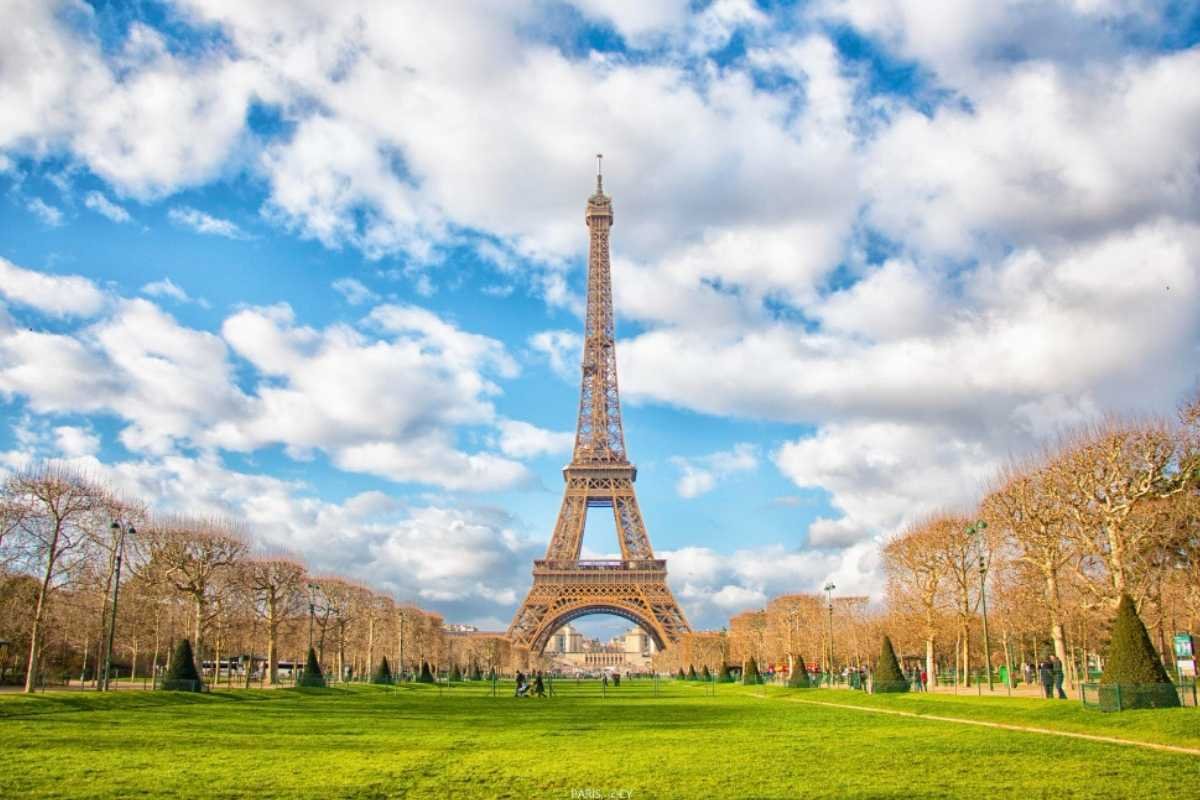
Begin Day 1 around Trocadéro before moving through western Paris.
Morning: Trocadéro and Eiffel Tower
Suggested start: around 8:30 AM.
Begin at Trocadéro for the classic open Eiffel Tower view, then walk through the gardens and cross Pont d’Iéna toward the tower.
If you only want exterior views, around 45–60 minutes can be enough. Going up the tower requires much more time, so allow roughly two or three hours once security, elevators and time on the viewing levels are included.
- Metro: Trocadéro or Bir-Hakeim
- Best photo points: Trocadéro terrace, Pont d’Iéna and Champ de Mars
- Planning priority: protect your reserved tower time
Check the official ticket office first. If official availability does not fit your plans, you can also compare current Eiffel Tower guided visit options.
Late Morning: Lunch and a Seine Walk
After the tower, avoid immediately racing toward another major monument. Instead, use part of the late morning for lunch and a short walk beside the Seine.
You can move toward Pont Alexandre III and the Invalides area, but do not turn this section into a two-hour walking challenge. Around 30–45 minutes of relaxed river time can be enough.

Keep a Seine cruise optional so Day 1 still has room for delays.
Optional: One-Hour Seine Cruise
A sightseeing cruise can be useful because it lets you continue seeing Paris while sitting down after several hours on your feet.
However, a cruise is optional rather than essential. If the Eiffel Tower took longer than expected, remove the cruise before rushing the rest of Day 1.
You can compare current one-hour Seine cruise options, or see our Seine River Cruise guide for departure areas and timing.
Late Afternoon: Arc de Triomphe
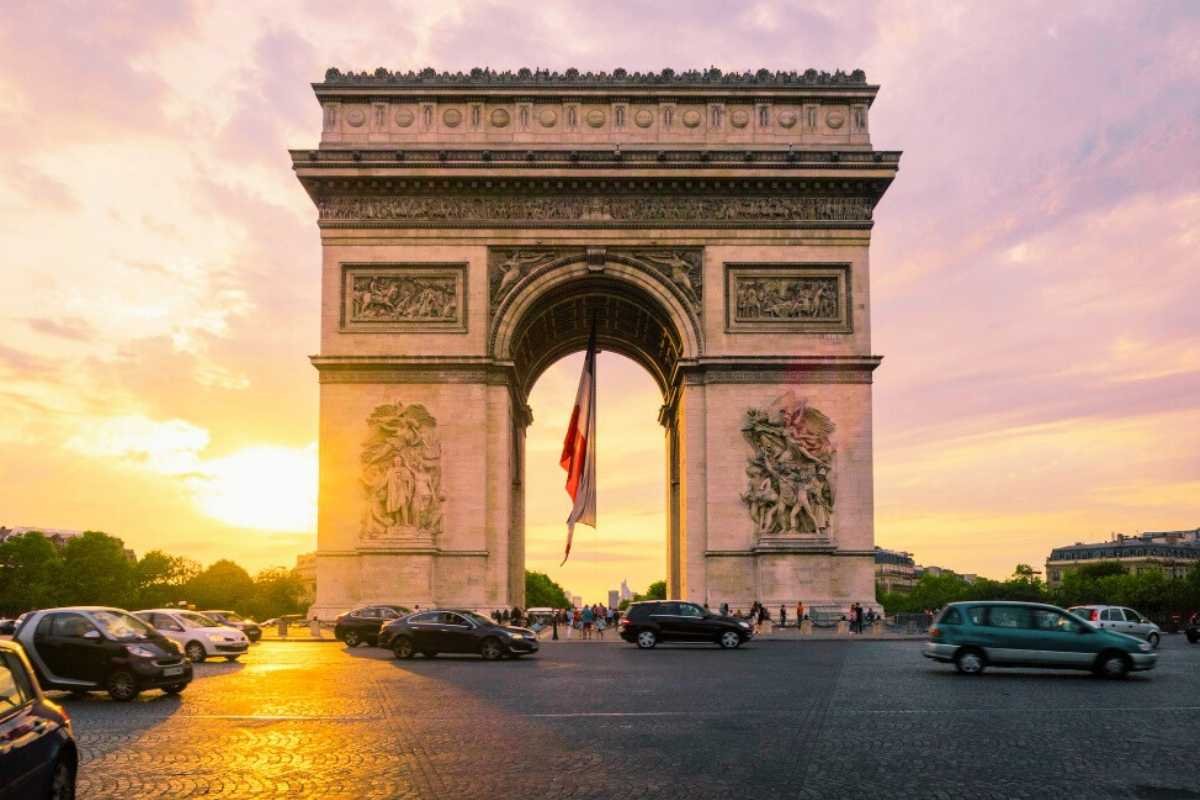
The Arc de Triomphe rooftop provides a different view from the Eiffel Tower.
Continue to Charles de Gaulle–Étoile and use the underground passage to reach the Arc de Triomphe.
If you climb to the rooftop, around 45–60 minutes is reasonable for many visitors. The view also helps first-time travelers understand Paris geographically because the major avenues radiate outward from the monument.
You can check current Arc de Triomphe rooftop ticket options.
Evening: Champs-Élysées Without Overdoing It
Finish with part of the Champs-Élysées instead of treating the entire avenue as one more sightseeing assignment.
Walk, browse a few shops or stop for dinner according to your remaining energy. If the day ran late, shorten this section first.
TripsCity Insight: Day 1 does not become better because you walked every meter of the Champs-Élysées. Protect the Eiffel Tower and Arc de Triomphe; let the avenue remain flexible.
Paris 3 Day Itinerary Day 2: Louvre, Notre-Dame and Latin Quarter
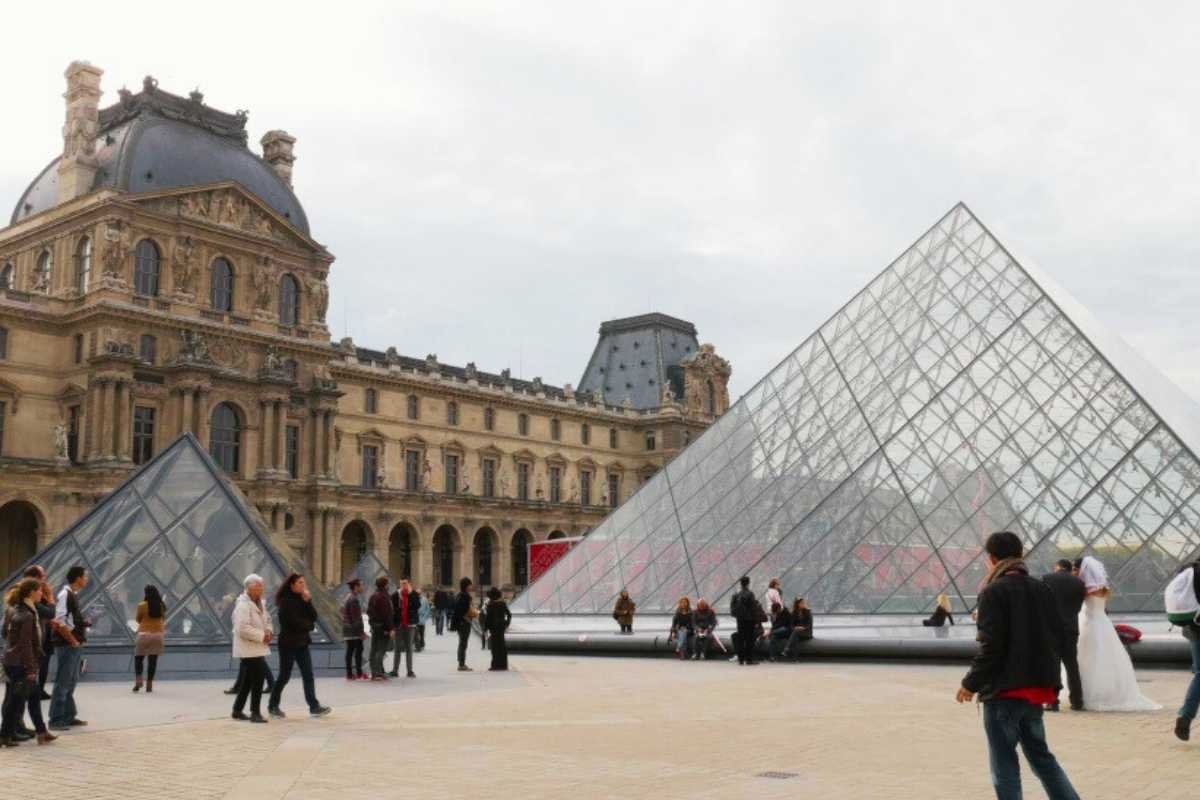
A focused Louvre visit leaves enough time for Paris’s historic center.
Morning: Louvre Museum
Suggested start: around 9:00 AM or your reserved time slot.
The Louvre is large enough to consume the entire day. For this itinerary, decide your priorities before entering rather than attempting to move through every department.
A practical first visit might include the Mona Lisa, Winged Victory of Samothrace, Venus de Milo and one collection that genuinely interests you. Around 2.5–3 hours works well for many first-time visitors following this route.
- Metro: Palais Royal–Musée du Louvre
- Suggested visit: around 2.5–3 hours
- Best strategy: choose priority works before arrival
You can compare current Louvre ticket options. For entrances and a more focused museum strategy, see our Louvre Museum guide.
Midday: Tuileries Garden and Lunch
After leaving the Louvre, walk into the Tuileries and give yourself time outside.
Thirty to sixty minutes is enough for lunch, a short walk or sitting near one of the ponds. This is recovery time, not empty space in the schedule.
Afternoon: Seine, Pont Neuf and Île de la Cité
Continue east toward Pont Neuf and Île de la Cité. Walking this section makes more sense than adding another Metro journey because the route naturally connects the Louvre area with historic Paris.
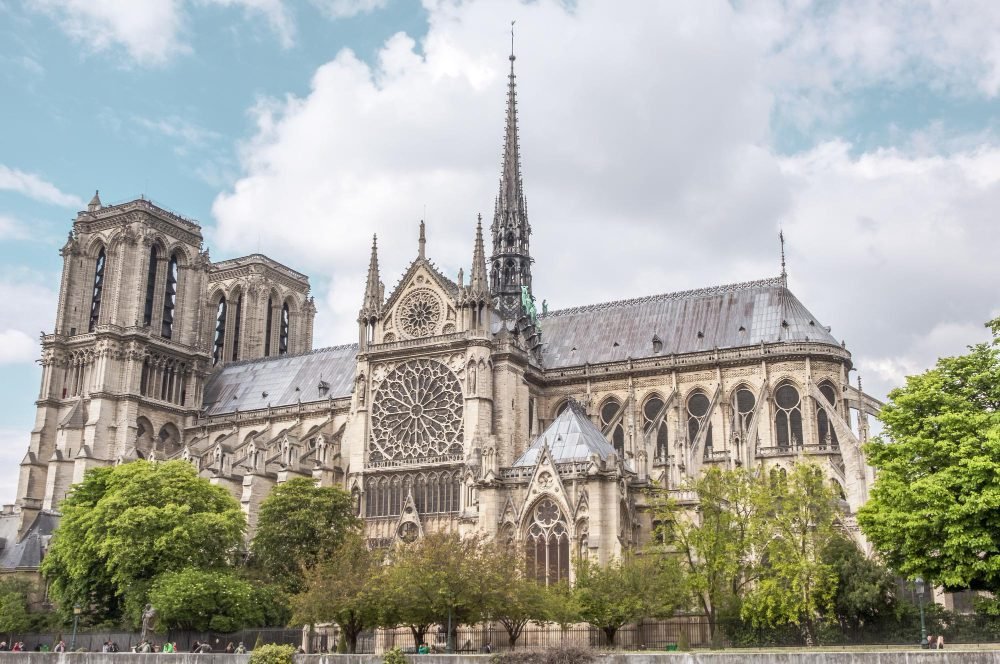
Notre-Dame is open to visitors again, making an interior visit possible on Day 2.
Late Afternoon: Notre-Dame Cathedral
Notre-Dame is no longer an exterior-only stop. The cathedral is open to visitors, and ordinary entry is free.
A free reservation is optional and can reduce waiting, while spontaneous visitors can still queue without one. Importantly, ordinary cathedral entry does not require a paid third-party ticket.
Check the official Notre-Dame reservation information close to your visit because opening conditions can change around services and special events.
Should You Add Sainte-Chapelle?
Add Sainte-Chapelle if its stained glass is a genuine priority, not merely because it is nearby.
If you include it, reduce Louvre time or shorten the riverside section. Otherwise, another ticketed visit can turn a balanced Day 2 into a sequence of queues.
Evening: Latin Quarter
Cross to the Left Bank and finish the evening in the Latin Quarter.
Explore bookstores, cafés and smaller streets, then choose dinner without scheduling another formal attraction. After a Louvre morning and Notre-Dame afternoon, a flexible evening usually works better than another reservation.
Paris 3 Day Itinerary: Day 3, Practical Tips and FAQ
The final day of this Paris 3 Day Itinerary changes the rhythm. Instead of another museum-heavy route, Day 3 focuses on Montmartre and gives you room to adjust the afternoon around your departure time and energy.
Paris 3 Day Itinerary Day 3: Montmartre and Sacré-Cœur

Day 3 slows the pace in Montmartre after two landmark-heavy days.
Morning: Abbesses and Montmartre Streets
Start around Abbesses and gradually make your way uphill rather than going directly to Sacré-Cœur.
You can pass the Wall of Love, stop at a bakery and explore smaller streets before reaching the basilica. This approach spreads the uphill walking over more time and gives the neighborhood a chance to feel like more than a photo stop.
Midday: Sacré-Cœur Basilica
The main basilica is free to enter. Its official visitor information currently lists daily opening from early morning until late evening, although religious services can affect the visitor experience.
The terrace outside provides a broad free viewpoint across Paris. If you want something higher, the dome is a separate visit with roughly 280 steps and no elevator; the official site currently lists an adult contribution of €8.
Check the official Sacré-Cœur visitor information before your visit.
Early Afternoon: Place du Tertre and Quieter Streets
Continue toward Place du Tertre, then move beyond the busiest square into quieter Montmartre streets.
Rue de l’Abreuvoir, La Maison Rose and the vineyard area can all fit naturally, but avoid treating every location as a mandatory photograph. The point of Day 3 is to regain some flexibility after the more structured first two days.
If you prefer deeper historical context, you can compare current Montmartre walking tour options.
What Should You Do With the Rest of Day 3?
Your departure time should decide the afternoon.
If you leave Paris that evening: stay in Montmartre for lunch, then return to your hotel with plenty of buffer for luggage and airport travel.
Travelers with the full evening: can remain around Abbesses and Rue Lepic for dinner, or travel toward Opéra for a final central Paris walk.
Art-focused travelers: should shorten Montmartre and use the afternoon for Musée d’Orsay. Do not add the museum on top of a full Montmartre day.
What Should You Cut If the Schedule Runs Late?
| Problem | Best Adjustment |
|---|---|
| Eiffel Tower takes longer than expected | Skip the cruise or shorten Champs-Élysées |
| Day 1 becomes tiring | Keep Arc de Triomphe, make the evening shorter |
| Louvre runs long | Skip Sainte-Chapelle and shorten the Tuileries break |
| Notre-Dame queue is long | Keep the Latin Quarter evening flexible |
| You are tired on Day 3 | Stay in Montmartre and skip the optional central Paris return |
Missing one optional stop is not a failed itinerary. Instead, it is usually evidence that you protected the experiences that mattered more.
Common Mistakes on a Three-Day Paris Trip
Adding Versailles automatically. A full-day excursion has a major opportunity cost when you only have three days.
Believing every “skip-the-line” promise. Timed entry can reduce ticket-office waiting, but security still exists. At the Eiffel Tower, third-party priority tickets provide no special privilege beyond the official reserved e-ticket.
Trying to see the entire Louvre. The museum is too large for that approach to fit comfortably into this itinerary.
Turning Montmartre into a checklist. Its value comes from walking, atmosphere and viewpoints as much as individual landmarks.
Walking every long transfer. Paris is walkable, but using the Metro strategically protects your energy for the parts of the city where walking actually improves the experience.
Leaving no buffer for departure day. Luggage collection, transport disruptions and airport travel can easily consume more time than expected.
Final Verdict: Is This Paris 3 Day Itinerary Realistic?
Yes. This Paris 3 Day Itinerary works because each day has a clear purpose rather than trying to cover all of Paris equally.
Day 1 gives you the western icons, Day 2 combines the Louvre with historic Paris, and Day 3 slows down in Montmartre. Consequently, you finish with three very different versions of the city without spending the entire trip commuting between attractions.
The itinerary becomes unrealistic only when optional experiences are treated as mandatory additions.
TripsCity Verdict: Three days is enough for an excellent first impression of Paris when you protect the landmarks that matter most and leave Versailles, Disneyland and extra museums for a longer trip or a return visit.
Paris 3 Day Itinerary FAQ
Is three days enough for a first trip to Paris?
Yes. Three days gives first-time visitors enough time for the Eiffel Tower, Seine, Arc de Triomphe, Louvre, Notre-Dame, Latin Quarter and Montmartre if the days are grouped geographically.
Should I visit Versailles during a three-day trip?
Only if Versailles is one of your highest priorities. It consumes most of a day, so you should replace Montmartre or another major section rather than trying to add it to this itinerary.
How long should I spend at the Louvre?
Around 2.5–3 hours works well for a focused first visit. Art-focused travelers can stay longer, but they should reduce the afternoon itinerary rather than rushing through the historic center.
Should I book the Eiffel Tower and Louvre in advance?
Yes if they are priorities. A reserved Eiffel Tower time helps anchor Day 1, while the Louvre strongly recommends timed booking and states that advance booking is the only way to guarantee museum access.
What transport option is best for three days?
It depends on how many rides you expect to take. In 2026, Metro-Train-RER journeys cost €2.55, Bus-Tram journeys cost €2.05 and Navigo Day costs €12.30. Compare your likely rides rather than assuming a pass is always cheaper.
Is Notre-Dame open to visitors?
Yes. Ordinary cathedral entry is free, and a free reservation can reduce waiting. Booking is optional, so visitors can also join the regular queue.
Is Sacré-Cœur free?
Entry to the main basilica is free. The dome is a separate paid visit and requires climbing roughly 280 steps.
Where should I stay for three days?
Prioritize a hotel near a simple Metro or RER connection. The 1st, 5th, 6th, 7th and parts of the 9th can all work depending on your budget and sightseeing priorities.
Can I add Musée d’Orsay?
Yes, but replace another activity instead of simply adding it. The cleanest option is to shorten Day 3 in Montmartre or reduce part of Day 2 if Impressionist art is a major priority.
Can I add Disneyland Paris?
Yes, but it should replace one full Paris sightseeing day. On a three-day first visit, that creates a major trade-off between Disneyland and central Paris.
If three days feels too short, continue with our Paris 4 Days Itinerary. For realistic spending, use our Paris Budget Guide.
Last updated: September 2026.