
What No One Tells You About Visiting Paris (2026): The City Doesn’t Punish Tourists—It Punishes Mess
Most guides describe Paris like a mood: romantic, elegant, cinematic. What no one tells you about visiting Paris is that mood doesn’t run your day—the system does.
But the version of Paris that affects your trip isn’t a mood. It’s a system.
And here’s the first reality most people only learn after landing:
Paris doesn’t punish you for not knowing it. It punishes you for moving through it without a plan.
Not with danger. Not with drama. With friction.
Friction in Paris looks like: the wrong entrance, the wrong exit, the wrong queue, the wrong “this should be quick” assumption. It looks like losing 40 minutes without noticing—then realizing your day is suddenly fragile.
That’s why first-time Paris trips split into two types:
1) “Paris was incredible. We felt in control.”
2) “Paris was amazing but exhausting. We kept fixing the day.”
This guide is for people who want the first version. Not by hype. By rules.

Paris feels magical when the day is stable. It feels heavy when you keep repairing it.
What no one tells you about visiting Paris is that the “rules” are mostly invisible—until you break them and spend the day repairing time.
If you want to reduce cold-queue time in either city, focus on pre-booking just 1–2 key time-savers (your main “anchors”) and keep the rest of the trip flexible—this way you protect your best hours without over-planning.
What No One Tells You About Visiting Paris: Paris Is Dense, Not “Compact”
People say Paris is “walkable,” and that’s true—but it hides a trap.
Paris is not just walkable. It’s dense. Density means you can reach a lot quickly—but it also means you can make ten small choices that all cost time: crossing, rerouting, detouring, re-entering, re-queuing, re-transferring.
The city isn’t hard because places are far. It’s hard because time leaks.
In a lower-friction city, you can wander and still win. In Paris, wandering often becomes: “We’re late, we’re hungry, we’re tired, and now the next thing is harder.”
If you’ve already published this on TripsCity, it pairs perfectly with this reality:
Paris Travel Mistakes to Avoid (2026): The Real Traps That Steal Your Best Hours
Visiting Paris Reality: The Two Parises You’ll Experience (Whether You Notice or Not)
Most first-timers think they’re visiting one city. They’re visiting two.
Paris Layer 1: Tourist Paris.
Museums, big monuments, major hubs, timed-entry systems, official signage, staff used to visitors. This layer is “designed to work” for you—if you show up correctly.
Paris Layer 2: Everyday Paris.
Neighborhood counters, small bakeries, quick service, apartment entry codes, “normal” interactions. This layer can be totally fine—but it’s faster, less explanatory, and not built for long hesitation.
Here’s the secret: most bad Paris experiences happen when people accidentally build their entire trip inside Layer 2 while also trying to do Layer 1 icons on top of it.
That’s when the day collapses: you’re solving logistics all morning, then you hit a timed ticket problem, and your brain is already tired.
Visiting Paris in 2026: The First 48 Hours Shock (What Surprises Most People)
Not scams. Not “rude Parisians.”
The real surprise is how quickly a day gets fragile when you start it late or start it empty.
Here’s what it feels like:
• You leave at 11:15 thinking “we’ll just walk and see.”
• You drift. You stop. You take photos. You pick a direction.
• It’s 13:10 and you still haven’t anchored the day.
• Now you’re hungry, so decisions get worse.
• Now you pick the next thing based on proximity, not quality.
• Now the queue is long, so you “fix it” with a paid choice you didn’t plan.
That’s not a moral failure. It’s a predictable outcome of a dense city with bottlenecks.
If you want Paris to feel calm, the first two days should be built like this: one anchor, one nearby walk, one reset, one clean return route. That’s the spine.
We’ll build that spine in Part 2.
Visiting Paris in 2026: The “Day Spine” That Stops Overwhelm
Paris becomes easy when you stop trying to “do more” and start trying to stabilize the day.
This is the TripsCity rule most people never hear:
In Paris, you don’t need a perfect plan. You need a plan that doesn’t break when you’re tired.
So here’s the spine that keeps the day stable:
1) One morning anchor (museum/monument/experience).
2) One nearby walk (45–90 minutes, not cross-city).
3) One indoor reset (warm + quiet + seated).
4) A clean return route decided early.
This spine works because it prevents the three killers of first-time Paris trips: decision fatigue, queue panic, and “late return chaos.”
What No One Tells You About Paris Logistics: Entrances Matter More Than Attractions
People lose more time in Paris at the edges than at the sights.
Edges are: entrances, exits, security lines, the wrong gate, the wrong side of the river, the wrong Metro exit.
Two travelers can “visit the same place” and have different experiences because one arrives clean and the other arrives confused.
If you want one official baseline that’s actually designed for visitors (and not random blog summaries), use the official tourist office:
Paris je t’aime (Official Paris Tourist Office)
Visiting Paris Base Rule: Your Hotel Is Either a Multiplier or a Daily Tax
Most first-timers treat the hotel like a price decision.
In Paris, it’s a movement decision.
A weak base doesn’t just add commute time. It steals your best hours and makes the return feel heavier every day—especially in winter or rain.
If you already have this on TripsCity, it’s the exact protection rule for first-timers:
Where to Stay in Paris (Base Logic That Prevents Burnout)
The “Queue Tax” and Why Timed Entry Is a Calm Tool (Not a Luxury)
Here’s the honest money rule in Paris:
You don’t overspend in Paris on attractions. You overspend fixing time.
When a line looks long, tired travelers don’t patiently “wait it out.” They pivot. They buy something else. They grab a taxi. They do a paid shortcut. That’s how budgets leak.
If you choose one or two anchors to protect your time (not to over-plan your entire trip), this is the point where pre-booking makes the biggest difference.
Paris timed-entry tickets & guided anchors
Use it like a seatbelt: 1–2 anchors that keep the day stable. Not a shopping spree.
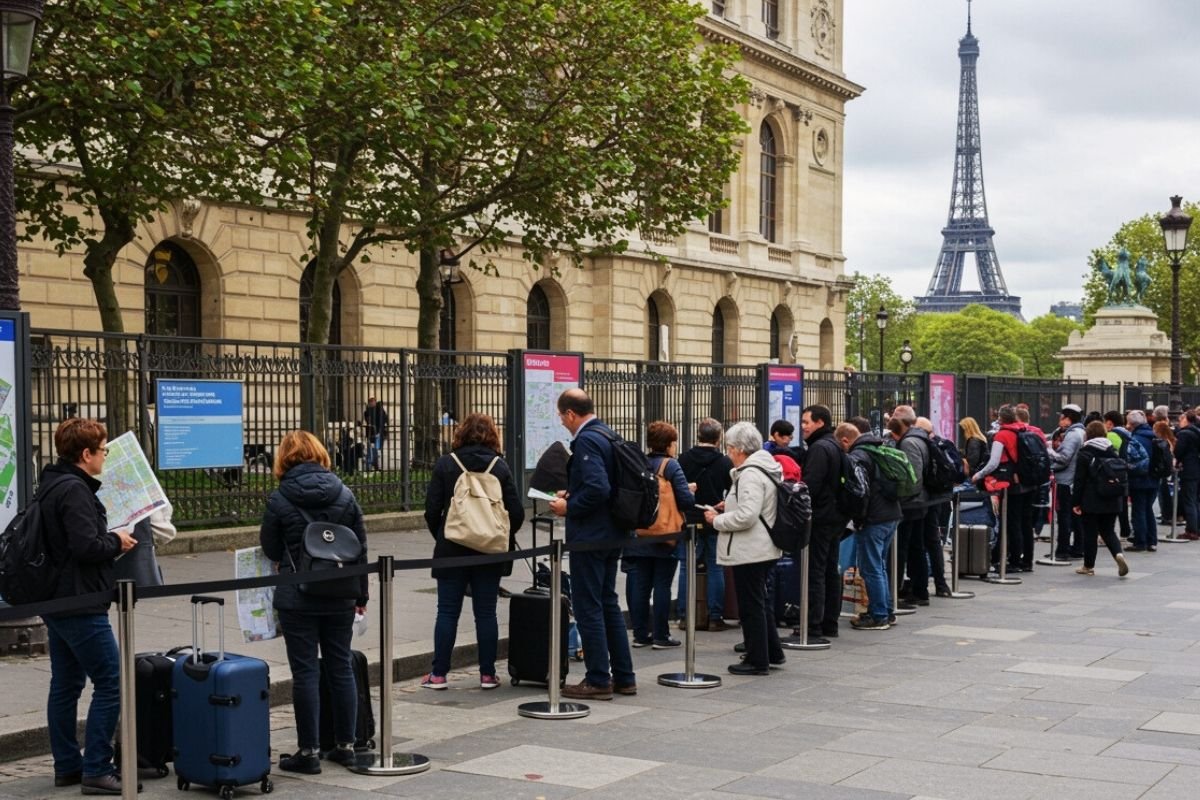
Paris drains you when every big decision happens in a queue. Lock one anchor early and the whole day gets calmer.
Visiting Paris Movement Rule: Paris Is Fast Underground—But Transfers Create Fatigue
The Metro is efficient. The fatigue comes from transfers, wrong exits, and “we’ll just change lines again.”
First-timers often lose hours like this:
• taking the “fastest” route with two changes late in the day
• surfacing at the wrong exit and re-routing in public
• trying to solve the day while standing still in crowded corridors
If you want clean movement across the whole trip, keep one reference guide open (and build your habits around it):
How to Get Around Paris (Metro Logic That Prevents the Lost Tourist Moments)
Part 3 gives you the exact daily template + a checklist you can repeat without thinking.
What No One Tells You About Visiting Paris: The Daily Template That Works When You’re Tired
Most plans work when you’re fresh.
Paris tests you when you’re tired: late afternoon, slightly hungry, phone battery lower than you want, feet heavier than the morning.
So build a Paris plan that assumes “tired you” will exist.
What no one tells you about visiting Paris is that the “tired version of you” is the one that makes the expensive mistakes—unless you design the day for it.
Step 1: The 5-Minute Morning Setup (Before You Leave the Room)
Do this once every morning. It removes half the stress you’ll otherwise blame on “Paris.”
• Screenshot your hotel address + pin (offline proof).
• Screenshot the return route (station name + one exit note if possible).
• Choose one morning anchor and save the correct entrance note.
• Decide a simple lunch plan (time + area) so hunger doesn’t run your day.
• Put one indoor reset into the plan (even if you “don’t need it yet”).
This isn’t over-planning. This is friction control.
Step 2: The Paris Day Spine (Repeat This All Trip)
Anchor → Nearby Walk → Indoor Reset → Clean Return
Paris becomes kind when your day has a spine. It becomes exhausting when you keep starting over.
Step 3: The “Repair Moves” When the Day Goes Wrong
Paris doesn’t collapse because one thing goes wrong. It collapses because you respond with panic fixes.
Use these repair moves instead:
Repair A: Reduce the decision. One action, not five options.
Repair B: Change the environment. Step aside, go inside, sit, then decide.
Repair C: Protect the next hour. Don’t try to “save the whole day.” Save the next hour.
Repair D: Make the return easy. When you’re tired, choose the cleaner route, not the clever one.
What No One Tells You About “Seeing Everything”: Paris Is Better When You Skip
First-timers often feel pressure to “cover Paris.”
But Paris isn’t a list city. It’s a density city.
Trying to do everything creates the exact feeling people regret: rushing, queues, transport fatigue, and paying to fix mistakes.
Paris gets better when you do fewer things with more control.
If you want one TripsCity anchor-plan that already follows this philosophy, this is the clean pairing:
Paris 5 Days Itinerary: The Complete Expert Plan for First-Time Visitors

Paris feels “easy” when you plan rest before your body forces it.
Visiting Paris Tired-Day Test: The Honest Filter for Every Choice
When you’re choosing neighborhoods, routes, even your daily plan—ask one question:
Will this still feel good at 6:30 PM when I’m tired?
If the answer is no, it’s not a “bad plan.” It’s a plan for a different city.
Final Answer (2026 Reality)
What no one tells you about visiting Paris is that Paris is not hard because it’s unfriendly.
It’s hard because it’s dense, fast, and full of bottlenecks.
And it becomes one of the best cities on earth when you stop trying to “wing it” and start protecting the day: one anchor, one nearby walk, one indoor reset, and a clean return.
FAQ: What No One Tells You About Visiting Paris
Why do first-time travelers feel overwhelmed when visiting Paris?
Because time leaks through small friction: wrong entrances, queues, transfers, late starts, and decision fatigue in the street.
What’s the simplest way to make Paris feel easier?
Use a day spine: one morning anchor, one nearby walk, one indoor reset, and a clean return route planned early.
Is Paris still good if I don’t plan every hour?
Yes. Paris doesn’t require perfect planning—just a plan that doesn’t break when you’re tired.
What’s the biggest money trap in Paris?
Spending to fix time: taxis, last-minute switches, and buying alternatives because a queue or entry confusion derailed the plan.