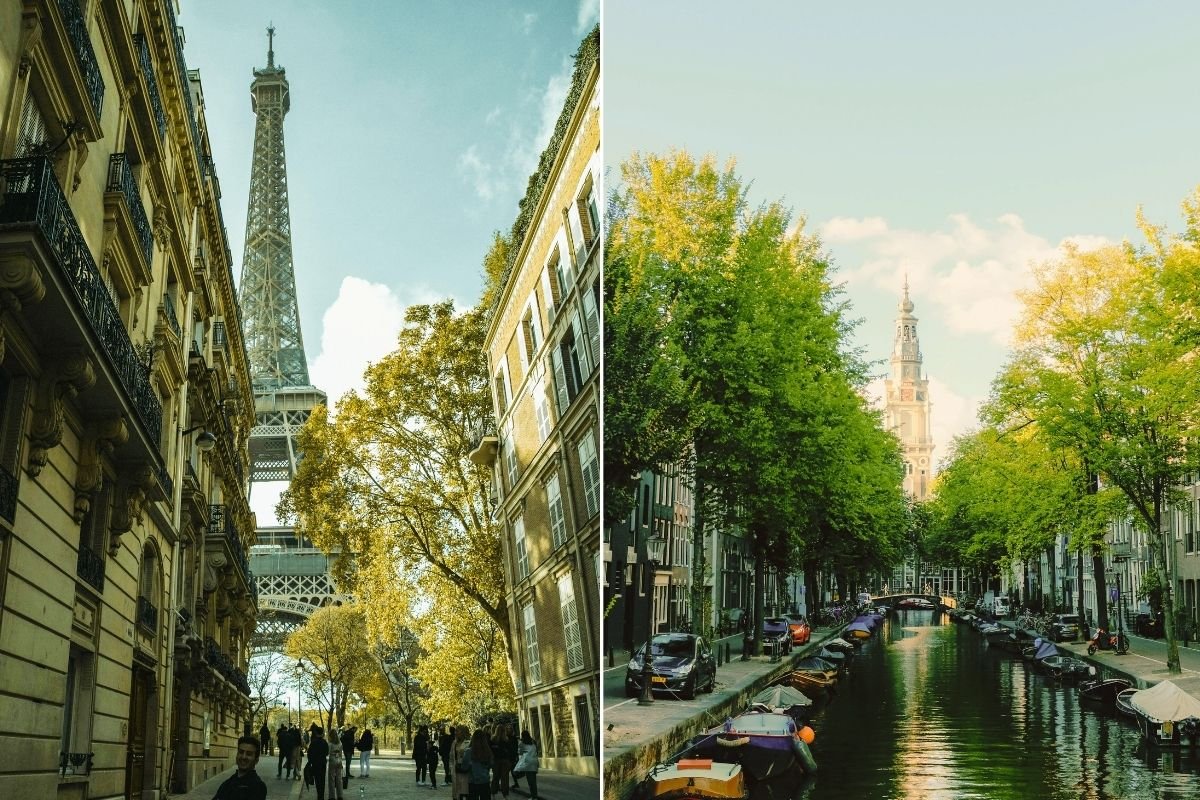
Paris vs Amsterdam (2026): The City That Fits You When You’re Tired
Most people ask Paris vs Amsterdam like it’s a preference.
But the real decision happens on day three—when your feet hurt a little, the weather is annoying, and you don’t want to “research” anything anymore.
Paris doesn’t punish you with chaos. It punishes you with precision friction: entrances, time slots, long queues, and the quiet cost of starting late.
Amsterdam doesn’t punish you with complexity. It punishes you with comfort friction: compact spaces that fill up fast, days that feel shorter when it’s windy or damp, and a trip that gets worse when you over-pack it.
This guide isn’t trying to crown a winner. It’s built to help you pick the city that stays enjoyable when your plan isn’t perfect.

Paris vs Amsterdam (2026): pick the city that still works when your energy drops.
Paris vs Amsterdam Travel Style: Anchor-Days vs Loop-Days
If you want the honest difference in one line:
Paris runs on anchor-days. Amsterdam runs on loop-days.
In Paris, the day succeeds when it has a spine: one main anchor, one nearby walk, one reset, and a clean return route. Without that, the city drains you through small losses: wrong entrance, a longer queue than expected, too many transfers, and late decisions that turn into paid shortcuts.
In Amsterdam, the day succeeds when it stays local: one area, one loop, and one or two clear stops. The city is compact enough that you don’t need constant transport solving—but if you cram too much in, the day starts feeling heavy fast.
Paris anchor-day rule: start with one “time-fixed” target
In Paris, your best morning anchor is usually a museum, monument, or timed experience. Even if you don’t buy tickets, you still want a fixed first target—because “starting the day in the street” creates decision fatigue quickly in a dense city.
If you want the same anchor logic in a longer plan, this internal guide matches it:
Paris 5 Days Itinerary (structure that prevents wasted hours)
Amsterdam loop-day rule: one area should carry most of the day
Amsterdam works when one neighborhood loop carries you: slow walking, one museum or highlight, one calm reset, then a flexible finish. The city rewards “less, but better,” not constant switching.
Paris vs Amsterdam Culture: Monumental Depth vs Human-Scale Detail
Both cities are cultural heavyweights. They just deliver culture differently.
Paris is monumental and layered. Culture is often institutional: major museums, historic seriousness, and places where timing and entrances matter.
Amsterdam is intimate and human-scale. Culture shows up in the city’s texture: canals, compact museums, and neighborhoods where “being there” is part of the experience.
If you want official visitor baselines (better than random summaries), use the tourism boards:
Paris je t’aime (Official Paris Tourist Office)
I amsterdam (Official Amsterdam Visitor Guide)
Paris culture fit in 2026: depth per hour
Paris is ideal if you want fewer places but more meaning per place—and you’re willing to plan around entrances and timing.
Amsterdam culture fit in 2026: calm impact without constant scheduling
Amsterdam is ideal if you want culture that stays calm even with a light plan: short distances, fewer “time slot” moments, and days that still feel complete when you slow down.
Paris vs Amsterdam Costs (2026): What Triggers the Overspending
People argue “which is cheaper,” but the real question is: what kind of spending do you trigger when the day goes wrong?
Paris leaks money through late decisions + ticket friction. If you start late, you spend the day recovering time—and recovery often costs more than you expect.
Amsterdam leaks money through comfort decisions + convenience spending. If you choose a weak base or overload the itinerary, you spend more just to keep the day comfortable.
Paris cost trap: the “late decision tax”
In Paris, many big experiences are bottlenecked by timing and entrances. When you miss the clean window, the day becomes: queue → frustration → “let’s pay to fix it.” That’s where budgets quietly break.
If you want a TripsCity-style cost reality check, link this internally:
Paris Budget Guide (what you really spend per day)
Amsterdam cost trap: the “comfort tax”
Amsterdam feels easy—so people keep adding “one more thing.” Those small additions stack up fast when you’re tired, the weather turns, or your plan has no limits.
If you want structured anchors (timed entry / guided options) without turning the trip into a paid marathon, this is one of the few places an affiliate link fits naturally:
Paris & Amsterdam tickets + guided anchors
Transport and Movement: Paris Is Faster Underground, Amsterdam Is Easier Above Ground
Movement is where fatigue is created—so this section matters more than people admit.
Paris is built for Metro logic. You can cross the city quickly, but you can also burn energy on stairs, transfers, and route changes if you stack too many switches—especially late.
Amsterdam is built for compact movement. Many days work best above ground: short walks, simple hops, and staying in one area instead of crossing the city repeatedly.
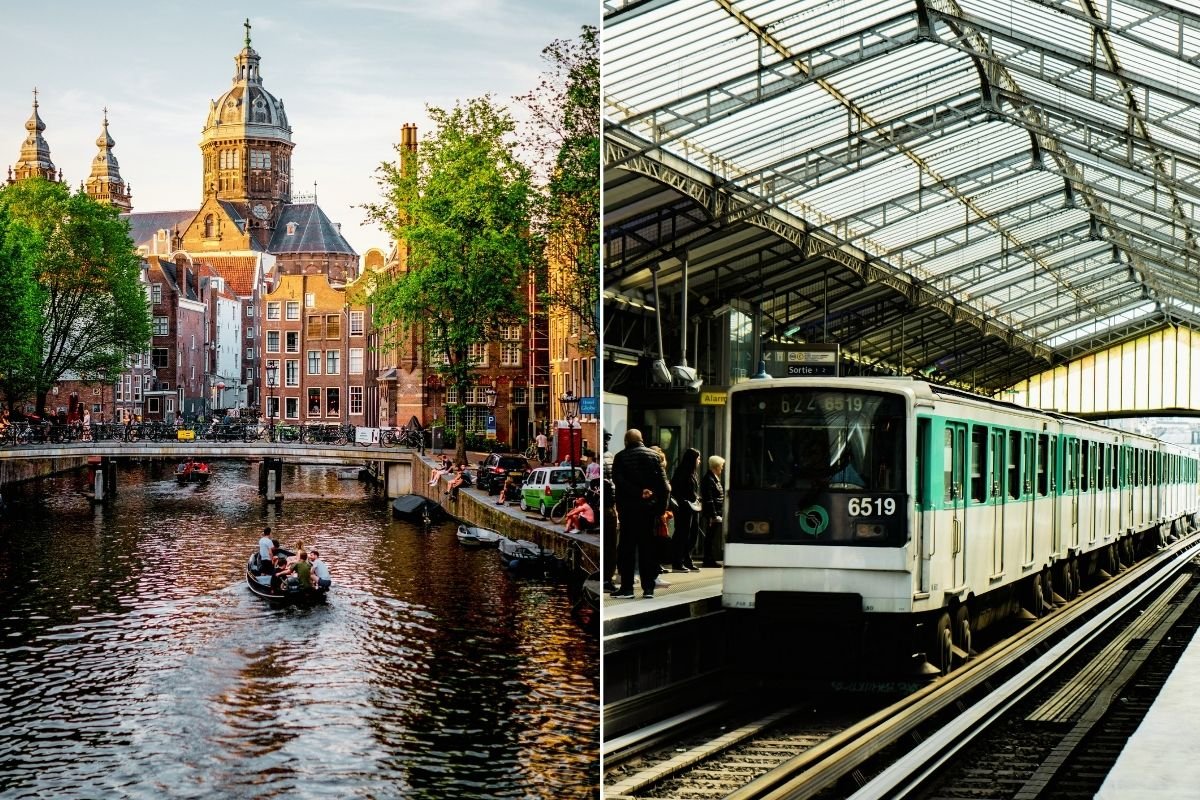
Your trip quality is often decided by movement, not attractions.
Paris vs Amsterdam for first-time travelers: who loses more time?
Most first-timers lose hours in Paris through micro-friction: wrong entrances, wrong exits, over-transferring, and starting without a day spine.
Most first-timers lose hours in Amsterdam through over-planning: too many stops, not enough resets, and a day that looks “easy” on a map but feels heavy in real walking time.
Which City Fits You Better in 2026?
Don’t choose based on your best mood. Choose based on your tired mood. That’s the honest filter.
Choose Paris If You Want This Kind of Trip
• Iconic anchors, museum depth, and “meaning per hour.”
• A city that rewards structured days and clean routing.
• You don’t mind planning entrances and timing to protect your hours.
If Paris usually drains you, it’s often because of predictable mistakes—this internal link fits naturally here:
Paris Travel Mistakes to Avoid (2026)
Choose Amsterdam If You Want This Kind of Trip
• A compact city that stays enjoyable with a light plan.
• Calm culture days built around walkable loops.
• Less pressure to chase time slots to feel “successful.”
Paris and Amsterdam in One Trip: The Only Split That Stays Realistic
Two cities can work beautifully if you don’t compress them like a checklist.
Good split: 3–4 days Amsterdam + 4–5 days Paris (or reverse).
Bad split: 2 days here, 2 days there, with transfer days eating your energy.
Protect one buffer day after travel. Don’t schedule your heaviest anchor immediately after arrival.
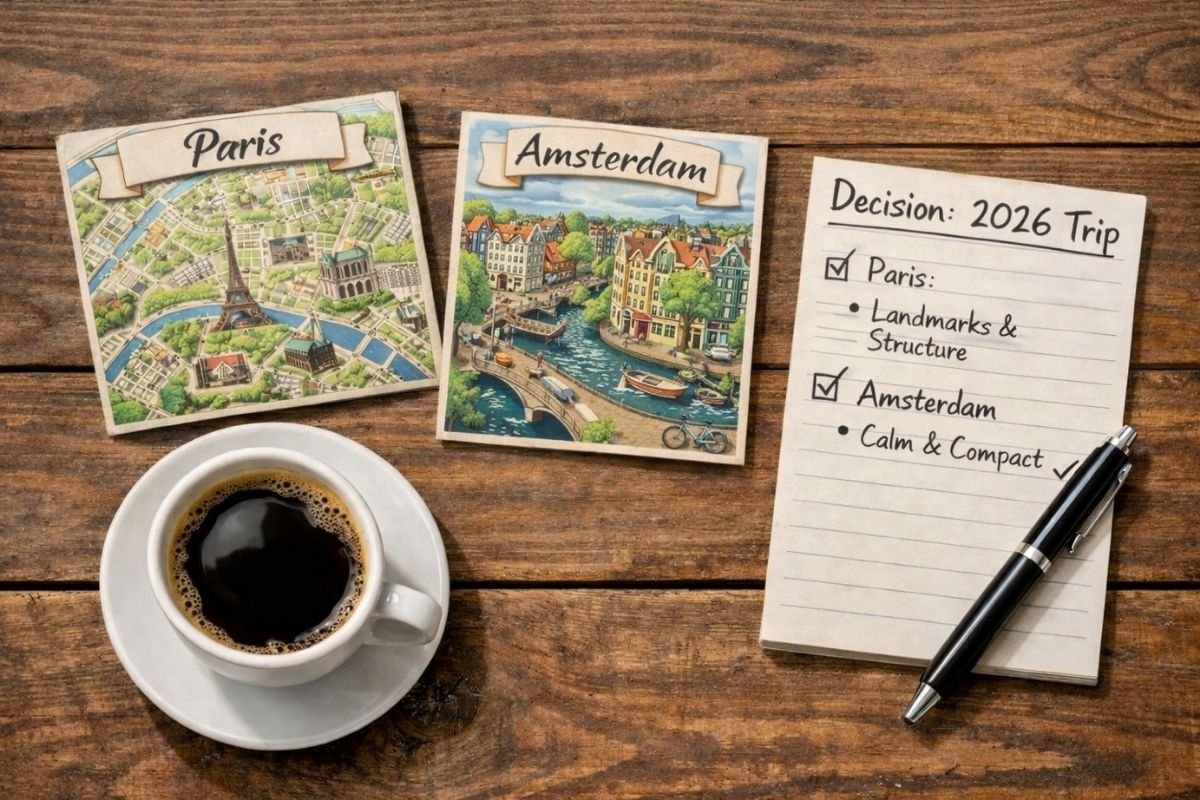
Choose based on how you travel when you’re tired—not on your best-case mood.
Paris vs Amsterdam Day System: Two Templates That Prevent Overwhelm
These templates are why some travelers feel calm—and others feel destroyed.
Paris day template (anchor-based)
1) One morning anchor (timed if possible).
2) One nearby walk (45–90 minutes).
3) One indoor reset (museum café / quiet passage / slow meal).
4) Decide the return route early—before you get tired.
Amsterdam day template (loop-based)
1) Pick one area and build one loop walk (don’t cross the city twice).
2) Add one main anchor as the spine (museum or timed visit).
3) Plan one calm reset before your body forces it.
4) Keep the finish flexible, not empty—flexible with limits.
Final Answer
Paris vs Amsterdam (2026) isn’t about which city is “better.”
Paris wins when you want depth and you can plan around friction. Amsterdam wins when you want a calmer rhythm and a city that stays enjoyable even when your plan is light.
Pick the city that matches how you move when the day is imperfect. That’s the one you’ll remember well.