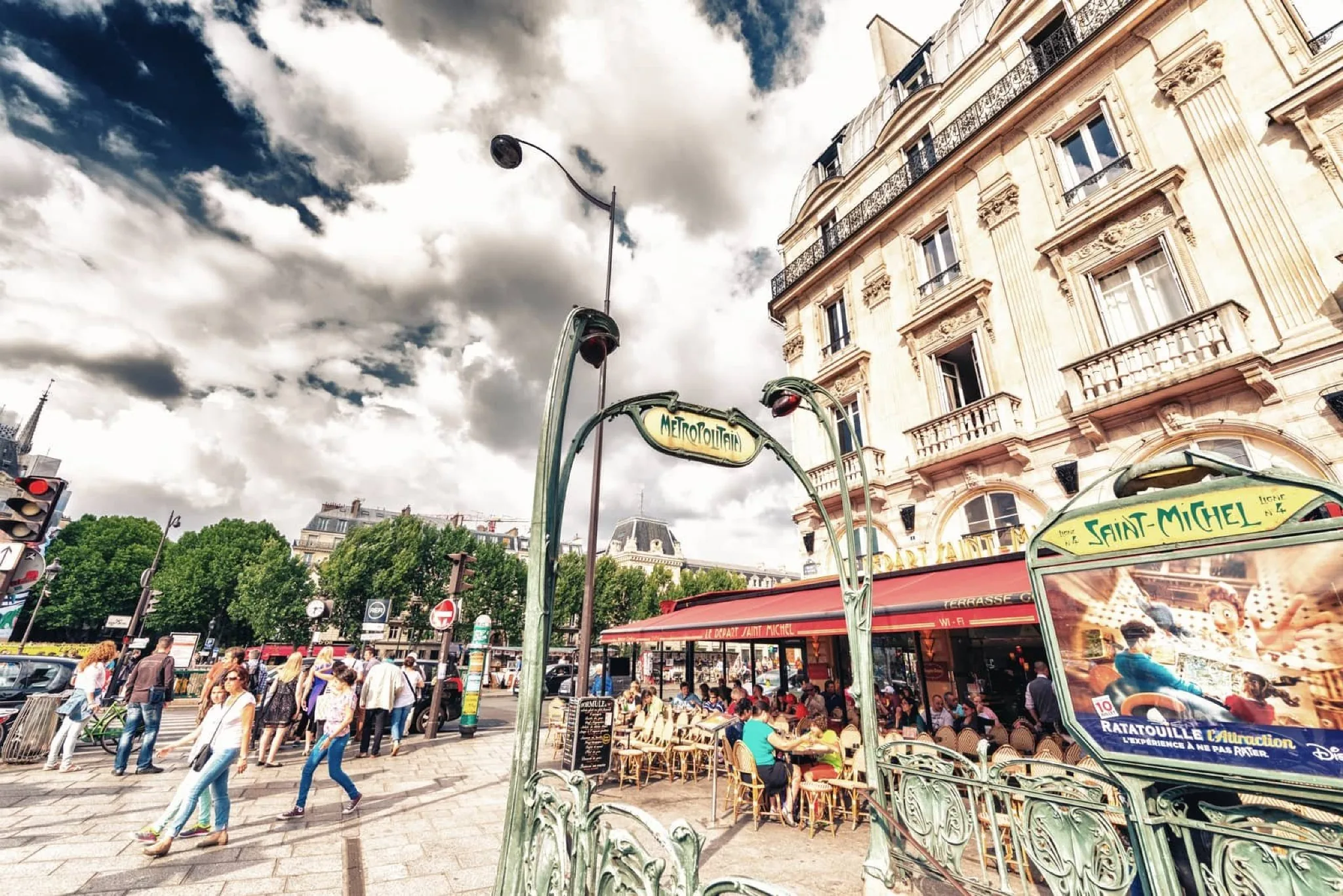
This Latin Quarter Guide explains which sights deserve your time, how long to stay, where to walk, what to budget, and how to avoid turning one of Paris’s most atmospheric districts into a rushed checklist.
The neighborhood sits on the Left Bank, centered largely in the 5th arrondissement and extending toward the 6th around Boulevard Saint-Michel. For first-time visitors, it works best as a half-day or full-day experience. The attractions are close together, but the value comes from slowing down between them: entering a medieval museum, sitting near the Panthéon, or walking Rue Mouffetard after the crowds thin.
Quick Answer: Is the Latin Quarter Worth Visiting?
Yes. The Latin Quarter is one of the best areas in Paris for history, architecture, affordable food, bookshops, and walkable sightseeing. Plan at least three hours for the essential route, half a day if you want to enter the Panthéon or Musée de Cluny, and a full day if you also want Rue Mouffetard, the Arènes de Lutèce, the Jardin des Plantes, or the Grande Mosquée de Paris.
Stay near Saint-Michel for maximum centrality, near the Panthéon for a quieter historic atmosphere, or around Place Monge and Rue Mouffetard for a more residential feel. The area is easy to reach by Metro and RER, but several streets slope uphill, so comfortable shoes matter.
What Is the Latin Quarter in Paris?
The Latin Quarter is the historic university district of Paris. Its name comes from the medieval period, when Latin was widely used in teaching and academic life. The Sorbonne remains its most famous educational institution, but the neighborhood is much broader than the university buildings alone.
Near the Seine, Saint-Michel is busy and heavily visited. Around the Sorbonne and Panthéon, the streets feel more academic. Farther south, Rue Mouffetard and Place Monge feel more local, with food shops, cafés, and markets. Your route determines whether you remember crowds near the river or quieter streets around Contrescarpe and Mouffetard.
This Latin Quarter Guide helps you understand how the neighborhood is organized before you start exploring. Knowing the difference between the lively streets near Saint-Michel and the quieter areas around the Panthéon and Rue Mouffetard makes it much easier to plan a route that matches your interests.
Is the Latin Quarter Worth Visiting for First-Time Travelers?
The Latin Quarter is valuable on a first Paris trip because Roman history, medieval art, university architecture, churches, bookshops, gardens, and lively streets fit into one connected area. Unlike the Louvre or Versailles, it does not require one long timed visit; you can choose one main attraction and keep the rest flexible.
It is less suitable for travelers focused on luxury shopping or grand boulevards. Visitors with limited mobility should also plan carefully because streets around the Panthéon and Montagne Sainte-Geneviève are sloped and sometimes uneven.
TripsCity Insight
The Latin Quarter is not one attraction. Treat it as a sequence of small experiences. Choose one paid anchor, one food stop, and one longer walk. That structure creates a better day than trying to enter every building.
Following this Latin Quarter Guide makes it easier to balance sightseeing with time to relax.
Best Things to Do in the Latin Quarter
Visit the Panthéon
The Panthéon is the neighborhood’s clearest landmark. Inside are the vast interior, Foucault’s pendulum, murals, and the crypt honoring major French figures. Standard admission is currently around €16, although prices can change.
Allow 60 to 90 minutes. It is most worthwhile for travelers interested in French history, architecture, or science; otherwise, the exterior and Place du Panthéon may be enough.

Panthéon in the Latin Quarter, Paris
Check current tickets and visitor information on the official Panthéon website.
See Saint-Étienne-du-Mont
Just behind the Panthéon, Saint-Étienne-du-Mont offers a quieter contrast and a beautiful stop without another long ticketed visit. Even a few minutes inside changes the rhythm of the route.
Explore the Musée de Cluny
The Musée de Cluny is the strongest choice for medieval history, combining Roman bath remains with a national medieval collection that includes the Lady and the Unicorn tapestries.
Plan 90 minutes to two hours. It is normally closed on Mondays, and standard adult admission is currently about €14. Check the official Musée de Cluny information page before visiting.
Walk Around the Sorbonne
The Sorbonne represents the academic identity behind the neighborhood, but much of the visitor experience is architectural rather than an open campus tour. Walk around Place de la Sorbonne and Rue des Écoles, and check separately if guided access is available.
Browse Shakespeare and Company
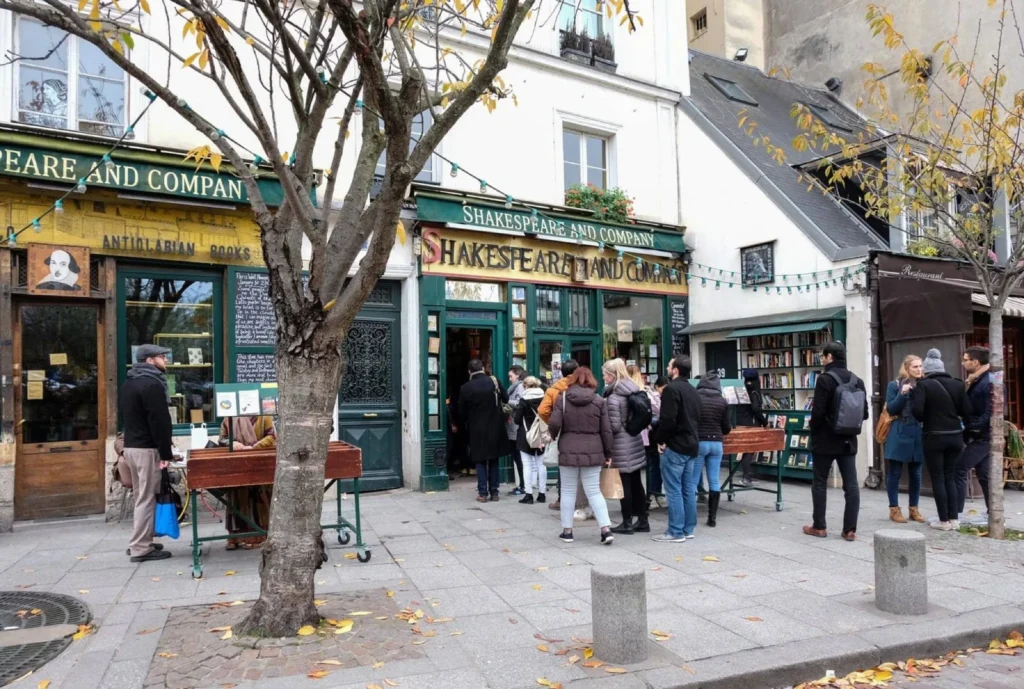
Shakespeare and Company is one of the Latin Quarter’s best-known literary landmarks.
Shakespeare and Company sits near the Seine opposite Notre-Dame. It is worth visiting for literary interest, but expect queues during busy periods. Go early or later if browsing matters, then continue toward the quieter streets behind Saint-Julien-le-Pauvre.
Walk Rue Mouffetard and Place de la Contrescarpe
Rue Mouffetard is where the district becomes more residential, with bakeries, produce shops, cafés, and restaurants. Place de la Contrescarpe works well for a break. Morning favors food shops, lunch brings students and workers, and evening becomes more social.
Find the Arènes de Lutèce
The Arènes de Lutèce are an interesting free Roman stop hidden behind surrounding streets. Fifteen to thirty minutes is enough unless you want to sit in the garden. Pair them with Rue Mouffetard, Place Monge, or the Jardin des Plantes.
Continue to the Jardin des Plantes and Grande Mosquée
The Jardin des Plantes is the best extension for families or travelers needing open space. The grounds are free, while galleries, greenhouses, and the zoo use separate tickets.
Nearby, the Grande Mosquée de Paris offers a different architectural experience. Visitor access is generally available outside Fridays and Muslim religious holidays, but check current details on the official visitor page.
Good to Know
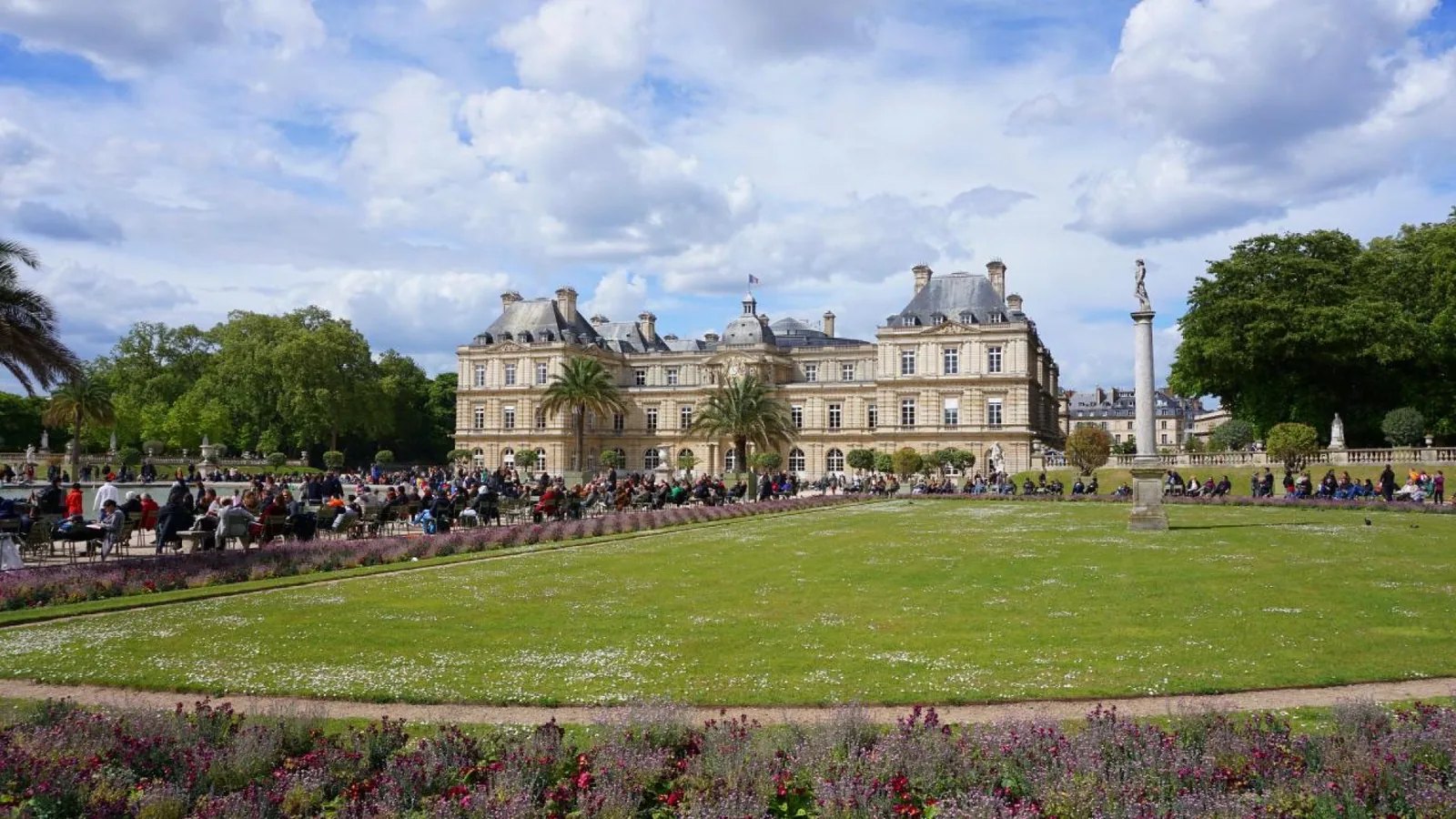
Luxembourg Gardens offer a peaceful break near the western edge of Paris’s Latin Quarter.
Luxembourg Gardens sit on the western edge of the broader Latin Quarter experience. Add them if you want a calm ending near the 6th arrondissement, but do not combine Luxembourg Gardens, Jardin des Plantes, every museum, and Rue Mouffetard in one short half-day.
Best Latin Quarter Walking Route
Use this Latin Quarter Guide walking route to connect the neighborhood’s highlights without unnecessary backtracking.
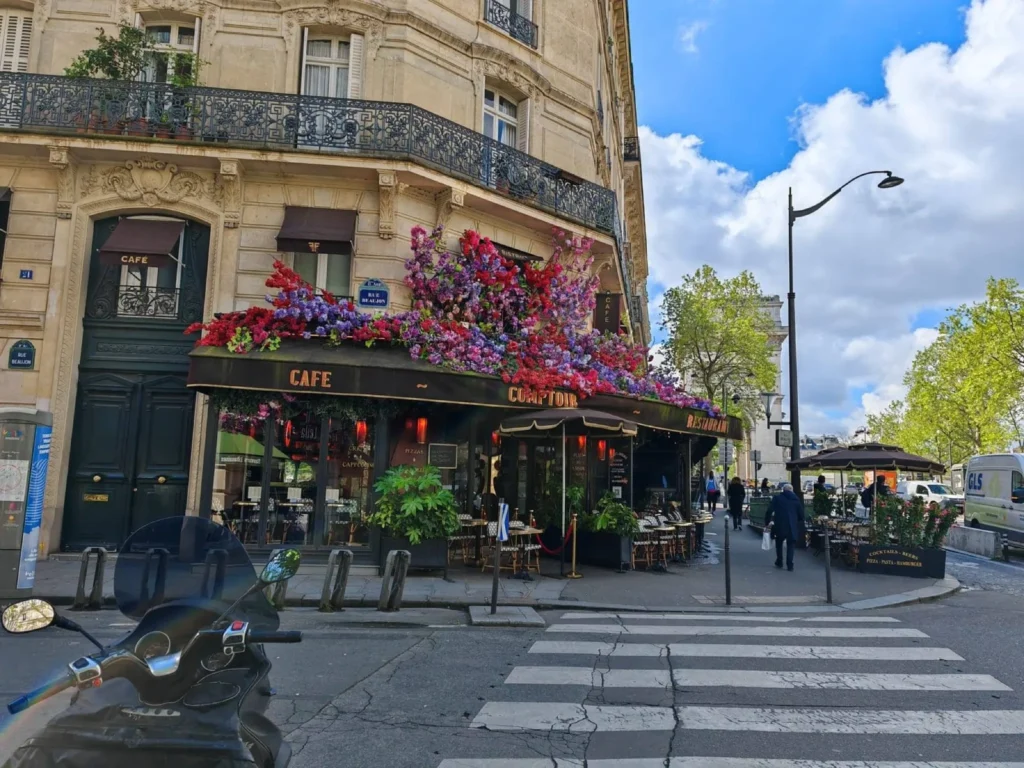
A colorful Paris café offers a relaxing stop after exploring the surrounding streets.
This route moves from the busiest northern edge toward quieter southern streets. Allow about three hours without paid interiors or a full day with museums, lunch, and gardens.
Stop 1: Saint-Michel and the Seine
Begin near Saint-Michel or Saint-Michel–Notre-Dame. Enjoy the river view, but treat the crowded restaurant lanes as orientation rather than your best food stop.
Stop 2: Shakespeare and Company
Cross toward Rue de la Bûcherie for the bookshop and streets around Saint-Julien-le-Pauvre, then continue inland.
Stop 3: Saint-Séverin and Musée de Cluny
Continue past Saint-Séverin toward Musée de Cluny. Enter if medieval history is a priority; otherwise, continue toward the Sorbonne.
Stop 4: Sorbonne and Panthéon
Walk past Place de la Sorbonne and climb toward Rue Soufflot and the Panthéon. The incline is noticeable, making this a good point for your main indoor visit or café break.
Stop 5: Saint-Étienne-du-Mont and Place de la Contrescarpe
After the Panthéon, see Saint-Étienne-du-Mont, then continue toward Place de la Contrescarpe as the streets become calmer.
Stop 6: Rue Mouffetard
Walk downhill along Rue Mouffetard for lunch, pastries, or market food. Continue toward Place Monge and the Arènes de Lutèce if you still have energy.
Optional Final Stop: Jardin des Plantes or Grande Mosquée
Choose one final extension: Jardin des Plantes for families and open space, or the Grande Mosquée for architecture and a slower finish.
Travelers who prefer local context can compare guided neighborhood experiences through Klook, especially when the history behind the streets matters more than independent wandering.
How Long Do You Need in the Latin Quarter?
| Time available | Realistic plan | Best for |
|---|---|---|
| 2–3 hours | Saint-Michel, Sorbonne streets, Panthéon exterior, and a short café stop | First-time visitors with a packed itinerary |
| Half day | Add one paid attraction plus Rue Mouffetard or Luxembourg Gardens | Most travelers |
| Full day | Add two attractions, lunch, Arènes de Lutèce, and Jardin des Plantes | History lovers and slower travelers |
For most people, half a day is the sweet spot. It gives enough time for one meaningful interior visit without turning the neighborhood into another endurance test. A full day works only when you genuinely enjoy history, museums, gardens, and long walks.
If this is your first Paris trip, combine the Latin Quarter with a realistic city plan rather than adding it randomly between distant attractions. Our guide to Paris for first-time travelers explains how to structure days without constant backtracking.
Where to Eat in the Latin Quarter
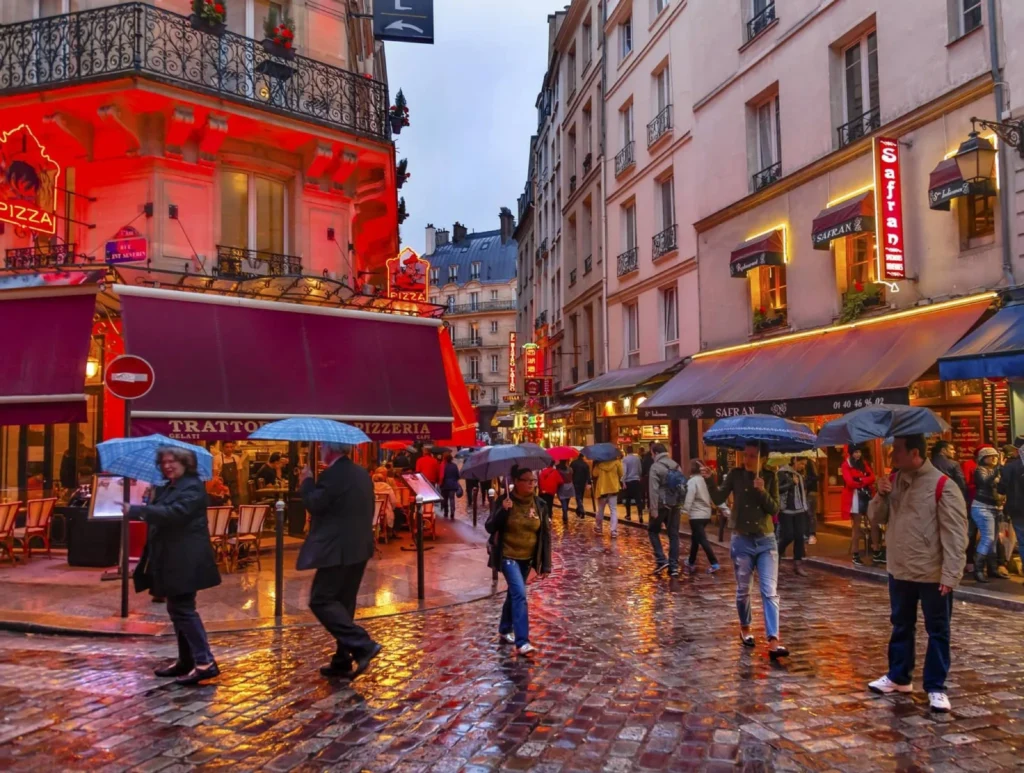
Rue de la Harpe is one of the Latin Quarter’s most popular streets, lined with cafés, restaurants, and a lively atmosphere throughout the day and evening.
The Latin Quarter can be excellent for food, but the busiest streets near Saint-Michel contain many fixed-menu restaurants aimed at passing visitors. Convenience does not always mean good value.
For a Quick Breakfast
Choose a bakery near your route. A pastry, coffee, or sandwich keeps the morning flexible and usually costs less than a tourist-zone breakfast.
For Lunch
Rue Mouffetard and Place Monge offer casual restaurants, bakery lunches, crêpes, market food, and picnic ingredients. Place Monge also hosts a food market on selected mornings.
For Dinner
Small restaurants fill quickly from Thursday through Saturday. Reserve when a specific place matters, or walk away from the busiest lanes and compare menus.
Watch Out
Do not wait until you are exhausted to choose lunch. Hunger makes travelers stop at the first visible menu, and the most visible restaurant is often located where foot traffic is highest rather than where value is best.
Best Time of Day to Visit the Latin Quarter
Morning is best for Rue Mouffetard, quieter photographs, and a more local atmosphere. Late morning through mid-afternoon is better for museums and monuments. Early evening works well for cafés, restaurants, and the social energy around Place de la Contrescarpe.
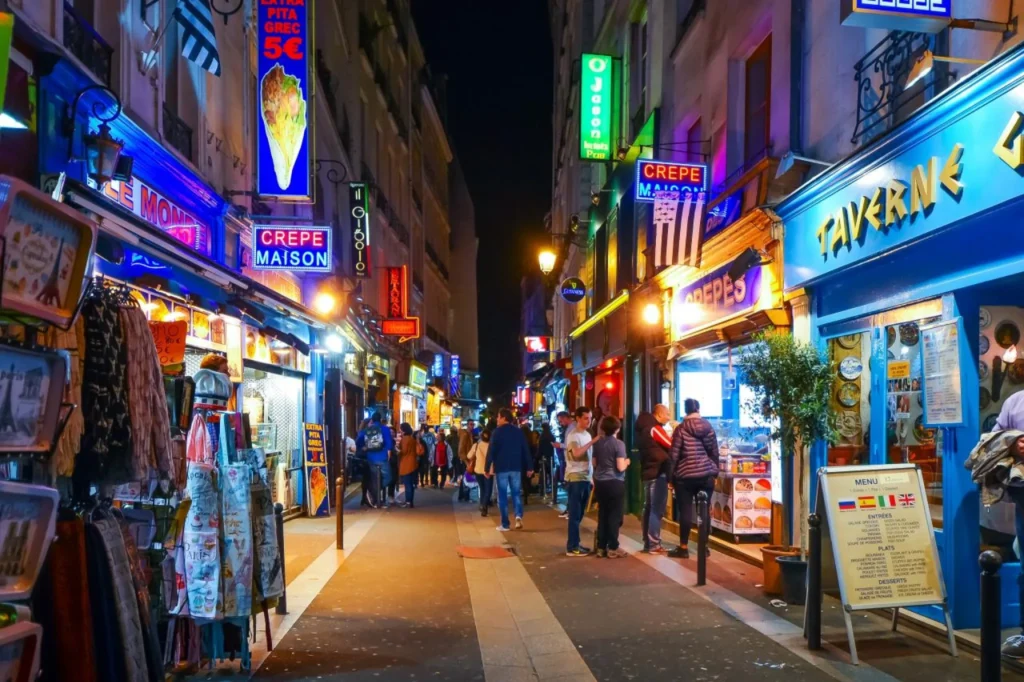
Rue de la Huchette comes alive after dark with restaurants, crêperies, and busy sidewalks.
Summer afternoons can feel crowded and warm, especially on sloped streets without much shade. In winter, the neighborhood becomes more atmospheric but daylight ends earlier, and indoor opening hours matter more. Travelers visiting during colder months can use our Paris winter itinerary to balance outdoor walking with warm indoor stops.
Should You Stay in the Latin Quarter?
The Latin Quarter is a strong base for first-time visitors who value central location, historic streets, restaurants, and access to the Seine. The trade-off is that rooms can be small, elevators compact, and northern streets noisy. Prices also rise near Saint-Michel and the river.
| Area | Main advantage | Main drawback |
|---|---|---|
| Saint-Michel | Extremely central and well connected | Busy, touristy, and potentially noisy |
| Sorbonne and Panthéon | Historic, elegant, and calmer at night | Uphill walks and higher hotel prices |
| Rue Mouffetard and Place Monge | Local food, neighborhood atmosphere, and markets | Farther from some major Right Bank sights |
| Near Luxembourg Gardens | Calm, beautiful, and convenient for the 6th arrondissement | Often expensive |
Compare hotel locations and full stay prices through Trip.com, then check walking distance to your nearest Metro or RER station before booking.
For a broader comparison with other districts, read our guide to where to stay in Paris.
How to Get to the Latin Quarter
The Latin Quarter has no single entrance, so choose a station based on your route:
- Saint-Michel or Saint-Michel–Notre-Dame: best for the Seine, Shakespeare and Company, and the northern edge.
- Cluny–La Sorbonne: best for Musée de Cluny and the Sorbonne.
- Maubert–Mutualité: useful for the central 5th arrondissement and quieter streets.
- Cardinal Lemoine: practical for the Panthéon, Place de la Contrescarpe, and Rue Mouffetard.
- Place Monge: best for the market, Arènes de Lutèce, and southern Rue Mouffetard.
- Luxembourg RER: useful for Luxembourg Gardens and the western side.
Walking is best once you arrive, but the area is less flat than it appears. Start near the river for a route that grows quieter, or near Place Monge for more downhill walking.
How Much Does a Latin Quarter Visit Cost?
The neighborhood can be inexpensive because many of its best experiences are free. Streets, churches, the Arènes de Lutèce, Luxembourg Gardens, and the main Jardin des Plantes grounds do not require a standard admission ticket.
| Visit style | Approximate cost per person | What it includes |
|---|---|---|
| Walking-focused | €0–€20 | Free sights plus coffee, pastry, or simple snack |
| Balanced half day | €30–€60 | One paid attraction and a casual meal |
| Comfortable full day | €70–€120 | Two paid sights, café stop, and sit-down meal |
These are planning ranges rather than fixed prices. The Panthéon and Musée de Cluny currently cost roughly €14–€16 each, while food choices can change the total quickly. Check official prices before travel and see our Paris budget guide for wider daily spending estimates.
Is the Latin Quarter Safe?
The Latin Quarter is generally comfortable for visitors, including solo travelers and families. The main concern is petty theft in crowded transport areas and busy streets rather than serious danger.
Keep your phone and wallet secure around Saint-Michel, crowded Metro entrances, and busy restaurant lanes. At night, use well-lit main streets when returning to your hotel, especially if you are tired or unfamiliar with the route.
The area becomes quieter away from Saint-Michel, which can feel peaceful but may also make some side streets seem empty late at night. Our full Paris safety guide explains practical scam and transport precautions without exaggerating the risk.
Luggage, Toilets, and Small Practical Problems
Older hotels may not hold luggage all day, and carrying bags through sloped streets or narrow cafés quickly becomes frustrating. Travelers arriving before check-in or leaving after checkout can compare nearby storage options through Radical Storage.
Public toilets are not always available exactly when you need them. Use museum facilities, larger cafés where you are a customer, or public facilities near major gardens. Families should plan these stops before long walking sections rather than waiting for an emergency.
Common Latin Quarter Mistakes to Avoid
- Staying only near Saint-Michel: the busiest northern streets are not the whole neighborhood.
- Trying to enter every attraction: two major interiors can consume most of the day.
- Ignoring the hills: the walk toward the Panthéon is more tiring than the map suggests.
- Choosing lunch when already exhausted: this usually leads to poor value and a rushed decision.
- Adding too many gardens: Luxembourg Gardens and Jardin des Plantes sit on different sides of the district.
- Expecting open access to the Sorbonne: admire the area, but check organized access separately.
- Visiting only for nightlife: the district’s strongest character appears during the day and early evening.
- Dragging luggage through the route: store bags before beginning the walk.
TripsCity Insight
The most satisfying Latin Quarter day usually contains one serious attraction, one unplanned street, one good meal, and enough empty time to sit down. The neighborhood rewards attention more than speed.
Final Verdict: Who Will Enjoy the Latin Quarter Most?
Whether you have a few hours or an entire day, this Latin Quarter Guide is designed to help you make the most of your visit. Use it to choose the attractions that matter most, avoid common mistakes, and experience one of Paris’s most historic and rewarding neighborhoods at your own pace.
The Latin Quarter is one of the best Paris neighborhoods for travelers who enjoy history, books, churches, old streets, gardens, and food that ranges from quick student meals to traditional dining. It is central enough for a first trip but layered enough to reward repeat visitors.
If you follow this Latin Quarter Guide, you’ll enjoy a better balance between famous landmarks and quieter local streets.
Choose a three-hour route if your itinerary is crowded, a half day for the best balance, or a full day if museums and neighborhood walking are major priorities. Do not measure success by the number of landmarks completed. The strongest memory may be a quiet church, a market purchase, or the moment the crowds disappear as you turn away from Boulevard Saint-Michel.
Latin Quarter Guide FAQs
What is the Latin Quarter famous for?
It is famous for the Sorbonne, the Panthéon, medieval streets, Roman remains, bookshops, cafés, churches, Rue Mouffetard, and its long academic history.
How many hours do you need in the Latin Quarter?
Allow at least three hours for a walking route. A half day is better if you want one museum or monument, while a full day suits travelers adding gardens and multiple paid attractions.
Is the Latin Quarter walkable?
Yes. Most major sights are close enough to connect on foot, but the streets around the Panthéon and Montagne Sainte-Geneviève include noticeable slopes.
Is the Latin Quarter a good place to stay?
Yes, especially for first-time visitors who want central sightseeing, restaurants, and Left Bank atmosphere. Choose Saint-Michel for convenience, the Panthéon for calm, or Rue Mouffetard for a more local feel.
Is the Latin Quarter expensive?
Hotels can be expensive because of the central location, but the neighborhood is flexible for food and sightseeing. Many streets, gardens, churches, and Roman remains are free.
What Metro station is best for the Latin Quarter?
Saint-Michel is best for the northern edge, Cluny–La Sorbonne for the museum and university area, Cardinal Lemoine for the Panthéon and Contrescarpe, and Place Monge for Rue Mouffetard and the Arènes de Lutèce.
Is the Latin Quarter safe at night?
It is generally comfortable at night, particularly on active main streets. Keep valuables secure in crowded areas and use well-lit routes when returning late.
Can you visit the Latin Quarter and Notre-Dame on the same day?
Yes. Notre-Dame is directly across the Seine from the northern Latin Quarter, making it easy to combine with Shakespeare and Company, Saint-Michel, Musée de Cluny, and the Sorbonne.