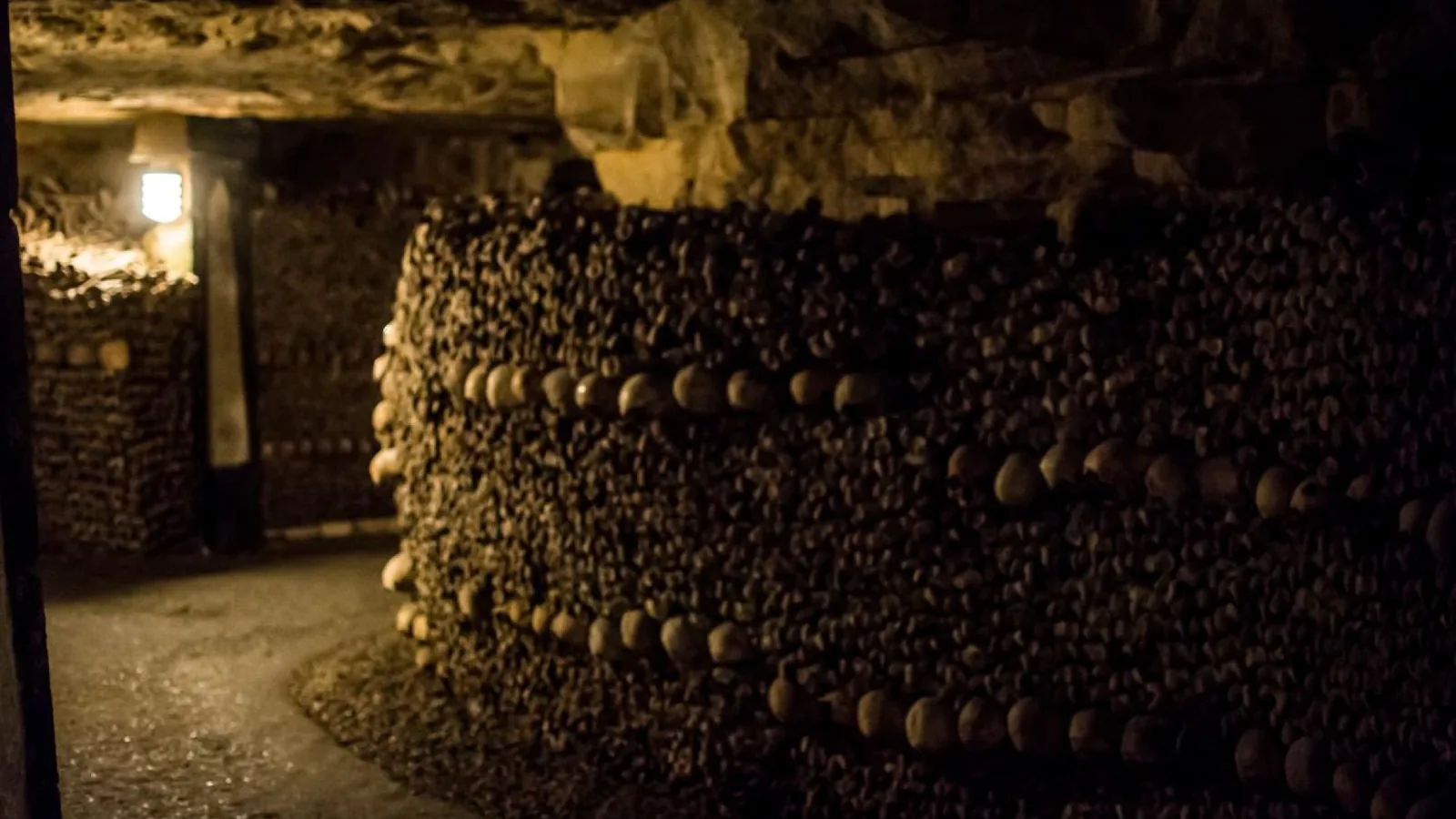
This Paris Catacombs guide explains what to expect before you descend beneath Denfert-Rochereau in the 14th arrondissement. After 131 steps down come cooler air, old quarry galleries and an ossuary holding the remains of several million Parisians. The visit lasts only about an hour, but timed tickets, stairs, luggage rules and a separate exit make it an attraction worth planning properly.
Paris Catacombs Guide: Quick Answer
Worth it? Yes if you are interested in Paris history, unusual architecture or underground places. Skip it if enclosed spaces, many stairs or visible human remains are likely to make you uncomfortable.
Current adult price: €31 full rate, with audio guide included.
Booking: timed tickets are released seven days in advance, and online booking is strongly recommended.
Opening hours: Tuesday to Sunday, 9:45 a.m.–8:30 p.m.; last admission at 7:30 p.m.
Visit length: about one hour for the 1.5 km one-way circuit.
Physical reality: 131 steps down, 112 steps up, uneven floors and no elevator.
Temperature: around 14°C year-round, with noticeable humidity.
TripsCity verdict: the Catacombs are not a universal Paris “must-do.” They are a strong choice for the right traveler and an easy skip for the wrong one. Judge the physical and emotional experience first, then book the ticket.
TripsCity checked current prices, ticket rules, access conditions and opening information against the official Paris Catacombs website in August 2026. Time-sensitive details can change, so verify your exact date before visiting.
Are the Paris Catacombs Worth Visiting?
For many first-time visitors, yes—but only if the experience matches your interests. This Paris Catacombs guide treats the attraction as a real travel decision, because the Catacombs offer something the Louvre, Eiffel Tower and Seine cannot: a physical encounter with the hidden infrastructure and mortality of historic Paris.
The visit is not simply “a tunnel full of skulls.” You move through former limestone quarries that helped supply building stone for Paris, then enter a municipal ossuary created after overcrowded cemeteries became a serious public-health problem in the late eighteenth century.
The strongest reason to visit is contrast. Paris above ground is open and bright; 20 meters below it, the city becomes narrow, damp and quiet. But that same difference makes the attraction unsuitable for some travelers. There are hundreds of stairs, no step-free route, low light, uneven flooring and real human remains.
It is also not automatically a good family attraction just because children can enter. The more useful question is whether your child is comfortable with darkness, underground spaces and the fact that these are human remains rather than Halloween decoration.
What Are the Paris Catacombs?
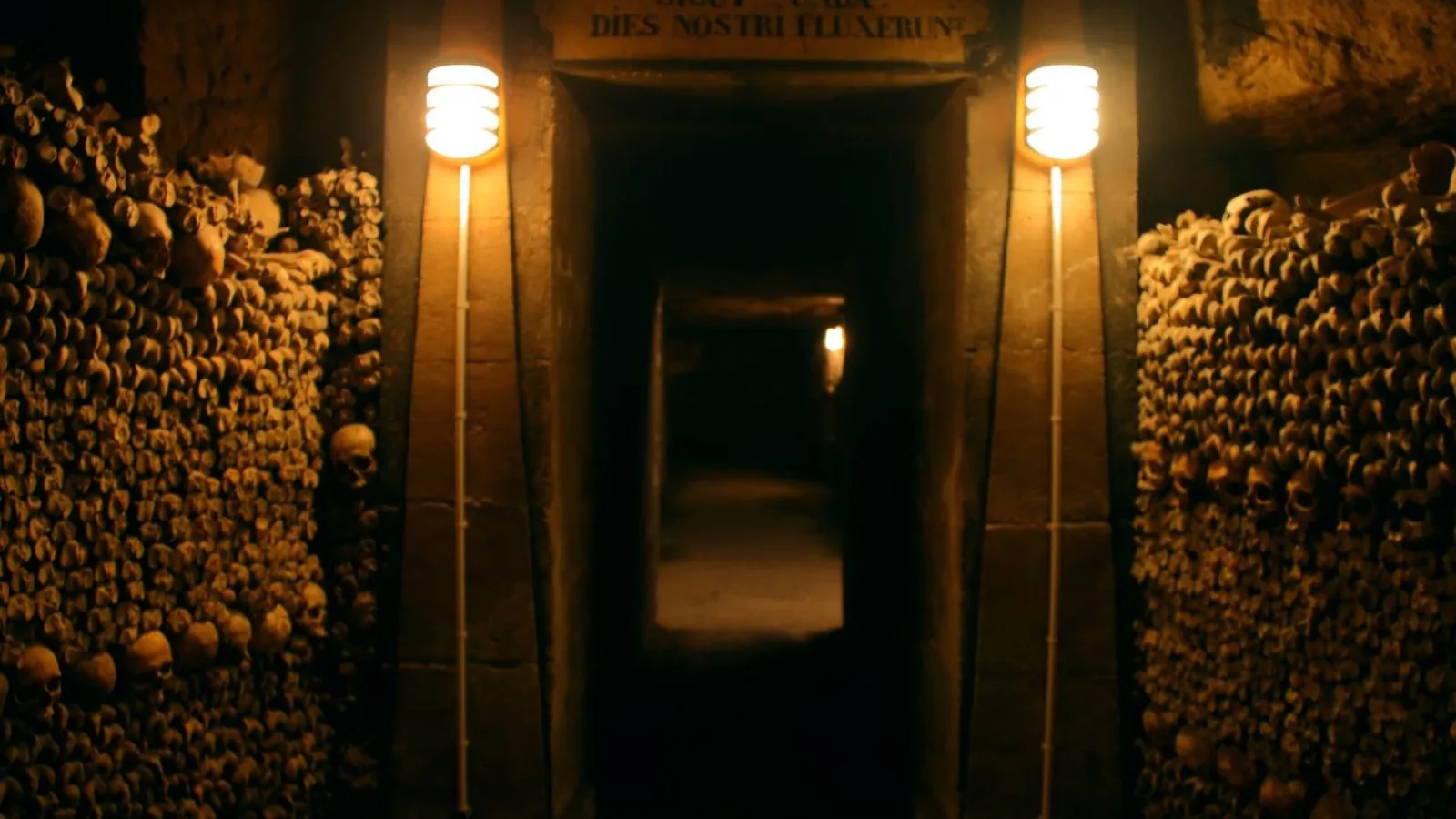
The underground ossuary reveals the distinctive bone-lined passages that define the Paris Catacombs.
The official Paris Catacombs are part of old underground quarries transformed into the Paris Municipal Ossuary. They should not be confused with the much larger network of former quarries beneath Paris that is often casually called “the catacombs.” The public route is a controlled heritage site; the wider underground network is not part of the normal visit.
The Saints-Innocents cemetery was closed in 1780 after centuries of use. From 1785 to 1787, remains were transferred at night into the former Tombe-Issoire quarries, and other cemetery transfers followed. The underground site was consecrated as the municipal ossuary in 1786 and opened to visitors by appointment in 1809.
Between 1810 and 1814, Inspector Louis-Étienne Héricart de Thury reshaped the ossuary. Workers created walls of femurs, tibias and skulls, added monuments and inscriptions, and turned a storage solution into a place intended to encourage reflection. The galleries themselves add another layer: they sit within limestone formations linked to the stone that helped build Paris above.
Paris Catacombs Tickets, Prices and Booking Strategy
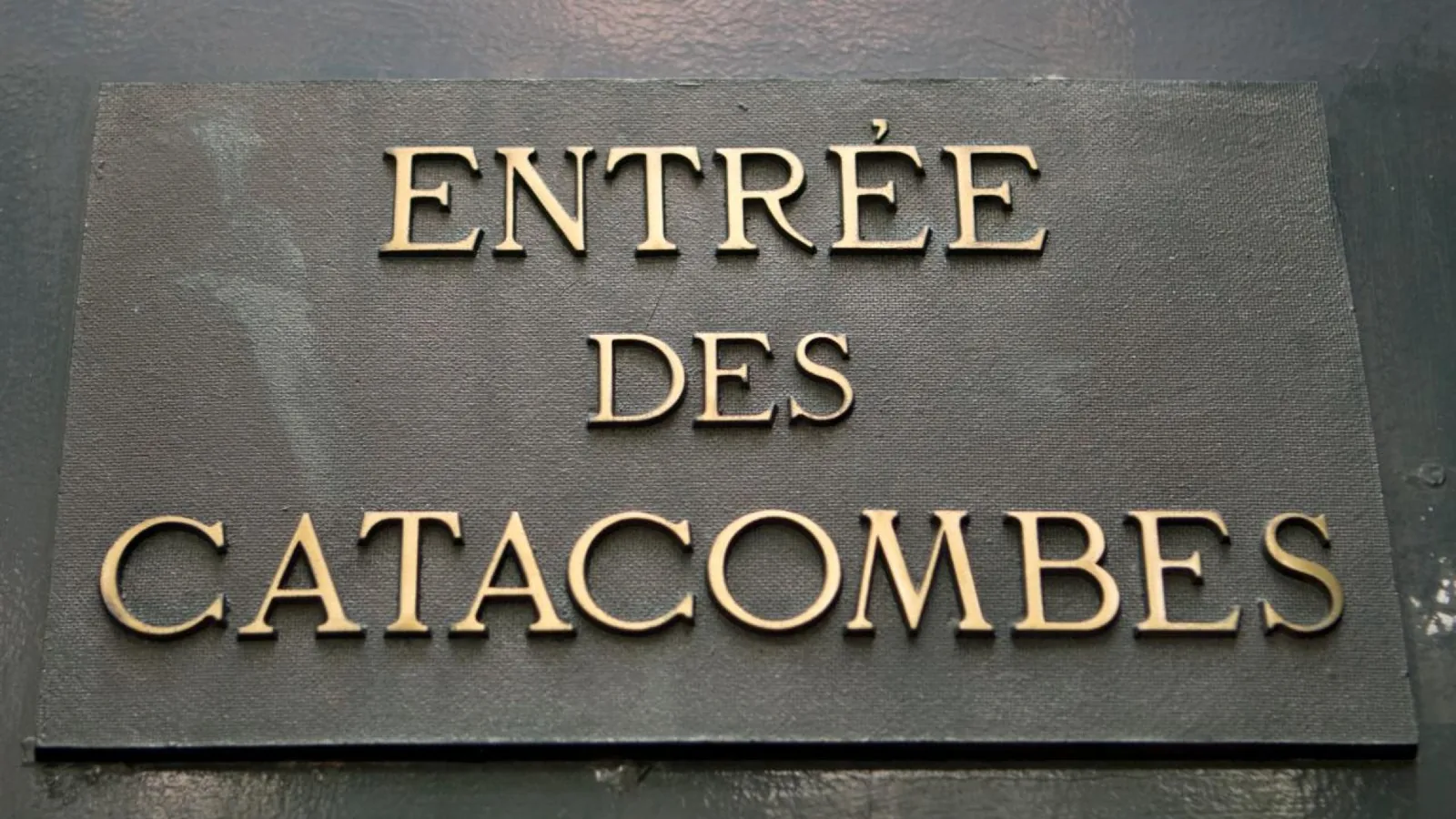
The Paris Catacombs entrance, where timed admission makes advance planning an important part of the visit.
One of the most important details in this Paris Catacombs guide is the booking window. Unlike some major Paris attractions, the official booking system currently opens seven days before the visit date.
| Ticket Type | Current Price* | What to Know |
|---|---|---|
| Full rate | €31 | Audio guide included |
| Reduced rate | €25 | Eligibility and valid ID required |
| Children 8–17 | €15 | Audio guide included |
| Children under 8 | Free | Consider emotional suitability before booking |
*Prices checked in August 2026. Always confirm current rates and eligibility before paying.
For ordinary paid admission, a timed online ticket is the safest approach. Check the official Paris Catacombs website when your seven-day booking window opens. Free-admission categories work differently: the official site says eligible free tickets cannot be reserved online in advance and are obtained at the desk with supporting proof.
If official inventory is sold out, use the Catacombs’ published list of authorized resellers rather than buying from a random marketplace. GetYourGuide and Klook are among the currently listed authorized sellers.
This is also an attraction that should work as an itinerary anchor. Our Best Paris Tickets to Book in Advance guide explains why controlled-capacity attractions should shape the day around them instead of being squeezed between flexible stops.
Which Paris Catacombs Ticket Should You Choose?
For most visitors, the standard official ticket is enough. The current full-price ticket includes an audio guide, so you get historical context without automatically paying for a separate tour.
Third-party guided tours may be useful if you want deeper explanation of cemetery history, quarry engineering, inscriptions and the evolution of the ossuary. The Catacombs’ own guided tour is currently unavailable, so compare reseller tours carefully: check the meeting point, language, cancellation terms, duration and what the product actually adds before paying a premium.
One fresh detail matters: the Catacombs reopened on April 8, 2026 after a major renovation. The updated visitor experience includes refreshed scenography and a more immersive audio presentation while technical work improved conservation and visitor conditions.
How to Get to the Paris Catacombs
For anyone using this Paris Catacombs guide to plan the journey, the visitor entrance is at 1 Avenue du Colonel Henri Rol-Tanguy, 75014 Paris, beside Place Denfert-Rochereau. The easiest public-transport stop is Denfert-Rochereau, served by Metro lines 4 and 6 and RER B.
One detail matters: you do not exit where you entered. The official exit is at 21 bis Avenue René-Coty, nearly 700 meters away. Save both addresses if someone is meeting you or you have plans immediately afterward.
If you are organizing the wider trip, our How to Plan a Trip to Paris guide can help you group fixed reservations by neighborhood.
What to Expect Inside the Paris Catacombs
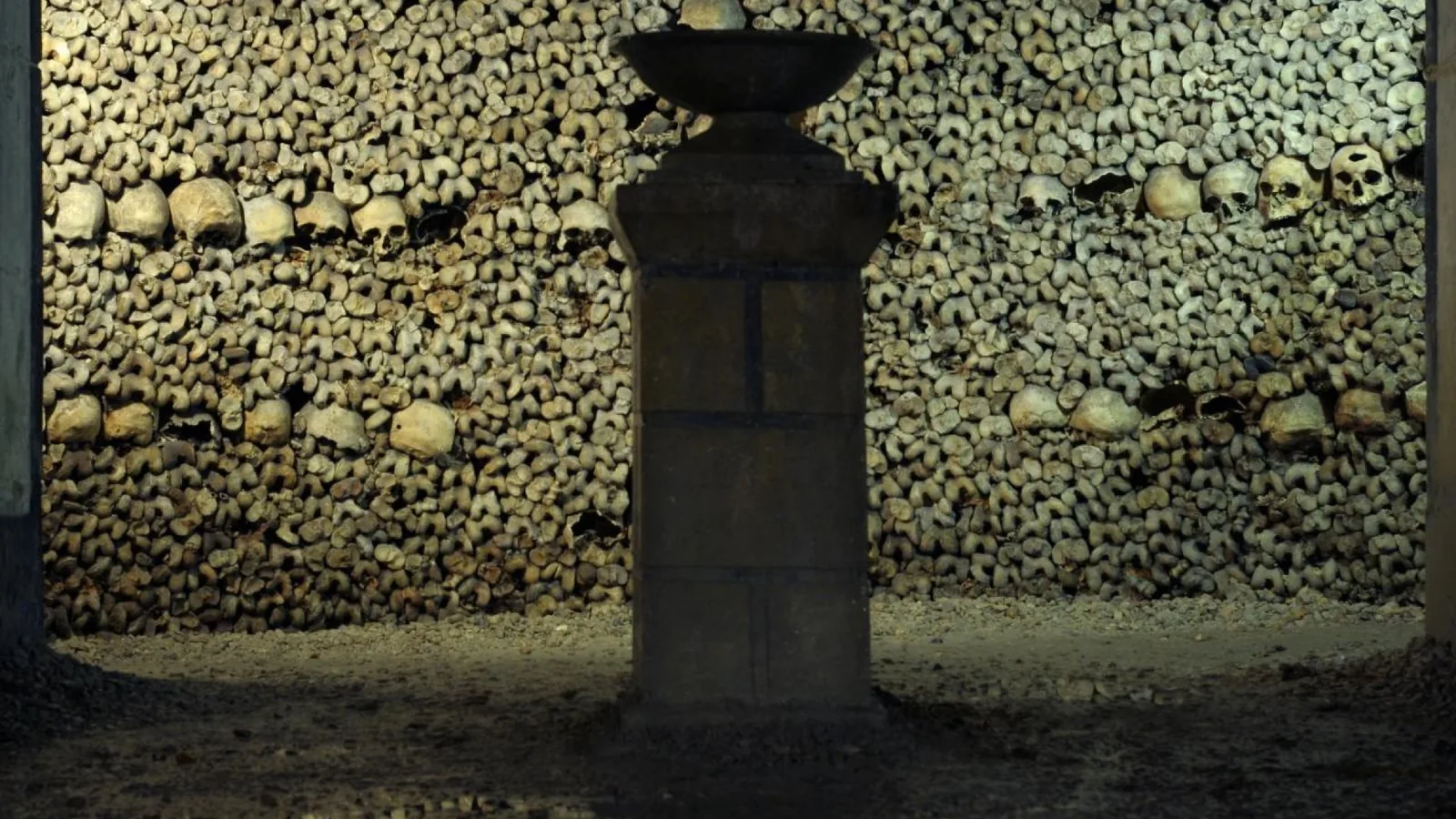
Rows of bones and skulls form the striking ossuary walls visitors encounter beneath Paris.
The physical experience is an important part of any useful Paris Catacombs guide. The visit begins with 131 steps down to the level of the old quarries, about 20 meters below Paris. The bones do not begin immediately: you first move through quarry galleries and interpretation that explain the geology and underground structure.
Eventually you reach the ossuary. Beyond its famous warning, skulls and long bones form walls while other remains are stacked behind them. Inscriptions throughout the route encourage reflection rather than spectacle.
Do not expect every minute to be visually dramatic. Some sections repeat, and that repetition changes the mood. After the first rows of skulls, the experience can shift from “look at this” to the recognition that these were individual people.
The route is 1.5 km and one-way. Plan about one hour, and remember that you cannot simply reverse course for another photograph. At the end, 112 steps take you back to street level.
Best Time to Visit the Paris Catacombs
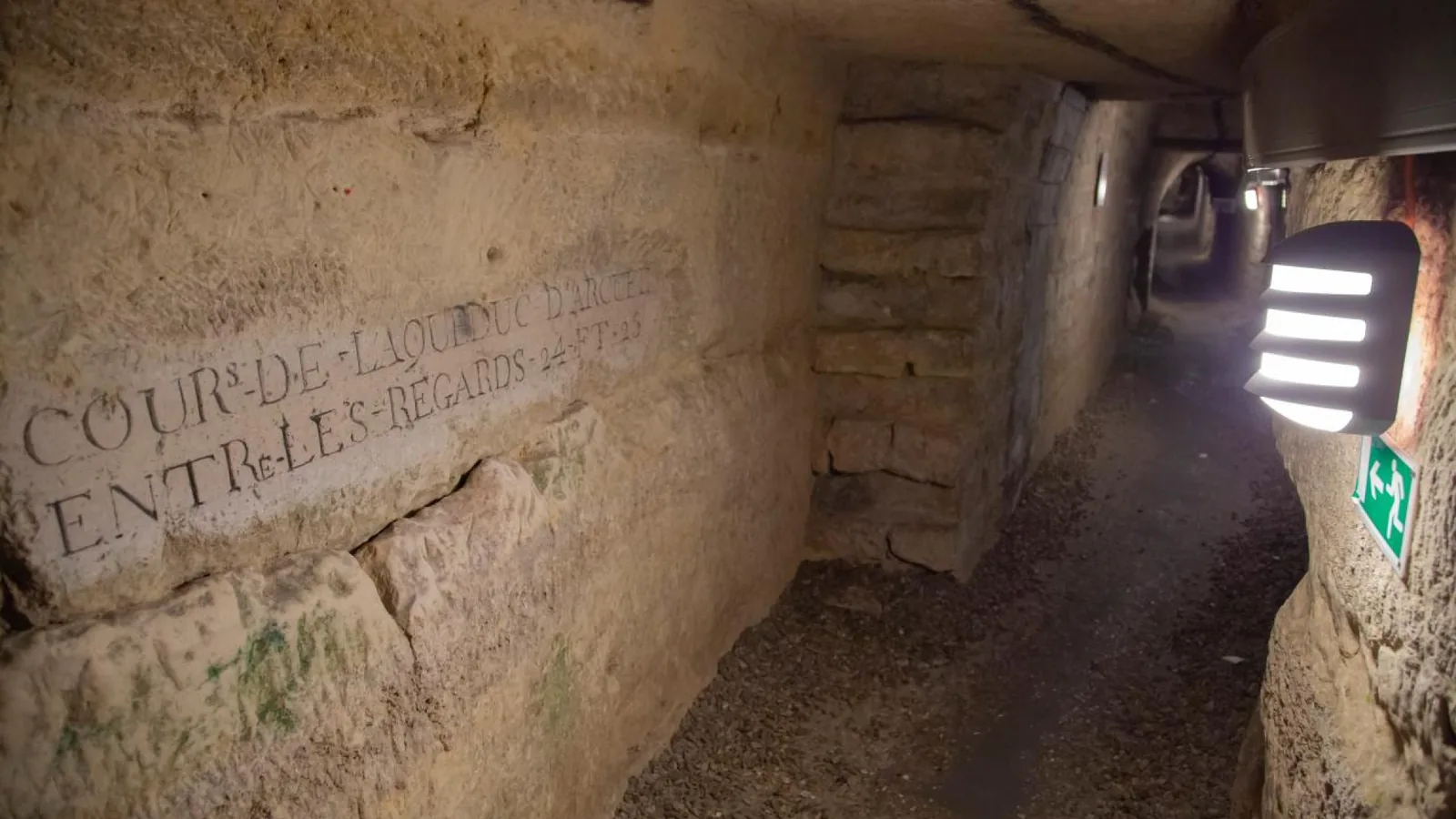
A narrow underground passage illustrates the enclosed environment visitors experience along the Catacombs route.
Because admission is timed and visitor capacity is controlled, itinerary fit matters more than chasing a mythical “empty” hour.
An early slot is useful when the Catacombs are a priority because it removes the risk of a delayed lunch, museum visit or transport problem making you late. A later slot can work well after a flexible morning, but the current last admission is 7:30 p.m.
A weekday can be easier to build around when the rest of your itinerary is flexible, but demand can still be high. Do not treat a weekday visit as a reason to wait until the last moment to book.
The Catacombs are currently closed every Monday, as well as January 1, May 1 and December 25. Check the official calendar when your trip includes a public holiday.
Season changes the transition more than the underground visit itself. The temperature stays near 14°C: in summer you descend from heat into cool humidity, while in winter the difference can feel much smaller.
Temperature, Clothes, Shoes and Bags
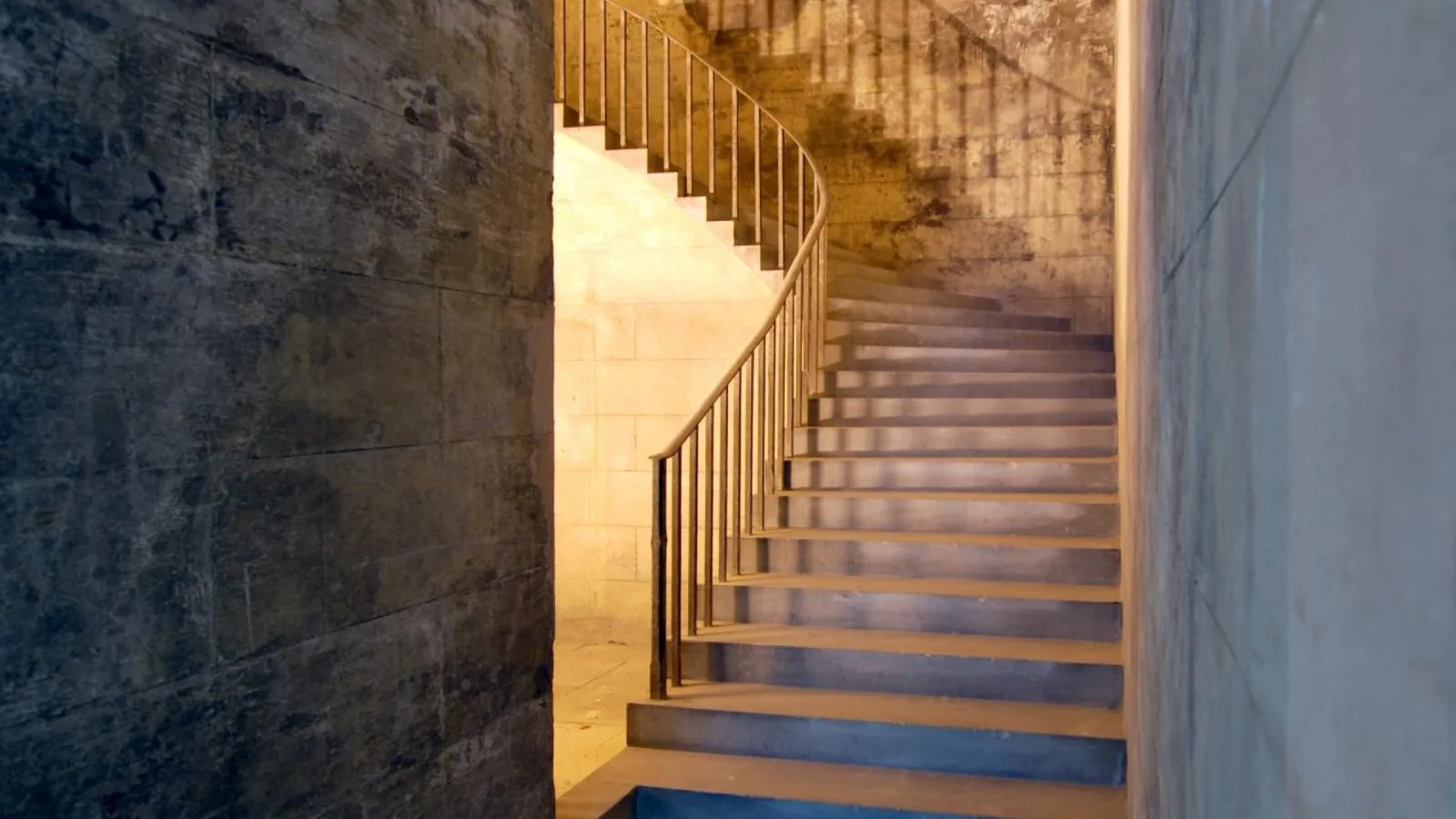
Stairs are part of the Catacombs experience, making comfortable shoes and practical clothing important for the visit.
A practical Paris Catacombs guide also has to account for conditions underground. The Catacombs stay around 14°C and can be humid, so a light layer is useful even in summer. Comfortable shoes with reliable grip matter more than style because the flooring can be uneven and slippery.
Large bags are a bigger problem. Suitcases, large bags and motorcycle helmets are prohibited, and there is no cloakroom. Official guidance allows only small bags up to roughly 40 × 30 × 20 cm, carried in front or by hand.
On hotel-change days, do not arrive with a suitcase expecting storage at the entrance. If needed, you can find luggage storage in Paris with Radical Storage before heading to Denfert-Rochereau.
Food and drink are not allowed along the visitor circuit. Restrooms are available at the entrance and exit, so use them before starting the one-way route.
Accessibility, Claustrophobia and Health
The Catacombs are not wheelchair accessible and have no step-free alternative. The official site does not recommend the visit for people with motor disabilities, cardiac or respiratory insufficiency, or claustrophobia.
The passages are not crawlspaces, but you are deep underground for an extended period with narrow areas and low light. If that combination already makes you anxious, skipping the visit may improve your trip rather than diminish it.
Paris Catacombs With Children
Children under 14 must be accompanied by an adult. Strollers are not allowed; the official site recommends a baby carrier.
Emotional suitability matters more than the age rule. Explain beforehand that these are real human remains in a historic ossuary, not a horror attraction. Some children will be fascinated; others may find the experience upsetting.
Photography and Respect Inside the Ossuary
Photography for private use is allowed, but flash and tripods are prohibited. Low light may produce grainier phone photos; accept that rather than blocking the route while chasing a perfect shot.
Do not touch the bones. Eating, drinking and alcohol are prohibited on the route, and animals are not allowed. Photograph the site as a visitor to a memorial space, not as if the remains were props.
How to Fit the Paris Catacombs Into Your Itinerary
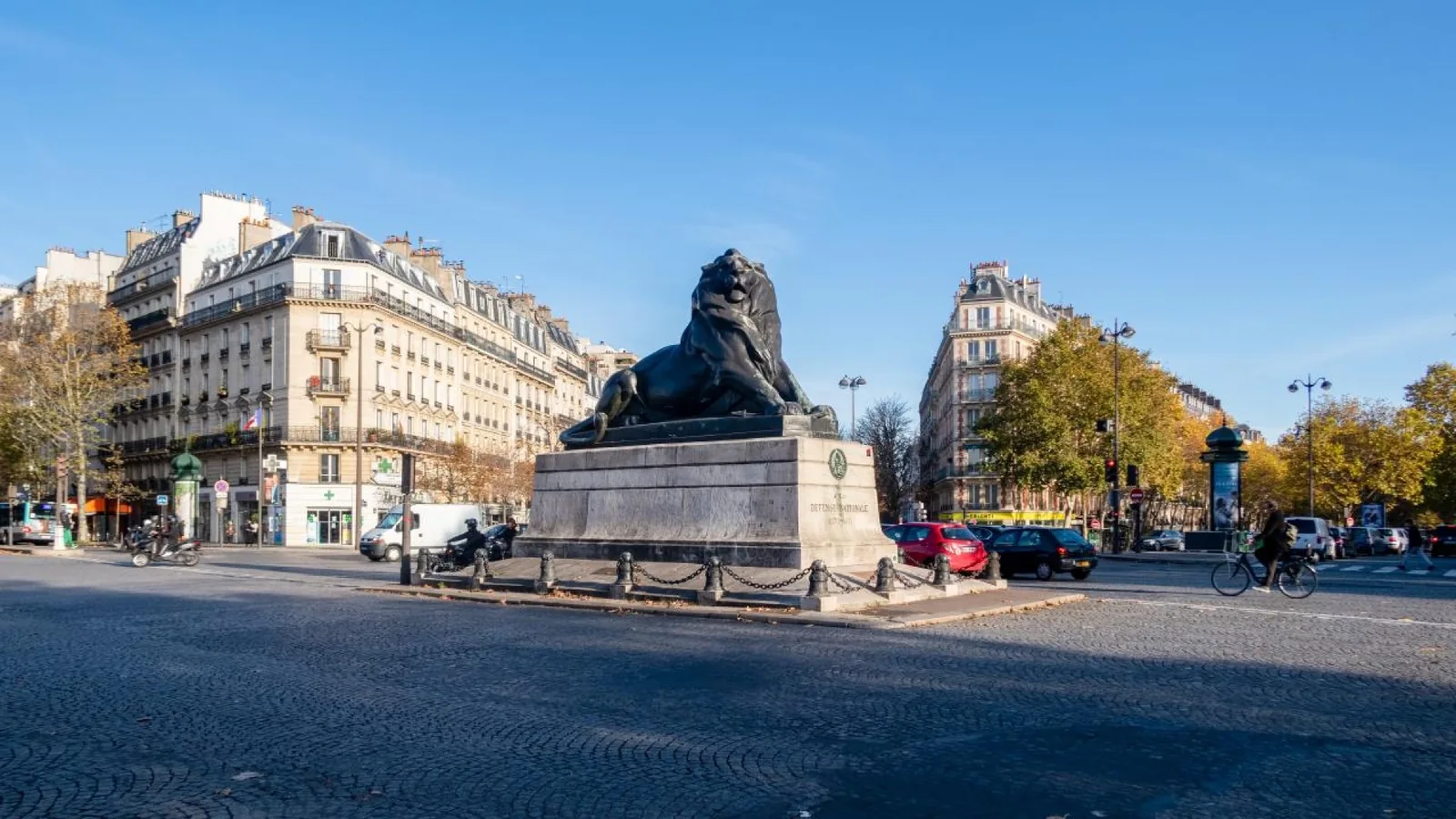
Place Denfert-Rochereau provides a useful starting point for planning the Catacombs around the rest of a Paris itinerary.
The Catacombs look small on paper but create a larger planning footprint. The underground route may take about an hour, yet you also need transport, arrival margin, ticket scanning and the walk from the separate exit.
For most travelers, protect roughly two hours around the local visit rather than pretending the attraction occupies exactly 60 minutes. Pair it with a flexible stop in southern central Paris—a café break, Montparnasse or Luxembourg Gardens—rather than another difficult timed reservation.
If you are building a longer trip, see our Paris 5 Days Itinerary and treat the Catacombs as an optional anchor instead of automatically inserting them into an already full museum day.
Should You Visit the Catacombs and Louvre on the Same Day?
You can, but both demand concentration and physical energy. The Louvre adds hours of walking and standing; the Catacombs add stairs, uneven ground and another intense historical environment.
If both are priorities, leave a real meal or outdoor reset between them. Our Louvre Museum Visitor Guide can help you judge the physical load.
Mistakes That Can Ruin a Paris Catacombs Visit
Waiting Too Long to Check Ticket Availability
Tickets currently open seven days ahead. Set a reminder for the booking window and know your preferred day plus a backup time before sales open.
Forgetting the Separate Exit
The route ends nearly 700 meters from the entrance at Avenue René-Coty. That matters if someone is waiting for you or your next booking is tight.
Arriving With a Suitcase
There is no cloakroom and large luggage is prohibited. This rule can end the visit before it starts.
Dressing Only for the Weather Above Ground
A hot Paris day does not make the tunnels warm. Bring a light layer and shoes suited to damp, uneven flooring.
Underestimating the Stairs
The route includes 243 steps in total—131 down and 112 up—plus 1.5 km of walking. “Only one hour” does not mean physically effortless.
Treating the Ossuary Like a Horror Set
The bones belong to real people. The site is more meaningful when approached as a memorial and historical space rather than a background for shock photos.
Confusing the Official Catacombs With Illegal Quarry Exploration
The ticketed route is not the wider underground quarry network shown in urban-exploration videos. The official Catacombs themselves note that the term “catacombs” is often incorrectly used for those broader quarries. This guide concerns the legal public site only.
Who Should Skip the Paris Catacombs?
Skip the Catacombs if you need step-free access, have a condition that makes the stairs or underground environment unsafe, experience strong claustrophobia, or know visible human remains will make the visit distressing rather than meaningful.
You should also skip them when your schedule is already overloaded. Paris has enough depth above ground that you do not need to descend 20 meters simply to complete a checklist.
For travelers using this Paris Catacombs guide to decide whether the visit belongs in their itinerary, the strongest fit is anyone interested in urban history, geology, unusual architecture and memorial spaces. They are likely to remember the Catacombs long after more conventional attractions begin to blend together.
Final Verdict: Are the Paris Catacombs Worth Your Time?
Yes, for the right traveler. This Paris Catacombs guide ultimately comes down to one question: does this kind of underground historical experience fit the way you want to see Paris? The Catacombs combine the physical city, its dead, its geology and its history in one unusually concentrated experience.
Book when the seven-day window opens, use the official system or an authorized seller, travel light, wear reliable shoes, bring a layer and leave enough time around the visit that the 243 stairs do not become another rushed task.
Go for the history and atmosphere rather than for a skull-wall photograph. The strongest moment is often when the novelty fades and the scale of what you are walking beside begins to register.
Paris Catacombs FAQ
Are the Paris Catacombs worth visiting?
Yes for travelers interested in unusual Paris history, underground architecture and memorial sites. They are easier to skip if you dislike enclosed spaces, many stairs or visible human remains.
How much do Paris Catacombs tickets cost?
As of August 2026, the full rate is €31, the reduced rate is €25, children aged 8–17 pay €15, and children under 8 enter free. Current paid rates include an audio guide.
How far in advance can you book Paris Catacombs tickets?
The official booking window currently opens seven days in advance. Timed online booking is strongly recommended because capacity is controlled and popular slots can sell out.
How long does a Paris Catacombs visit take?
Plan about one hour for the 1.5 km one-way route. The visit also includes 131 steps down and 112 steps back up, so allow extra time around the ticket for arrival and exit.
How cold are the Paris Catacombs?
The underground temperature stays around 14°C year-round and the galleries can be humid. A light layer and comfortable shoes with good grip are useful even during summer.
Are the Paris Catacombs suitable for claustrophobic visitors?
The official site does not recommend the visit for people with claustrophobia. The route is underground, one-way and includes narrow, dim areas with no step-free or quick street-level alternative.