
A Paris 7 Days Itinerary gives first-time visitors something a three-day city break cannot: enough time to see the famous landmarks without turning every morning into a race across the Metro.
The biggest mistake is assuming that seven days means you should simply add more attractions. Paris works better when you group sights geographically, leave recovery time after large museums and give neighborhoods such as Montmartre, Saint-Germain and Le Marais enough space to feel different from one another.
The quick answer: spend the first four days on central Paris, use Day 5 for Versailles, then dedicate the final two days to neighborhoods and eastern Paris rather than repeating the Eiffel Tower, Arc de Triomphe or Louvre.
| Day | Main Plan | Pace |
|---|---|---|
| Day 1 | Eiffel Tower → Trocadéro → Invalides area → Arc de Triomphe → Champs-Élysées | Iconic first day |
| Day 2 | Louvre → Tuileries → Orangerie → Seine Cruise → Notre-Dame | Museum-heavy |
| Day 3 | Montmartre → Sacré-Cœur → Place du Tertre → quieter streets | Slow neighborhood day |
| Day 4 | Musée d’Orsay → Saint-Germain → Luxembourg Gardens → Panthéon → Latin Quarter | Culture + walking |
| Day 5 | Versailles Palace → Gardens → Trianon Estate | Full-day trip |
| Day 6 | Le Marais → Place des Vosges → Palais Royal → Covered Passages → Opéra | Neighborhoods + shopping |
| Day 7 | Père Lachaise → Belleville → Buttes-Chaumont → Canal Saint-Martin | Local final day |
TripsCity Insight: Seven days should make Paris easier, not busier. The advantage of a week is being able to stop adding attractions once a day already feels complete.
Disclosure: This guide contains affiliate links. If you book through one of them, TripsCity may earn a commission at no extra cost to you.
Paris 7 Days Itinerary: Quick Plan, Costs and Before You Start
This Paris 7 Days Itinerary is built for a first visit rather than for someone trying to complete a checklist. Each day stays mostly within one part of the city, while the largest time commitments — the Louvre and Versailles — receive enough space to avoid ruining everything scheduled after them.
How This One-Week Paris Plan Is Designed
Days 1 and 2 cover the sights most first-time visitors would regret missing. However, they approach them from different parts of central Paris so you are not constantly doubling back.
Day 3 slows down in Montmartre. Day 4 moves to the Left Bank, while Day 5 leaves central Paris completely for Versailles.
The final two days deliberately avoid repeating the major landmarks. Instead, Day 6 covers Le Marais, Palais Royal, the covered passages and Opéra, while Day 7 moves east through Père Lachaise, Belleville and Canal Saint-Martin.
That structure creates more information gain than simply assigning another museum to every available morning.
2026 Paris Transport Costs to Know
A week in Paris involves enough Metro travel that transport costs deserve attention before you arrive. In 2026, a standard Metro-Train-RER ticket costs €2.55, while a Bus-Tram ticket costs €2.05.
For travelers who use public transport heavily, the all-zone Navigo Week pass costs €32.40. However, it is valid for a fixed calendar week from Monday through Sunday. It is not a rolling seven-day pass.
| 2026 Transport Option | Price | Important Rule |
|---|---|---|
| Metro-Train-RER ticket | €2.55 | Single journey, excluding airport trips |
| Bus-Tram ticket | €2.05 | Separate ticket type from Metro/RER |
| Navigo Day | €12.30 | All zones, excluding airport services |
| Navigo Week | €32.40 | Monday–Sunday, not seven days from activation |
That calendar rule matters. A visitor arriving on Wednesday and leaving the following Tuesday should not automatically assume Navigo Week is the best answer.
Our Paris transportation guide explains which ticket or pass makes sense for different arrival dates. You can also check the current official Île-de-France Mobilités fares.
Tickets to Reserve Before You Arrive
Do not try to reserve every attraction in Paris. Instead, secure the few bookings that can control an entire day.
Eiffel Tower: choose your date and approximate time before building Day 1 around it. The official Eiffel Tower ticket office should be your first place to check availability.
Louvre: a timed entry makes Day 2 much easier to plan. Our Louvre Museum guide covers entrances, timing and how long first-time visitors actually need.
Versailles: Day 5 should be built around your Palace reservation rather than treating Versailles like a flexible neighborhood stop.
Notre-Dame: entry to the cathedral is free. The official cathedral website also offers free reservations that can make the visit more predictable, although current access arrangements should always be checked shortly before the trip.
Where to Stay for This Paris 7 Days Itinerary
A seven-day stay changes the hotel calculation. Saving €20 per night can stop feeling like a bargain if every morning begins with two transfers and every evening ends with a long journey back.
For this route, the 1st, 4th, 5th and 6th arrondissements give excellent central access. The 7th works especially well if being near the Eiffel Tower matters, while parts of the 9th can offer useful access to Opéra, department stores and multiple Metro lines.
You do not need to sleep beside every attraction. What matters is having a straightforward connection to several parts of the itinerary.
Compare the trade-offs in our Where to Stay in Paris guide.
How Much Should You Schedule Each Day?
One major attraction plus one neighborhood is often enough.
The Louvre can consume three hours before you include queues, walking and lunch. Versailles can consume most of a day. By contrast, places such as Le Marais or Montmartre become more enjoyable when you stop measuring every hour.
Therefore, use the suggested times below as a framework rather than appointments. The plan should absorb a slow lunch, bad weather or tired feet without collapsing.
Paris 7 Days Itinerary: Days 1–4
The first four days of this Paris 7 Days Itinerary cover the classic first-trip sights, but each day stays geographically focused. That reduces unnecessary Metro transfers and gives you a better chance of enjoying what happens between attractions.
Day 1: Eiffel Tower, Trocadéro, Arc de Triomphe and Champs-Élysées

Start the week with western Paris and its most recognizable landmarks.
Morning: Trocadéro and Eiffel Tower
Start Day 1 around Trocadéro. The elevated square gives you the classic Eiffel Tower view before you walk through the gardens and cross Pont d’Iéna.
If you are going up the tower, allow roughly two hours once security, elevators and viewpoint time are included. More time may be needed during busy periods.
- Metro: Trocadéro or Bir-Hakeim
- Good photo stops: Trocadéro terrace, Pont d’Iéna and Champ de Mars
- Best strategy: reserve before the trip rather than building Day 1 around same-day availability
If you prefer a third-party booking option, you can check current Eiffel Tower guided visit availability.
Afternoon: Invalides Area and Arc de Triomphe
After lunch, do not rush directly across the city. Spend some time around the Seine or Invalides area before continuing toward the Arc de Triomphe.

The Arc de Triomphe gives one of the clearest views of Paris’s street layout.
Use the underground passage to reach the monument. Do not attempt to cross the traffic circle at street level.
The rooftop works especially well late in the afternoon because the view includes the Eiffel Tower, La Défense and the entire axis of the Champs-Élysées.
You can check Arc de Triomphe rooftop ticket options if you want to reserve beforehand.
Evening: Champs-Élysées Without Repeating It Later
Finish the day by walking part of the Champs-Élysées toward Place de la Concorde. There is no need to schedule the avenue again later in the week.
That is an important correction to many overloaded itineraries: once you have properly covered western Paris on Day 1, use the remaining six days to discover something different.
Day 2: Louvre, Tuileries, Orangerie, Seine Cruise and Notre-Dame

Day 2 combines the Louvre with nearby sights rather than crossing Paris between museums.
Morning: Louvre Museum
Make the Louvre the only serious commitment of the morning. Trying to “finish” the museum is impossible for a normal sightseeing day, so choose a short priority list before entering.
A first visit might include the Mona Lisa, Winged Victory of Samothrace, Venus de Milo, Egyptian galleries or Napoleon III Apartments. However, three focused sections usually create a better experience than racing through ten.
- Metro: Palais Royal–Musée du Louvre
- Suggested visit: roughly 2.5–3 hours
- Planning rule: choose highlights before entering
You can check current Louvre ticket options, or verify opening information directly on the official Louvre website.
Midday: Tuileries Garden
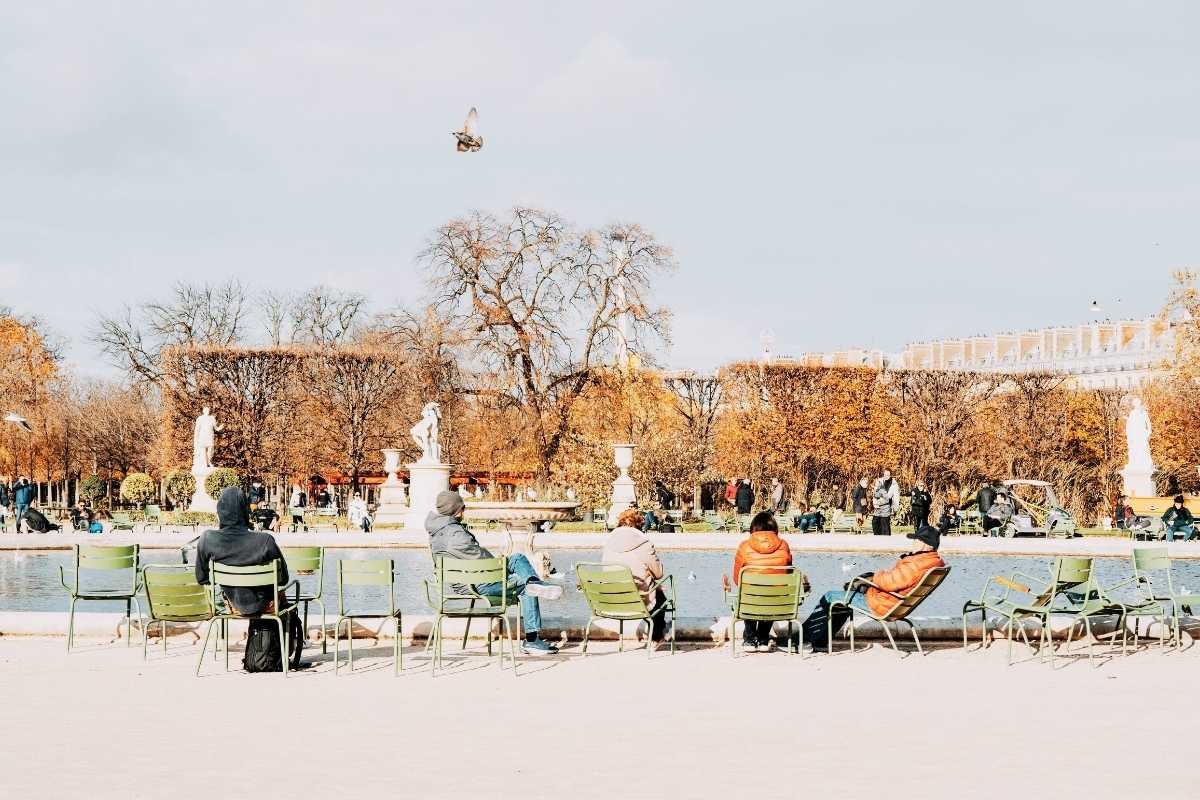
The Tuileries provide a useful recovery break after several hours inside the Louvre.
Leave the museum and resist the urge to enter another major attraction immediately.
The Tuileries are directly beside the Louvre, making them the obvious place for lunch, a bench break or simply time outdoors before continuing.
Afternoon: Musée de l’Orangerie or a Longer Seine Walk
If you still have museum energy, continue through the garden to Musée de l’Orangerie. Its Monet Water Lilies rooms make it much easier to visit in a shorter window than the Louvre.
However, this stop is optional. Travelers already feeling museum fatigue should skip it and use the afternoon for the Seine, Pont des Arts and Pont Neuf instead.
Evening: Seine Cruise and Notre-Dame
A one-hour cruise works well here because you have already spent much of the day walking.
You can check current Seine sightseeing cruise options. For a full comparison of departure points and cruise styles, see our Seine River Cruise guide.
Afterward, finish around Île de la Cité and Notre-Dame. The cathedral is open again to visitors, and the official website currently offers a free reservation system for easier access.
Check current visitor information on the official Notre-Dame website because religious services and special events can affect access.
Day 3: Montmartre Without Rushing It

Montmartre works better as a neighborhood day than as a two-hour photo stop.
Day 3 is where this Paris 7 Days Itinerary should begin feeling slower.
Morning: Abbesses and Montmartre Streets
Start around Abbesses rather than going directly to Sacré-Cœur. Walk Rue des Abbesses, the surrounding residential streets and the area around the Wall of Love before climbing higher.
Montmartre is one of those places where adding ten “hidden gems” often makes the day worse. Pick a route and allow yourself to wander off it.
Midday: Sacré-Cœur and Place du Tertre

Sacré-Cœur combines a major landmark with one of Paris’s broadest free city views.
Visit Sacré-Cœur, then continue to Place du Tertre. The square is tourist-heavy, but it still makes sense on a first Montmartre day because painters and portrait artists remain part of the neighborhood’s identity.
Afternoon and Evening: The Quieter Side of Montmartre
Instead of leaving after the basilica, continue toward Rue de l’Abreuvoir, La Maison Rose and the vineyard area.
This is also a good day to finish early. A seven-day itinerary does not need seven consecutive 8-hour sightseeing shifts.
Day 4: Musée d’Orsay, Saint-Germain, Luxembourg Gardens and the Latin Quarter
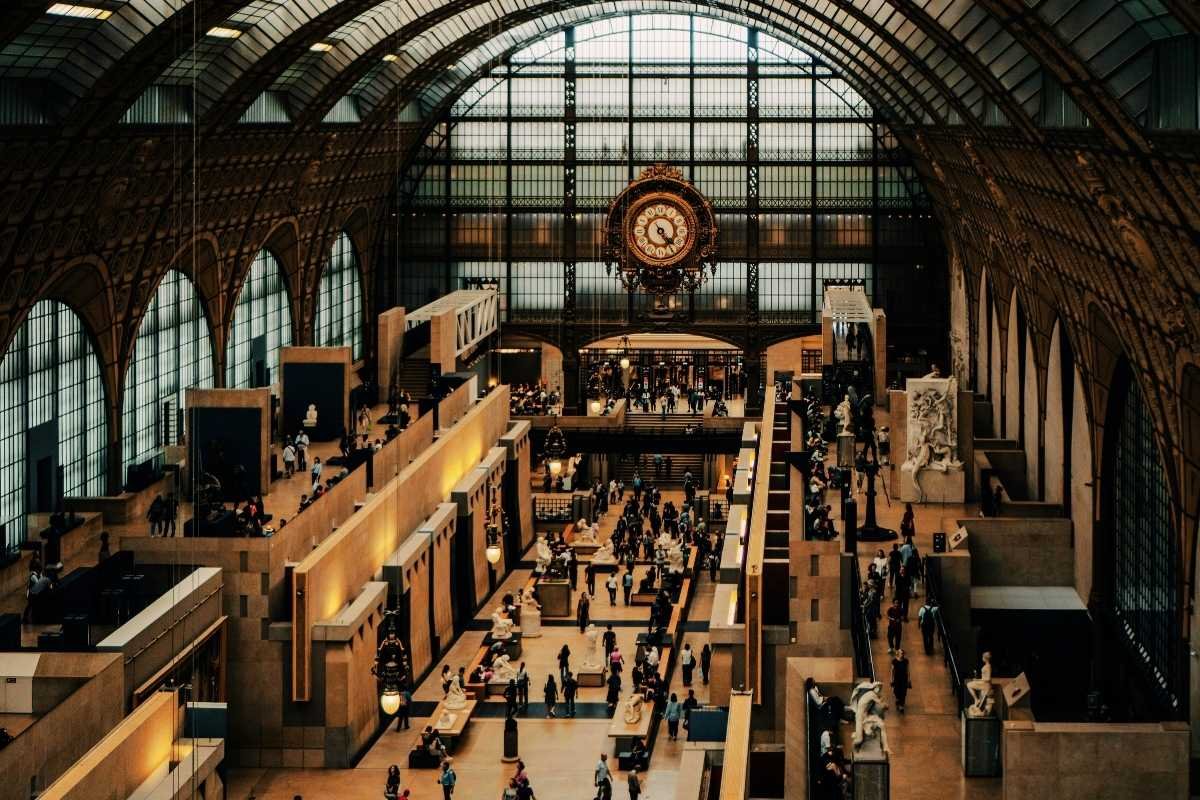
Day 4 keeps the main sightseeing on the Left Bank.
Morning: Musée d’Orsay
Musée d’Orsay is a better morning anchor than trying to combine it with another giant museum.
Its Impressionist and Post-Impressionist collections include Monet, Renoir, Degas, Cézanne and Van Gogh, but the building itself — a former railway station — is part of the visit.
You can check current Musée d’Orsay ticket options.
Lunch: Saint-Germain-des-Prés
Walk into Saint-Germain for lunch and browsing. This is the point in the week where stopping for a bakery, bookshop or café should count as part of the itinerary rather than lost sightseeing time.
Afternoon: Luxembourg Gardens

Luxembourg Gardens provide a natural pause between Saint-Germain and the Latin Quarter.
Continue south toward Luxembourg Gardens. Sit down instead of treating the park as another attraction to complete.
Late Afternoon: Panthéon and Latin Quarter
Finish around the Panthéon and Latin Quarter. If you enter the Panthéon, leave enough time before closing; otherwise, use the final hours for Rue Mouffetard, bookshops and the surrounding streets.
If several museums and monuments in this itinerary are already on your list, compare individual tickets with our updated Paris Museum Pass guide before buying anything.
Paris 7 Days Itinerary: Days 5–7, Practical Tips and FAQ
The final three days of this Paris 7 Days Itinerary deliberately change the rhythm. Versailles receives an entire day, while Days 6 and 7 move away from landmarks you have already seen and into neighborhoods that make a full week worthwhile.
Day 5: Full-Day Trip to Versailles
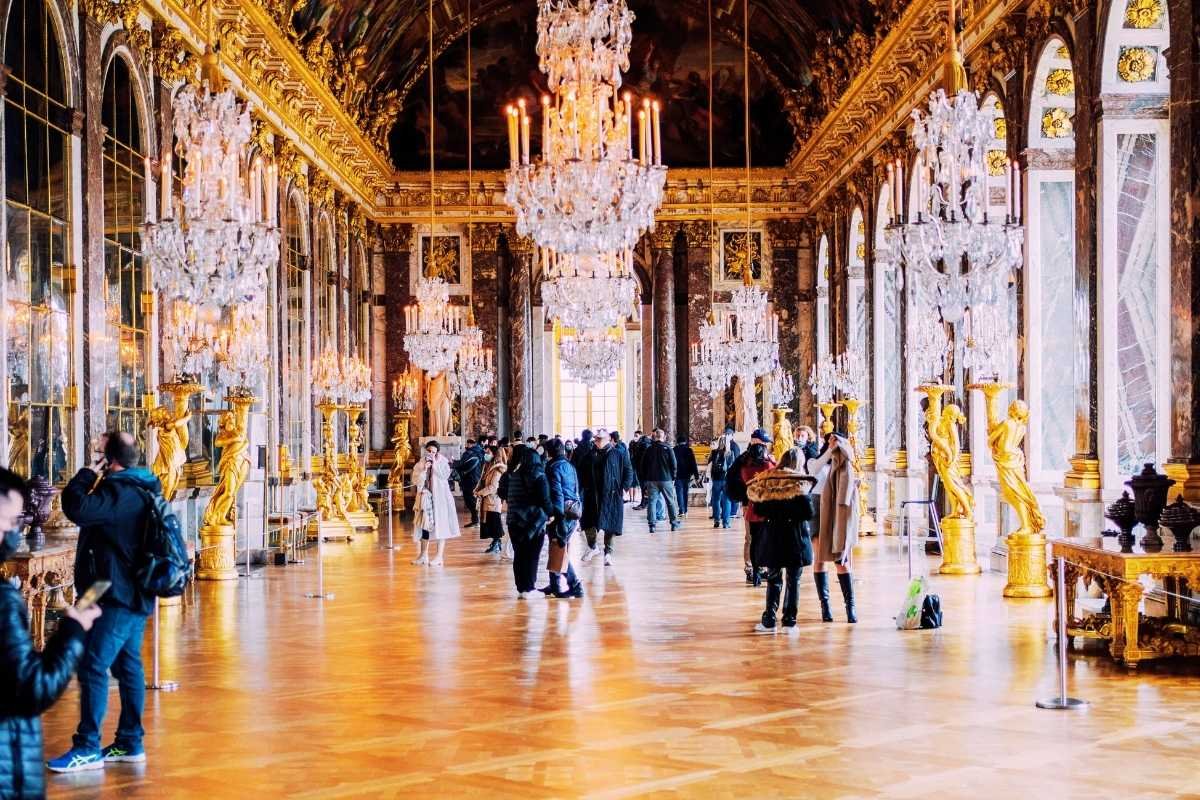
Versailles deserves a full day rather than being squeezed between central Paris attractions.
Morning: Palace of Versailles
Leave Paris early enough to reach Versailles before your Palace entry time.
The RER C remains a common route for travelers heading toward Versailles Château Rive Gauche, although you should check live service information on the day because engineering work and disruptions can change routes.
Inside the Palace, prioritize the State Apartments and Hall of Mirrors rather than trying to memorize every room.
You can check current Versailles ticket options, or use the official Versailles ticket office.
Afternoon: Gardens and Trianon

The scale of the Versailles estate is why the visit should not share a day with central Paris museums.
After the Palace, move into the gardens and toward the Grand Canal. If energy allows, continue to the Grand Trianon, Petit Trianon and Queen’s Hamlet.
Do not schedule an important Paris attraction for that evening. Even when the train journey runs smoothly, Versailles involves far more walking than most visitors expect.
Day 6: Le Marais, Place des Vosges, Covered Passages and Opéra
Day 6 fixes one of the biggest weaknesses in the old itinerary. Instead of sending you back to the Arc de Triomphe and Champs-Élysées for a second time, this Paris 7 Days Itinerary uses the day for areas you have not properly explored yet.
Morning: Le Marais and Place des Vosges
Start around Saint-Paul and walk through Le Marais toward Place des Vosges.
This is not a morning that needs an attraction every hour. Browse side streets, bakeries, small shops and historic façades. Depending on your interests, you can add Musée Picasso or keep the morning almost entirely outdoors.
Afternoon: Hôtel de Ville, Palais Royal and the Covered Passages
Move gradually west rather than taking the Metro after every stop.
Palais Royal creates an easy transition toward the historic covered passages around the 2nd and 9th arrondissements. Passages such as Galerie Vivienne offer a completely different atmosphere from the grand avenues you saw on Day 1.
This is also where shopping fits naturally into a week-long itinerary without requiring a separate shopping day.
Evening: Opéra and Haussmann
Finish around Opéra and Boulevard Haussmann. You can explore the department-store district, view the Opéra Garnier exterior or simply have dinner nearby.
The benefit is variety: Day 6 now feels nothing like Days 1–5.
Day 7: Père Lachaise, Belleville, Buttes-Chaumont and Canal Saint-Martin

The final day moves away from headline monuments and toward eastern Paris.
Morning: Père Lachaise Cemetery
Start at Père Lachaise if historic cemeteries interest you. The grounds contain elaborate monuments and the graves of major figures from French and international culture.
If cemeteries are not your thing, skip it without guilt and start later in Belleville. The final day is intentionally flexible.
Midday: Belleville
Continue toward Belleville for street art, local food and a city view that feels very different from Trocadéro.
Parc de Belleville provides a free skyline viewpoint and works well as a short stop rather than a major attraction.
Afternoon: Parc des Buttes-Chaumont

Buttes-Chaumont gives the final afternoon a slower, greener rhythm.
Spend the afternoon at Buttes-Chaumont. Its steep paths, lake and dramatic landscaping make it feel far removed from central Paris.
This is also why the park works better on Day 7 than squeezed between major landmarks earlier in the week.
Evening: Canal Saint-Martin
Finish the trip around Canal Saint-Martin. Walk the footbridges, find dinner nearby and let the final evening stay uncomplicated.
If modern architecture interests you more than neighborhoods, you could replace part of Day 7 with La Défense. However, most first-time visitors will get more contrast from eastern Paris after six days of major monuments.
Is Seven Days Too Long in Paris?
No — not for a first trip that mixes sightseeing with neighborhoods.
Seven days only feels excessive when every day is built around museums and famous landmarks. Once Versailles, parks, cafés, local districts and slower evenings are included, a week stops feeling unusually long.
In fact, the extra time solves one of the biggest Paris problems: you no longer need to choose between “seeing enough” and enjoying where you are.
Common Mistakes on a One-Week Paris Trip
Repeating the same area. If you already visited Champs-Élysées and Arc de Triomphe on Day 1, there is little reason to dedicate another half-day to them later.
Planning every evening in advance. After six or seven hours of sightseeing, you may want dinner near the hotel rather than another cross-city journey.
Putting Versailles beside another major attraction. Give the estate its own day.
Buying every skip-the-line product you see. Reserve where timing matters. Do not pay extra simply because a listing uses urgent language.
Ignoring transport geography. A famous attraction that is “only 20 minutes away” can still create an hour of lost time once walking, transfers and waiting are included.
Treating parks and neighborhoods as filler. Those slower periods are exactly what make seven days feel different from a rushed weekend.
Final Verdict: Is This Paris 7 Days Itinerary Realistic?
Yes. The updated Paris 7 Days Itinerary works because it does not require you to cross Paris repeatedly or visit three major paid attractions every day.
The first half covers the Eiffel Tower, Louvre, Montmartre and Left Bank. Versailles receives a dedicated day. Then Le Marais, the covered passages and eastern Paris give the final days a noticeably different character.
Most importantly, the plan has optional stops. Skip Orangerie if the Louvre was enough. Remove Père Lachaise if cemeteries do not interest you. Leave Montmartre early if you are tired.
TripsCity Verdict: A good seven-day Paris itinerary should feel easier than a four-day itinerary, not three days longer. Use the extra time to reduce transitions, not to increase the number of attractions.
Paris 7 Days Itinerary FAQ
Is 7 days enough for Paris?
Yes. Seven days give first-time visitors enough time for the major landmarks, several neighborhoods, museums and a full-day trip to Versailles without requiring an exhausting schedule every day.
Is one week in Paris too long?
No. A week works particularly well when you combine major attractions with neighborhoods, gardens, slower meals and one day trip instead of visiting museums continuously.
Should I buy a Paris Museum Pass for seven days?
It depends on how many included paid attractions you genuinely plan to visit. The Museum Pass is available for 48, 96 and 144 hours rather than seven days, so compare your planned admission costs before buying.
What transport pass is best for seven days in Paris?
That depends strongly on your arrival day. Navigo Week costs €32.40 for all zones in 2026 but runs from Monday through Sunday, not for seven days from activation. Travelers arriving midweek should compare it with individual tickets and other options.
Do I need reservations for a one-week Paris trip?
Reserve the attractions that can control an entire day, particularly the Eiffel Tower, Louvre and Versailles. Other parts of the itinerary can remain flexible.
What is the best area to stay for this itinerary?
Central neighborhoods with simple Metro access work best. The 1st, 4th, 5th and 6th arrondissements are especially convenient, while other well-connected areas can provide better hotel value.
Can I add Disneyland Paris to this 7-day itinerary?
Yes, but replace one full Paris day rather than squeezing Disneyland into an evening. For most first-time visitors, Day 6 or Day 7 is the easiest day to replace depending on personal priorities.
Should I visit Versailles and Disneyland on the same week-long trip?
You can, but that leaves only five full days for Paris itself. It works best for travelers who already know those two day trips are major priorities.
For broader trip planning, see our Paris trip planning guide, Paris Budget Guide and Things to Do in Paris guide.
Last updated: September 2026.