Do You Really Need a Paris Pass in 2026? The Question Behind the Discount Fantasy
Most people ask this like a simple money question: Do you really need a Paris Pass in 2026?
But the pass isn’t just a price. It’s a travel style. It changes how you move, how early you start, how many “ticketed anchors” you stack, and how much pressure you feel to “use it enough.”
Because a pass can save money and still ruin the trip.
Not with drama. With friction: rushed mornings, forced attraction-stacking, “we must go” decisions when your body wants a lighter day.
This guide gives you the honest answer: when a pass is the smart move, when pay as you go is cleaner, and the one break-even test that prevents regret.

A Paris pass can save money. But it also changes your day rhythm. The real question is whether that rhythm fits you.
Paris Pass in 2026 vs Pay As You Go: The One Rule That Decides Everything
If you remember one line, remember this:
A Paris Pass only wins when you actually want a ticket-heavy itinerary. If you want a lighter, neighborhood-first trip, pay as you go usually feels better—even if it costs slightly more.
Why? Because Paris is a city where time slots and entrances quietly control the day. A pass pushes you toward “more booked anchors,” which can be great… or exhausting.
So don’t start by asking “Is the pass cheaper?”
Start by asking: Do I want 2–3 major paid attractions most days? If yes, keep reading. If no, pay as you go and stop overcomplicating it.
What a “Paris Pass” Actually Means in 2026
People say “Paris Pass” like it’s one product. In reality, you’re choosing between two different pass behaviors:
1) An all-inclusive sightseeing pass (many attractions bundled).
2) A museum-focused pass (strong for museum-heavy itineraries, weaker for everything else).
Passes change over time. Don’t rely on random summaries—use the official pages as your baseline:
Paris je t’aime (official visitor baseline)
The Paris Pass
And for your TripsCity system thinking, these two internal guides pair directly with this decision:
Paris Budget Guide (what you really spend per day)
Paris Museum Pass Guide (how to use museum days without wasting time)
When a Paris Pass in 2026 Is Worth It
A pass is worth it when the way you naturally travel matches the pass structure. These are the profiles that usually win:
1) You plan 2+ paid “anchors” on most days
If your trip is built around museums, major monuments, and ticketed experiences—and you genuinely enjoy that style—passes can simplify your planning and reduce total cost.
2) You start early (and you don’t hate mornings)
Most pass value comes from stacking anchors. That’s easier when you’re moving by 9–10 AM, not starting at noon.
3) You accept that the day becomes more structured
Pass trips feel best when your day has a spine: anchor → nearby walk → reset → second anchor. If you like that rhythm, a pass fits you.
4) Your winter trip is indoor-first
In December–January, passes can work better for museum-heavy travelers because indoor anchors protect the day when weather is grey or wet.
But here’s the warning: winter also punishes outside waiting. If your pass plan forces you into slow outdoor queues, you’ll feel the “value” turn into fatigue.
When Pay As You Go Wins in 2026
Pay as you go is not the “cheap option.” It’s often the clean option. It wins when you care about freedom more than optimization.
1) You want neighborhood Paris more than attraction Paris
If your best days are walking, markets, parks, quiet streets, viewpoints, and slow meals, a pass creates pressure you don’t need.
2) You hate stacking commitments
Many first-timers don’t realize how much energy Paris takes. If you like open time and spontaneous choices, a pass can feel like a schedule you’re paying to obey.
3) You’re traveling with kids (or anyone with unpredictable energy)
Families lose pass value when the day gets shortened by weather, naps, or energy dips. Pay as you go avoids the “we must use it” stress.
4) You’re only doing a few big paid places
If your realistic plan is 1 major paid place per day (or even fewer), pass math usually loses. Pay for what you actually do.
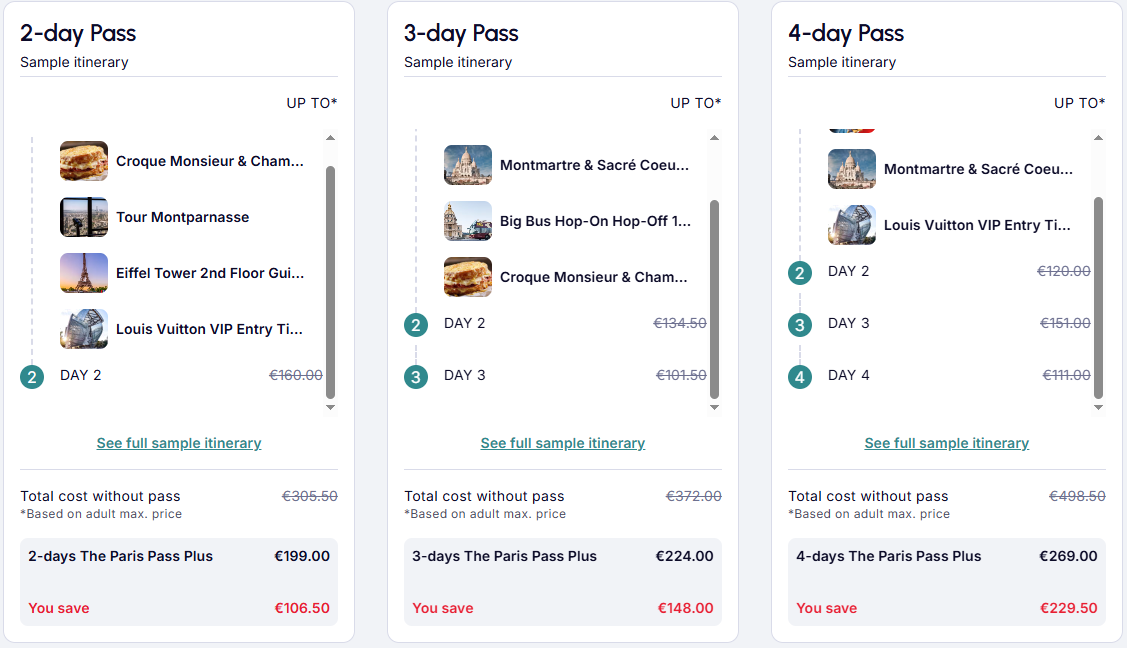
Do You Really Need a Paris Pass in 2026? The Break-Even Test (No Spreadsheet Needed)
This is the test that saves you from regret. Do it in 10 minutes:
Step 1: Write the top 6 paid places you truly plan to do (not “maybe”).
Step 2: Check whether your chosen pass actually includes them—and whether you still need reservations/time slots.
Step 3: Ask one honest question: Will I still do these if I wake up tired on day three?
If the answer is “yes, I want that ticket-heavy trip,” a pass can be smart.
If the answer is “no, I’ll probably slow down,” pay as you go will feel cleaner and more human.
The Hidden Cost Most People Ignore: “Pass Pressure”
Pass pressure is when you stop choosing what you want… and start choosing what you “should do” to justify the purchase.
That’s when the trip loses its natural rhythm. And in Paris, rhythm matters.
A pass is only a win if it matches how you actually travel—not how you imagine you’ll travel when you’re full of energy and optimism.
Two Day Templates (Pass Day vs Pay-As-You-Go Day)
These templates are the difference between “smart pass trip” and “wasted pass trip.”
Template A: Paris Pass Day (ticket-heavy, structured)
1) One morning anchor (timed if possible).
2) One nearby walk (45–90 minutes).
3) One indoor reset (museum café / quiet passage / warm stop).
4) Second anchor only if energy is still high.
5) Return route decided early (before fatigue starts making decisions).
Template B: Pay As You Go Day (freedom-first, low friction)
1) One flexible highlight (choose morning or afternoon).
2) One neighborhood zone for the day (don’t cross the city twice).
3) One rest plan (not optional—planned).
4) If you add a paid ticket, keep it to one anchor maximum.
If you want clean, timed-entry “anchors” without over-planning your entire trip, this is the moment where pre-booking makes the biggest difference:
Paris timed tickets & guided anchors
The right choice isn’t the cheapest. It’s the one that still feels good when you’re tired.
Final Answer (No Soft Language)
Do you really need a Paris Pass in 2026?
You need it only if you genuinely want a ticket-heavy trip and you start early enough to use it well.
If you want freedom, neighborhood days, and a plan that survives fatigue, pay as you go usually wins—even when it’s slightly less “optimized.”
FAQ: Paris Pass in 2026 vs Pay As You Go
Is a Paris Pass worth it for first-time travelers?
It can be, but only if you plan 2+ paid anchors on most days and you like structured mornings. If you prefer flexible days, pay as you go feels better.
What’s the biggest mistake people make with a Paris Pass?
Buying it before they know their real travel rhythm—then forcing attraction stacking to “justify” the pass.
Does a pass mean you skip every line?
No. Many places still require reservations or have security/entry processes. A pass can reduce ticket friction, but it doesn’t remove all waiting.
Is pay as you go more expensive?
Not always. It can be cheaper if you do fewer paid places and spend more time on flexible neighborhood days.