Paris Travel Mistakes to Avoid (2026): The Quiet Errors That Waste a Whole Day
Paris travel mistakes to avoid (2026) rarely look dramatic at the airport. They look like normal decisions: “We’ll just walk from here,” “We’ll buy tickets on the spot,” “We’ll figure out the Metro once we arrive,” “This hotel is cheaper—how bad can the area be?”
Then you land, it’s colder or wetter than expected, your phone is at 18%, the line you didn’t plan for is already forming, and suddenly Paris is not “hard”—it’s just unforgiving when you’re slightly late, slightly tired, and slightly unprepared.
The shocking truth: most trips don’t get ruined by scams, strikes, or “bad luck.” They get quietly damaged by friction mistakes—small choices that drain time and energy until you start making worse choices later. By day two, you’re not exploring Paris. You’re negotiating your own plan.
This TripsCity guide is written like a warning from someone who has watched travelers lose half-days for avoidable reasons. Not a generic “top 10” list. A reality-based map of what actually goes wrong in Paris in 2026—and what to do instead, in a logical order.
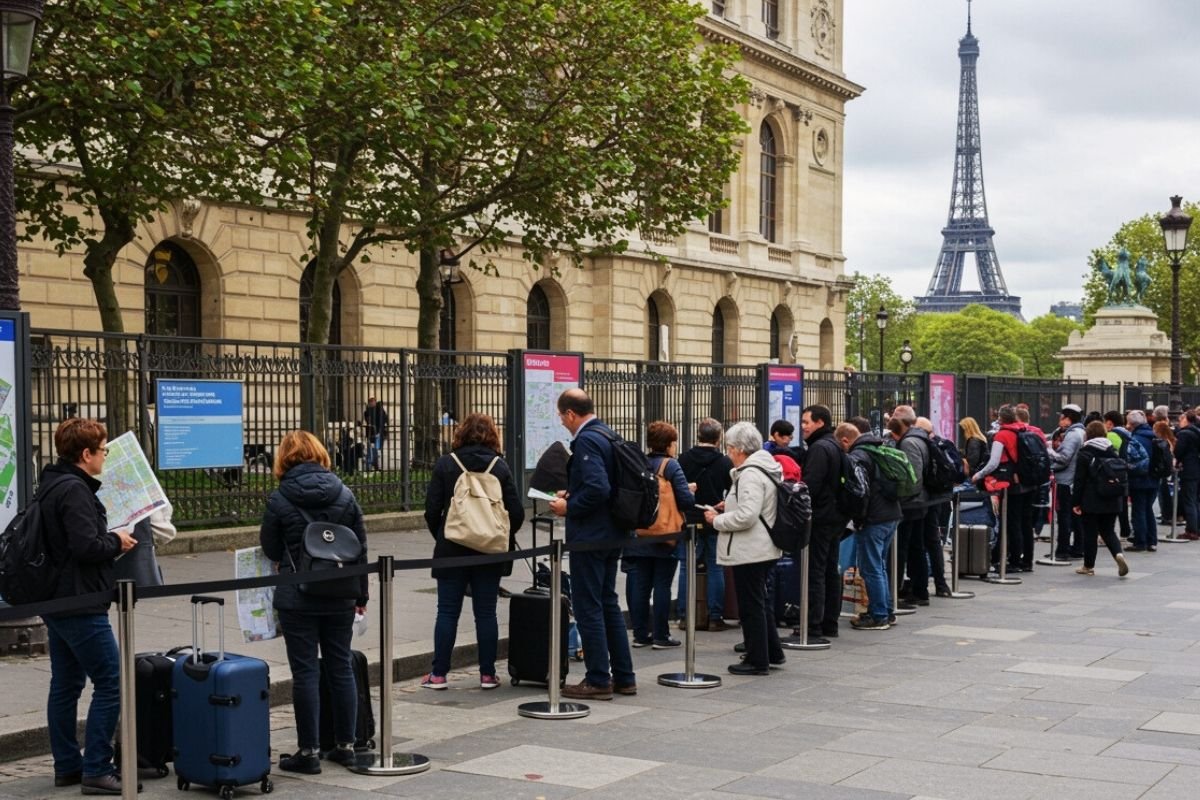
Most Paris mistakes are timing mistakes: one missed slot, one wrong entrance, one unplanned queue—then the day collapses.
Paris Travel Mistakes to Avoid (2026): The Reality Model (How Paris Actually Punishes Tourists)
Paris is not a “difficult” city. But it’s a city with systems: timed-entry doors, neighborhood geography, transport logic, security checks, and walking-heavy days. When you fight those systems, you lose time. When you work with them, Paris becomes smooth.
Here’s what matters in real 2026 travel behavior:
1) Paris is a timed-entry city now. Many major attractions and experiences work better (or only work well) when you reserve time slots. If you try to “wing it,” the penalty isn’t a small delay—it can be 1–3 hours of queue time or a sold-out day.
2) Paris is a walking city that feels bigger than it looks. On a full sightseeing day, many travelers hit 10–20k steps without trying. That changes your patience, your appetite, and your ability to “just go somewhere else” when Plan A fails.
3) Paris is a transition city. Metro → street → museum security → café → street again. The mistakes that hurt most are the ones that make transitions heavy: wrong shoes, wrong bag, no buffer time, dead phone, unclear meeting points.
The Real Travel Decision: Who This Article Is For (And Who Should Rethink Paris)
This article is for you if you want a Paris trip that feels controlled: you move easily, you don’t lose hours to predictable problems, and you plan just enough to stay free.
You should rethink your approach if you want to treat Paris like a small town where you can improvise everything. You still can improvise—but only after you lock the two foundations: where you stay and how you move. Without those, improvisation becomes expensive.
Paris Travel Mistakes to Avoid (2026): The “Numbers” That Predict Problems
Not marketing numbers. Practical numbers.
| Real factor | Realistic range | What it predicts |
|---|---|---|
| Daily walking | 10–20k steps | Bad shoes → smaller itinerary by day two |
| Queue / security time | 20–90+ minutes | No timed entry → daylight and mood loss |
| “Small delay” effect | 10 minutes becomes 45 | Wrong entrance / wrong line / no buffer |
| Transfers per day | 4–10 transitions | Dead phone / heavy bag → constant friction |
Paris Travel Mistakes to Avoid (2026): The Core Mistakes That Break Trips
Mistake #1: Booking the “cheap” hotel without understanding the map
This is the most expensive “cheap” decision in Paris.
When your accommodation is poorly placed, you pay for it every day: longer commutes, more tired evenings, more taxis/Ubers “just this once,” and less willingness to go back out after a museum. Paris is not flat in travel behavior—your base area decides your rhythm.
What to do instead: choose your base based on your trip type, not your budget fantasy. Families need calm + easy Metro access. Couples often want walkable beauty. Budget travelers need connectivity to reduce transport waste.
Use this before you book anything:
If you want to compare prices after you pick the right area, do it once and stop spiraling:
Paris hotel deals (by neighborhood)

The wrong base area doesn’t just cost time. It costs energy—then you start skipping Paris on your own trip.
Mistake #2: Treating the Metro like it’s “self-explanatory” on day one
Paris transport is excellent—when you understand the basic logic. The mistake is arriving with no plan, no idea how zones work for airports, no idea which tickets/passes fit your stay length, and no awareness that the “right exit” at a station can save you 10–15 minutes of walking.
What to do instead: decide your transport approach before you arrive. Even a simple plan prevents the classic day-one chaos: wrong ticket, wrong platform direction, wrong transfer, then you blame Paris instead of the gap.
Start here:
Mistake #3: Not building buffer time before “timed doors”
In 2026, many Paris experiences behave like appointments. The Louvre, Eiffel Tower access, popular day tours, river experiences, and even some museums can shift from “walk in anytime” to “your slot is your slot.”
The mistake is planning your day as if Paris is frictionless. Then one small delay—Metro transfer, wrong entrance line, security check—makes you late. Once you miss a timed window, the recovery cost is brutal: you either wait again, rebook, or you redesign the day while you’re already tired.
Practical rule: arrive 20–30 minutes early for timed entries (more in peak seasons). Not because Paris is scary—because Paris is busy.
Mistake #4: Trying to “see everything” and accidentally seeing nothing properly
This is the classic tourist self-sabotage: stacking five major stops in one day and assuming the city will cooperate.
Paris is better when your day has a shape: one major anchor (museum/monument), one neighborhood walk, one flexible block for food/rest, and one optional add-on if energy stays high. When you overbook, you don’t just get tired—you get mentally rushed. That’s when you miss small Paris moments and end up feeling like you did homework, not travel.
What to do instead: build days around neighborhoods. Paris rewards “area days,” not “pinball days.”
Mistake #5: Arriving with no connectivity plan (then losing time to basics)
You can survive without data. But you’ll waste time: finding meeting points, checking confirmations, navigating stations, translating quick signs, adjusting routes when something is closed.
What to do instead: decide your connectivity method before landing. If you want the simplest “works immediately” setup, an eSIM is usually the cleanest layer for tourists:
Paris Travel Mistakes to Avoid (2026): What Changes by Traveler Type
Couples
Couples often lose Paris to pace mismatch: one person wants long walks, the other gets cold/tired faster. Your mistake isn’t romance—it’s planning days with no rest blocks. Build a “warm reset” moment daily (café, museum, covered passage) so the day doesn’t collapse into tension.
Families
Families lose Paris through meltdown triggers: hunger, wet socks, long queues, and long transfers. Your biggest mistake is not building food + bathroom + warm indoor anchors into the day. Paris is great with kids when you control rhythm, not when you chase landmarks.
Budget travelers
Budget travelers lose money through replacement spending: buying last-minute items, paying for unnecessary transport, wasting prepaid tickets due to late arrival. Your mistake isn’t being cheap—it’s being unplanned in the wrong places.
Comfort seekers
Comfort travelers often overpack and overbook. Heavy luggage + dense schedules = Paris becomes tiring, not elegant. Your mistake is trying to control everything with “more.” The smarter control is fewer, better decisions.
TripsCity Funnels (Don’t Fix Mistakes One by One—Fix the System)
Most “Paris problems” disappear when you lock these three foundations first:
Where to Stay in Paris
How to Get Around Paris
Best Time to Visit Paris (season + crowds logic)
Paris Travel Mistakes to Avoid (2026): Tickets, Timing, and the Traps That Steal Your Best Hours
Paris travel mistakes to avoid (2026) shift after day one. The first day is usually “arrival friction.” The second and third days are where most people lose the trip: they start stacking big attractions, they underestimate queues, they waste time at the wrong entrances, and they realize—too late—that Paris is now a reservation-driven city.
The city still feels romantic, yes. But in 2026, the fastest way to ruin that feeling is to treat major sights like they’re casual walk-ins. The penalty isn’t just waiting. It’s the way waiting destroys your whole day structure: lunch gets pushed, neighborhoods get skipped, and you end up seeing Paris through the lens of “we’re late.”

In 2026, Paris punishes “we’ll just show up” thinking—because the best hours disappear into queues and security checks.
Paris Travel Mistakes to Avoid (2026): Ticket Strategy Mistakes That Cost You a Day
Mistake #6: Buying tickets “when you get there” for major attractions
This is the most common modern Paris failure. People are not lazy—they just grew up traveling in a world where you could walk up to a museum and enter within 15 minutes. Paris doesn’t behave like that consistently anymore.
What actually happens: you arrive at a popular attraction at a normal tourist hour, you see multiple lines, you start asking random people which one is correct, and by the time you understand the system, you’ve lost the calm part of the day.
What to do instead: lock your two biggest doors before you land. Not every museum. Not every day. Just the anchors you care about most.
If you prefer an official reference for at least one major door, use the Louvre’s official ticketing page (so you understand timed entry behavior):
Louvre hours & admission (official).
Then keep the rest practical: if you want a single place to reserve tours/tickets without juggling ten tabs, use one affiliate-friendly hub and stop reopening the same decision every night:
Paris tours & tickets (reserve time slots)
Mistake #7: Scheduling “big doors” back-to-back with no recovery block
Even when travelers book tickets correctly, they often schedule incorrectly. Example: Louvre at 10:00, Eiffel Tower at 13:00, a cruise at 15:00, then a neighborhood walk “somewhere” at 17:00.
That plan looks efficient on paper. In real Paris time, it’s fragile.
Why it breaks: exits take time, crowds slow you down, Metro transfers are not always clean, and you’ll want food. So you start rushing. Rushing is where Paris becomes stressful.
What to do instead: one major door per half-day. Put a real buffer after it: food + a short walk + flexible transit. If the first door goes long, your day survives. If it goes short, you gain freedom.
Mistake #8: Choosing “the wrong time” for the right attraction
Paris isn’t only crowded by season. It’s crowded by hour.
Many travelers do the same thing at the same time: late morning museum, mid-afternoon monument, early evening photo spots. That’s why some days feel “packed” even in winter.
Practical correction: move one anchor earlier than you want. If you can start one major attraction early, you buy calm for the entire day. The rest of the day becomes smoother because you’re not chasing time.
Paris Travel Mistakes to Avoid (2026): Arrival, Transfers, and the First-Hour Trap
Mistake #9: Turning arrival day into a sightseeing day
This is a psychological mistake. You land and you want to “use the day.” So you force a big plan on a body that’s tired, dehydrated, and mentally slow. Then a small delay happens—luggage, transport, check-in—and you start the trip with stress.
What to do instead: arrival day is for a soft win: a neighborhood walk near your hotel, one easy indoor anchor if weather is bad, and an early night. That’s not “wasting Paris.” That’s protecting day two.
Mistake #10: Negotiating airport transport when you’re tired
Paris transport can be simple, but negotiation when you’re tired is where mistakes happen: wrong queue, wrong assumption, overpaying, or losing time figuring out which option fits your luggage/family situation.
When a pre-booked transfer is actually worth it: late arrivals, families, heavy luggage, tight hotel check-in windows, or when you value a calm first hour more than saving a few euros.
If it fits your case, keep it simple:
Airport transfer (door-to-door)
Paris Travel Mistakes to Avoid (2026): Money, Safety, and the “Small” Traps
Mistake #11: Treating pickpocket risk like it’s a “story,” not a system
Paris is not uniquely dangerous. But it is a city with predictable tourist pressure points: crowded Metro lines, major attractions, and tight spaces where people are distracted.
The mistake is not “being careless.” The mistake is carrying your essentials in a way that makes you vulnerable when you’re tired: open tote, back pocket wallet, phone in a loose coat pocket, bag unzipped in crowds.
What to do instead: build a simple security habit: zipped crossbody or small daypack, essentials in one inside pocket, phone on a secure grip, and zero “I’ll just put it here for a second” moments in dense areas.
For a deeper neighborhood safety view (and how scams actually work), connect it with your TripsCity funnel:
Mistake #12: Eating near landmarks without any strategy
This is not “food snobbery.” It’s economics.
Restaurants in heavy tourist corridors can be fine—but the risk is paying high prices for average quality, then feeling like Paris food is “overrated.” What really happened is you bought convenience in the most expensive square meter of the city.
What to do instead: choose one food moment per day that you control. Not a full plan. Just one deliberate choice: a bakery, a neighborhood café away from the tight landmark ring, or a lunch plan after a museum so you don’t panic-eat the first menu you see.
Use your TripsCity food funnel to avoid the classic trap:
Paris Travel Mistakes to Avoid (2026): Day-Trip and “Too Far” Errors
Mistake #13: Booking a day trip before you understand your Paris pace
People book Versailles, Disneyland, Champagne, or Normandy before they’ve lived one full Paris day. Then they realize: Paris itself already fills the week.
The real risk: day trips make sense when your base is stable and your transport rhythm is clean. If you’re still confused by Metro transfers and your walking capacity, a day trip can feel like a logistical punishment.
What to do instead: place day trips after your first two Paris days. Let Paris set your pace first. Then choose one day trip that matches your energy level—not your Pinterest wishlist.
If Versailles is on your list, connect it to your planning funnel so you don’t do it in a fragile way:

Paris feels effortless when your day has one anchor, one neighborhood, and enough buffer to stay calm when small delays happen.
Paris Travel Mistakes to Avoid (2026): The Practical Rule Set (So You Stop Losing Hours)
Here’s the system that prevents most Paris mistakes without turning your trip into military planning:
Rule 1: Lock your base area first. Then lock your transport logic. Then book your top 1–2 timed doors. Everything else stays flexible.
Rule 2: One major door per half-day. Protect the space after it. That’s where Paris becomes enjoyable.
Rule 3: Never rely on your phone at 10% battery in a city built on tickets, maps, and meeting points. Power is trip insurance.
Rule 4: If you feel rushed, the plan is wrong. Paris is not a city you “win” by speed.
Paris Travel Mistakes to Avoid (2026): The Deadly Errors, the Fix System, and the Direct Decision
Paris travel mistakes to avoid (2026) are rarely dramatic. Paris doesn’t “ruin” you with one big disaster. It drains you with small failures that repeat: you miss the right entrance, you overstack the day, you get stuck in a queue at the wrong hour, you eat because you’re tired (not because it’s good), and you end up feeling like Paris is beautiful but exhausting.
That exhaustion is not the city’s fault. It’s almost always the structure of your plan. In 2026, Paris is a city of timed doors, reservation behavior, and dense transitions. If your trip is built like a checklist, it will break. If it’s built like a system, it becomes calm—even in winter.

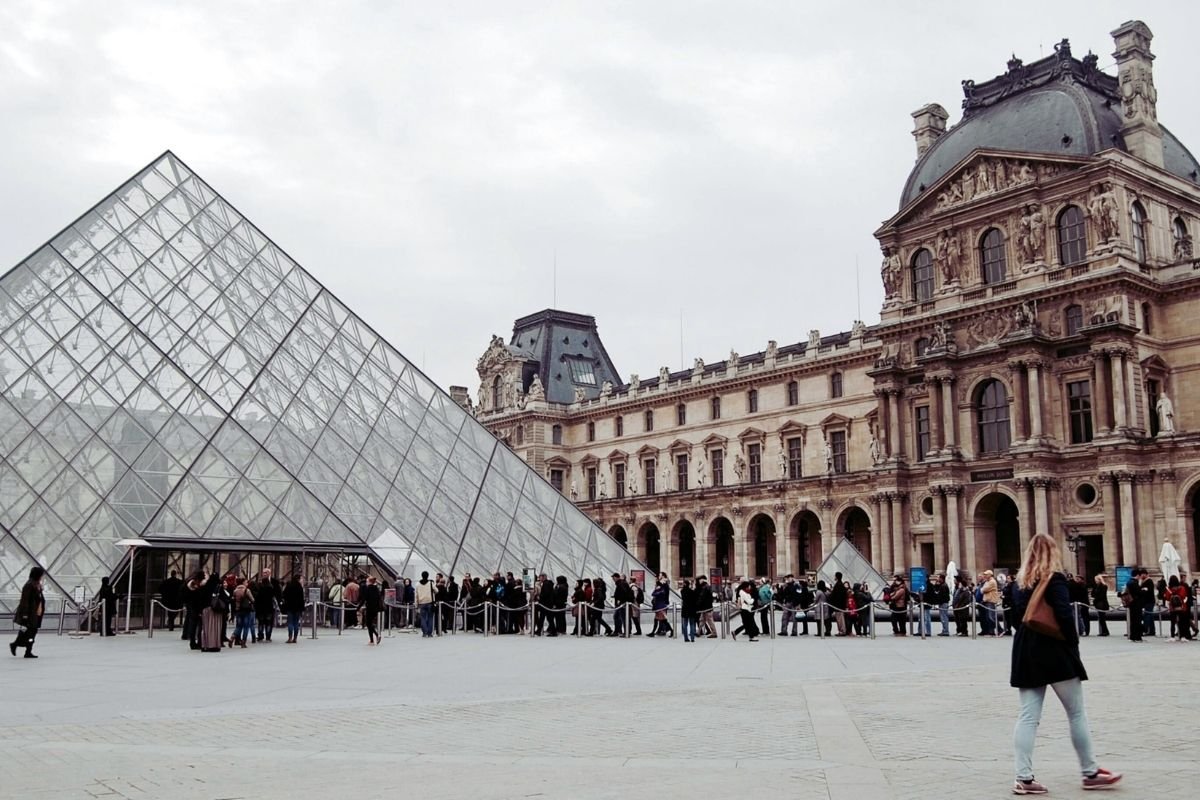
Most Paris travel “failures” are not disasters. They’re repeated small losses of time—queues, wrong entrances, and plans with no buffer.
Paris Travel Mistakes to Avoid (2026): The Friction Map (Why Trips Feel Hard)
If you want one mental model that explains almost every avoidable Paris problem, it’s this:
1) Door friction: you arrive at an attraction and discover the real system (security, lines, time slots, entry gates) is different than you assumed.
2) Transition friction: you underestimate how long it takes to move between neighborhoods, enter/exit stations, or cross busy areas at peak hours.
3) Timing friction: you schedule “tight” and one small delay turns into a chain reaction.
4) Energy friction: you walk too much early, then spend the best late-afternoon hours tired, cold, hungry, or annoyed.
The fix is not “more planning.” The fix is better structure: fewer anchors per day, smarter timing, and buffers that protect your mood.
Paris Travel Mistakes to Avoid (2026): Deadly Mistakes That Quietly Ruin Trips
Mistake #14: Treating Paris like a single neighborhood
Many travelers plan Paris like it’s a grid city where every point is “20 minutes away.” Paris is compact, but it’s dense. The real time sink is not distance—it’s transitions: station depth, platform changes, crowds, and the mental cost of constant movement.
Fix: build each day around one core neighborhood and one major anchor. If you want a second area, make it a short walk or a clean single transit line—not a zigzag.
If your plan is still forming, anchor your base with this TripsCity funnel first:
Mistake #15: Overbooking museums on the same day
Paris museums are powerful. That’s why people overdo them. Two big museums in one day sounds “efficient.” In reality, it becomes a fatigue trap: standing, walking, security, crowds, information overload—then you exit into the cold and your brain is done.
Fix: one museum anchor per day (or per half-day). Then pair it with an outdoor walk or a café reset. Your memory of Paris improves when you leave space for processing.
Mistake #16: Planning the day like a list instead of a rhythm
Lists are fragile. Rhythms survive. A rhythm is a sequence your body can repeat: leave hotel → walk → one anchor → food → one flexible block → return/refresh → evening.
Fix: plan the day in blocks, not points. Blocks are resilient. Points are brittle.
Mistake #17: Forgetting that winter changes the value of daylight
In winter, Paris daylight ends early and the city shifts indoors sooner. This creates a trap: travelers try to “fit more” before dark, then rush and burn out.
Fix: put your most outdoor-photogenic neighborhood walk earlier than you feel like. Then put your indoor anchor later. Winter Paris becomes calmer when your plan respects light.
To align timing + crowds + cost with your season, connect the funnel:
Mistake #18: Not budgeting for the “winter tax” (small purchases that add up)
In winter, mistakes cost money in small ways: buying an umbrella that breaks, replacing wet socks, taking extra transport because you’re cold, paying for snacks because meal timing slipped.
Fix: treat winter comfort as a budget strategy. The cheapest Paris winter trip is the one that avoids emergency spending.
If you want the realistic cost picture to support your plan, use:
Paris Winter Budget Guide 2026
Mistake #19: Ignoring the “entry gate” logic at big sights
Many Paris attractions have multiple lines or gates: timed ticket vs general admission, security vs ticket scanning, priority vs standard. People lose time simply because they arrive and stand in the wrong stream.
Fix: before you go, open the official page once and identify: (1) entry times, (2) what “timed entry” means, (3) where the actual entrance is. Do this once and you stop bleeding time.
Mistake #20: Leaving your trip exposed with no “plan B” for one bad day
Paris has rain days. Paris has strike days. Paris has days where you’re simply tired. The mistake is building a trip with no flexible module.
Fix: design one “soft day” in your itinerary: indoor anchors, easy neighborhoods, no hard reservations. That day becomes your pressure release valve.
Paris Travel Mistakes to Avoid (2026): The Practical Fix System (Do This in Order)
If you follow this order, you eliminate most Paris mistakes without obsessing:
Step 1: Choose your base like it’s part of the itinerary
Your hotel location is not a background decision. It decides your daily friction. Choose it based on how you travel: quiet nights vs central walking vs metro convenience.
Step 2: Lock your transport logic before you lock your attractions
If you don’t understand how you’ll move, you can’t schedule properly. A good base + clean transport makes Paris feel easy.
Step 3: Book only the “two doors” that matter most
Do not book everything. Book your two biggest anchors and protect buffers around them. This preserves freedom.
If you want to reserve tours/tickets cleanly in one place (instead of opening ten tabs):
Step 4: Build days by neighborhood, not by attraction category
Neighborhood days reduce transitions. Less transition = less fatigue = better memories.
Step 5: Protect the first hour and the last hour of each day
The first hour decides your pace. The last hour decides your mood. Keep both clean: no tight bookings, no long transfers, no “we’ll squeeze one more thing.”

Paris becomes easier to love when your day has one anchor, one neighborhood, and enough buffer to stay calm when small delays happen.
Direct Decision: Who This 2026 Paris Mistakes Guide Is For
This guide is for you if you want Paris to feel calm, not like a race. If you prefer fewer “big wins” per day but a better overall trip, this system will save you time and energy.
You should rethink your approach if your only definition of a successful trip is “maximum attractions per day.” Paris will punish that mindset in 2026. You’ll see more things—but remember less, enjoy less, and spend more in emergency fixes.
FAQ: Paris Travel Mistakes to Avoid (2026)
What is the #1 Paris travel mistake in 2026?
Treating major attractions like walk-ins. Paris is increasingly reservation-driven. Without timed entry or smart scheduling, you lose the best hours to queues and confusion.
How many big attractions should I plan per day?
One major door per half-day is the stable rule. Build buffers after it. Your trip becomes calmer, and you’ll still see a lot—just with less rushing.
Is it safe to use the Metro, or should I avoid it?
The Metro is efficient and normal. The real safety issue is distraction in crowded areas. Use a zipped bag, keep essentials secure, and avoid open pockets during dense moments.
Should I book day trips like Versailles before I arrive?
If you’re visiting for a short time, wait until you’ve lived two full Paris days and understand your pace. Then choose one day trip that fits your energy instead of your wishlist.
What’s the best way to avoid overspending in winter?
Avoid emergency spending by packing correctly and planning buffers. Winter costs often come from fixes—extra transport because you’re cold, replacement items, and rushed food decisions.
How do I avoid “exhausted Paris” by day three?
Stop zigzagging the city. Plan by neighborhood, use one anchor per day block, and schedule a soft day with no hard reservations. That structure keeps your energy stable.