
The best Paris tickets to book in advance are the Eiffel Tower, Louvre Museum, Palace of Versailles and Paris Catacombs if those attractions are important to your trip. Musée d’Orsay and Sainte-Chapelle are also worth reserving ahead when your dates are fixed or you are visiting during a busy period.
You do not need to pre-book everything in Paris. Standard Seine sightseeing cruises, neighborhood walks, parks and many smaller attractions can usually remain flexible. The useful question is not “What can I book?” but “What would I genuinely regret finding sold out?”
Which Paris Tickets Should You Reserve First?
| Attraction | Book ahead? | Why |
|---|---|---|
| Eiffel Tower | Yes | Preferred elevator, summit and evening slots can disappear |
| Louvre Museum | Yes | Timed reservations are recommended and on-site availability is not guaranteed |
| Paris Catacombs | Yes, when tickets are released | Timed entry and limited capacity make availability unusually tight |
| Palace of Versailles | Yes | A timed Palace visit makes a full day trip easier to plan |
| Musée d’Orsay | Recommended | Worth securing if the museum is a priority or your schedule is tight |
| Sainte-Chapelle | Recommended | Timed access is useful during busy periods and security can add waiting |
| Standard Seine sightseeing cruise | Usually not far ahead | Frequent departures often give visitors more flexibility |
| Notre-Dame Cathedral interior | No paid ticket required | Standard cathedral entry is free; optional free reservations may reduce waiting |
Before paying a reseller, check the official attraction website first. Official tickets are normally the baseline for price and access rules. Third-party platforms become useful when you want a guided experience, combination ticket, cancellation options or availability that fits your itinerary better.
If you want to compare live availability across major attractions and guided experiences, you can browse Paris tickets and tours on GetYourGuide.
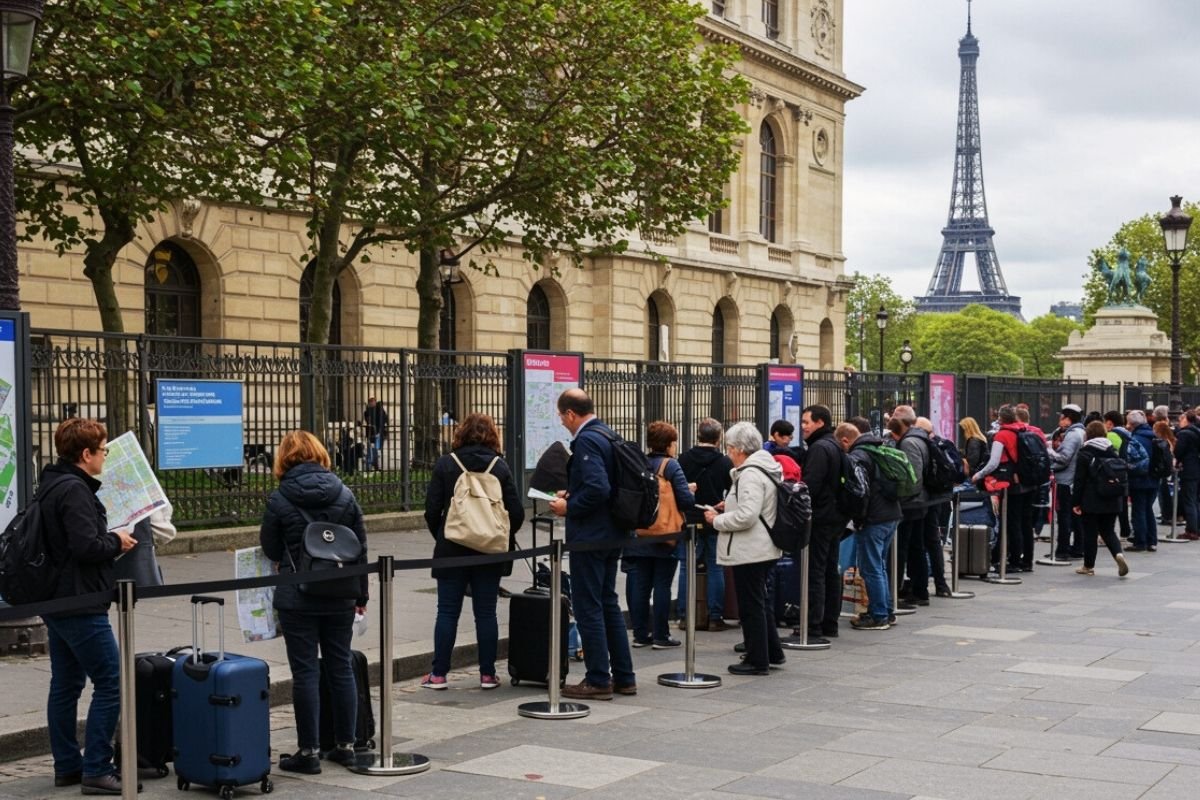
Advance booking matters most when missing a specific attraction or time slot would force you to change the rest of the day.
What Does “Book in Advance” Actually Mean in Paris?
Paris attractions do not all use the same reservation system. Understanding the difference prevents both under-planning and unnecessary bookings.
Timed Entry
A timed ticket reserves admission for a particular date and time. The Louvre, Eiffel Tower and several other major sights use timed systems in some form. A timed ticket helps control when you arrive, but it does not automatically mean zero waiting.
Limited-Capacity Tickets
The Catacombs are the clearest example. Capacity is restricted and official tickets use a short booking window, so this is a place where availability itself matters more than simply avoiding a ticket-office queue.
High-Demand Experiences
Some activities may technically remain possible later but lose the time, format or seat you wanted. Eiffel Tower summit access, a specific dinner cruise, a popular show or a small-group tour can fall into this category.
TripsCity Insight: reserve the experiences where the exact date, time or capacity matters. Leave ordinary walking, neighborhoods and flexible sightseeing open whenever possible.
For broader planning mistakes that can cost time even after your tickets are booked, see our Paris Travel Mistakes to Avoid guide.
Best Paris Tickets to Book in Advance First
If several major attractions are on your itinerary, prioritize the best Paris tickets to book in advance where availability or a preferred time matters most. You do not need to buy them all on the same day or through the same website.
Best Paris Tickets to Book in Advance: Eiffel Tower
If going up the Eiffel Tower is important to you, this is one of the first tickets to check. The official Eiffel Tower website currently allows elevator e-tickets to be purchased up to 60 days in advance, with a specific date and time.
Summit access deserves particular attention because the exact ticket type matters. A second-floor ticket is not the same experience as summit access, so do not book a convenient-looking option before checking what it actually includes.
Important: an advance ticket does not eliminate every line. Security checks still exist. The Eiffel Tower itself warns that third-party “priority access” wording does not provide magical access beyond the benefit of an official e-ticket.
Check current rules and official ticket availability on the official Eiffel Tower website.
Best Paris Tickets to Book in Advance: Louvre Museum
The Louvre currently recommends time-slot booking, including for visitors who qualify for free admission. Its official site says on-site tickets may be available when attendance is low, but only subject to availability.
That makes advance booking the sensible option when the Louvre is a must-see rather than an attraction you are willing to miss. Also check the museum calendar before choosing your date: the Louvre is normally closed on Tuesdays.
Buy standard admission through the official Louvre website. A guided tour becomes useful when you want interpretation, a defined highlights route or a different experience—not because every tour automatically removes every queue.
If you want to compare guided Louvre and Eiffel Tower options alongside other Paris attractions, you can check Paris attraction availability and guided tours.
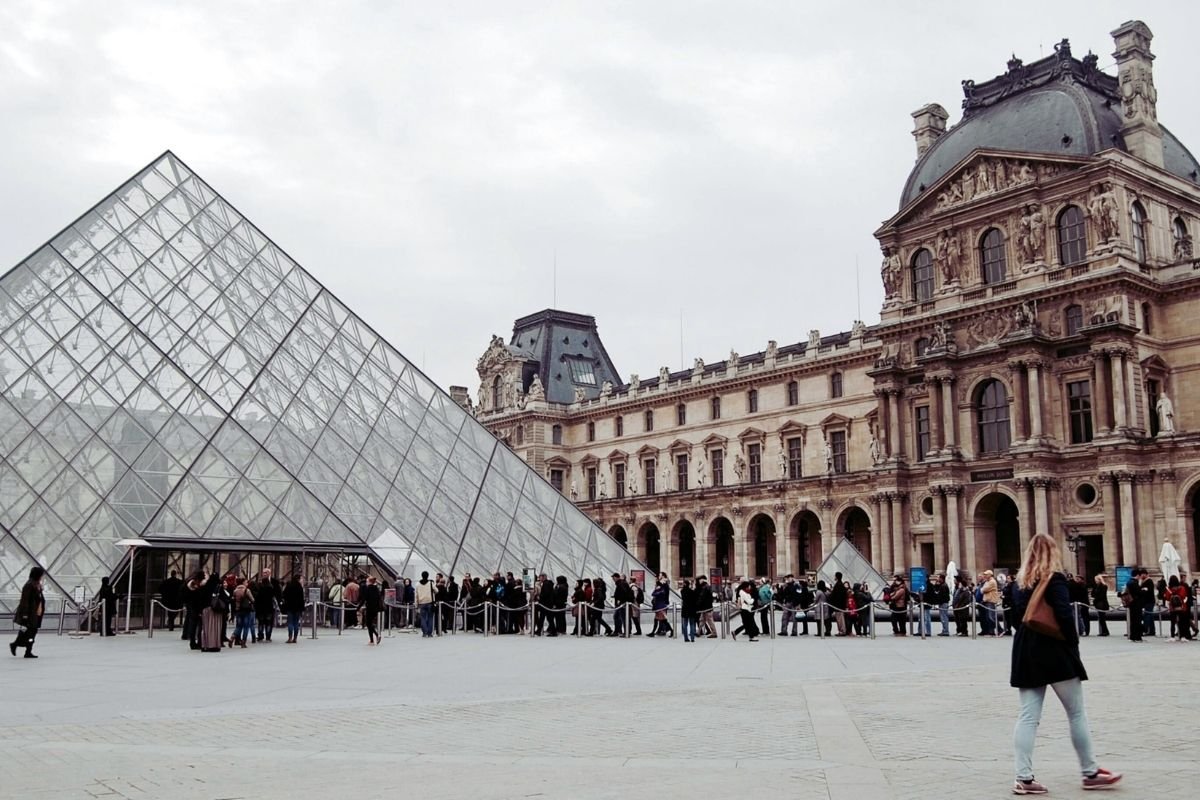
A timed Louvre reservation gives you a defined visit window, but normal security and entrance procedures can still take time.
3. Paris Catacombs Tickets
The Catacombs work differently from attractions that sell months of inventory at once. Official timed tickets are released only seven days before the visit, which means “book early” here actually means knowing when your booking window opens.
If the Catacombs are a must-do, set a reminder instead of repeatedly checking months ahead. Limited capacity makes this one of the Paris experiences where waiting until you arrive is a poor strategy.
Always check current visitor information through the official Paris Catacombs website before booking.
If official availability no longer fits your date, you can also compare Catacombs tours and Paris ticket options, but read exactly what admission and guiding are included before paying a higher price.
4. Palace of Versailles Tickets
Versailles deserves advance planning because the Palace uses timed admission and the visit usually consumes much more of the day than a central Paris museum.
Choose the date only after deciding whether you want the Palace alone or a broader visit that includes the gardens and wider estate. Then check the official Versailles ticket information.
Independent travel is practical if you are comfortable using public transport. If you prefer transportation and guiding packaged together, you can compare Versailles day trips and guided visits.
5. Musée d’Orsay Tickets
Musée d’Orsay is not as urgent for every traveler as the Eiffel Tower or Catacombs, but advance booking is sensible when Impressionist art is one of the reasons you are visiting Paris or when you need a particular time.
For a flexible itinerary, it may be possible to wait longer than you would for the Eiffel Tower. For a short trip with fixed museum days, reserving removes unnecessary uncertainty.
6. Sainte-Chapelle Tickets
Sainte-Chapelle is smaller than the Louvre, but timed access can still matter because visitor flow and security around the Palais de Justice affect entry.
It is especially useful to reserve when you are combining Sainte-Chapelle with Notre-Dame, the Conciergerie or another timed attraction on Île de la Cité. Leave enough space between reservations for security and walking rather than placing two time slots almost back to back.
TripsCity Insight: booking priority should follow scarcity, not fame. Eiffel Tower summit access and Catacombs capacity can require more attention than attractions where another admission time would work just as well.
Best Paris Tickets to Book in Advance — and What Can Wait
The best Paris tickets to book in advance are the ones where booking solves a real availability or timing problem. Several popular Paris experiences can stay flexible for most travelers.
| Experience | Usually book far ahead? | Exception |
|---|---|---|
| Standard Seine sightseeing cruise | No | Book earlier if you need a specific operator or departure |
| Montmartre neighborhood walk | No | Reserve only if you want a specific guided tour |
| Luxembourg Gardens | No | No ticket needed for normal garden access |
| Le Marais exploration | No | Reserve only a specific food, history or private tour |
| Notre-Dame Cathedral interior | No paid admission ticket | An optional free reservation may help reduce waiting |
| Arc de Triomphe or Panthéon | Often more flexible | Booking ahead can still help on a fixed or very busy day |
A standard sightseeing cruise is a good example of why not every attraction needs the same strategy. If departures are frequent and you are happy to take the next available boat, keeping the cruise flexible can help you respond to weather and energy levels.
A dinner cruise is different. You are choosing a specific meal, departure and seating period, so availability matters much more.
When Flexible Activities Should Still Be Reserved
Book a normally flexible experience earlier when one particular version matters to you. That includes a small-group food tour, a specific guide, a dinner cruise, a cabaret performance or a special evening departure.
Those are good places for affiliate comparison because you are choosing between genuinely different products rather than paying a premium for the same basic admission.
You can compare Paris cruises, shows, food tours and other bookable experiences once your must-see attraction dates are fixed.
Best Paris Tickets to Book in Advance: Does a Paris Pass Help?
No. A pass and a reservation solve different problems. A pass may cover admission to participating attractions, but that does not automatically mean you can arrive at every included site whenever you want.
Some attractions may still require or recommend a separate time-slot reservation. Before buying a pass, list the attractions you actually want and check both the pass coverage and each attraction’s booking rules.
The wrong order is buying a pass first and then trying to force enough attractions into the itinerary to justify it. The better order is deciding what you genuinely want to visit and then comparing the cost and convenience.
For the full break-even decision, see our Paris Pass vs Pay-As-You-Go guide.
Best Paris Tickets to Book in Advance for Flexible Experiences
Advance booking becomes more useful when you are purchasing something beyond simple admission.
Dinner Cruises
A dinner cruise has a fixed departure, meal and capacity. If a particular evening matters, treat it more like a restaurant reservation than a standard hop-on sightseeing cruise.
Cabaret and Evening Shows
Popular show dates and seating categories can disappear even though Paris itself obviously does not “sell out.” Reserve when the performance is a real part of your itinerary rather than a possible extra.
Small-Group and Private Tours
The limiting factor is often the guide or group size rather than the attraction. A highly rated small-group tour can have fewer available places than a large museum.
TripsCity Insight: pay in advance when you are securing scarce admission, a specific time or a genuinely different experience. Do not pay extra merely because a page uses urgent wording.
Best Paris Tickets to Book in Advance: How Early Should You Reserve?
There is no single booking deadline for Paris. Different attractions release tickets on completely different schedules, so a generic “book everything three months ahead” rule does not work.
| Attraction or experience | Practical booking approach |
|---|---|
| Eiffel Tower elevator access | Check as soon as your date becomes available; official e-tickets can currently open up to 60 days ahead |
| Louvre Museum | Reserve once your museum day is fixed, particularly if a specific time matters |
| Paris Catacombs | Official tickets open only seven days ahead, so set a reminder for the booking window |
| Versailles | Book after fixing your day trip date and deciding which parts of the estate you want to visit |
| Musée d’Orsay | Reserve earlier when the museum is a must-see or your itinerary has little flexibility |
| Sainte-Chapelle | Reserve ahead for busy dates or when pairing it with other timed Île de la Cité attractions |
| Dinner cruise or popular show | Book earlier if you need one specific evening or departure |
Official Website or Third-Party Platform?
Start with the official website when you only need standard admission. It gives you the attraction’s current rules, official ticket types and a useful price baseline.
A third-party platform can add value when you want a guided tour, transportation, a combination experience, easier cancellation terms or a product that is meaningfully different from standard admission.
The key is to compare what is included, not simply the headline words. A €25 official ticket and a €70 guided product are not automatically competing versions of the same thing if the second includes a guide, transportation or another attraction.
What Does “Skip the Line” Really Mean in Paris?
“Skip the line” does not necessarily mean “walk straight inside.” Major Paris attractions use security checks and entrance controls that a normal ticket cannot remove.
The Eiffel Tower is unusually clear about this. Its official guidance says third-party products described as “priority access” provide no special advantage beyond avoiding the ticket-office queue in the same way as an official e-ticket. Visitors still go through the required security and access procedures.
Apply the same skepticism elsewhere. Before paying extra, look for the actual benefit:
- reserved timed admission;
- ticket-office bypass;
- a dedicated group entrance;
- a licensed guide;
- transportation;
- another included attraction;
- or cancellation flexibility.
If the product page does not clearly explain what you are receiving, do not assume the phrase “skip the line” removes every wait.
What If Official Paris Tickets Are Sold Out?
First, check another date or time if your itinerary allows it. Then verify whether the attraction officially offers on-site availability or releases additional tickets later.
For guided experiences, authorized third-party inventory may differ from standard admission. That can make a tour useful when the experience itself interests you, but check the meeting point, admission inclusions, language, cancellation rules and recent reviews before buying.
You can compare remaining Paris ticket and tour availability if official times do not fit your itinerary.
Do not buy from street sellers or unfamiliar mirror sites simply because Google shows an urgent-looking ticket page. The Louvre currently warns visitors specifically about ticket fraud and mirror websites.

Save your tickets offline and leave realistic time between reservations instead of building a day around back-to-back entry slots.
For a realistic way to place reservations across several sightseeing days, see our Paris 5 Days Itinerary. For transport between those bookings, use our How to Get Around Paris guide.
How Many Paris Tickets Should You Book for a 3-, 5- or 7-Day Trip?
The right number of advance reservations depends on how long you are staying and how many ticketed attractions are genuine priorities. There is no useful universal rule that every visitor should book exactly one or two tickets.
| Trip length | Practical booking strategy |
|---|---|
| 3 days | Secure only the major attractions you would be genuinely disappointed to miss. Avoid filling every day with multiple timed reservations. |
| 4–5 days | Book your top icons first, then add one or two smaller timed experiences only if they fit naturally around those days. |
| 6–7+ days | You have more room for museums, Versailles, evening experiences and flexible days without forcing several reservations into one afternoon. |
| Repeat visit | Prioritize specific museums, exhibitions, food experiences or tours rather than automatically rebooking the major first-time sights. |
A useful test is simple: if one attraction sells out, would you change the itinerary to accommodate it? If the answer is yes, reserve it. If the answer is no, it may not need to become another fixed appointment.
Best Paris Tickets to Book in Advance FAQ
What are the best Paris tickets to book in advance in 2026?
For most visitors, the highest-priority tickets are the Eiffel Tower, Louvre Museum, Paris Catacombs and Palace of Versailles when those sights are on the must-see list. Musée d’Orsay and Sainte-Chapelle are also worth reserving when your schedule is fixed or demand is high.
How far in advance should I book the Eiffel Tower?
The official Eiffel Tower currently allows elevator e-tickets to become available up to 60 days in advance. If summit access or a particular evening time matters, check availability as soon as your date opens.
How far in advance can I book Paris Catacombs tickets?
Official Catacombs tickets use a much shorter window and are released seven days before the visit. Set a reminder rather than expecting to reserve them months ahead.
Do I need to book the Louvre in advance?
Advance booking is the safer choice if the Louvre is important to you. The museum currently recommends time-slot reservations and says on-site tickets may be sold only when attendance is low and subject to availability.
Do skip-the-line tickets skip security in Paris?
Not necessarily. Timed or priority admission may reduce ticket-office waiting, but security and entrance controls can still apply. Always read exactly what a ticket promises before paying extra.
Do I need to book a Seine cruise in advance?
A standard sightseeing cruise can often remain flexible when departures are frequent. Dinner cruises, private cruises and specific evening experiences are more sensible to reserve in advance because capacity and departure times matter.
Does the Paris Museum Pass mean I can enter without reservations?
No. Pass inclusion does not automatically remove an attraction’s time-slot or reservation rules. Check each must-see attraction before buying the pass and again before your visit.
Should I book Paris attractions through the official website or GetYourGuide?
Use the official website as the first reference for standard admission, rules and prices. A third-party platform can be useful when you want a guided tour, transportation, combination experience, cancellation flexibility or different availability. Compare what is actually included rather than assuming the higher-priced option offers faster entry.
Final Verdict: What Should You Book Before Paris?
Book the Paris experiences where availability, timing or capacity genuinely matters to your trip. For most first-time visitors, that means checking the Eiffel Tower, Louvre, Versailles and Catacombs first, followed by Musée d’Orsay or Sainte-Chapelle if they are priorities.
Keep ordinary neighborhood sightseeing, parks and flexible activities open. Reserve premium experiences such as dinner cruises, shows and small-group tours when the exact date or product matters.
If you have already fixed your travel dates, you can compare Paris attraction tickets, tours and live availability after checking official admission options.
The goal is not to book the largest number of tickets. It is to arrive in Paris knowing that the experiences you care about most are secured while the rest of the trip still has room to change.