
Weather in Paris in January 2026 usually hits you the moment you step outside the airport doors.
Not a dramatic cold. Not snow falling like a movie scene.
It’s a quiet, damp chill that crawls under your clothes while you’re still trying to find your ride. Your suitcase wheels hiss on wet pavement. The sky is low, not beautiful. And your brain begins negotiating with itself:
“If this is day one… what will day four feel like?”
January in Paris doesn’t “ruin” trips by being extreme. It ruins them by being persistent. A light rain that doesn’t stop. A cold that doesn’t feel sharp — it feels sticky. A daylight window that closes earlier than your energy does. And that is exactly why this guide exists: to stop you from making the classic January mistake — planning Paris like it’s a bright, walk-all-day city.

January weather in Paris is often defined by grey light and damp streets, not snow postcards. Plan for moisture first.
Paris January Weather 2026: The Shocking Truth (It’s Usually Wet, Not Snowy)
Here is what most guides avoid saying clearly: January in Paris is more often wet than snowy.
Yes, snow can happen. But the normal Paris-January experience is drizzle, cold rain, fog, and humidity. That humidity changes everything. It makes mild temperatures feel colder than they look on an app. It makes your jacket feel heavier. It makes your socks feel like a liability. It turns “a quick 20-minute walk” into “I need to warm up before I get angry.”
If you’re arriving with the fantasy of crisp winter sun and powder snow, January will feel disappointing. But if you arrive with the expectation of real winter city life—a slower Paris built around indoor anchors—January can become one of the smartest months to visit.
Weather in Paris in January 2026: What You Can Realistically Plan Around
No one can promise you the exact weather for specific dates in January 2026 months ahead. But you can plan correctly using long-term Paris January patterns. Think in ranges, not promises:
| Planning factor | Typical Paris January range | What that means in real life |
|---|---|---|
| Daytime temperature | ~6–9°C | Comfortable while moving; uncomfortable the moment you stop |
| Night temperature | ~1–4°C | Waiting outside becomes the biggest mistake of the day |
| Rain (monthly total) | ~40–60 mm | Not storms every day, but enough wet days to punish weak shoes |
| Sunshine (monthly total) | ~50–65 hours | Many days are bright-grey; outdoor photos can feel flat |
To be clear: weather in Paris in January 2026 is less about extreme temperatures and more about damp cold, short daylight, and planning your days around indoor anchors.
The sunshine line is the one people underestimate. Paris in January is not always “dark,” but it is often low-contrast. The city looks softer, calmer, sometimes beautiful—but not reliably bright. If your whole trip is based on outdoor light, January demands humility.
Paris in January 2026: Daylight and the Daily Rhythm
In early January, Paris mornings start late and evenings arrive early. Practically, this changes your behavior even if you don’t want it to:
You don’t “begin exploring at 7:30.” You begin closer to 9:30–10:00, once you’ve warmed up and the day has stabilized. And you don’t keep doing outdoor stops until 19:00 without paying for it physically.
This is where tourists lose money: when daylight ends and their plan still expects three more outdoor neighborhoods. That’s when they start paying for taxis, buying emergency layers, and “saving the day” with impulsive spending.

Paris Winter Weather in January: Benefits and Penalties (No Romance, No Panic)
What January does well
Paris becomes calmer. Not empty. Calmer. That matters if you want the city to feel like a place, not a queue. Many travelers finally enjoy museums properly because the pace becomes more human.
January rewards depth over speed. If you prefer one serious museum, one strong neighborhood walk, and time to breathe, January supports you. It punishes the “10 attractions in one day” mindset.
What January does poorly
Wet cold punishes the wrong clothing system. A heavy coat that absorbs moisture is worse than a lighter coat that blocks wind and keeps you dry. If you get damp early, you spend the day trying to recover instead of exploring.
Walking becomes a negotiation. Paris is a walking city, but in January you have to choose walks with purpose. Random long walks “just to see things” often end with numb fingers and resentment.
January 2026 in Paris: Who This Weather Fits — and Who Should Rethink It
This month is for you if
You want a quieter Paris, you can handle cold with proper layering, and you value atmosphere over perfect weather. You like planning. You accept that some days will be “museum + warm break + short focused walk” rather than “endless outdoor wandering.”
You should rethink January if
You’re traveling mainly for outdoor photography light, long walking days, or you have a low tolerance for damp cold. If your mood collapses after two grey days, January may turn your trip into a fight with the sky.
If you’re still undecided, don’t guess. Use the TripsCity funnels that match your decision problem:
Is Paris Good in Winter? Honest Pros, Cons & Real Travel Advice
Paris Winter Budget Guide 2026: What You Really Spend (Dec–Jan)
Things to Do in Paris in January 2026: Complete Winter Travel Guide
Weather in Paris in January: The Two Costs Travelers Don’t Expect
This is not a “weather-only” article, because in January, weather becomes spending.
First: rain increases your reliance on the Metro and short rides you didn’t plan. If you stay a week and move daily, a weekly pass can reduce stress and decision fatigue. Official transport fares and passes (the only transport source I’ll use in this article) are here:
Île-de-France Mobilités — Official tickets & fares
Second: indoor anchors become your insurance. In January, “we’ll decide museums later” is how you waste hours in wet weather. A fixed museum plan protects the day. For opening hours, closures, and admission rules, use the official Louvre page (the only museum source I’ll use in this article):
Louvre — Official hours & admission
One natural affiliate placement (kept minimal, used for January logic)
If you already know January will push you indoors, one timed entry can prevent a “cold, wet, wandering” day. This is not about being fancy—it’s about controlling your schedule when the sky refuses to cooperate.
See timed Louvre ticket options here
That’s the foundation: January is not a “pretty winter” month by default. It’s a month that becomes good when you plan like someone who respects cold, moisture, and time.
Weather in Paris in January 2026 by Traveler Type: Who Wins, Who Struggles
January does not treat all travelers equally. Two people can land in Paris on the same grey week, see the same drizzle, feel the same temperature — and one will call it “magical and calm,” while the other will call it “a mistake.”
The difference is not luck. It is how your travel style reacts to cold, dampness, and short daylight.
This section is written like a warning sign. Not because January is dangerous, but because it is honest. Paris won’t change to match your mood. You have to design the trip around what January really is.

A couple can love Paris in January—if the plan is built around warmth, timing, and realistic walking distances.
1) Couples: January can be romantic, but only if you stop chasing the “perfect Paris day”
Couples often arrive with the strongest fantasy: quiet streets, warm cafés, long walks, spontaneous plans. January can deliver parts of that — but it also punishes the fantasy if you push it too far.
What works for couples in January is not “doing everything.” It’s building a rhythm that protects your mood. One meaningful highlight per day. A warm break planned, not improvised. A short neighborhood walk chosen for atmosphere, not distance. And an evening plan that ends before you become cold and tired at the same time — because that’s when couples start arguing about nothing.
What breaks couples in January is the belief that walking is always the romantic option. In damp cold, walking becomes a negotiation. If one person is warmer than the other, the day slowly turns into a silent conflict: one wants to continue, the other wants to escape indoors. You avoid this by planning “indoor anchors” in the middle of the day. Not as a backup. As the core structure.
If you want a January couple-trip that actually works, pair this weather guide with your internal funnel for timing and activities:
Things to Do in Paris in January 2026
Is Paris Good in Winter? Honest Pros & Cons
2) Families: January is either “smooth and calm” or “constant damage control”
Families don’t just “experience weather.” They manage it. Every degree of cold multiplies into gloves, complaints, toilet timing, snack timing, stroller timing, and “we need to warm up now.” That is why families either love January (because the city is calmer) or hate it (because the day collapses faster).
What works for families in January is a short, controlled day plan. You choose one big indoor activity that is worth the effort — a museum that is genuinely interesting for the adults, plus something that keeps children engaged. Then you add one outdoor segment that is deliberately short, with a clear start and end. The mistake families make is trying to “walk until we’re tired.” In January, kids don’t get “pleasantly tired.” They get cold, bored, and emotionally loud.
What breaks families in January is arriving without a warming strategy. When a child gets damp, the day is over. You can be in the most beautiful city on earth — it won’t matter. That is why families should treat waterproof footwear as a requirement, not a “nice-to-have.” It’s also why a family should avoid back-to-back outdoor landmarks in January. Not because the landmarks aren’t worth it, but because your time window for comfort is limited.
If your TripsCity family funnels are active, connect January weather to a family-specific planning style, not a generic “Paris highlights” list:
Paris With Kids: Family Guide & Attractions
Paris Safety Guide 2026
3) Budget travelers: January is a gift, but only if you don’t waste money fixing preventable problems
Budget travelers often choose January for a reason: fewer crowds, lower seasonal pressure, and the feeling that Paris becomes more accessible. That part can be true. But January also creates a hidden budget trap: weather mistakes create emergency spending.
The classic budget mistake is spending carefully on flights and accommodation, then losing money daily on small fixes: buying an umbrella you didn’t pack, buying new socks because your shoes failed, taking more rides because you planned unrealistic walks, paying premium prices because you waited until you were cold and hungry to find food.
What works for budget travelers in January is spending a little upfront to avoid daily leaks. One reliable outer layer. One reliable pair of shoes. A plan that uses the Metro intelligently instead of proving you can walk everywhere. And one “indoor day” strategy, so you never waste hours in damp weather searching for something to do.
January budget planning belongs next to your TripsCity money funnel. This is where weather becomes cost control:
Paris Winter Budget Guide 2026
How to Get Around Paris (Metro, Tickets & Tips)
4) Comfort seekers: January can work, but you must stop pretending you’re an “adventurous walker”
Some travelers value comfort above all: good sleep, warm interiors, controlled schedules, clean logistics. There’s nothing wrong with that. The mistake is acting like you’re a “walk all day” traveler in January when you’re not.
What works for comfort seekers in January is choosing the right base area and paying for convenience with intention. The goal is not luxury — the goal is fewer cold transitions. Fewer long walks between transport connections. Shorter exposure time. If your hotel is poorly located, January becomes a series of cold transfers and wet waiting. If your base is smart, January becomes calm.
This is where your “Where to stay” funnel becomes part of the weather strategy, not a separate topic:
Where to Stay in Paris: Best Areas & Neighborhoods
Best Time to Visit Paris 2026: Weather, Crowds & Costs
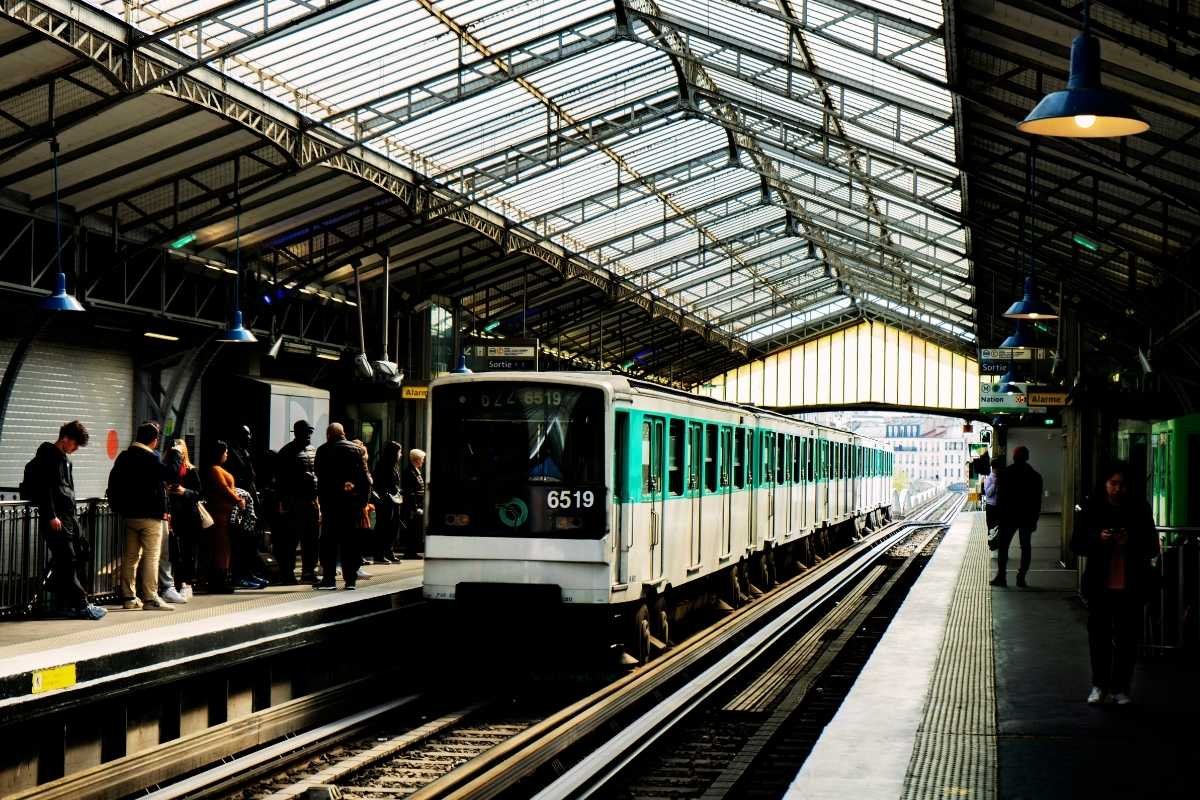
The smartest January travelers don’t fight the weather. They move with it—using indoor anchors and efficient transport instead of long, wet walks.
Paris January Weather Mistakes: The Fatal Errors That Break a Day
Mistake #1: Packing for “cold” instead of packing for “wet cold”
Cold by itself is easy. Wet cold is different. It clings to fabric, makes you feel heavier, and stops you from “resetting” after a short walk. A big coat that absorbs moisture can be worse than a lighter system that keeps you dry. January comfort is not about thickness; it’s about staying dry and blocking wind.
This is why footwear matters more than people admit. In January, the wrong shoes don’t just hurt your feet. They change your route decisions, shorten your day, and force expensive fixes.
Mistake #2: Building a day around outdoor landmarks, then “hoping” for weather
Hope is not a plan. January planning is about anchors. An anchor is something that remains valuable even if it rains: a museum, a covered passage, a timed entry, a long indoor experience. Outdoor landmarks can still happen, but they should be placed between anchors, not used as the foundation.
Mistake #3: Over-walking to “save money” and then paying more
January punishes this logic: “We’ll walk everywhere to save money.” In damp cold, you slow down. You stop more. You warm up more. You lose time. And then you pay for transport anyway — not strategically, but emotionally, to escape discomfort. The solution is not “don’t walk.” The solution is walk with purpose and use transport intelligently.
Mistake #4: Waiting until you’re cold to decide where to eat
January hunger is different from summer hunger. When you’re cold, your decision quality drops. You choose the first place you see. You overpay. You sit in a bad spot. You eat quickly and leave without recovering. A January trip needs at least one planned “warm break” per day — not a fancy restaurant, just a reliable reset point.
Mistake #5: Treating evenings like summer evenings
In January, the day often ends earlier even if you’re still awake. When light fades and temperature drops, you can still go out — but the cost is higher in energy. Tourists often push evenings too far, then wake up exhausted and blame Paris for being “tiring.” The smarter move is finishing your main activities earlier and keeping evenings light and close to your base.
Minimal affiliate integration that matches January logic (optional, not spam)
If you want one simple weather-proof move, use a single timed indoor experience on a day that looks wet. This is not “buying tourism.” This is controlling time.
Weather in Paris in January 2026: The Practical Plan That Prevents a Broken Day
At this point, you don’t need more “tips.” You need a system.
January in Paris works when your day is built like a controlled sequence: warm start, focused outdoor window, indoor anchor, short second outdoor window, early finish. The purpose is not to become fragile. The purpose is to protect your energy so the city stays enjoyable even when the sky is not cooperating.

A good January day in Paris is designed, not improvised: one core highlight, one warm anchor, one short walk with purpose, then stop before fatigue wins.
A realistic January day framework (the one most travelers should copy)
Start late on purpose. In January, forcing an early start often creates a cold, miserable first hour that sets a negative tone. Begin your main movement closer to mid-morning, when the city has “woken up,” your body has warmed, and your decision-making is stable.
Use a “two-block day.” Instead of ten scattered stops, design two meaningful blocks:
Block A (late morning to early afternoon): your main attraction + a warm break you do not negotiate with.
Block B (mid-afternoon): one focused neighborhood walk or viewpoint with a clear endpoint.
This framework is not about being “lazy.” It’s about not paying for weather mistakes with exhaustion and money.
What to Wear for Paris January Weather 2026 (A System, Not a Shopping List)
If you only remember one thing, remember this: January comfort in Paris is not about “heavy.” It’s about dry + wind-proof + adjustable.
Base layer: something that keeps you dry from the inside. If you sweat under a thick sweater, the dampness stays with you all day.
Mid layer: warmth you can remove indoors without looking like you’re undressing for survival.
Outer layer: blocks wind and resists moisture. A coat that absorbs rain slowly becomes an enemy.
Hands + ears: you don’t need extreme gear. You need small protection so you can stay outside without becoming irritated.
This matters because Paris in January is full of micro-transitions: inside → outside → metro → outside → inside. The wrong system forces you to carry too much or suffer too much. The right system keeps you stable.
The “January weather checklist” that prevents the expensive fixes
I’m not going to give you a cute list. I’m going to give you the exact failures that cause daily damage — and what replaces them.
1) Replace “We’ll walk everywhere” with “We’ll walk only when it’s worth it”
Paris is beautiful on foot. But January walking needs intention. Choose walks that give you a high return: a strong street, a specific view, a defined neighborhood loop. Avoid long “in-between” walks that are only there because you’re trying to prove something to yourself.
When you want the city to feel easy, keep your base area smart. If you haven’t decided yet, your funnel matters more in January than in any other season:
Where to Stay in Paris: Best Areas & Neighborhoods
2) Replace “We’ll decide museums later” with “We’ll pre-lock one indoor anchor”
January is the month where one indoor anchor saves a day. Not because you’ll spend all day inside — but because the anchor removes uncertainty. When you know you have one protected highlight, the rest of the day becomes lighter.
If you want this to be affiliate-friendly without being salesy, you place one option naturally and move on:
Timed indoor anchor idea: Louvre timed entry options
3) Replace “We’ll eat when we’re hungry” with “We’ll schedule one warm reset daily”
January hunger plus cold creates bad decisions. You overpay, you sit in the wrong place, you don’t recover properly. Schedule one warm reset each day (late lunch or long coffee stop) and treat it like part of the itinerary. This is how you keep your mood stable through grey weather.
A weather-proof day plan you can actually follow (without forcing perfection)
Plan A: Dry-ish day (you still build it like January)
10:00–12:30: Your main outdoor walk with purpose (a defined loop, not random wandering).
12:30–14:30: Warm indoor reset + meal (no rushing).
14:30–16:30: Indoor anchor (museum / covered experience).
16:30–18:00: Short second walk close to your base, then stop.
Why this works: you get outdoor time when you’re warmest and most motivated, then you lock a protected highlight when your energy drops.
Plan B: Wet day (this is where most tourists fail)
10:30–12:30: Indoor anchor first (so the day is already “won”).
12:30–14:30: Warm reset (longer than you think).
14:30–16:30: Short outdoor window only if it’s worth it (choose one area, one purpose).
16:30–18:00: Back close to base. Keep it simple.
Why this works: you remove the feeling of chasing the weather. You don’t “wait for the rain to stop” while wasting your day.
Plan C: Family version (shorter, calmer, fewer transitions)
Late morning: One major indoor activity.
Early afternoon: Warm meal + recovery time.
Mid afternoon: One short outdoor stop with a clear endpoint.
Before evening: Finish while everyone is still emotionally stable.
If you’re traveling with children, connect this weather plan to your family funnel so the whole trip stays realistic:
Paris With Kids: Family Guide & Best Attractions

On wet January days, indoor anchors are not a backup—they are the structure that keeps your trip from turning into wasted hours and cold frustration.
Funnels: how January weather connects to the rest of your Paris decisions
If you treat weather as an isolated topic, you’ll plan wrong. In January, weather touches everything:
Where you stay determines how many cold transitions you suffer daily → Where to Stay in Paris
What you do must include indoor anchors that match your style → Things to Do in Paris in January 2026
When you visit depends on whether you want calm or light and warmth → Best Time to Visit Paris 2026
How much you spend is controlled by how many “weather fixes” you trigger → Paris Winter Budget Guide 2026
Direct decision: should you travel to Paris in January 2026?
Here is the honest answer.
Go in January 2026 if you want a calmer Paris, you enjoy indoor culture, and you can respect winter logistics. If you plan your day with anchors, January becomes elegant and surprisingly peaceful.
Rethink January if your happiness depends on bright skies, long outdoor days, and spontaneous wandering with no structure. January will force structure anyway — and if you resent that, you will resent the trip.
If you go, go correctly: plan like someone who is preventing a mistake, not like someone hoping Paris will save the mood.
FAQ: Weather in Paris in January 2026 (Practical Answers)
Is Paris in January 2026 extremely cold?
Usually not “extreme,” but it often feels colder than the numbers because of humidity and wind. Many travelers underestimate how tiring damp cold can be when you’re outside repeatedly throughout the day.
Does it snow in Paris in January?
It can, but the more common experience is rain or drizzle. Plan for wet streets first, and treat snow as a bonus rather than the expectation.
How should I plan sightseeing around January weather?
Use a two-block day: one major highlight + one indoor anchor + one short purposeful walk. Avoid building the day on outdoor landmarks only. If the weather turns, you should still have a “won day” because your anchor holds.
What is the biggest packing mistake for January Paris?
Packing for “cold” instead of “wet cold.” A thick coat that absorbs moisture can ruin your comfort. A layered system with a moisture-resistant outer layer usually performs better for Paris winter conditions.
Is January a good month for budget travelers?
It can be—if you avoid weather-driven emergency spending. The money leaks usually come from fixing preventable problems: failed shoes, unplanned rides, and “cold hunger” decisions. Plan to prevent those leaks and January becomes financially calmer.