
The best areas to stay in Paris for families depend on the age of your children, budget, transport needs and how often you expect to return to the hotel during the day. Saint-Germain-des-Prés is a strong all-around choice for families prioritizing a central but calmer base. The Latin Quarter suits families who want central access and more energy, while Le Marais works better for families comfortable with busier streets. Opéra is useful when transport convenience matters most, and Bastille can offer better value if you choose the exact street carefully.
When comparing the best areas to stay in Paris for families, focus on the combination of location, transport access, street atmosphere and the practical needs of your children.
The important distinction is that this guide is a family accommodation comparison. It is not intended to replace TripsCity’s individual neighborhood guides, which cover sightseeing, food, walking routes and what to do in each area in much greater depth.
| Area | Best for | Main trade-off |
|---|---|---|
| Saint-Germain-des-Prés | Families wanting balance, central access and calmer evenings | Usually more expensive |
| Latin Quarter | Families with older children or teenagers | Some streets are busy and noisy |
| Le Marais | Short stays and families who enjoy a lively central neighborhood | Crowds and narrow streets |
| Opéra / 9th | Families prioritizing transport connections | Busier commercial atmosphere |
| Bastille / 11th | Families looking for better-value accommodation | Evening atmosphere varies by street |
What Families Should Check Before Choosing an Area
Before booking, check the exact hotel location rather than relying only on the arrondissement name. Distance to the nearest useful transport connection, street noise, hotel access and room configuration can matter more to a family than being a few minutes closer to a famous sight.
If stroller access or station accessibility is important to you, check the official RATP transport information for the routes and stations you expect to use.

For families, the exact route between the hotel, street and public transport can matter as much as the arrondissement itself.
TripsCity Insight: choose the family base first, then compare hotels inside that area. Comparing cheap rooms across the entire city can hide differences in transport, street noise and the practicality of returning to the hotel with tired children.
For a broader comparison that is not limited to families, see our Where to Stay in Paris guide.
Once you have narrowed down the area that fits your family, you can compare Paris family-friendly hotels by neighborhood and check room size, location and recent guest reviews.
Best Areas to Stay in Paris for Families Compared
The sections below compare each area only as a family base. They deliberately do not repeat sightseeing routes, restaurants or detailed neighborhood advice covered elsewhere on TripsCity.
Saint-Germain-des-Prés: Best for a Balanced Family Base
Saint-Germain-des-Prés is one of the strongest options for families who want to stay centrally without making nightlife or shopping the main reason for choosing the area. Its biggest advantage is balance: central location, useful transport and access to places where a family can slow down.
Best for: first visits, families prioritizing calmer evenings and travelers willing to pay more for location.
Trade-off: accommodation can be expensive, so compare the actual room and hotel facilities rather than paying a premium for the neighborhood name alone.
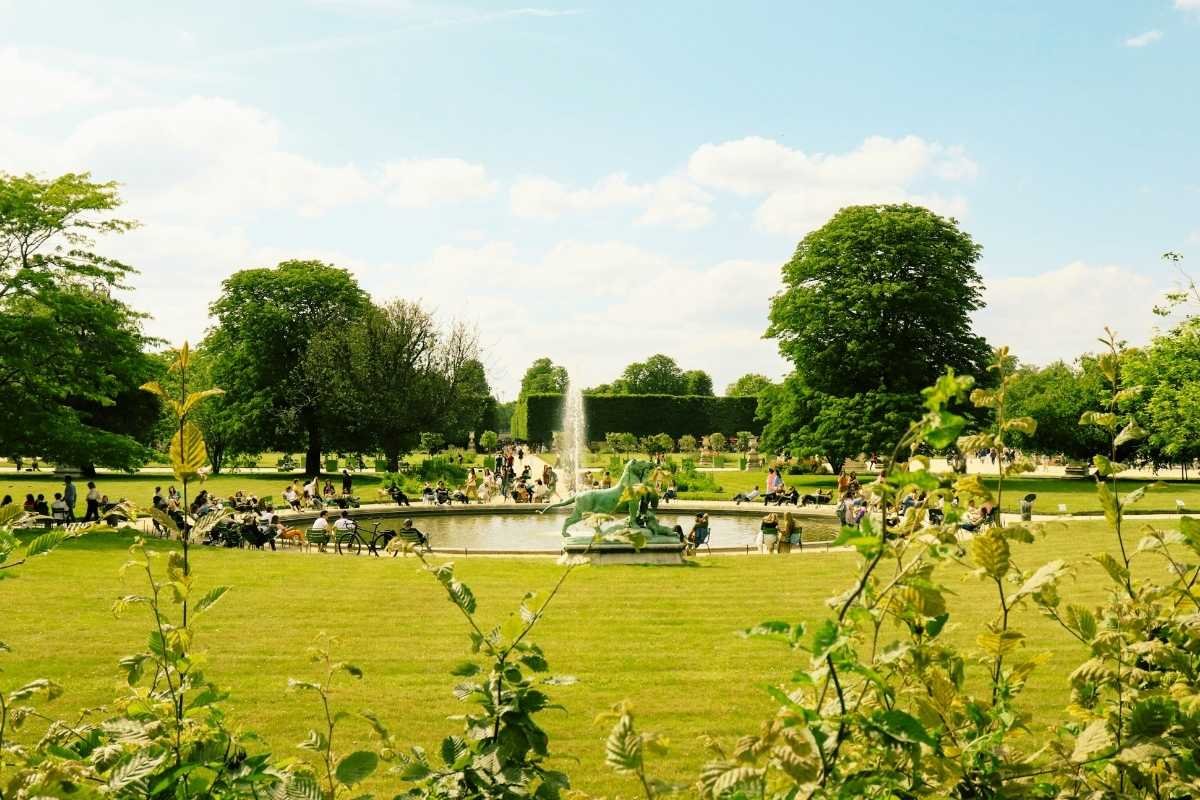
Saint-Germain-des-Prés can work well for families who value a central base with easy access to quieter breaks.
Latin Quarter: Best for Families Who Want Central Energy
The Latin Quarter makes sense for families who prefer to be surrounded by activity and want a central Left Bank base. It can be particularly appealing with older children or teenagers who enjoy having cafés, shops and busy streets close to the hotel.
Best for: families with older children, shorter first visits and travelers who value central access.
Trade-off: the experience changes noticeably by street. If sleep and quiet evenings matter, check the exact hotel location rather than treating the whole 5th arrondissement as identical.
Le Marais: Best for Active Families on Shorter Trips
Le Marais gives families a very central Right Bank base, but central does not always mean effortless. Busy pedestrian areas and narrow streets can make it less convenient for families carrying a lot of gear or trying to move quickly with a stroller.
Best for: families who enjoy a lively neighborhood, travel relatively light and expect to spend significant time exploring on foot.
Trade-off: crowds and street density can matter more here than distance on the map.
Opéra / 9th Arrondissement: Best for Transport Convenience
Opéra is worth considering when transport flexibility matters more than having the quietest residential atmosphere. It can be practical for a first family trip because several parts of Paris are straightforward to reach from the broader area.
Best for: families prioritizing transport, shopping access or an efficient central base.
Trade-off: some streets are busy and commercial, so choose the hotel itself carefully if you want quieter evenings.
Bastille / 11th Arrondissement: Best for Families Watching the Budget
Bastille can widen the accommodation choice for families who do not need to stay in the most expensive central districts. The important decision is the exact street, because the broader area includes both quieter pockets and streets with a much livelier evening atmosphere.
Best for: budget-conscious families, especially with older children.
Trade-off: do not book based only on an attractive nightly rate. Check the route to the hotel and recent comments about street noise.
For full neighborhood descriptions beyond the family-accommodation question, use our broader Where to Stay in Paris guide and the individual TripsCity area guides.
Best Areas to Stay in Paris for Families by Travel Style
A more useful way to choose is to start with your family situation rather than asking which arrondissement is universally “best.”
| Your family | Strong starting point | Why |
|---|---|---|
| First visit with younger children | Saint-Germain-des-Prés | Good balance between central location and a calmer base |
| Family with teenagers | Latin Quarter | Central, lively and easy to combine with a more active trip |
| Short trip with light luggage | Le Marais | Central location for families comfortable with busy streets |
| Transport-first family | Opéra / 9th | Useful when easy connections are a major priority |
| Budget-conscious family | Bastille / 11th | Can offer more accommodation options if the exact street works for you |
| Family expecting midday hotel returns | Prioritize location over arrondissement label | A simple route back to the hotel may matter more than neighborhood prestige |
TripsCity Insight: two families can stay in the same arrondissement and have very different experiences. A quiet hotel near a useful station may be a better family choice than a more famous address several difficult blocks away.
Three Mistakes to Avoid When Comparing Family Areas
Choosing Only by Nightly Price
A lower room rate can be worthwhile, but compare what you are giving up in location and convenience before deciding that the cheapest hotel is automatically the best value.
Choosing an Arrondissement Without Checking the Exact Street
Neighborhood labels are broad. Look at the hotel’s immediate surroundings, transport route and recent guest feedback about noise rather than assuming every street behaves the same way.
Confusing Central With Convenient
A central hotel can still be inconvenient for your particular itinerary. Think about the places your family actually plans to visit and whether getting back to the hotel will remain practical later in the day.
For the next layer of planning, use our How to Get Around Paris guide and Paris With Kids guide.
How to Choose Between the Best Areas to Stay in Paris for Families
Once you have narrowed the city to one or two suitable areas, stop comparing neighborhoods and start comparing the accommodation itself. This is where family needs differ most from those of couples or solo travelers.
Check the Room Configuration
A room that technically accepts a family is not always comfortable for one. Check the actual sleeping arrangement, whether a cot or extra bed is available if needed, and whether connecting rooms or larger family rooms are offered.
For longer stays, an apartment or aparthotel can be useful when you value additional space or simple food preparation. For shorter stays, a well-located hotel may be easier if you prefer reception services and less household setup.
Check the Building Before Falling in Love With the Photos
Paris has many older buildings, and access varies. If you travel with a stroller, young children or substantial luggage, confirm whether the hotel has an elevator and whether it reaches the floor of your room.
Do not assume that a beautiful historic property will automatically be the easiest family property.

The practical details of a family hotel matter most at the moments when everyone is already tired.
Check the Route to Public Transport
Do not judge convenience only by the name of the nearest Metro station. Look at the actual walking route between the hotel and the transport you expect to use.
If you will travel with a stroller or expect to return to the hotel during the day, station accessibility and a straightforward route deserve extra weight. Our How to Get Around Paris guide covers the transport side in more detail.
Check Evening Noise
A street that feels convenient in the afternoon may become much busier at night. Recent hotel reviews can be useful for identifying recurring comments about street noise, nearby bars or rooms facing a busy road.
This matters especially with younger children or light sleepers. The arrondissement alone cannot tell you how quiet a particular hotel room will be.
Compare Hotels Only After Choosing the Area
Once you have one or two suitable areas, compare accommodation within those boundaries. That makes price differences easier to evaluate because you are comparing hotels that solve roughly the same location problem.
You can compare Paris hotels by neighborhood after narrowing down the area.
Family Accommodation Checklist Before Booking
- Exact street and immediate surroundings
- Useful transport within a practical walking distance
- Room capacity and actual bed configuration
- Elevator access if your family needs it
- Air conditioning or heating appropriate for your travel season
- Recent comments about street and room noise
- Breakfast or nearby food options if mornings with children are difficult
- Cancellation conditions
- Whether a midday return to the hotel will be realistic
Use our Paris With Kids guide for the sightseeing side of a family trip and our Paris Budget Guide when comparing the wider trip cost.
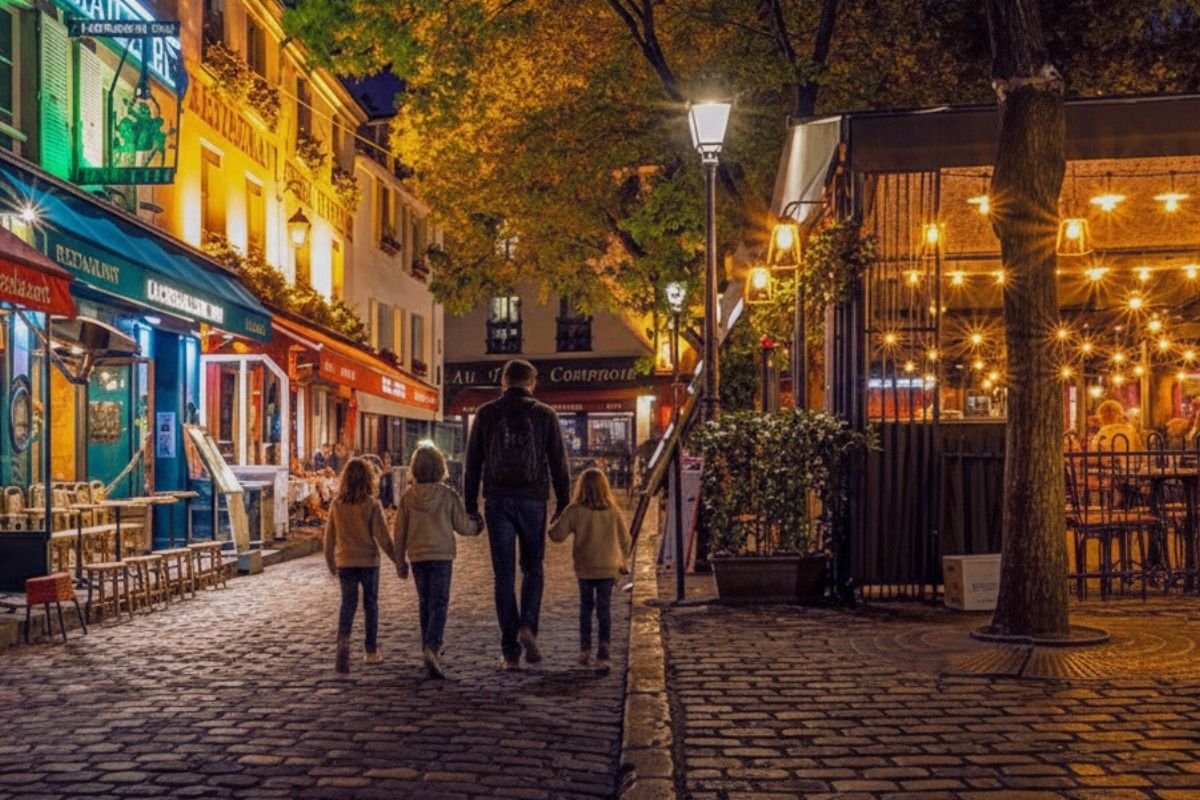
For many families, a convenient return at the end of the day is more valuable than adding another attraction to the itinerary.
Final Verdict: Where Should Families Stay in Paris?
There is no single winner among the best areas to stay in Paris for families because the right choice depends on your children’s ages, budget, transport needs and hotel priorities. Saint-Germain-des-Prés is one of the strongest all-around choices when balance and a central location matter more than finding the lowest hotel rate. The Latin Quarter can suit families with older children who want more activity, while Le Marais works better for families comfortable with busier streets. Opéra is useful when transport convenience is the priority, and Bastille can make sense when budget matters and the exact hotel location checks out.
The arrondissement should only create your shortlist. The final decision should come from the hotel itself: room setup, access, street noise, transport route and whether returning there with tired children will still feel practical.
If you are still deciding between several parts of the city, compare them first in our Where to Stay in Paris guide. Then return here to make the final choice specifically for a family trip.
Best Areas to Stay in Paris for Families FAQ
What is the best arrondissement in Paris for families?
There is no universal winner, but the 6th arrondissement around Saint-Germain-des-Prés is a strong all-around option for families who value central access and a calmer base. Your children’s ages, budget and hotel location can make another area a better fit.
Is the Latin Quarter a good area for families?
Yes, particularly for families with older children or teenagers who enjoy a lively central neighborhood. Check the exact hotel street if quiet evenings are important to you.
Is Le Marais a good place to stay with children?
It can be. Le Marais is central and convenient for walking, but busy streets and crowds may make it less comfortable for some stroller families or travelers seeking a very quiet base.
Should families stay outside central Paris to save money?
Sometimes it can be worthwhile, but compare the savings with the extra travel your itinerary would require. A less central hotel is not automatically poor value, just as a central hotel is not automatically convenient.
What should families check before booking a Paris hotel?
Check the exact location, transport route, room and bed configuration, elevator access if needed, recent noise comments and whether returning to the hotel during the day would be practical.
Is a hotel or apartment better for a family in Paris?
It depends on the trip. Apartments and aparthotels can offer extra space and simple food preparation, while hotels may provide easier check-in, reception services and fewer practical tasks during a short stay.
Should families change hotels during a Paris trip?
For most short family trips, one well-chosen base is simpler than changing accommodation. A hotel change can make sense when Paris is only one part of a wider itinerary, but moving rooms solely to experience another neighborhood usually adds work.
Is it worth paying more for a central family hotel?
Sometimes. Paying more can be worthwhile when the location meaningfully simplifies the trip, but do not assume a higher price guarantees a better family stay. Compare the room, transport and immediate street as carefully as the arrondissement.